Museum / Rooms / Medieval banking
Room · 6 chapters · 79 lives
Medieval banking
Art of banking during the Middle Ages could only be overshadowed by the banker’s art to go around the Church’s view on moneylending
Church and medieval business
In Medieval Europe the Catholic Church exercised significant social and political authority. On economic plan, it hampered the development of banking and big enterprises which depended on loans by its teaching on sinfulness of borrowing money and charging interest. The concept of usury varied and in some cases opposed only to excessive interest rates while in other cases involved rejection of all interest charges at any level.
The first international bankers of the medieval world were the Order of the Knights of Temple, and the Jews who were replaced by Italians in the 13th century.
Main protagonists of medieval banking
Regarding the scope of its operations, three main groups of bankers operated in the Middle Ages. The pawnbrokers who extended credit to consumer secured by liens on personal assets; local money-changers and deposit bankers that provided foreign exchange services, accepted deposits and extended loans to local businessmen; and finally, international merchant-bankers as the most superior form of medieval banking organization that possessed the required capital for financing of cargoes and insuring risks in large scale enterprises.
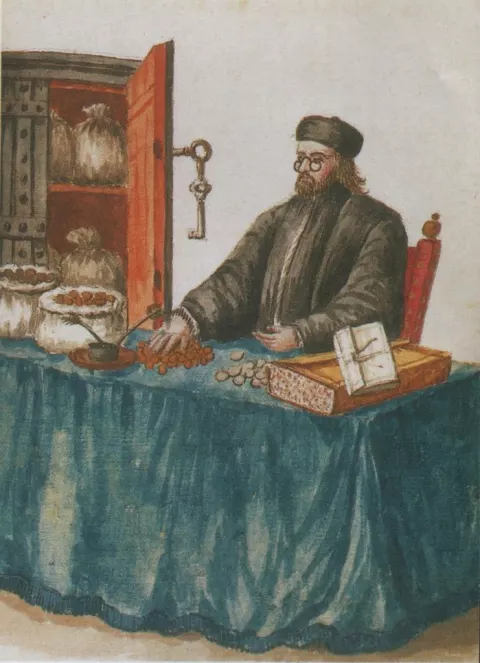
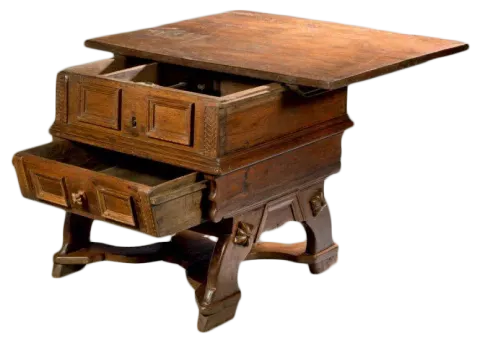
The term “banchierus”, derived from the “banchus”, a carpet covered table or bench, over which the exchanges were made.
Super companies of the medieval world
The northern Italian city-states also originated a new type of business ─ the super-company. The Bardi, Peruzzi and Acciaiuoli of the 13th and 14th centuries that were in the later period replaced by the equally famous Medici house, were the best representatives of powerful international merchant-banking companies among whose clients were the rulers and the highest nobility of Europe.
Devices of avoiding
As an important precondition for doing business, the medieval bankers first had to develop devices to get around the concept of usury and evade the Church’s surveillance. The “voluntary gifts” were the simplest way. There was also a “repurchase agreement” according to which the borrower sold goods to the lender and bought them back at higher prices and the “interisse” or a compensation for loss inflicted because of late payment from which the modern term “interest” came from.
While the small players unable to adopt sophisticated banking techniques which masked lending were subjected to usury campaigns, ironically, the large international merchant-banks were actually accepted by and worked with the Church.
Financial innovations
These super-companies were also credited with the invention of the two very important business devices which served as the grounds of their business superiority as compared to north European bankers. The first was the bill of exchange, a mean of transferring funds and making payments over long distances without physically moving the money and the second one was the double-entry bookkeeping that allowed entrepreneurs to have better insight in their business affairs and contributed to increase of profits.
Bill of exchange or draft was a financial instrument whose use not only facilitated transfer of funds over great distances, but also successfully circumvented the Church’s prohibition on usury since profits were realized discreetly, through differences in exchange rates and not by charging interest.
Church’s response to usurious lending
Besides three main categories of bankers that operated in this period, the financial world of the Middle Ages was also composed of nonprofit pawn banks called “Monti di Pietà” founded on initiative of Catholic Church, which offered financial loans at a moderate interest (between 6 and 15 per cent) to those in need.
Banca Monte dei Paschi di Siena founded in 1472 as Monte di Pietà has been in operation without interruption to the present day and is considered the oldest bank in the world still operating.

Chapters
- Introduction to medieval banking
- The Knights Templar and the Jews
- Medieval bankers
- Accounting methods
- Public banks
- Business tools
Introduction to medieval banking
Fall of the Roman Empire in the fifth century marked the beginning of the Middle Ages, the millennial period of human history that is in the economic field labeled by disappearance of most of its trade and feudalization. Banking activities were further suppressed by the Church's teaching that lending money and charging interest were sin because it takes advantage of people’s misfortune. When applied to agriculture lending often contributed to even greater poverty of the lenders, but it was indispensable for development of international trade and large scale business activities. In such circumstances, it took centuries before banking was again re- discovered – in the late medieval Italian cities as a consequence of intensification of commercial life.
The Knights Templar and the Jews
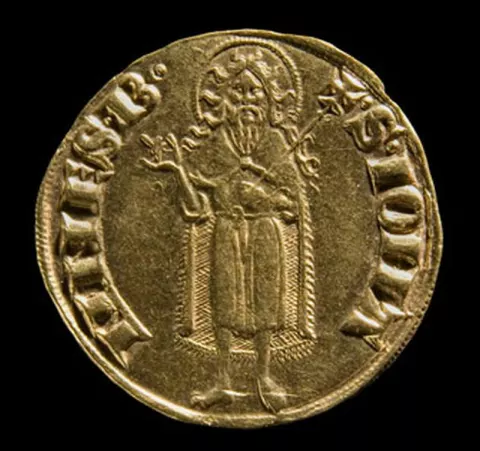
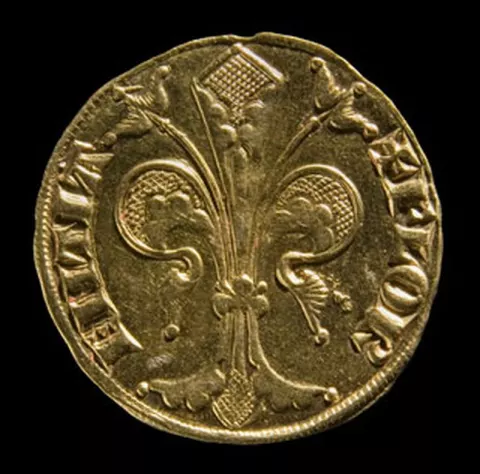
In the period from the fall of the Roman Empire until the 11th century, scope of the banking activities were mostly reduced to the changing coins. Medieval world was comprised of a multitude of states which produced their own coinage. In such an environment, the experts were necessary to exchange various currencies, as well as to determine the weight, fineness and validity of coinage. From the 9th up to the mid-13th century, the silver standard predominated with the silver "denier" as the largest denomination. In the 14th century, gold currencies emerged in Italian city-states. With the development of general economy their activities became more complex and consequently evolved in a system of coinless transaction.
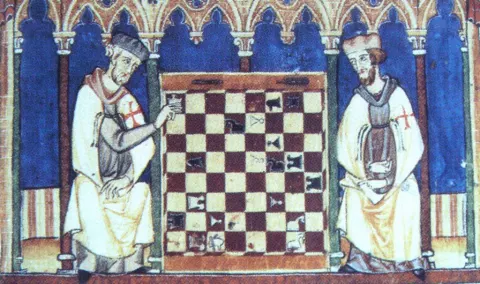
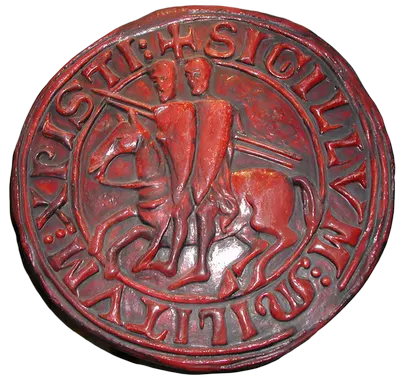
The first international banking system was operated by the Order of the Knights of Temple, founded in 1118 as military and
religious order in charge for keeping the passage to Holy Land safe for pilgrims. They performed three basic functions – they guarded and managed money from nobles and rulers, made loans from their own resources, and exchanged currency for travelers. Thanks to their services, the merchant was able to give money to their office in France, and safely travel to Jerusalem where he received his money in local currency.
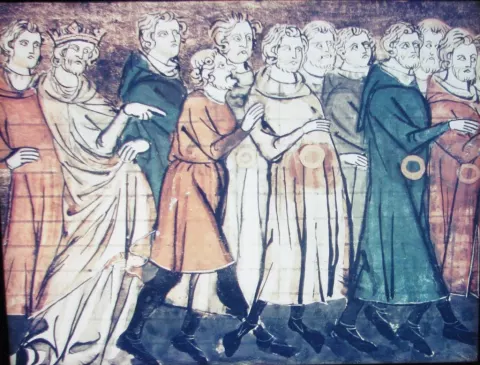
A miniature from Grandes Chroniques de France depicts the expulsion of Jews from France in 1182.
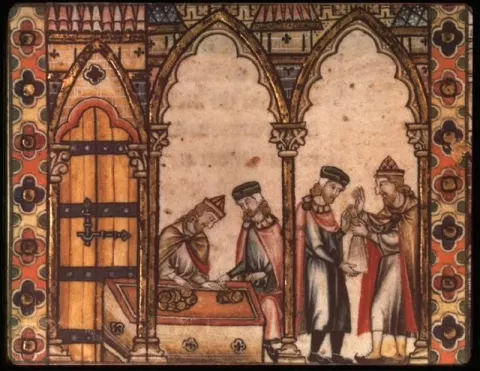
Another group known for its banking services were the Jews. Since the Christian prohibition on usury did not refer on them and the civil law didn’t forbid interest on loans, they were allowed to lend money at interest to Christians. Their services were especially required from rulers who always needed funds for financing their lavish lifestyle and warfare. But rulers could also be ungrateful customers, often unwilling to repay loans and causing bankruptcies. In England and France, the rulers often resorted to confiscation and eviction of the Jews to avoid paying debts. From the 13th century the Jews were gradually replaced by the Italians in the field of high finances.

Medieval bankers
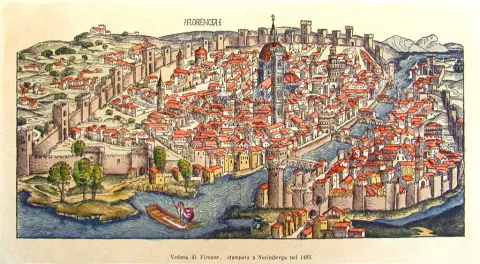
The origins of modern banking lay in the rise of international trade in medieval Europe, with the epicenters in the industrializing regions of Flanders, northern France and northern Italy. The financial growth of some Italian cities that was made in trade led to the revival of banking practices.
In all probability, the great Italian banking houses of the 13th century evolved from money-changing operations. Etymology confirms this theory. The term “banchierus”, derived from the “banchus”, a carpet covered table or bench over which the exchanges were made. In the mid-12th century the term was used as a synonym for “cambitor”, or the money changer.
During the Middle Ages operated three main groups of bankers. These were pawnbrokers, local money changers and deposit bankers, and international merchant-bankers.
Medieval bankers
Pawnbrokers
pawbrokers
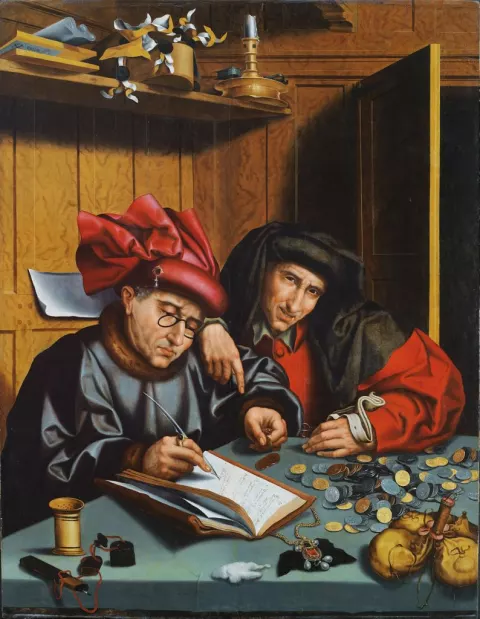
The lowest level of medieval credit institutions was occupied by the pawnbrokers, businessmen who granted loans on the security of movable property for a fixed rate of interest. Although it was considered “infamous profession”, it was tolerate because people actually depended on it.
The procedure was following: a customer would give an item (such as jewels, tools, or household items) to the pawnbroker who would in return provide him a loan, usually lower than the value of the item itself. The customer had an agreed amount of time to return the loan; otherwise he lost the item. Thus, to the pawnbroker the profit was assured – either through the interest payments on the loan or through the sale of the client’s item. Furthermore, many pawnbrokers practiced usury by charging excessive interest rates of 30 per cent or even more.
Medieval bankers
Money-changers and deposit bankers
The second category was represented by the local money-changers and deposit bankers. The last evolved after the money changers started to receive deposits, a practice that occurred in Genoa in the mid-12th century and in Venice during the 13th century.
The purpose of the deposit bank was to provide a means of payment that minimizes the need to use actual cash. Therefore, when the client brought the coins to the money-changer, instead of changing currency he could simply open an account in the bank. Except being a good solution for keeping money safe, deposits could also be used in making payments to creditors by giro or assignment. The usual way to give the instructions to the banker was orally. In return for this service the money changers usually charged a small fee. Eventually, they have extended their services and began offering short-time credits to their clients. Such banks were found only in the major commercial cities like Venice, and outside of Italy in Barcelona, Geneva, Bruges, and London.
Medieval bankers
International merchant-bankers
international merchant-bankers
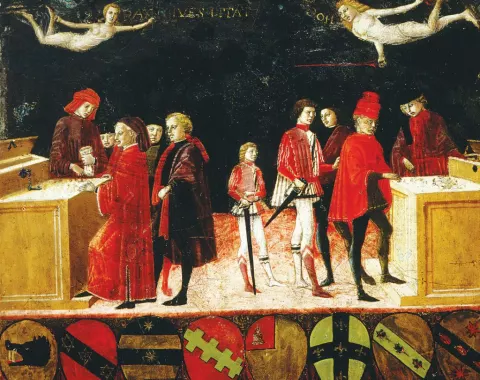
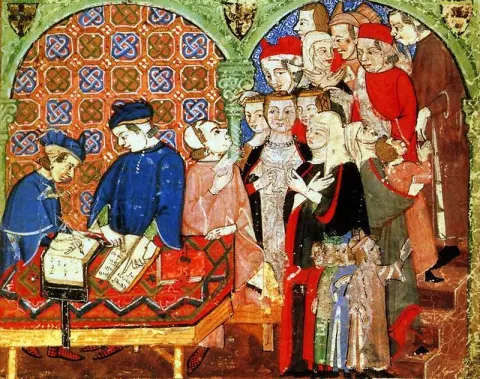
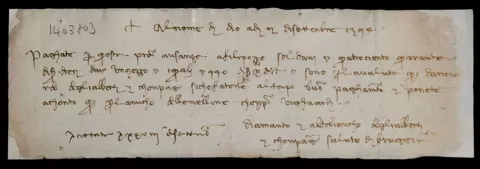
And finally, there were the international merchant-bankers as the most prominent group involved in banking business. Successful merchants who were able to acquire large profits in trade were generally inclined to invest their capital in lending and to become financiers. Merchant-banking was predominantly Italian zone of influence – starting with merchants from Asti, Genoa, Sienna and Lucca by the beginning of the 13th century, the Florentines in 14th and 15th century, and finally Genoese in 16th century. Their services of financiers and investors were of crucial importance for supporting large scale trading activities in Middle Ages which required capital both for financing of cargoes and insuring risks.
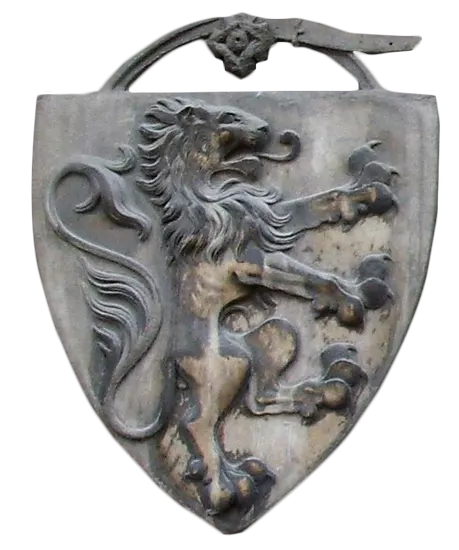
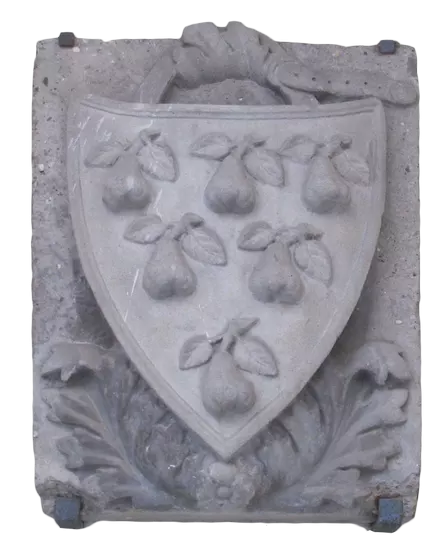
The best representatives of the powerful medieval international merchant-banking companies with numerous branch offices across Europe were the Bardi, Peruzzi and Acciaiuoli. After their bankruptcies in the 1340s they were replaced by even more successful the Medici and Alberti Houses. The business portfolio of merchant-banking companies included large scale trading operation in luxurious and essential commodities, manufacturing activities and lending business at the service of European rulers, the highest nobles and the Papacy.
After the downfall of the Medici bank, its significance would partly be replaced by the Fuggers, who represented the most developed form of late medieval family mercantile company.

Accounting methods
The rise of the international trade beginning from the 12th century encouraged the Italian city-states to develop more advanced double entry bookkeeping system that better suited to new business challenges.
The accounting system that had previously prevailed was a single-entry bookkeeping which recorded flow of goods, but did not measure profit and loss, and made concealment of fraud easy. Therefore it was not suitable for large scale and long distance business operations.
The double entry bookkeeping system was, most likely, for the first time used by Genoese merchants. The principle of double-entry bookkeeping was simple – each transaction should be recorded twice – as a debit (left side) and a credit (right side). The total credits must equal the total debits. The double entry accounting allowed the businessmen to classify, record and cross-check their accounts, as well as to calculate their profits which gave them an insight to what they owned and how well their business was doing. The Arabic numerals that replaced the old Roman system in this period additionally simplified calculations and positively contributed to accounting methods.
The 15th century Ragusan merchant, diplomat, and humanist Bendetto Cotrugli is known as the author of the oldest known work on double-entry bookkeeping which bears the title the “Art of Trade” (“Il libro del arte del mercatura”).

Public banks
Besides three main categories of bankers that operated in this period, the financial world of the Middle Ages was also composed of public banks and nonprofit pawn banks called the “Monti di Pieta” which offered financial loans at a moderate interest to those in need.
“Monti di Pieta” (literally mountains of piety) were a special nonprofit banks founded in 1461 by the Franciscan order. They were engaged in lending small amounts of money to private citizens in exchange for pawned property. A pre-determined interest rate from 5-10 percent was charged to these loan, and acquired profits were used to cover the expenses of operating the Monte and to extend the scope of their charitable work. The purpose of these banks was to offer people an alternative for “sin” of usury, especially the Jewish one. After the Fifth Lateran Council approved their activity in 1515, the branches were also opened in France, Spain, Germany, and the Netherlands.
Banca Monte dei Paschi di Siena, founded in 1472 as Monte di Pietà has been in operation without interruption to the present day and considered the oldest bank in the world still operating.
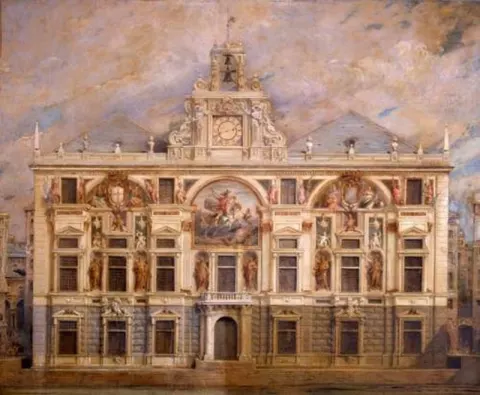
As a counterweight to the private banks, in several Mediterranean cities operated public banks that were founded to extend loans to the state and to assure stability. The “Tabula de Cambi” of Barcelona, founded during the early 15th century, was the first public bank established, and it was followed by the “Casa di San Giorgio” founded at Genova in 1407. These banks partly represented the precursors of public banks to be established in the following period, during the 16th and 17th centuries, in Venice, Milan, Amsterdam, Hamburg and Nuremberg.
Business tools
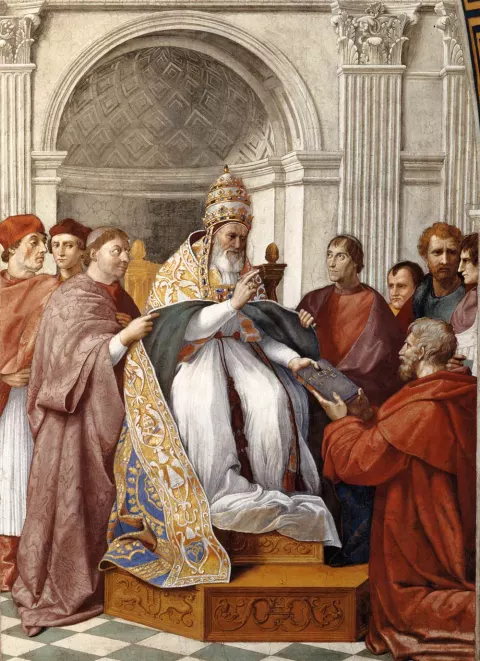
Pope Gregory IX (ca. 1145-1241) declared situations when taking of interest was allowable from the canonical viewpoints.
Large companies both inherited and developed various business practices to overcome constraints posed by society and distance. The Church represented a great obstacle to banking business in those times considering the moneylending and chagrining interest as heretical. The Pope Gregory IX has even declared situations when taking of interest was allowable from the canonical viewpoints.
Therefore, the medieval businessmen first had to find a way to get round the concept of usury to be able to do business. The simplest way is that the borrowers would give the lenders some “voluntary” gifts which were in reality forced loans. Loans could also be structured as a “repurchase agreement” according to which the borrower sold goods to the lender and bought them back at higher prices. Sometimes a third party was involved to disguise the real nature of the sale. Around the 13th century the businessmen began to use concept of “interisse” (from which our word “interest” originally come from) that was legally recognized compensation for loss inflicted because of late payment. The logic was following – if a merchant made a commercial loan for some minimal period (for example, a month) it was not usurious if he charged a percentage of each month afterward, since this was a penalty, and not money received for leasing the loan. In short, it was seen as a compensation for the profit the merchant would made with that money if he placed it instead in some profitable investment.
These devices for circumventing of usurious charges resulted in, ironically, an unequal imposition of punishment for usury on pawnbrokers and small moneylenders, who did not adapt such a sophisticate banking techniques, and the merchant banks with international connections, who were accepted and worked with the Church itself, like the famous Medici family.
The greatest financial innovation of the commercial revolution was the bill of exchange introduced in the medieval business world by the Italians merchants who frequented the Champagne fairs. Perfected by the late 1200s, the bill of exchange made possible for one party to receive a sum of money in one currency in one place on one date, and repay it in another currency at another place at a later date.
The bill of exchange combined three features of great importance for running the international business. It avoided the costs of transporting specie (as the expense of tolls, security and transport could be considerable), it provided a practical device for international credit and currency exchange, and last but not least, it circumvent the Church's prohibition of usury.
The transaction involved four parties. The borrower and lender in the town of issue, and the borrower's correspondent (the payer) and the lender's representative (the payee) in the town of repayment. There were specialized courier services between Italy and Champagne from the mid-13th century for delivering of the bills.
Although interest per se was not charged, a profit often was realized through differences in exchanges rates. Since exchange-rates were subjected to fluctuations, final profit could be considerably more or less than predicted. Using the advantages of this system, the merchants could transfer their own funds from one bank to another to earn higher interests.
79 lives in this room
 Orlando Bonsignorid. 1273
 Giovanni Villanic. 1276-1348
 Folco Portinarid. 1289
 Marco Carellic.1320/25-1394
 Samuel Ben Meir Ha-Levi Abulafiac. 1320–1361
 Francesco di Marco Datinic. 1335-1410
 Richard Dick Whittingtonc. 1354-1423
 Palla di Onofrio Strozzi1372-1462
 Sir William Walworthdied 1385
 Vitaliano I Borromeo1387-1449
 Luca Pitti1394-1472
 Jacques Coeurc. 1395-1456
 Johann Fustc. 1400-1466
 Giovanni di Paolo Rucellai1403–1481
 Francesco Sassetti1421-1490
 Filippo di Matteo Strozzi1428-1491
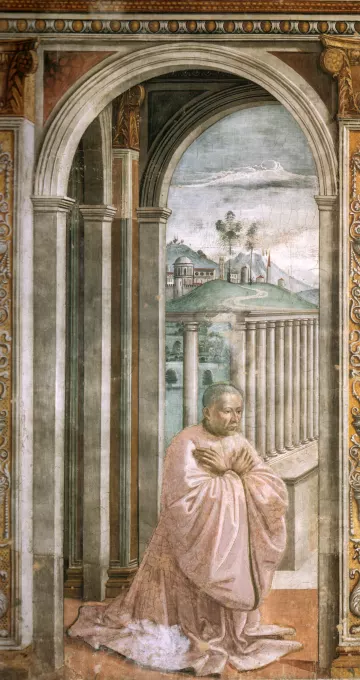 Giovanni Tornabuonic. 1428 - c. 1490
 Isaac Abravanel1437–1508
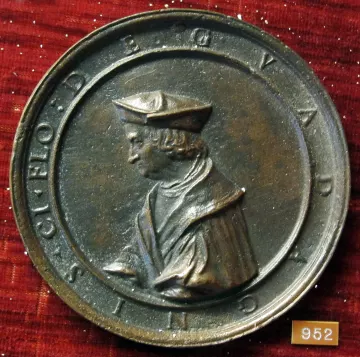 Tomasso Guadagni1454-1533
 Jakob Fugger1459-1525
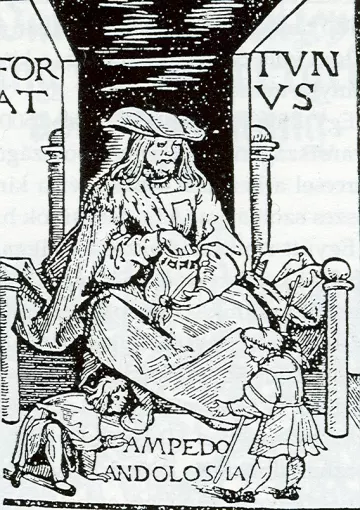 Imre Fortunatusc. 1460–c. 1526
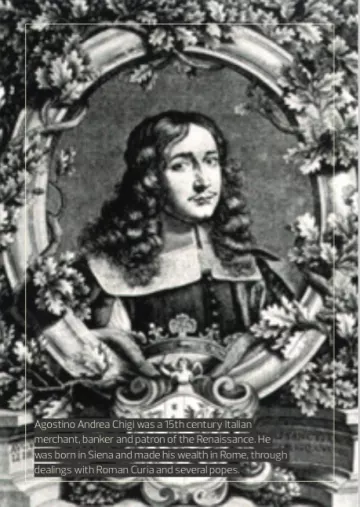 Agostino Andrea Chigi1466-1520
 Mathias Mulichc. 1470-1528
 Filippo Strozzi the Younger1489-1538
 Balthasar Eggenbergerdied 1493
More lives in this room
- Peter Barsymes 6th century
- Aaron Ben Amram 9th–10th century
- Wuhsha of Egypt 11th–12th century
- Aaron of Lincoln c. 1125-1186
- Jurnet of Norwich c. 1130-1197
- Ingo della Volta 12th century
- William Cade of St Omer 12th century
- Isaac of Norwich c. 1170- c.1235
- Benedict of York died 1189
- Aaron of York 1190 – 1268
- Josce of York d. 1190
- Dulcea of Worms d. 1196
- Jehan Bretel c. 1200–1271
- Elijah Menahem Ben Moses c. 1220–1284
- Solomon ben-Abraham (Rashba) Adret c. 1235-1310
- Filippo di Amedeo de Peruzzi c. 1240 - c. 1303
- Todros ben-Judah 1247–after 1295
- Benveniste de Porta d. 1268
- Belia of Winchester died after 1273
- Licoricia of Winchester d. 1277
- Benedict Ben Moses of Lincoln d. 1278
- Jan de Mirabello van Halen 1280-1333
- Simon de Mirabello van Halen 1280-1346
- Isaac of Southwark d. 1289/90
- Laurence of Ludlow died 1294
- Ridolfo de’ Bardi c. 1300 - c. 1360
- Gertrud Morneweg d. 1301
- Hanna van Recklinghausen 1332-after 1349
- Antonio di Pessagno died before 1340
- Vivelin of Strasbourg d. after 1347
- Jäcklin 14th century
- Kandlein of Regensburg 14th century
- Lewko ben Yarden fl. late 14th century
- Minna of Zürich 14th century
- Reynette of Koblenz 14th century
- Buonaccorso Pitti 1353-c.1433
- Hildebrand Verkinchusen c. 1370 - 1426
- Andrea de' Pazzi 1371-1445
- Manessier de Vesoul d. 1375
- Niccolò di Iacopo di Alberti died 1377
- David Steuss died c. 1387
- Pietro Bicarani died 1414
- Filippo Borromeo 1419–1464
- Pietro Massimo 1420-1489
- Jacopo de’ Pazzi 1433-1478
- Venguessone Nathan d. 1436
- Ishmael Abnarrabi 15th century
- Meir Melamed second half of 15th century
- Meshullam Volterra 15th century
- Vitale Jehiel of Matassia 15th century
- Juan di Torralba died 1458
- Angelo Modercai Finzi died 1476
- Mordecai Angelo b. Abraham d. 1476
- Anselmo del Banco died 1532