No. 6667
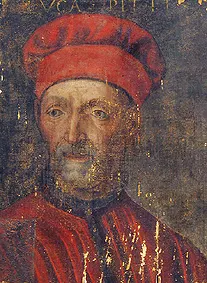
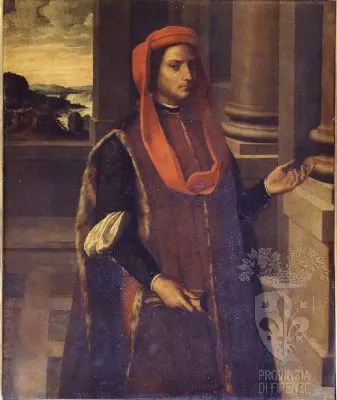
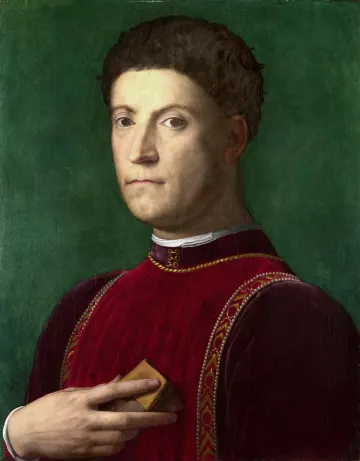
Palla di Onofrio Strozzi
In the work “Lives of illustrious men of the 15th century” (Vite di uomini illustri del secolo XV.) of Vespasiano da Bisticci, an Italian humanist, Palla di Onofrio Strozzi was described as rich, handsome, scholar, a family man, and a great builder and collector.
Palla was born in Florence into a wealthy banking family of the Strozzi. He gained an excellent education and owned an important collection of rare books. In the tax records of the 1427, Palla was also the richest man in Florence owning property valued at more than 100,000 florins. In accordance with business manners of the Florentine high society, Palla also derived his wealth from real estate in city and countryside, investments in communal bonds (monti), and from companies engaged in banking, commerce and industry. Therefore, his inventory of his property included 54 farms, 30 houses, a banking firm with a capital investment of 45,000 florins, and a large amount of communal bonds. But, although he was trained to run the family’s banking business, he was not interested in business affairs and lived well beyond his means, which contributed to his later economic and political downfall.
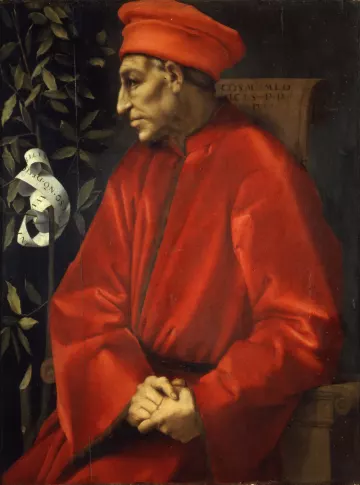
Together with Rinaldo degli Albizzi, Palla led the plot against Cosimo de’Medici, the covert ruler of Florence, with an aim to ruin political and economic position of the Medici. Although the conspirators had some initial success forcing Cosimo to exile in 1433, the success was short-lived. With the return of Cosimo the both families were exiled from Florence. The Strozzi had taken shelter in Padua where Palla died in 1462 leaving his collection to the monastery of Santa Giustina.
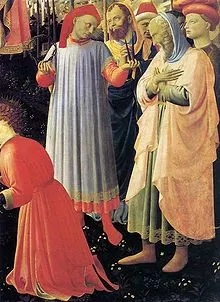
As patron of the arts, Palla is remembered as commissioner of Gentile da Fabriano's “Adoration of the Magi” in the Strozzi Chapel of Santa Trinita church in Florence. He also commissioned the Fra Angelico's “Deposition of Christ” in the Sacristy of Santa Trinita in Florence.