No. 8108
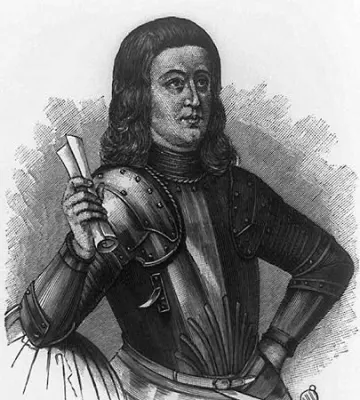
Imre Fortunatus
Imre Fortunatus was a Jewish moneylender and official who enjoyed great reputation at the Hungarian court.
His original family name was of Seneor, while his personal name was Shelomoh (Zalman) ben Efrayim. After his conversion he gained the epithet Fortunatus, as indication that the man who has converted and embraced the true religion was indeed fortunate.
Imre arrived to Hungary from Portugal or Italy and became distinguished merchant and moneylender in the early 16th century Buda. Soon thereafter he converted to Christianity, some said because he wanted to prosper in business and the other because he wanted to avoid a death sentence for having a relation with Christian woman while he was married. After he converted, he abandoned his wife and children who remained the Jews, and remarried. Despite that, he remained loyal to his former religion and used his influence for benefits of the Jews in Buda, Prague and Vienna, on several occasions.
His expertise in finances and the large loans to the royal court made him a highly influential personage in the high circles of the Hungarian society, especially of King Lajos II and Queen Maria. He continued to rise – he leased mines in Upper Hungary, took charge of the customs duty of Buda Castle and supervised frontier. Around 1520, he was appointed a vice treasurer in the Kingdom.
Success and wealth earned him enemies and accusations of corruption and neglect of financial responsibilities by János (John) Szapolyai and István (Stephen) Werbőczi. In 1525, following the fall of Nándorfehérvár (Belgrade) to the Ottomans, Imre was sentenced by the Diet to be burned at the stake for the debasement of currency and incompetence in implementing defense policy. As a consequence, he was shortly imprisoned. In the aftermath of his releasement, the angry mob ransacked the Buda ghetto and robbed his palace, while Imre managed to save his life by lowering himself from the hall of Buda Castle.
In the following period, Imre succeeded to recover his position at the court. He changed the party and presented a financial plan to fill the empty treasury by seizing the copper mines of the Fuggers in Hungary. On 20 July 1526, his last known financial transaction mentions the royal loan of 10,000 gold coins to fight against the Ottomans, who threatened the safety of Hungary.
He died in Buda a few weeks later.