No. 6657
Vitaliano I Borromeo
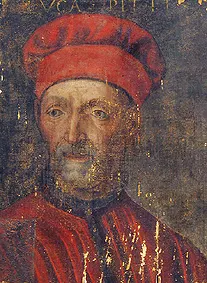
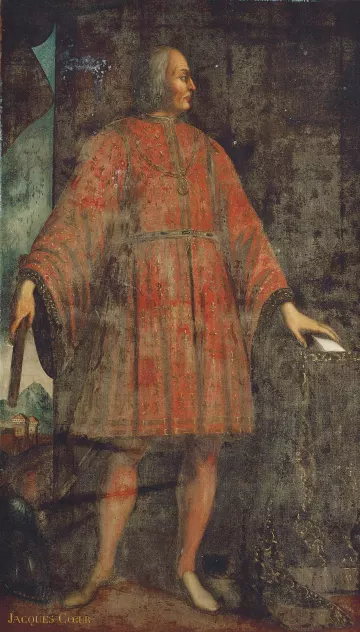
Vitaliano I Borromeo was a nobleman and a banker from Milan, who had an important role in political and diplomatic history of the Duchy of Milan.
According to one story, as a young man Vitaliano was left without money and decided in an interesting and amusing way to drive an attention of his wealthy and childless uncle. Having sold all his possessions, he bought donkeys with covers embroidered with a camel sitting atop a basket, symbolizing his poverty. He achieved the goal, and became a stepchild of his wealthy uncle Giovanni Borromeo, who amassed a considerable fortune through mercantile and banking activities. His bank, with headquarters in Venice, had branch offices all over the Europe – in Milan, Rome, Bruges, Barcelona and London.
In the following years, Vitaliano became one of the leading feudatories, banker, wealthy landowner and patron of arts. He married Ambrosina Fagnani and had one sone, Filippo Borromeo who would inherit his business enterprise.
Vitaliano also held an office at the Duke's court, first as a treasurer (1418) and then as a counsellor (1441). When the Duke died in 1447, the senate of the new Ambrosian Republic appointed Vitaliano as one of the twelve “bailia” (magistrates).
In 1439 he gained the city of Arona on the western shore of Lake Maggiore, from Filippo Maria Visconti, the Duke of Milan who made him Count of Arona in 1445. Vitaliano expanded his propertied around Lago Maggiore by buying many estates in the province of Novara.
However, Vitaliano joined the conspiracy against Dictator Carlo Gonzaga in 1449 and after the plot was discovered he was forced to flee to Arona. He died the same year by an unknown cause and was buried in Milan.
Francesco Sforza gave his inheritance to his son Filippo, and allegedly, added three rings to the Borromeo-family coat-of-arms.