No. 6823
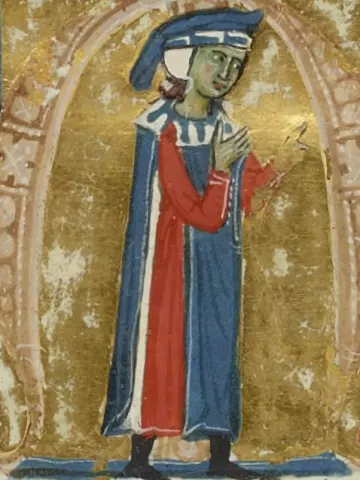
Laurence of Ludlow
The main commercial export product of England during the period of the Middle Ages was certainly the wool produced on the estates of magnates, monasteries and farmers. The wool from Shropshire and Herefordshire has been particularly demanded in the market because of its high quality.
Recognizing the great potential of this trade, Laurence followed his father in the business, and from 1270s started to create his business network. Besides being active in Shrewsbury, he also held an office in London and was active in oversea trade. He traveled to the Low Countries and there he sold his wool to towns with cloth industries, such as Ghent and Bruges, and visited famous fair at Champagne, in north-west France were merchants from all over Europe gathered to do business.
One part of the wealth acquired in trade, Laurence decided to invest in landed property and in finances. Land owning in that time was associated with social prestige, and in that way could be interpreted his purchase of the manor of Stokesay in 1281. Through the loans to the nobility of the Welsh borderlands and to the ruler, he achieved substantial influence and became an advisor to the king Edward I. Under his influence, Edward who was in desperate need for funds to finance a war with France decided to triple the customs rate on wool exports instead of a wholesale seizure of wool. That measure was especially disadvantageous for the wool producers.
He died in 1294 when fleet carrying wool from London to Flanders ran into a storm. One chronicler wrote: “Because he sinned against the wool-growers, he was swallowed by the waves in a ship full of wool.”
However, his heirs enjoyed his legacy and remained lords of Stokesay until 1498.