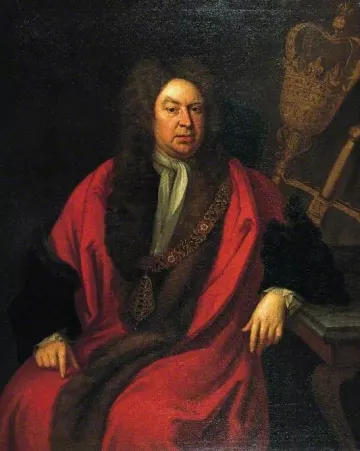
No. 9586
Thomas Guy
Known as a successful bookseller, Guy amassed a large fortune by speculating in the stock of the South Sea Company.
Thomas Guy was the eldest of three children born to Thomas Guy, a coal merchant, carpenter, and barge operator, and Anne Vaughton. His father worked in a small wharf in Southwark, near London Bridge where the family lived in relatively poor circumstances. After his father’s death, they would move to his mother’s family.
He attended Tamworth Free Grammar (high) School where he learnt Latin, Greek and math. In 1660 he became an apprentice to John Clarke, a bookseller in Cheapside, London, and eight years later he bought a bookstore in Cornhill, in the financial center of London, and its stock of £200 worth of books. That same year he became a freeman of the Stationers’ Company, and a liveryman five years later enabling him to sell and print books.
As a bookseller he saw the business opportunity in selling of cheap, but well produced Bibles. Eventually, selling Bibles became his main trade and source of profits. He used the generated wealth to provide loans and to enter into politics. However, his major business investments were two ventures - trading in seamen’s pay tickets during the War of the Spanish Succession (1701-1714) fought between Great Britain and France and Spain in coalition.
The second venture was investment in the South Sea Company founded in 1711 with monopoly to trade with the Spanish colonies of South America, in return for £10 million that the company should give to the government. The Company raised £10 million by selling shares at £100 each. Since the company traded only in slaves, it gradually took on more government debt. By 1720 the value of the shares climbed from £128 per share in January to more than £1,000 by the end of August. Guy sold his shares at an enormous profit. It is estimated that he bought his shares in the company for between £42,000 and £54,000, and he sold them in 1720 for about £234,000.
By 1704 he retired from business and devoted himself to charity work. At time of death, he was worth about £300,000 of which more than two-thirds of this sum went to the foundation of Guy’s Hospital.