Museum / Rooms / The book trade
Room · 5 chapters · 152 lives
The book trade
Although present since Antiquity, the real ascent of the book trade and related businesses, occurred in the 15th century with the invention of movable type printing by Johannes Gutenberg
Preconditions
To have a substantial book production first some preconditions had to be fulfilled. Basically the production had to be cost and labor efficient. These problems were solved by printing press and with paper as a cheap material used for printing. Before the wide-spread use of paper most commonly used mediums for writing were papyrus and parchment or velum. Both of them had certain disadvantages for printing; papyrus was fragile, while parchment was expensive.
Medium
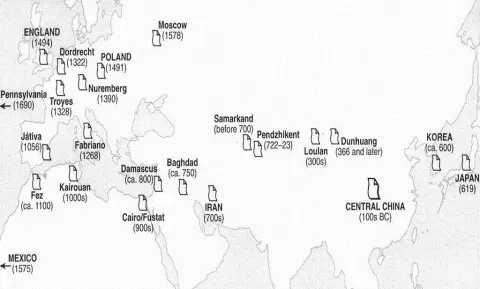
In the year 105 paper was formally introduced to Chinese court, and this year is used to mark the time of its invention. However, seven centuries needed to pass for paper to reach the Arabs, and three more until the production began in Europe. The first paper production in Europe occurred in Spain in the 11th century. In producing paper, the European papermakers have combined knowledge of the Arabs with technical solutions already available in Europe. By the mid-14th century paper was cheap enough and abundant to satisfy the demands of business and government. Thus, one of the conditions for mass production of books was satisfied.
Press
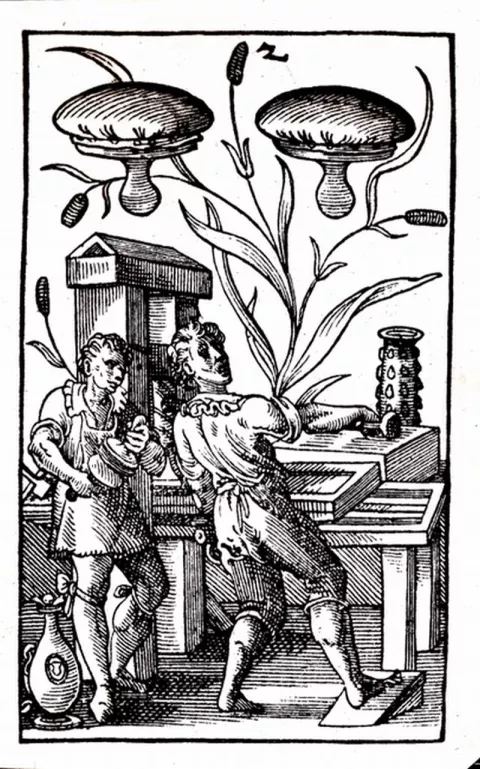
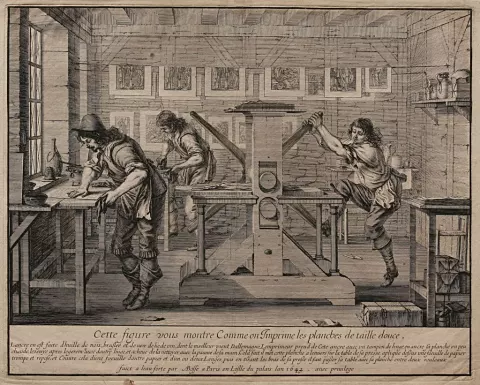
Although paper provided cheap medium on which to write, producing of multiple copies remained a laborious handwork. In the late 14th century appeared woodcut printing, or xylography, where the image is cut in relief on a piece of wood and then copied on paper. Xylography was a simple mean to reproduce religious scenes and it soon developed as a thriving trade in a world of mainly illiterate and highly religious society. However, it had a flaw ─ it was not suitable for printing of written word. The real breakthrough in the history of the written word came in the mid-15th century with the invention of movable type printing by Johannes Gutenberg.
Printing and business
Invention of movable type printing initiated mass communication as it enabled the spread of knowledge and ideas faster than it was possible ever by then. It also gave wings to some businesses established before such as papermaking and selling of books but it also generated new ones such as printing and publishing. Bookshops sprung up across Europe and the book trade soon developed as a business covering all of Europe. As other trades and commodities, books and its traders found organized fairs to be among the best places for networking and trading.
In the first years of printing, up to 1480 or 1490, printers on average produced between 100 and 300 copies of an edition. This number rose to 1000 and 1500 copies during the 16th century reaching the high 1000 and 2000 copies per edition in the 17th century.
Production of papyrus was a monopoly of the ancient Egyptians and it was after the papyrus that the paper was named.
The most valuable and expensive parchment has been made of a skin of animal fetus.
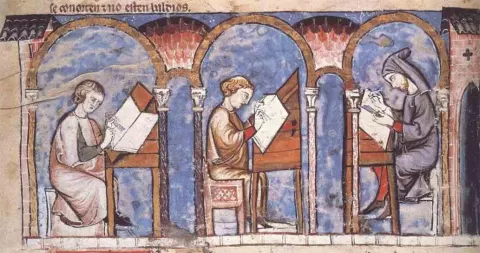
Prior to movable type printing books were all handwritten and copied by professional copyist, which was a slow and expensive work unsuitable for large-scale distribution.
Chapters
The first writing materials
To have a book trade, in substantial volume, it is necessary to have printing presses and to have printing presses it is necessary to have something to print on.
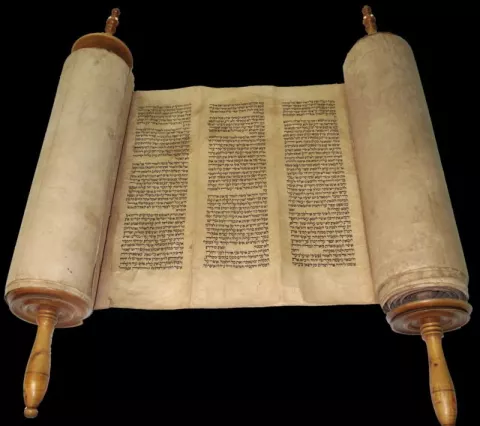
Before the paper took over as a main writing material this role was fulfilled by papyrus and parchment or velum.
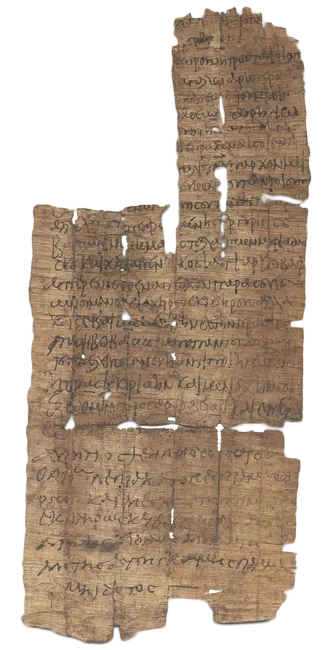
The production of papyrus, a thin paper-like material made from the pith of the papyrus plant “Cyperus papyrus”, is recorded already in 3rd millennium Egypt. Its production remained a monopoly of the ancient Egyptians until 10th century, when it was replaced by parchment. The great classical works of Greek and Roman literature have been written on papyrus. Also, after the papyrus was named paper used today.
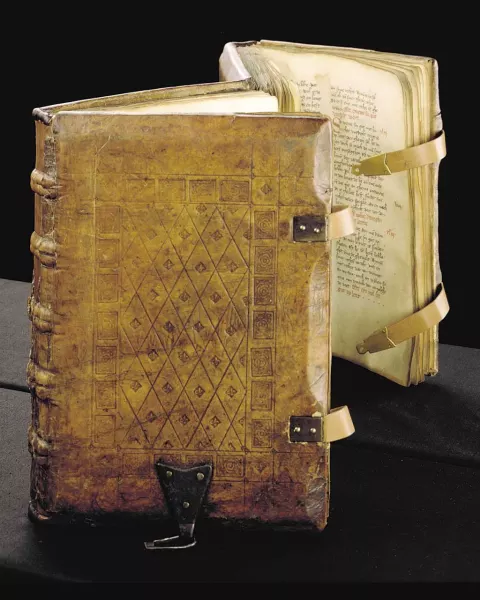
Parchment and velum were another writing material, both made of animal skins. Vellum was more subtle and made from calf skin. The word parchment or “pergamenum” in medieval Latin derives from the name of the city of Pergamum whose ancient King Eumenes allegedly invented the parchment in the 2nd century BC.
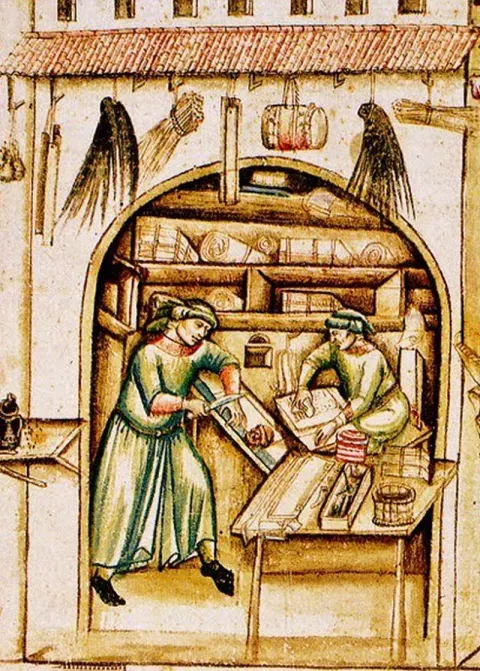
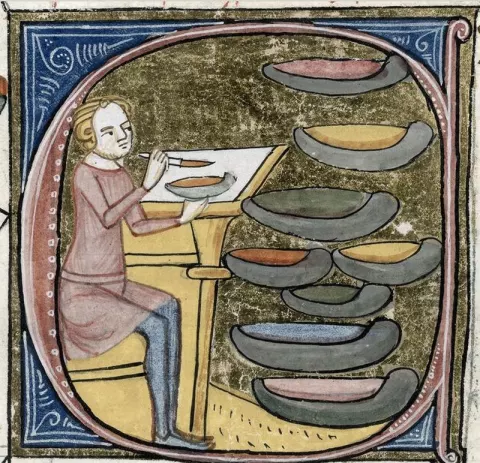
The process of transforming the animal skin into a writing material was complicated and it was the task of the “percamenarius”, or the parchment-maker. Due to the complexity of production, parchment has been more expensive solution.
Thickness and fineness of parchment depended primarily on the type of animal and its age. The most valuable and expensive parchment has been made of a skin of animal fetus.
Printing
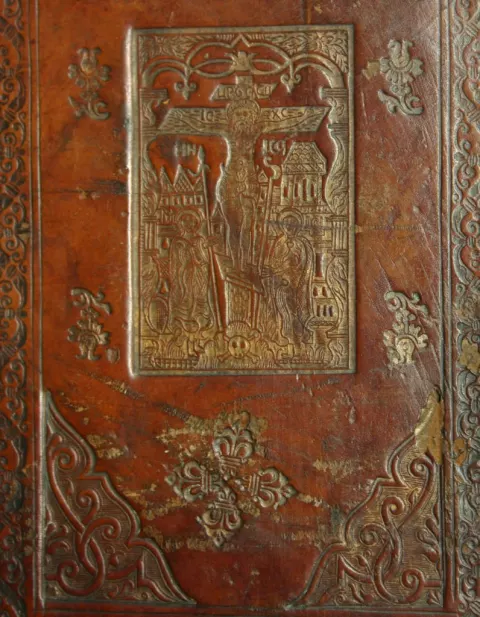
A form of printing was known in Europe by the 14th century. It was used to decorate bindings of manuscripts with designs impressed into leather by means of engraved plate.
Also, the ornamental capitals which filled the space left by the copyist at the head of each chapter and paragraph were occasionally made with small embossed stamps made of wood or metal.
Woodcut printing, or xylography, where the image is cut in relief on a piece of wood and then copied on paper, appeared in the late 14th century. It was a simple mean to reproduce religious scenes and it soon developed as a thriving trade in a world of mainly illiterate and highly religious society.
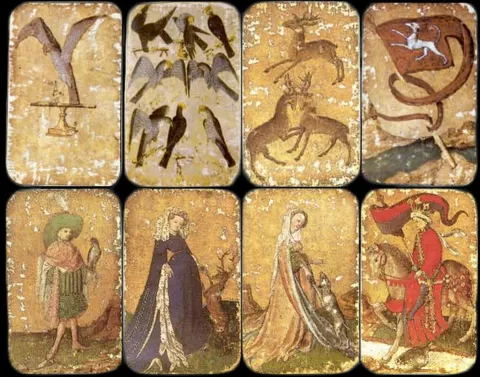
It also developed a prosperous industry of playing cards that were printed from blocks and then colored.
Playing cards originally in the collections of the dukes of Bavaria, dated c. 1430. Considered amongst the earliest surviving sets of playing cards.
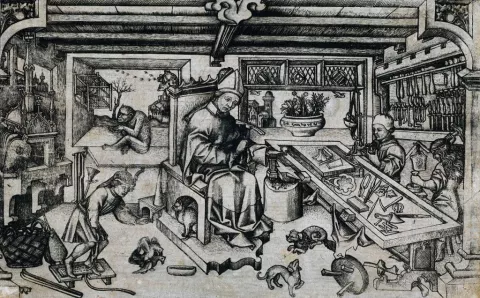
Although printing with movable type did not develop from this wood printing technique, the block remained in use for illustration of the first books. Printing with movable type needed more durable matrices then wood so the first printers were usually the members of the Guild of Goldsmiths – specialists in metal-working.
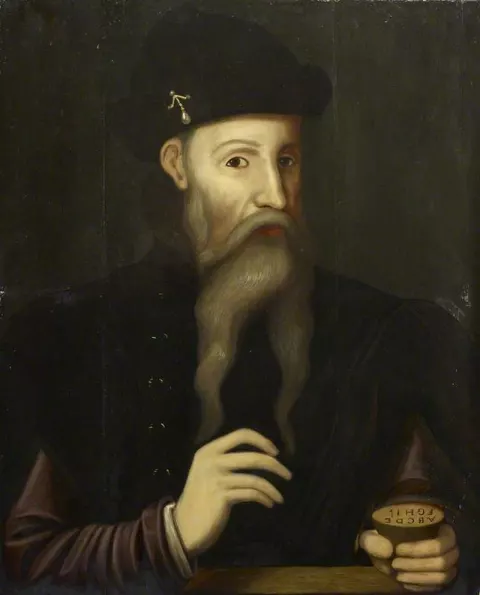
The inventor of printing press Johannes Gutenberg was also a goldsmith. There are documents suggesting that he was conducting experiments in Strasbourg on printing from 1436 to 1439 but they are vague and susceptible of many interpretations.
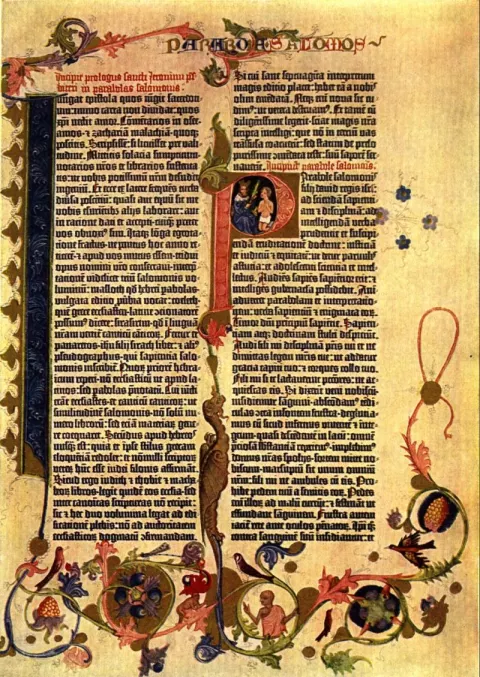
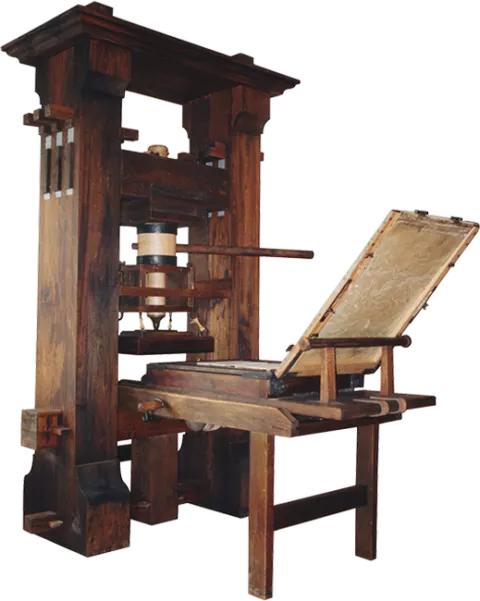
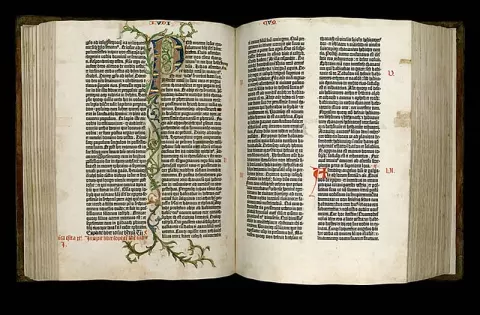
By 1448 Gutenberg was back in his native town of Mainz where he continued his experiments with financial aid of Johann Fust. Although Gutenberg printed some minor works before 1450, from 1452 to 1455 he was working on the first major book printed in the West using movable type – the Gutenberg Bible also known as the 42-line Bible. By that time the printing press was perfected and it soon spread across the Europe.
The discovery of printing press with movable type in Europe by Johannes Gutenberg (1397-1468) in the mid-15th century enabled the spread of knowledge and ideas faster than it was possible ever by then. It sparked a revolution in mass communication. Discovery also gave wings to some businesses established before such as papermaking and selling of books, but it also generated new ones such as printing and publishing. The book trade existed since the antiquity but, and especially through the Middle Ages, it was business limited to few professionals and clients. Printing enabled a fast way of reproducing titles, large editions and lower costs of the book itself.
Those involved in the book trade naturally had an interest in printing a large number of copies of an edition in order to reduce the cost of producing each copy. But they also had to calculate the number of copies the market could absorb. In the first years of printing, up to 1480 or 1490, printers on average produced between 100 and 300 copies of an edition, although some edition meet the number of 1000 copies, but these were enormous figures for the period. By 1480 the market was better organized and the business was conducted on a large scale. Between 1480 and 1490 the average was about 400 or 500 copies and higher figures were increasingly common. By the end of the 15th century some of the biggest publishers reached 1500 copies on average for their great editions. During the 16th century average editions were between 1000 and 1500 copies and in the 17th century figures were between 1000 and 2000 copies per edition. For the 18th century average of edition was about 2000 copies. In all the periods there were exceptional editions with much higher number of copies and works were disseminated by repeated printing often by different printers.
Book as a commodity
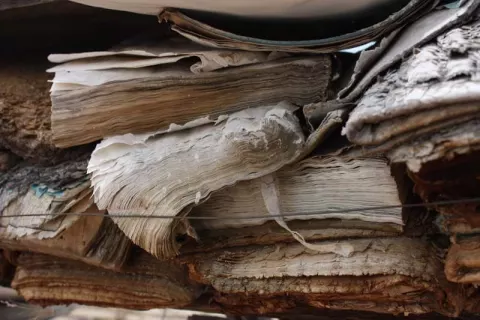
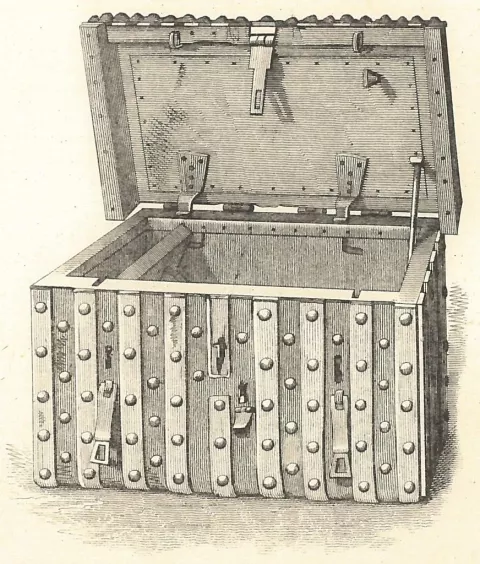
Books were specific merchandise; they were precious and fragile but also heavy and cumbersome what added to problem of their efficient distribution. Books were transported by boat or by wagon and were distributed across Europe. Although they were commonly placed in great wooden crates for protection, they risked being ruined by seawater at the bottom of a ship’s hold or by rainwater in a carrier during bad weather, and it was not unusual if they arrived soaked or otherwise damaged.
There was another danger during the long voyage of books from sender to receiver; cargoes could go astray during transshipment because, ironically, many people could not read.
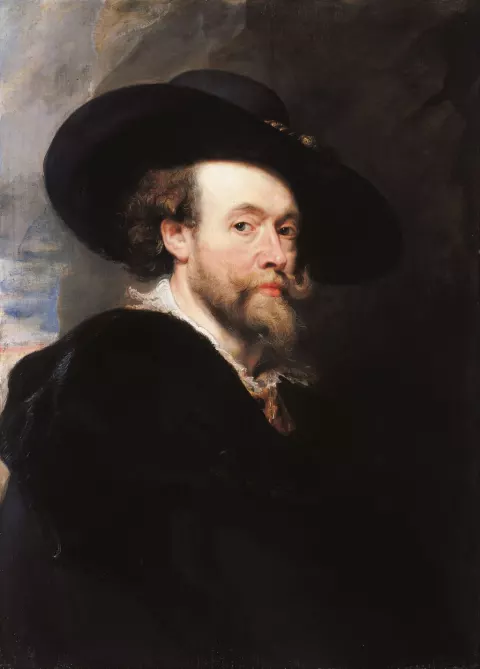
Sir Peter Paul Rubens, a Flemish Baroque painter was often contracted by Balthasar I Moretusto, the head of the great printing company Officina Plantiniana to design title pages and provide other illustrations.
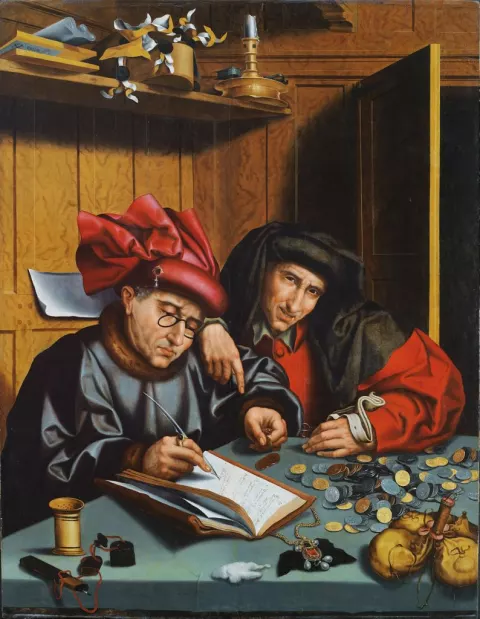
Shipment of books over long distance had another problem even when the shipment arrived intact. Since the banking system was still badly adapted to this kind of commerce it was often impossible to pay in cash up until the late 17th century. Thus were the methods of barter and bills of exchange in common use. When a bookseller received a consignment he made a note in his account book of what he owed and similarly when he sent out a consignment he made a note of what his client owed him. After some time they balanced up the accounts and the debtor settled up by using the traditional method of the bill of exchange. For example one bookseller in Paris, Cramoisy, received more books from another bookseller from Antwerp, Moretus, than he had sent to him and was thus in his dept. However, Cramoisy sent more books to another associate in Brussels, Leonard, who would then transfer to Moretus the money owed to Moretus by Cramoisy.
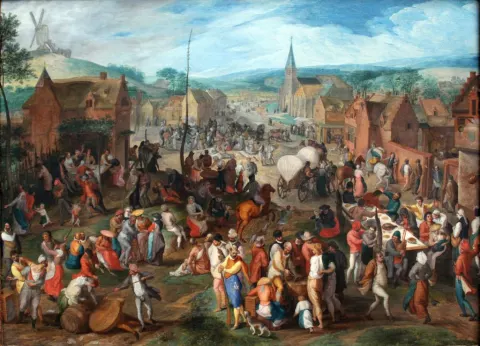
The early printers needed to form a commercial network through which they could sell sufficient number of books. To organize such a network they employed middlemen, agents, who would visit towns and sell their products. Agents would usually visit towns on a day of local celebration, so that they could reach greater audience and do better business. They announced their arrival and place where they stayed in town, usually in an inn, with handbills and posters. If an agent discovered that business went particularly well in one place he would often return or would set up a shop of his own or for the printer he worked for. In this way retail bookshops sprung up across Europe and the book trade soon developed as a business covering all of Europe.
Agents would usually visit towns on a day of local celebration, so that they could reach greater audience and do better business. Village fair by Flemish artist Gillis Mostaert, 1590
Fairs
What greatly facilitated the book trade were fairs. They were the meeting places of merchants where business networks could be established. The fairs provided certain benefits for merchants such as exemption of some taxes, they were attended by large crowds and money changers and they were regular what made them convenient for balancing accounts and the payment of debts.
Men in the book trade could buy equipment from the dye-casters and type engravers as well as the finished product - the book. Such a concentration of people of the same business also served as a forum for discussion of their mutual problems, for announcements of forthcoming publications, and as an opportunity to check that other booksellers were not planning to publish the same books.
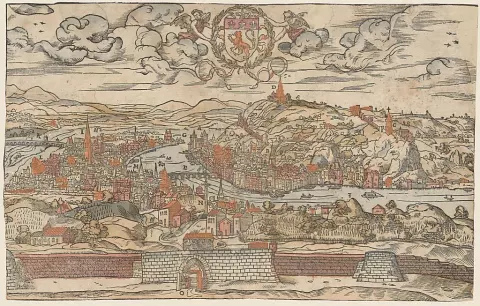
The most important book fair was originally at Lyon. From the mid-15th century, helped by various royal privileges and with its own energies, the town developed as an important fair center. Situated on rivers Saone and Rhone it had a favorable position on trade routes; further, Lyon was at the junction of two important land routes - one crossed over the Guillotiere Bridge and reached Italy via the Dauphine and the Alpine passes, the other rejoined the Loire at Roanne. Lyon’s market dealt in all the commodities traded in Europe, particularly spices and silks, and it was from Lyons that rice, almonds, herbs, medicinal plants and dyestuffs from Italy, Portugal and the Levant were distributed throughout France. Twice a year, for fifteen days, the fairs were organized. Merchants were protected and were not obliged to open their accounts to inspection, moneylending was permitted, and merchandise was protected by numerous privileges and exempted from taxes on the transport of goods.
The special place at Lyon’s commercial life belonged to printers and booksellers that made Lyon the hub of the international book trade. Books from Italy, Germany and Switzerland were imported into Lyon and further distributed through France and further to Spain. Also books from France were exported to other countries, notably the famous editions of law books published in Lyon.
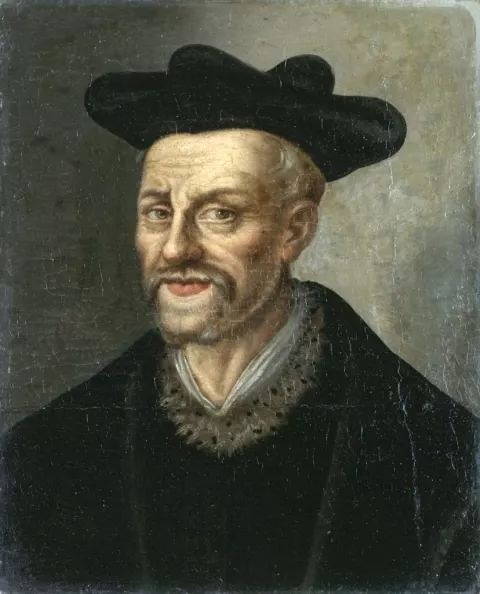
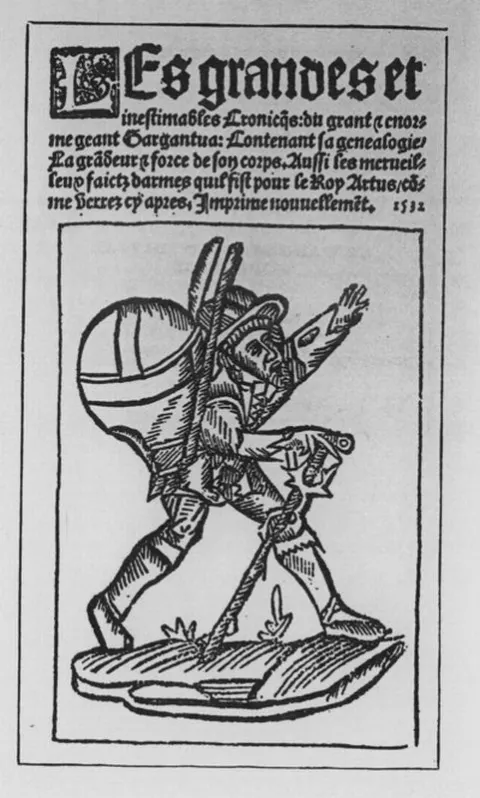
The fair was also a gathering place of common people interested in popular reading such as almanacs, prophecies, and popular story-books, often illustrated with wood-cuts. According to François Rabelais at one Lyon fair his “Grandes et Inestimables Cronicques du Grand et Énorme Géant Gargantua”, extravagant and satirical work, sold in more copies than Bibles in ten years.
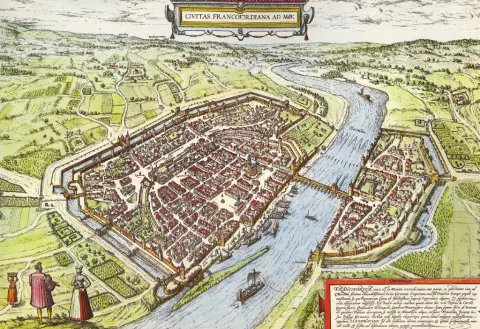
Another fair that developed a name for itself in the book trade was the one at Frankfurt. By the time the printing was invented the Frankfurt Fair was already established as the most important German fair. To Frankfurt came drapers from England and the Low Countries, spices from the East, wines from Southern Europe, and manufactures of German cities. It was an international fair with all kind of commodities ranging from agricultural to industrial.
Although printing was developed at Frankfurt relatively late, since 1530, the Frankfurt Fair attracted booksellers from early on.
Frankfurt also developed a name as a market for printing equipment. All engaged in book business had an interest to attend the Frankfurt Fair; typefounders and typecutters sold their founts and matrices and offered their skills, printers, publishers and booksellers sold books both in bulk and retail, artists in woodcut and copper engraving offered their skills and authors watched their works being sold or have searched for publishers to sell them their manuscripts.
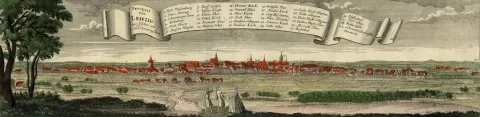
Publishers produced catalogues of books for sale at least from 1470, and the method was soon adopted by booksellers. These catalogues were often distributed at the Frankfurt Fair and in 1598 the Town Council decided to publish an official catalogue. The catalogues shows us that until the 1680-1690 the number of new books printed in Latin are more numerous than that printed in German. They also confirms that the Frankfurt Fair was the main market for German books and, at the same time, the international mart for Latin works in the second half of the 16th and the first half of the 17th centuries. The Frankfurt Fair was, in terms of book trade, eclipsed by the one in Leipzig.
The Thirty Years War (1618-1648) greatly disrupted international book trade, and from 1630 to 1640 German Protestant theological works were published more than the Catholic ones. Since Protestants were not welcomed at the Frankfurt Fair they shifted to the Leipzig Fair where they did not encounter the same obstacles. The triumph of the Leipzig Fair also marks the start of a process of fragmentation in the book trade since after 1640; fewer books came out in Latin and more in the vernacular languages. Since Latin was the language educated knew no mater of their origin book printed in Latin could easily be sold on an international market, but the prevalence of the vernacular language more or less confined the editions to the regions where specific language was used.
Paper
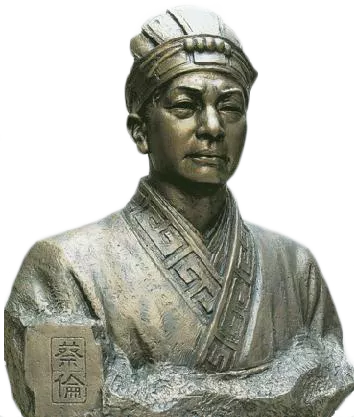
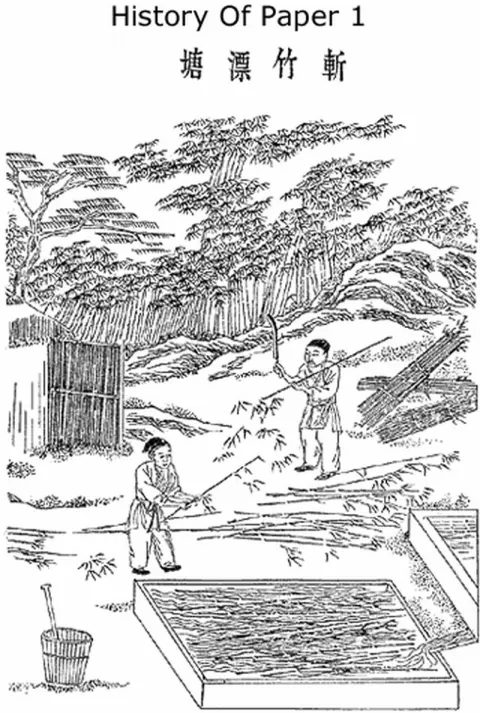
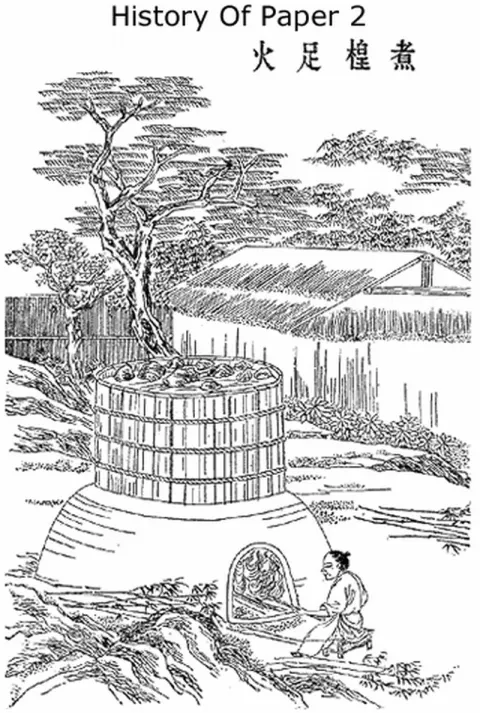
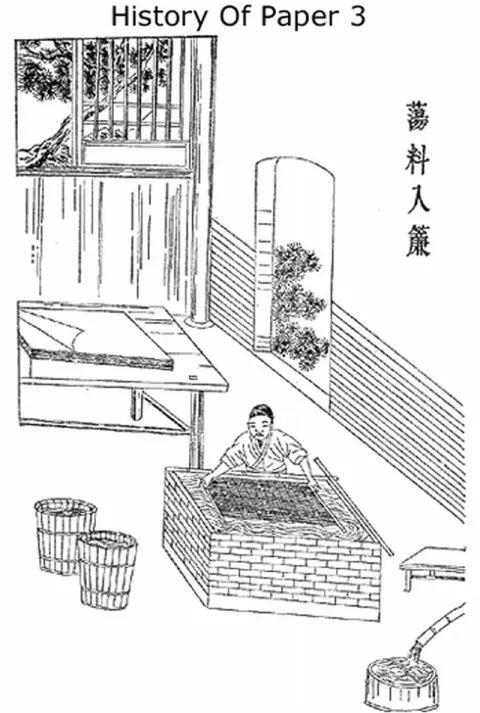
The paper was invented in China by a Chinese court official Cai Lun (Ts'ai Lun) in the beginning of the 2nd century. The year 105 when paper was introduced to Chinese court is also used to mark the time of its invention, although it seems that it happened somewhat earlier.
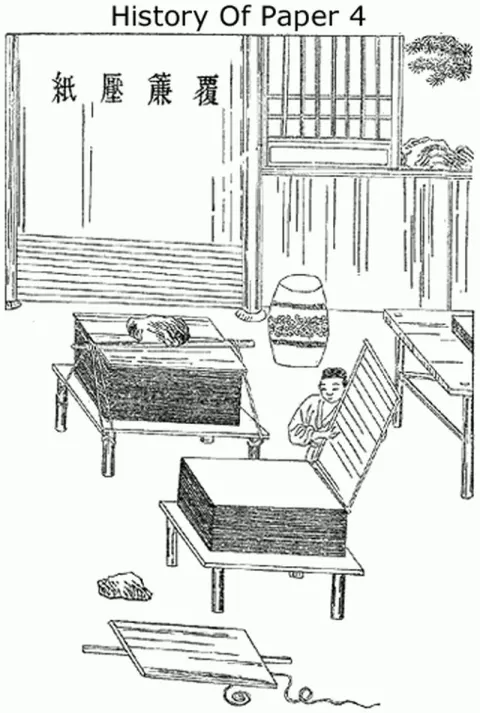
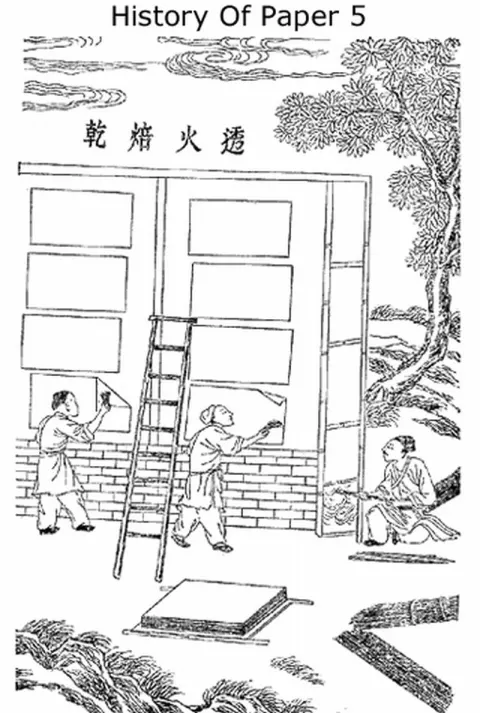
Five major steps in ancient Chinese papermaking process represented on a Ming dynasty woodcut.
Paper has reached Europe through the Arabs and it was first introduced to Arab Spain and Sicily. Thanks to trade connections and merchants trading with Arab lands the paper reached Genoa by the 12th century, and it was not long before it took place in Italy and the rest of the Europe.
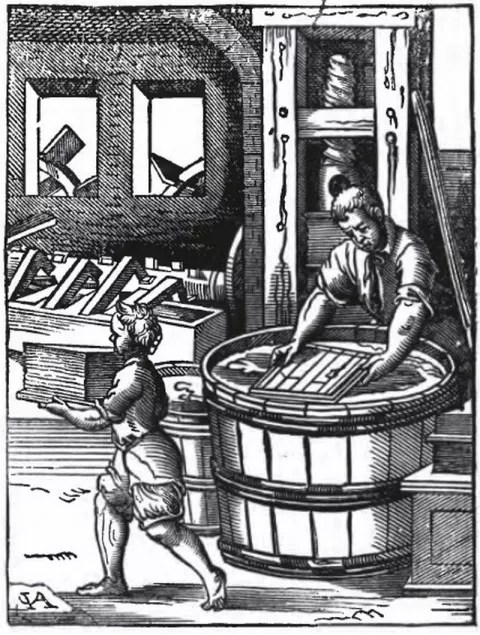
The main source for the production of paper that remained in use till the 19th century were old rags of flax and hemp. The first paper production in Europe occurred in Spain in the 11th
century. The growing demands for paper in Italy resulted in the establishment of paper production in Fabriano that survived to the present day. By the end of the 13th century paper produced in Italy dominated the markets of southern Europe.
In France the paper production occurred in Champagne in the 1330s, from where it spread to other parts; before long France was exporting paper across Western Europe. In the late 14th century papermaking began in south Germany, rapidly expanding in the area as well. Although by the 15th century papermaking spread through Europe, Italy continued to be the main supplier of Spain, England, the Low Countries, Austria and Germany.
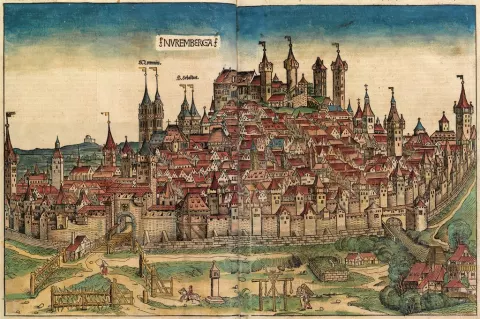
The Nuremberg paper mill in 1493 represented as the building complex at the lower right corner. Paper mills were required by medieval law to be erected outside of the city because of their noise and smell.
In producing paper, the European papermakers have combined knowledge of the Arabs with technical solutions already available in Europe. Papermakers from Fabriano used water mills that used a device that transformed the rotary action of a mill into a reciprocal movement by means of levers what allowed them to replace the old grindstones by mallets to pulverize rags and so to increase output, reduce costs, and produce paper of superior quality.
The second factor that helped European papermaking industry was the extended cultivation of flax and hemp at the close of the Middle Ages.
There was a great demand for paper due to the emergence of cities, its urban middle class, and universities.
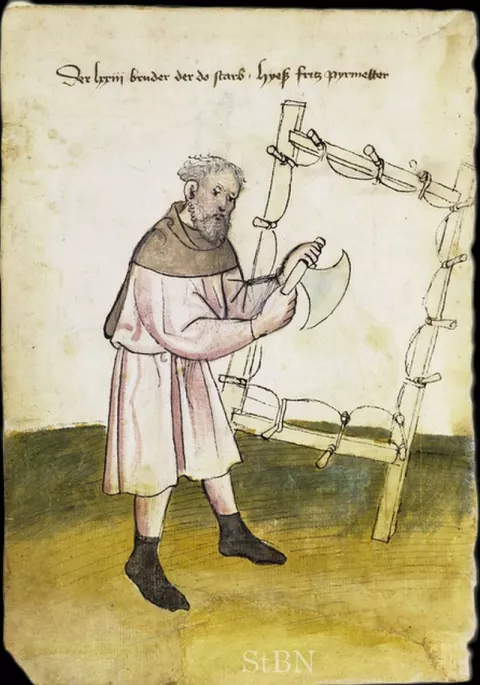
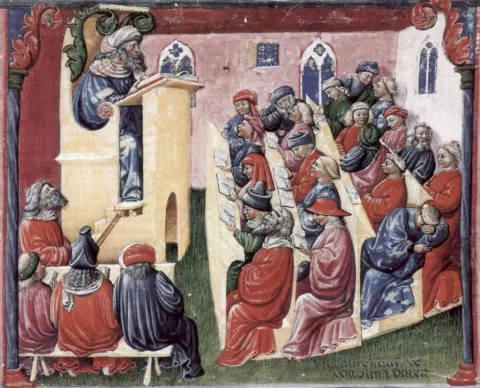
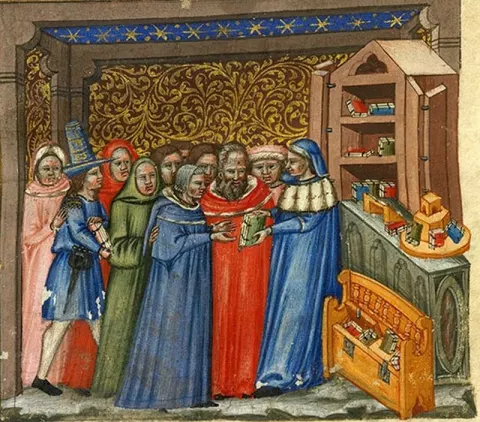
By the mid-14th century paper was cheap enough and abundant to satisfy the demands of business and government. Nevertheless, producing of multiple copies remained a laborious handwork. Universities tried to solve the problem of book production by separating each text into quires and distributing them among the university scribes for copying. Completed texts were then deposited with the authorized university book dealers,
stationers, who then rented it to students or copyists.
Demand for books in urban centers such as Paris and Florence turned stationers into booksellers whose business was fostered by the growing intellectual interests of the increasingly urban and literate population of the early 15th century.
However, the traditional manual copying of texts was to slow and expensive for large-scale distribution and the need for
faster, cheaper, and more reliable method encouraged the creative minds to solve the problem.
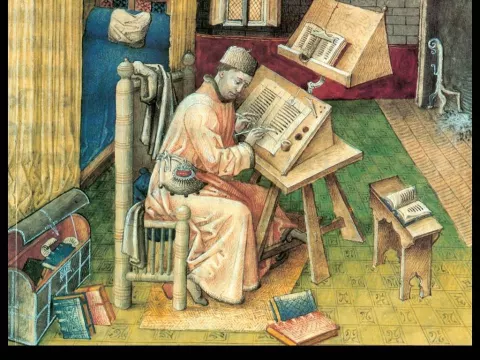
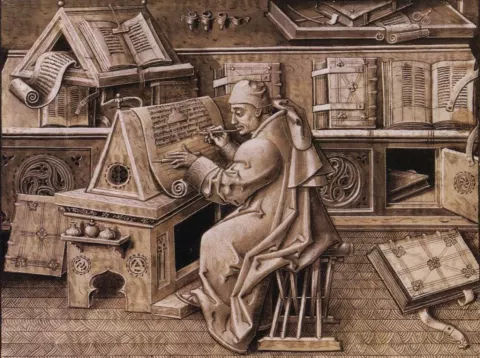
Miniature shows Jean Miéllot, a famous writer and translator working on a codex. He worked as a secretary to Philip the Good, Duke of Burgundy (r. 1419-1467) and the leading bibliophile in Northern Europe.
152 lives in this room
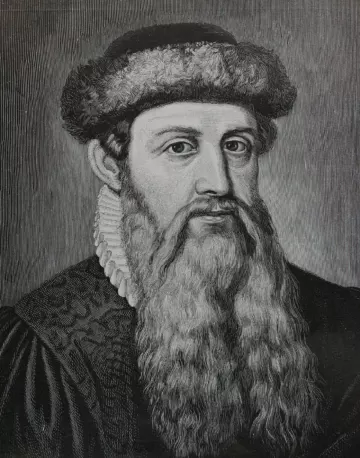 Johann Gutenbergc. 1398–1468
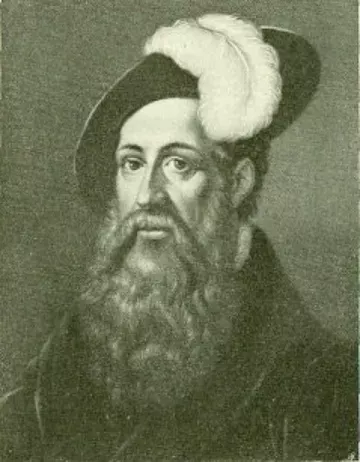 Johann Fustc. 1400-1466
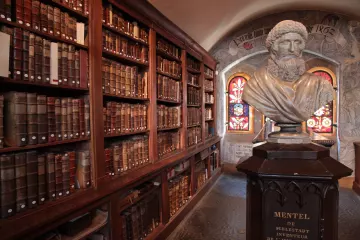 Johannes Mentelinc. 1410-1478
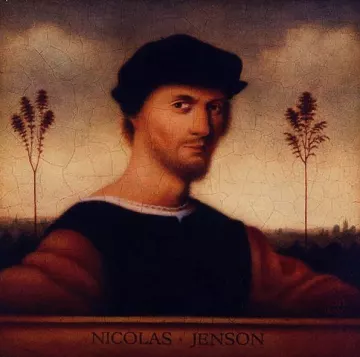 Nicholas Jenson1420-1480
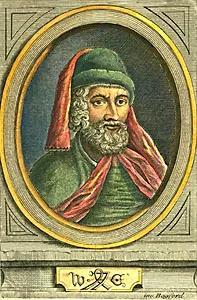 William Caxtonc. 1421–1491
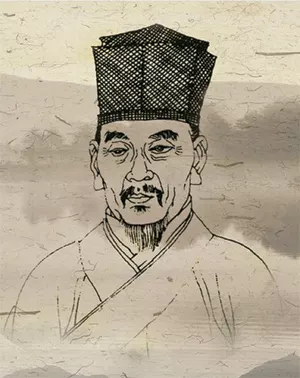 Hua Sui1439-1513
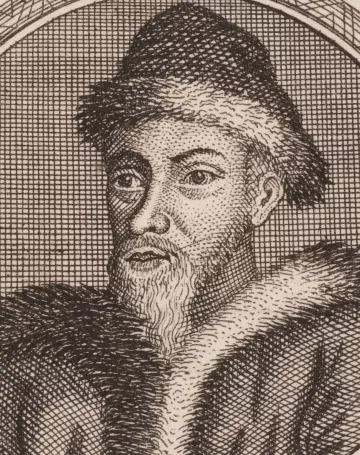 Anton Kobergerc. 1440-1513
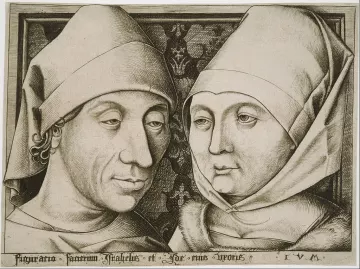 Israhel van Meckenemc. 1445-1503
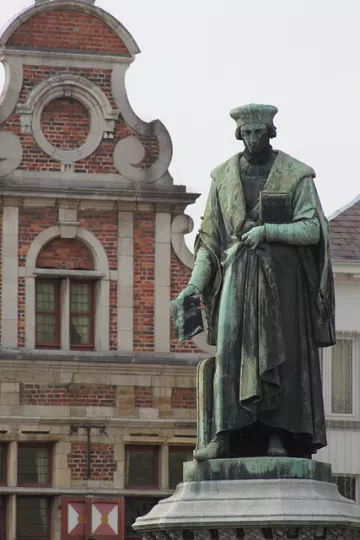 Dirk Martens1446-1534
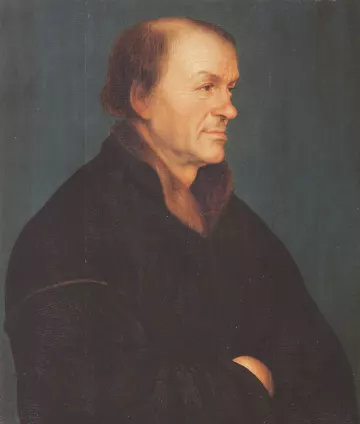 Johann Frobenc. 1460-1527
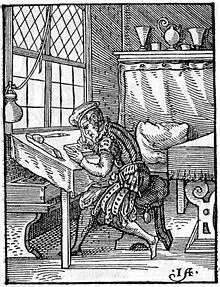 Johann Haller1463–1525
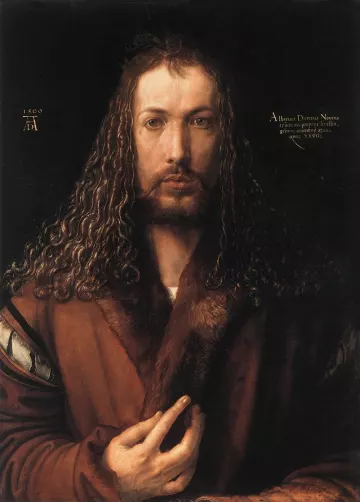 Albrecht Dürer1471–1528
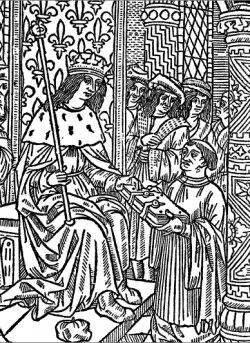 Antoine Vérardfl. 1485-1512
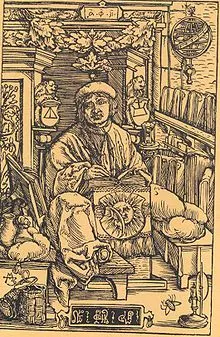 Francysk Skaryna1490-1552
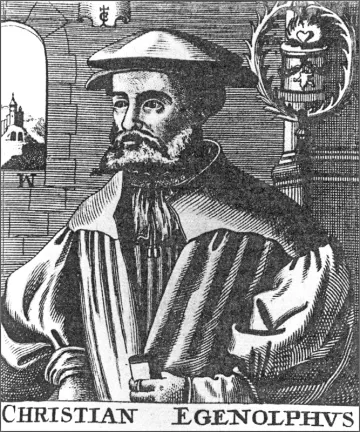 Christian Egenolff1502-1555
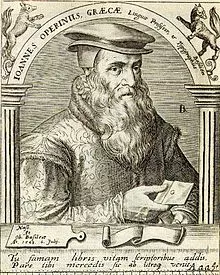 Johannes Oporinus1507-1568
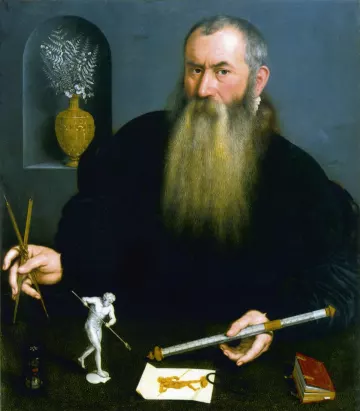 Wenzel Jamnitzerc. 1507-1585
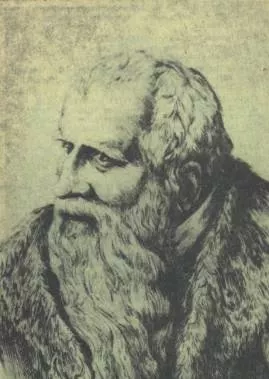 Jiří Melantrich of Aventinoc. 1511-1580
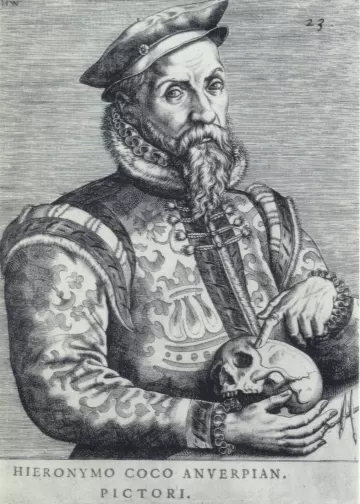 Hieronymus Cock1518-1570
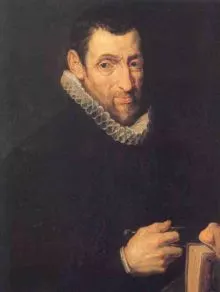 Christophe Plantinc. 1520 – 1589
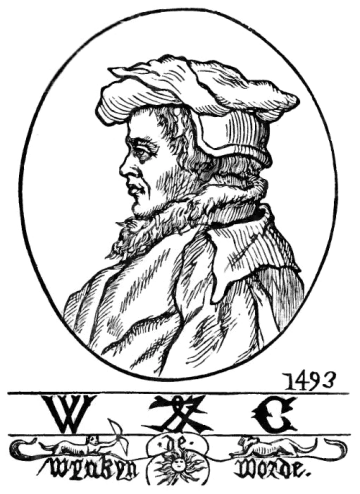 Wynkyn de Worded. 1534
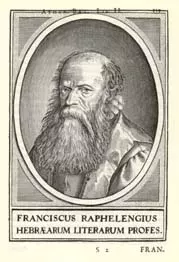 Franciscus Raphelengius1539-1597
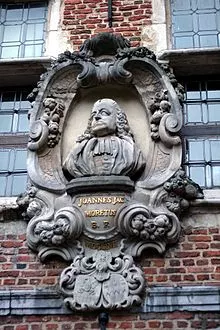 Jan Moretus1543-1610
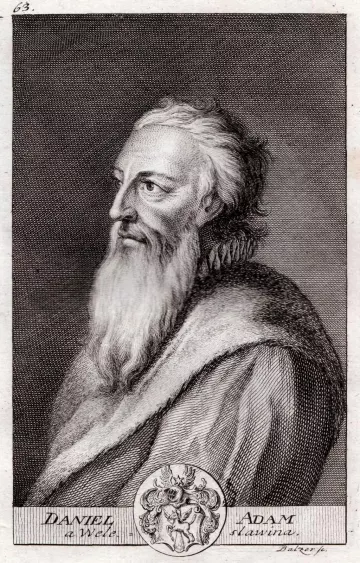 Daniel Adam z Veleslavína1546–1599
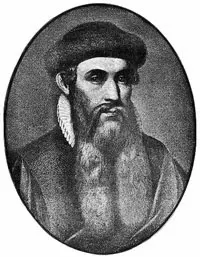 Daniel Bombergdied c. 1549
 Hakob Meghapart16th century
 Willem Janszoon Blaeu1571-1638
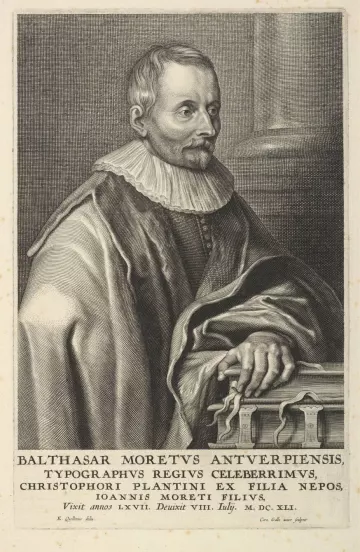 Balthasar Moretus1574-1641
 Joannes de Laet1581-1649
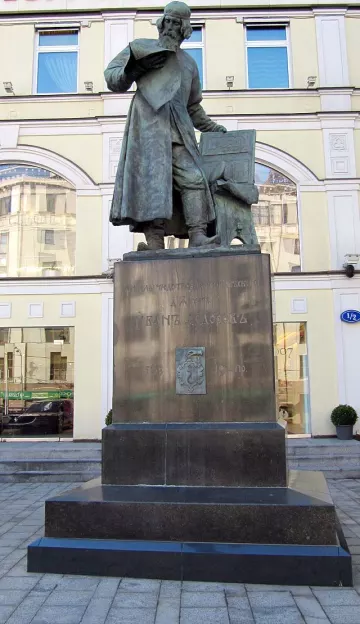 Ivan Fyodorovd. 1583
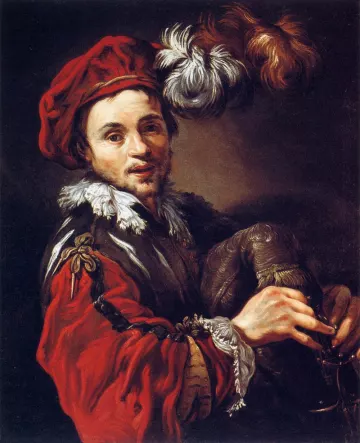 François L’Anglois1589-1647
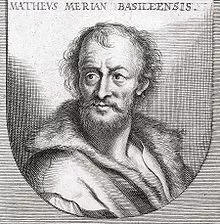 Matthäus Merian1593-1650
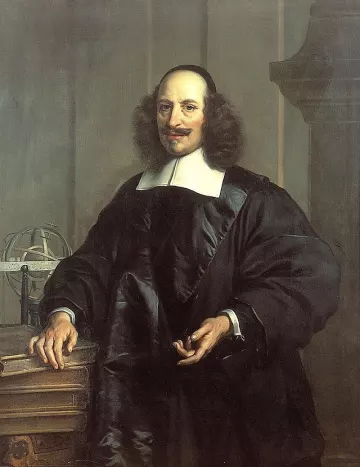 Joan Blaeu1596-1673
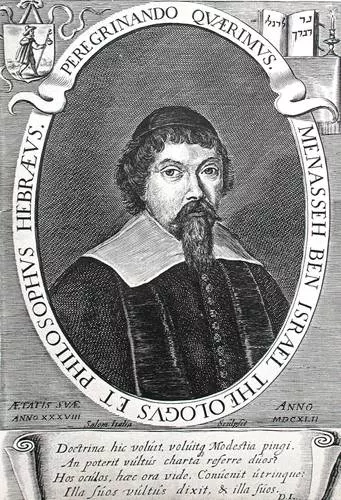 Manasseh ben Israel1604–1657
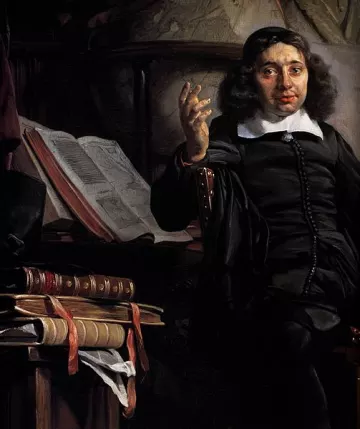 Abraham Casteleync. 1628–1681
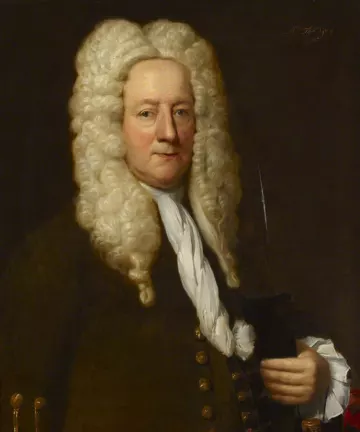 Thomas Guy1644–1724
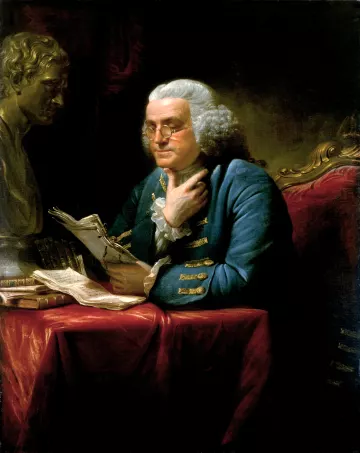 Benjamin Franklin1706–1790
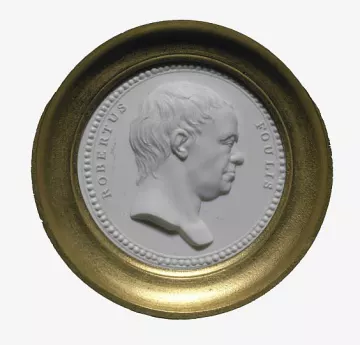 Robert Foulis1707-1776
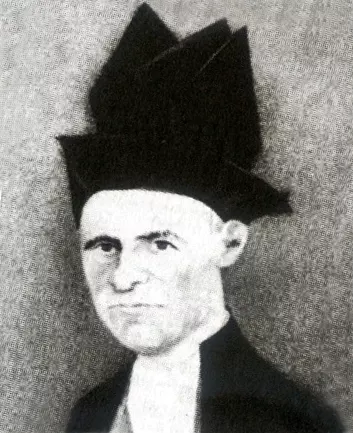 Shahamir Shahamirian1723-1797
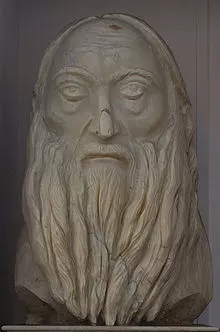 Harutyun Shmavonyan1750-1824
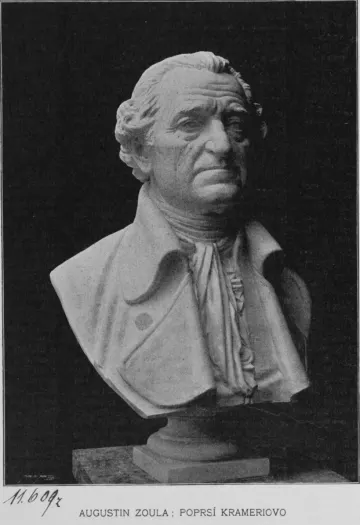 Václav Matěj Kramerius1753-1808
More lives in this room
- Master of the Playing Cards fl. 1430 - 1450
- Colard Mansion 1440-1484
- Master E. S. fl. 1440–1468
- An Kuo 1450
- Estellina Conat 15th century
- Geoffroy Tory 1450
- Guillaume LeRoy c. 1450–c. 1529
- Martin Schongauer 1450
- Simon de Colines 1450
- Vespasiano da Bisticci 1450
- Walter Chepman 1450
- Jodocus Badius 1462-1535
- Henri Estienne the Elder 1470-1520
- Kasper Straube fl. 1473 - 1477
- Angelo Modercai Finzi died 1476
- Abraham ben Solomon Conat d. c. 1477
- Hans Weinreich 1480/1490 – 1566
- Hieronymus Vietor c 1480-1547
- Guy Marchant fl. 1483-1506
- Jost de Negker c. 1485–1544
- Heinrich Eggestein d. c. 1488
- Philippe Pigouchet fl. 1488-1518
- Christoph Froschauer c. 1490 – 1564
- Sebastian Gryphius 1491-1556
- Joshua Solomon d. 1493
- Pierre Attaingnant c. 1494 - c. 1552
- John of Westphalia d. 1498
- Juan Pablos c. 1500- c. 1561
- Johann Bämler d. c. 1503
- Jean de Tournes 1504 – 1564
- Ulrich Gering d. 1510
- Robert Granjon 1513-c. 1590
- Guillaume Rouillé c. 1518–1589
- Johann Snell d. c. 1519
- Johann Rynmann d. 1522
- Heinrich Gran d. c. 1523
- Schweipolt Fiol d. 1525
- Judah Gedaliah d. c. 1526
- Denis Janot fl. 1529–1544
- Solomon Usque c. 1530–c. 1596
- Reyna Nasi c. 1532 - 1599
- Gershom ben Moses d. 1534
- Florian Ungler d. 1536
- Merten de Keyser d. 1536
- Jean de Tournes II 1539 – 1615
- Lodewijk Elzevir c. 1540-1617
- Rutger Velpius c. 1540–1614/15
- Willem Vorsterman d. 1543
- Arnout Coninx 1548–1617
- Abraham Ortelius 1550
- Abraham Usque 1550
- Adriaen Matham 1550
- Androw Myllar 1550
- Eliezer ben Isaac 16th century
- Gerardus Mercator 1550
- Giacomo Mazzocchi 16th century
- Hendrik Goltzius 1550
- Henri Estienne 1550
- Humphrey Toy 1550
- Isaac Massa 1550
- Israel ben Daniel Zifroni 1550
- Jacob Floris van Langren 1550
- Jacob Franquart 1550
- Jacob Matham 1550
- Jodocus Hondius 1550
- John Allde 1550
- John Speed 1550
- Marco Antonio Giustiniani fl. 16th century
- Pyotr Timofeyevich Mstislavets 16th century
- Ralph Newbery 1550
- Robert I Estienne 1550
- Roizl Fishels of Cracow 16th century
- Sigmund Feyerabend 1550
- Thomas Bassendyne 1550
- Thomas Davidson 1550
- Théophraste Renaudot 1550
- Hieronymus Verdussen c. 1552-1635
- Charlotte Guillard d. 1557
- Edward Aggas fl. 1564–1601
- Thomas Adams 1566-1620
- Pieter van den Keere 1571 – c. 1646
- Apkar Tebir d. c. 1572
- Łazarz Andrysowicz d. 1577
- Johann Bussemacher fl. c.1580 – 1613
- Hessel Gerritsz 1581-1632
- Meir ben Ephraim of Padua d. 1583
- Claes Jansz. Visscher 1587-1652
- Jan Janssonius 1588-1664
- Jean de Tournes III 1593 – 1669
- Immanuel Benveniste 1608 – c. 1660
- Joachim Trognaesius d. 1624
- David de Castro Tartas c. 1625–c. 1700
- Uri Ben Aaron HaLevi 1625–1715
- Juan de la Cuesta d. 1627
- Joseph ben Gerson Concio d. c. 1628
- Izaak Aaronowicz d. 1629
- Robert Allot died 1635
- Agnes Campbell 1637-1716
- Ann Mearne 1650
- Bella Hurwitz 17th century
- David ben Nathan Gruenhut late 17th – early 18th century
- Hannah Allen 1650
- Isaac bar Judah Yudeh Katz 1650
- Sarah Griffin fl. 1652 - 1673
- Moses Frankfurter 1672–1762
- Thomas Warren fl. 1727–1741
- Solomon ben Joseph d. 1734
- Rivkah Bat Yisrael of Frankfurt early 18th century
- Tsutaya Juzaburo 1750-1797
- Fardunjee Marzban 1787-1847
- Ichibei Izumiya IV d. 1823