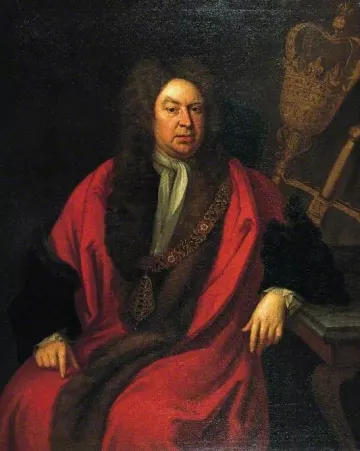
No. 10578
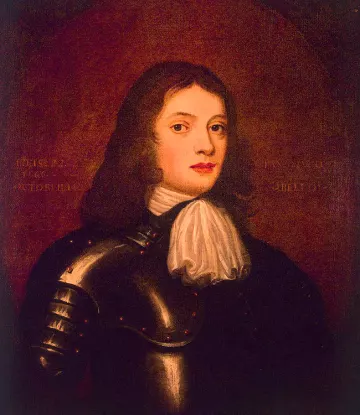
William Penn
Born in a wealthy landowning family, Penn became known as the follower of the Quakers and founder of the Pennsylvania colony. His estates in England and Ireland, along with the colony in America made him the largest private landowner in the world at the time.
From an early age Penn became interested in religion, especially after he had an opportunity to hear a speech of Thomas Loe, a missionary for the Society of Friends, known by the name Quakers. He studied Greek and Roman classics at Oxford University but was expelled for religious rebellion when he was 17 years old. His parents sent him to France where he attended the Protestant Academy. Upon returning to England in 1664 he continued his education at Lincoln’s Inn, a prestigious London law school. His affection for Quakers didn’t fade, and he was arrested several times for attending their meetings and for speaking his mind on religion. Furthermore, he used his family wealth, connections, and his own diplomatic skills to release large number of them from jail or to save them from the gallows. He even prepared a historic defense of religious toleration. In the end, as a result of his activities, his father disowned him for a time. After his father’s death in 1670, he inherited a substantial income of £1,500 a year, estates in Ireland, a golden chain and medal, and silver bullion.
Since Penn realized that religious toleration was not possible in England, he tried to find it somewhere else. In 1681 king Charles II granted him a charter for an American territory west of the Delaware River and north of Maryland in exchange for cancelling a debt that he owed to his father. The Pennsylvania colony reflected his personal beliefs of religious tolerance and peaceful relation with the native inhabitants.
By 1701 he returned to England for the rest of his life. After two strikes and health difficulties, he died in 1718 at his home in Berkshire, England.