No. 1336
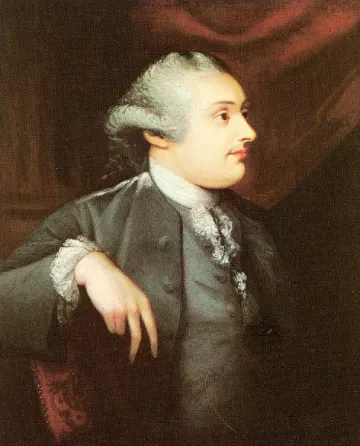
Henry Cavendish
Born in a noble British family, Henry avoided a career more suitable for a nobleman, such as public or political service, and devoted his life to science eventually becoming the wealthiest science of his day.
From an early age, Henry manifested extreme shyness and discomfort in social situations which were accompanied with the growing interest in science. At the age of 18 he went to Cambridge University, and in 1753 he built a private laboratory in his family house in London. Henry's father, although interested in science as well, thought that he should be engaged in activity more suitable to his social status, and supported him with only a modest allowance of £500 a year.
Fortunately, in the 1780’s Henry inherited a large fortune from his cousin who admired his life vocation, and the wealth was additionally augmented in 1783 following his father’s death. Henry became the wealthiest scientist at the time. Although he was very generous in investing money in science instruments and experiments in the areas of chemistry and physics, he was more than frugal in other segments of life. Uninterested in food, fashion, politics, marriage, land acquisition and other sources of wealth, he became known as eccentric. He wore the suits from the previous century. In addition, he rarely left the house and tried to avoid contacts with his house personnel as much as possible. During his routine once a week meetings at the Royal Society, it is known that he would go to great lengths to avoid meeting people.
Since he never married and died childless, his immense fortune went to his family members. At his death, Cavendish was reported to be the largest holder of bank stock in England and his fortune was £1.175 million, the equivalent of £4.3bn in 2010.