No. 1528
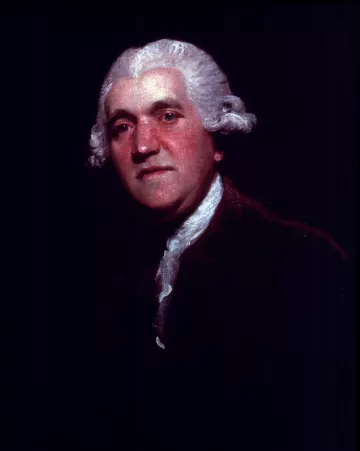
Josiah Wedgwood
Josiah Wedgwood was an English potter and industrialist born at Burslem, now in Stoke-on-Trent, in a family whose members had been potters since the 17th century.
After his father’s death in 1739, he worked in the family business at Churchyard Works, Burslem, and in 1744 became an apprentice to his elder brother Thomas. During his apprenticeship Wedgwood became exceptionally skillful at the potter’s wheel, but due to the attack of smallpox he lost his right leg and since then became concentrated on designing rather than making pottery.
In 1754 he formed a partnership with the famous potter Thomas Whieldon. In the period that followed, Wedgwood experimented with different techniques and produced a glass green glaze which became his trademark. In 1759 he established his own company and his first factory was the Ivy House works in Burslem. Wedgwood continued to experiment with techniques and improve his products. His unique glazes and distinctive wares surpassed other pottery products, and his business flourished. In 1763 he moved the company to the larger Brick House (or Bell) factory. Two years later Wedgwood opened his first showrooms in London. The Queen Charlotte was so amazed with his cream-colored pottery that she allowed him to call it the Queen's Ware. Later, he would create the 1,282-piece Frog Service dinnerware for the Russian empress Catherine the Great as well.
In 1771 Wedgwood built a new factory with a new business partner. He named it Etruria after the Italian district in which ancient black porcelain was being excavated. At Etruria, Wedgwood applied revolutionary concepts like health insurance, sick leave, and housing for workers and their families. His porcelain, called the “black basalt” became a major commercial success. Moreover, by introducing division of labor with specialist workers who were allocated particular parts of the production process, he greatly increased production and his profits.
As a shrewd businessman Wedgwood realized the importance of water transport. He invested in the building of the Trent & Mersey Canal which, when completed, brought clay from Cornwall to his Etruria factory.
Wedgwood believed in political and social reform and agitated for the abolition of the slave trade.
He died in 1795 from cancer of the jaw. He left the bulk of his estate worth £600,000 or around $100 million in 2010 to his wife and children. His company lasted until the 21th century.