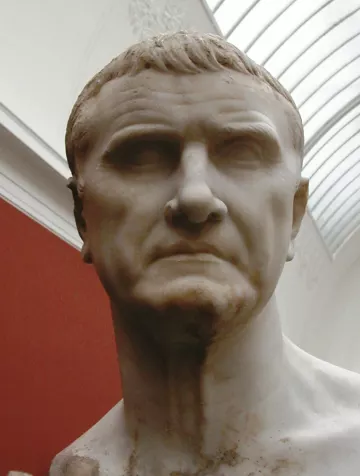
No. 10364
Marduk-nasir-apli
Marduk-nasir-apli, also known as Sirku, was a born in Babylon into a wealthy Egibi family of Sumero-Babylonian origin, which was one of the greatest business dynasties in ancient history. Their business methods, more similar to modern finance in sophistication, are preserved in two thousand Babylonian clay tablets documenting the family’s business activities.
The time in which Marduk ran his business coincided with the period of extraordinary economic prosperity of the Achaemenid Persian Empire under the King Darius the Great. After his father’s death in 522 BC, Marduk became the head of the business house. The family’s assets included 17 houses in Babylon, Hursagkalamma, and Borsippa; multiple fields, livestock, outstanding loans owed to them, servants, and more than one hundred slaves.
The Egibis made its fortune in trading commodities, renting farms and moneylending. By using numerous rivers, they transported the bulk commodities bought at local markets such as wheat, barley, beer, onions, dates, salt, cooking wares and wool to markets of the capital cities where they sold goods to rulers or religious leaders for distribution to the Mesopotamian population. The profit gained in trade, the Egibis invested in purchase of land and then rented the farmlands to sharecroppers and stimulated them to grow profitable fruit. Workshops and factories were established for manufacture of goods. The Egibis also expanded in the lucrative international trade, and it is known that Marduk traveled as far as Medina to conduct business and other leading cities of the Persian Empire.
One part of the capital they engaged in finances, banking and moneylending activities, and soon emerged as leading bankers in Babylon and Persia. They lent great stores of silver, usually at the rate of 20 per cent per annum.
Marduk was also dominant in the public sector, and acted as financial intermediary for the Persian court. He provided loans, collected taxes and revenues, served as a military supplier, collected rents and tithes from the temples, built and maintained state canals, bridges and waterways.
Besides that, he was also active in slave trade throughout the Persian Empire, and it is also known that he supplied “companions”, probably prostitutes to beer taverns.
He retired at 65, and he handed the family business to his son, Nidinti-Bel. After his death, the family business and fortune of the Egibis started to decline.