Museum / Rooms / Economy of Ancient Mesopotamia
Room · 6 chapters · 74 lives
Economy of Ancient Mesopotamia
Rich legacy of the Mesopotamian civilization in the area of banking, trade and overall business practices rightfully brought it the title of “Cradle of business”
The land between the rivers
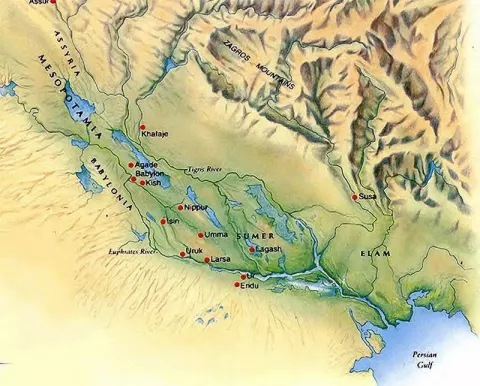
For the highly developed civilization that flourished between the Euphrates and Tigris Rivers, already the ancient Greeks used name “Mesopotamia” meaning “the land between the rivers”. From the need to organize and plan the agriculture which was the backbone of the Mesopotamian economy, over time the first governments, hierarchically organized society and laws emerged in history.
Birth of trade
Irrigation system enabled to the Mesopotamians to produce the first agricultural surpluses in history. Without worrying about bare survival the Mesopotamians began to look how to make life more enjoyable. From the idea that the surpluses of agricultural products should be simply exchanged for the goods lacking in the homeland, they paved the way for the development of international trade as a form of entrepreneurship.
Birth of banking
The first banking institutions in history engaged in lending were the temples of ancient Mesopotamia. From the share of deposits given to temples on safekeeping the priests were able to accumulate capital which was for the first time in history used for business purposes and profit-making.
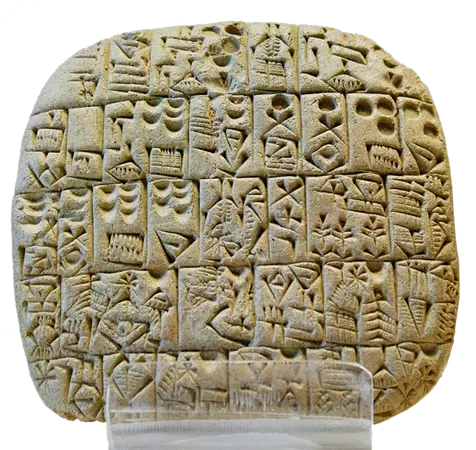
From the need to record economic transactions more efficiently the ancient Mesopotamians invented cuneiform writing, the oldest form of writing in the world around 3500 BC!
The oldest economic institutions in history
The royal palaces and religious temples of Mesopotamia are considered the oldest economic institutions in history. They were the only institutions that possessed sufficient capital and social prestige to successfully carry out demanding long-distance trade relying on the network of agents who distributed commodities on their behalf.
The first businessmen in history
Around 2nd millennium BC these agents in the service of state, also known as “damgar” and “tamkarum” meaning a merchant, became financially powerful enough to manage international trade independently. As compensation for this concession, the temples and palaces received tithes and dues which contributed to development of the first taxes in history. This shift in economic power, in addition, provided a powerful incentive for development of business and business practices, many of which are applied even today.
The women of ancient Sumer enjoyed more rights and freedom than women in later civilizations. They were allowed to own property, run their own business, and they had the right to education.
Connecting Asia
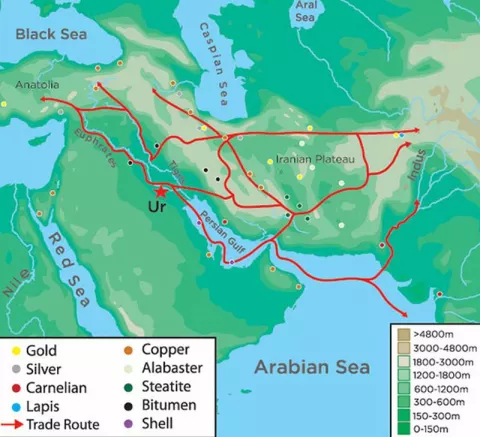
In pursuit of profit, the Mesopotamian entrepreneurs established trade network that in the 3rd millennium BC stretched from the Indus Valley on the East to Syria on the West. This overland route connected East and West Asia at least 2,700 years before emergence of the famous Silk Road. The language of Mesopotamian entrepreneurs, Akkadian, became the lingua franca of the Near East, widely used both for business and diplomacy.
Money
Commercial life was based on bartering since the Mesopotamians were not familiar with coins. In farming regions basic medium of exchange was grain, measured by volume, and in urban centers was silver, measured by weight. Silver was the most common “money” or commodity used for trade, and the values of other commodities were most often expressed in terms of silver.
By establishing trading emporiums, the ancient Mesopotamians pioneered the rise of yet another form of entrepreneurship – the commercial colonization – which would become a dominant means of economic expansion in the times that followed.
Business innovations
In order to cope with high costs and risks of the long-distance trade, the Mesopotamian businessmen invented a number of inventions. The “narruqqum” or joint stock fund provided an opportunity to entrepreneurs to take part in large business with low investments through pooling of capital and risk sharing. Invention of credit, especially of credit at interest which was transmitted over long distances by using the bill of exchange, were another tool for financing business adventures. In daily business affairs the Mesopotamians heavily relied on a contract which remained a standard tool for arrangement of commerce, finance and private property ownership until present day. Thanks to accounting and writing systems, the Mesopotamian entrepreneurs were able to control their transactions over long-distances which often involved multiple parties and commodities.
The ancient Mesopotamian entrepreneurs also invented some innovative tools, which are a testament of their creativity and resourcefulness. The cylinder seals were used to identify ownership of goods, and as a way of signing letters and official documents, while clay envelopes were used in cases when private and important business information were supposed to be sent.
First business laws in history
Mesopotamian rulers wanted to enhance business development by legal regulations. The oldest surviving government regulations for dealing with business issues originate from the 18th century BC and were contained in the Code of Hammurabi.
The Code of Hammurabi already in the 18th century regulated maximum permissible interest rates for loans in grain and silver – 33⅓ % a year for loans of grain and 20% a year for loans of silver. It also contains, perhaps, the most advanced regulation which refers to the minimum wage for workers!
Chapters
- Mesopotamian merchants
- Mesopotamia – cradle of civilization
- Mesopotamian economy
- Trade and transport
- Mesopotamian society
- Mesopotamia - business practice
Mesopotamian merchants
As it was mentioned, the Mesopotamian merchants initially (during the 3rd millennium BC) worked as an agents of the palaces and temples trading on their behalf, and only later, as their financial power grew, became a dominant factor in the profitable international trade. In ancient sources they were called “tamkarum” in Babylonian and “damgar” in Sumerian, meaning “merchant” or “entrepreneur”.
Trade carried by the Mesopotamian traders was unprecedented in terms of geography, volume and diversity. By the 3rd millennium BC Mesopotamian trade went in all directions with established trade routes carrying goods to and from the Indus Valley, Anatolia, Syria and other neighboring regions. Until the rise of Phoenicians, the first trading nation in the 8th century BC, Babylonian merchants were known as the most industrious merchants of antiquity. Moreover, their language, Akkadian was the lingua franca of the Near East used not only for business transactions but also in international diplomacy.
The Mesopotamian entrepreneurs possessed the entrepreneurial behavior. They understood the concept of profit, weighed to material welfare and engaged in commerce to generate the wealth. Their business transactions were evidenced in hundreds of thousands of clay tablets recording revenues, expenses and investments that were stored in archives of temples of private firms such were the Egibi family of Babylon and Murashu sons of Nippur.
Mesopotamia Statistics
Mesopotamia – cradle of civilization
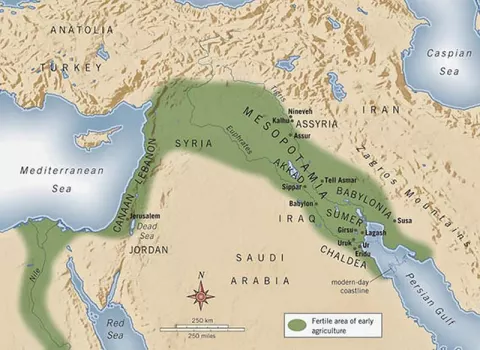
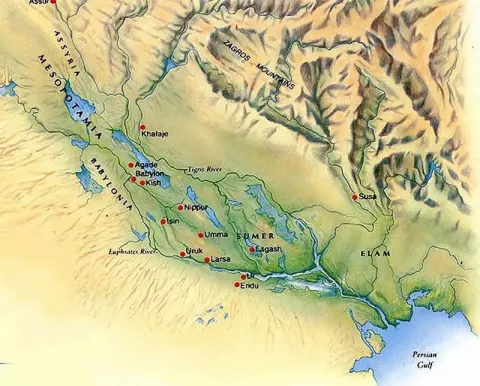
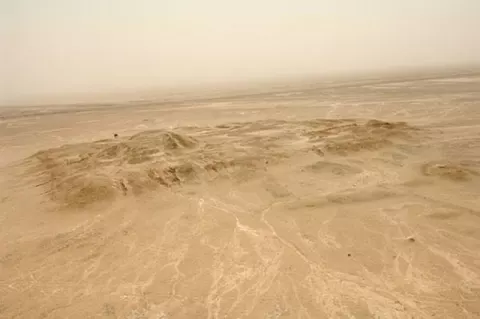
The fertile area of present day eastern Syria, southeastern Turkey and most of Iraq called by the Greeks Mesopotamia meaning “Land between rivers” was a place where the fist high developed civilizations emerged around five thousand years ago.
The organization of land and the maintenance of irrigation canals of the Tigris and Euphrates led to the rise of government and law, while the food surpluses supported a complex division of labor and development of first cities and urban society.
Mesopotamia was a network of city-states, and its accompanying secular and religious class engaged in dynamic political competition and economic rivalry. Each city had its own god and temple, which was not only the religious center, but also the center of commercial activities.
Economic welfare gave rise to leisure that inspired the arts and science achievements like invention of writing, demarcation of time into hours, minutes, and seconds, religious rites, sailboats, invention of wheel and plough…
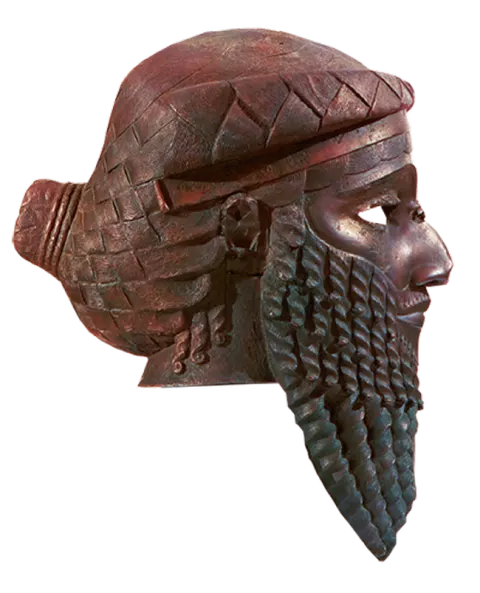
The Mesopotamian civilizations, namely that of Sumer, Akkad, Babylonia, Assyria and Persia, made a big impact on the cultures of the ancient world – notably the Greek and Roman civilizations – which earned it a name “Cradle of civilization”.
The entire culture of the region once known as Mesopotamia was swept away in the final conquest of the area by Muslim Arabs in the 7th century.
Mesopotamian economy
With fertile soil and abundant water, the economy of ancient Mesopotamia was based on agriculture, and to a lesser extent, on animal husbandry. Its inhabitants believed that the agricultural welfare is dependent upon the favor of divine powers, such as the goddess Ninhursag “Mother Earth”, and the God Enki, the deity of freshwater beneath the soil.
Regarding the seasonal rainfalls and geography, there were two distinguished forms of agriculture. In the North sufficient rainfall enabled a rain-fed agriculture, while in the South, in the ancient Sumer and Babylonia, agriculture production depended on an intricate irrigation system of the rivers Euphrates and Tigris. The irrigation based agriculture was more demanding in terms of organizational skill and labor, but in return it gave richer crops and food surpluses. Therefore, the southern part of Mesopotamia developed more rapidly in social and economic terms.
Shaduf is an irrigation device that consists of a long, tapering, nearly horizontal pole mounted like a seesaw. A bucket is hung on a rope from the long end, and a counterweight is hung on the short end. The operator pulls down on a rope attached to the long end to fill the bucket and allows the counterweight to raise the bucket. Device is still in use today.
The main agriculture products of Mesopotamia were grain, especially barley, emmer wheat and sesame, onions and garlic. Apples, cherries, figs, pears, plums, pomegranates, and peaches should also be mentioned. Dates were the major cash crop.
In order to increase production, the Mesopotamian farmers searched for farming techniques and technologies that would also facilitate the hard work. In the 4th millennium BC was invented the plow, one of the greatest inventions in human history. Another revolutionary invention was the “shaduf”, a specific devise used for lifting water and pouring into a nearby channel, which is still in use today.
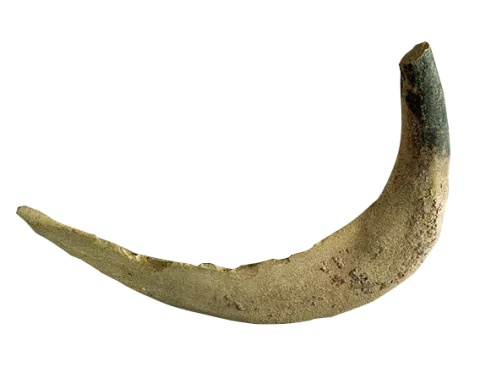
Sickle a tool used for cutting grain.
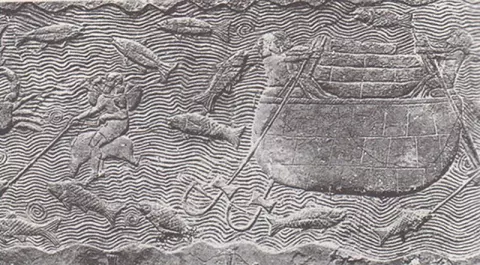
Assyrian coracle and fisherman on inflated skin, c. 7th century BC
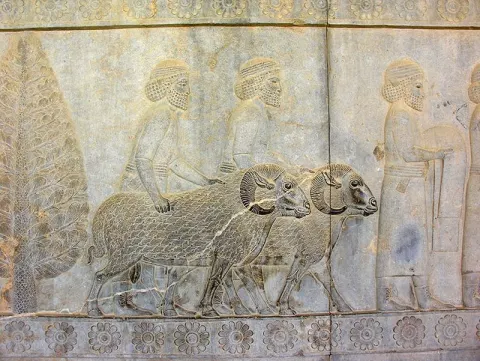
Assyrian delegation offering tribute to the Persian king in Apadana (modern-day Perspolis, Iran), 5th century BC
Around the same time when the Mesopotamians started to grow plants for food, they realized that they could raise animals as source of food and as beasts for burden. Domestic animals were also prized for their wool and hides in manufacturing industries.
Sheep and cattle were main domesticated animals, while oxen and donkeys were used as draught animals. Fishing was also an important part of the economy. The Mesopotamians caught the fish in the rivers and cultivate it in the ponds. Fishing was also source of income for the state as the royal and priestly authorities controlled and leased fishing rights to commercial fishermen.
Mesopotamian economy
Money
Business in Ancient Mesopotamia was conducted without money, or at least without coinage. It was invented about 700 BC, in the Kingdom of Lydia, in Asia Minor. Coinage remained a novelty in conservative Mesopotamia until the kings of Persia and the monarchs of the Hellenistic Age promoted its use.
During the long Mesopotamian history barter constituted the basis of commercial exchange. Basic medium of exchange in rural region was grain, measured by volume, and in urban centers silver, measured by weight. Silver was the most common “money” or commodity used for trade, and the values of other commodities were most often expressed in terms of silver.
Mesopotamian economy
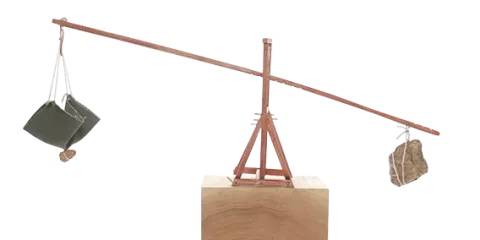
Weights and measures
Since commercial exchange was conducted through weights and measures, it necessitated uniformly accepted values. Even though centuries of usage and tradition fixed their meaning and value, standards might vary from city-state to city-state.
Mesopotamian measures have their origins in Sumerian culture. They bore Sumerian names and they rely on Sumerian mathematical sexagesimal system, with sixty as its base.
Listed below are the Akkadian names and approximate values of Mesopotamian weights and measures, the meanings of their names (where known), and their approximate values in today’s terms. It is important to say that by Neo-Babylonian (1000-626 BC) times, the shiklu, or “shekel,” took the place of the she as the basic unit of weight.
Table of Weights
1 she (grain) = 1/600 oz.
1 shiklu (shekel) = 180 she = 3⁄10 oz.
1 manû (mina) = 60 shiklu = 18 oz.
1 biltu (talent) = 60 manû = 67 lb.
Table of Lengths
1 ubanu (finger) = 2/3 inch
1 ammatu (elbow or cubit) = 24 ubanu = 15 ½ inches
1 kanu (reed or cane) = 6 ammatu = 7′10 ½′′
1 gar = 12 ammatu = 15′9′′
1 ashlu (line) = 10 gar = 157 ½′, or 52 ½ yds.
1 beru (league) = 1800 gar= 5 ¼ miles
Table of Area
1 musaru (garden) = 1 sq. gar = 27 ½ sq. yds.
1 iku (field) = 100 musaru = ⅚ acre
1 buru (Sum. bur) = 18 iku = 15 acres
1 shar = 1,080 iku = 25 ⅓ sq. miles
Table of Volumes
1 Sumerian gin = ⅖ oz.
1 sila or qa = 60 gin = 1 ½ pints
1 massiktu or pi = 60 sila or qa = 11 gallons or 1 ⅓ bushels
1 imêru = 100 sila or qa = 18 ⅓ gallons or 2 ¼ bushels
1 qurru or gur = 180 sila or qa = 33 gallons or 4 ⅟₁₀ bushels
Trade and transport
Trade
Although Mesopotamia was a fertile area with an ample supply of food, it was poor in key natural resources that early civilizations thrived on – like copper and tin. In order to obtain these necessary commodities, as well as the luxury items sought by the elite, the ancient Mesopotamians began to trade with neighboring and more distant lands.
Initially, the government palaces and temples were the major initiators and financiers of long-distance trade that hired the merchants to distribute the foodstuffs and trade the commodities produced by temples. In these early days, palaces and temples used to provide loans which is origin of banking concept which will further develop the ancient civilizations. However, as the financial abilities of the merchant agents grew, they were able to turn the profitable long-distance trade into private entrepreneurship providing in return the palace with its custom dues, and temples with tithes.
Trade reached the highest point in the 3rd millennium BC spreading in all directions – from the nearby regions to a more distant Anatolia, Syria and the Indus Valley. In exchange for grain, textiles and oil, the Mesopotamian merchants imported gold and silver from Egypt; wood from Persia and the Levant; ivory, ebony, spices and other luxury goods from Nubia and the Indus Valley; timber and aromatic oils from Phoenicia; tin from Anatolia and Iran; copper, gold, ivory, pearls and delicacy known as “Dilmun onions” from Bahrain and the Arabian coast; lapis lazuli from the present day Afghanistan…
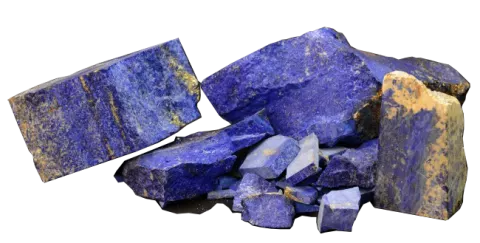
Lapis lazuli – semiprecious stone mined in Afghanistan and imported to Mesopotamia where it was used for jewelry and inlay decoration.
Pearls, also known as “fish eyes” where imported from the Gulf and used to make jewelry.
Copper was one of the most important goods traded. It came from Anatolia, Iran and the Gulf. It was mixed with tin to make bronze.
The ancient Mesopotamians were also pioneers in the advent of another form of entrepreneurship – commercial colonization. As their trade developed, the Mesopotamian merchants began to fortify their trade networks with strategically located trading emporiums. Kanesh, in modern day Kultepe, Turkey founded around 1700 BC was one of Mesopotamia’s largest outposts. There the Mesopotamian merchants paid a tax to the city’s ruler to live in their own quarter of Kanesh and conduct business with the citizens and other foreign merchants who came in the city to obtain Mesopotamian goods.
Besides long distance trade, in Mesopotamia also thrived local trade between the cities and its countryside. Food surpluses and animals were brought to city and exchanged for tools, plow and harnesses, used in everyday life in the countryside.
Trades and transport
Transport
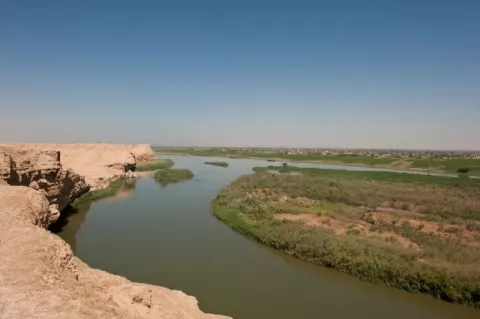
Euphrates river
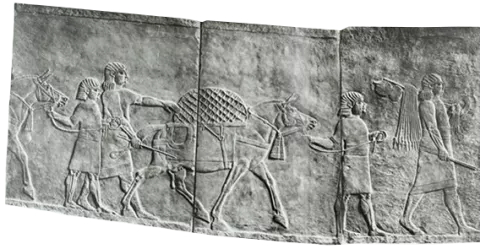
Depending on kind of goods and distances, the Mesopotamian merchants developed several different methods for transport. Goods were transported by local waterways, including the Euphrates and Tigris river systems, as well as by land carried out by caravans using donkeys as packing animals.
Since the Euphrates and Tigris flow from north to south emptying into the Persian Gulf, and the prevailing winds blow in the same direction, travel by rivers were possible only to south. Journeys to north and return trips had to be made by land.
Also, due to relative shallowness of the rivers there could be used only broad-bottomed boats. The largest examples were barges and ferries, which were hauled by ropes and pulled from the banks of the rivers. Scarcity of the timber, however, limited the number of such large vessels.
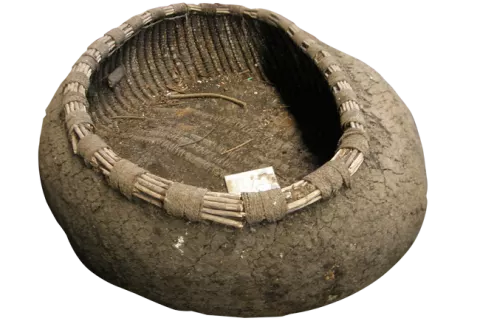
Smaller version of boats represented the coracle and kelek. Coracle’s round shape led the ancient people to call it a “turnip” and is still in used in Iraq where it is called “guffa”. “Kelek” was also of a round shape and made of hides stretched over a frame of willow braches, and it was disassembled after it had served its purpose.
A loaded mule with attendants c. 645-635 BC
Carts
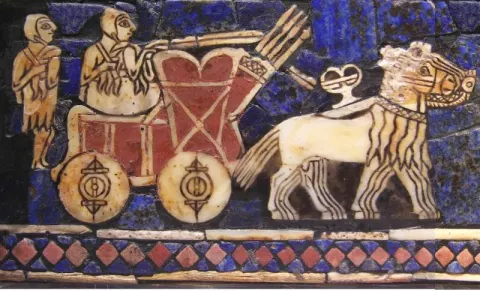
Land transport was more inconvenient for trade in comparison with transportation by water in terms of comfort, time and cost effectiveness. It was carried out by merchants who traveled on foot carrying load sacks on their backs, or wrapping of cloth around the goods and attaching its ends at the forehead. Another method of transporting goods was the use of pack animals, mostly the donkeys, who could be loaded or used to pull the carts. Therefore, the invention of wheel sometime before 3000 BC revolutionized the daily life of the Mesopotamians as it made easier to travel and transport things.


Mesopotamian society
Social stratification was a consequence of the economic welfare. Society of ancient Mesopotamia was formed as a hierarchically organized community. Since the political power was based on landownership, kings and priests who owned the most land were the richest, and most powerful members of society followed by the wealthy landowners and military leaders. Mesopotamian scribes, although they did not belong to landowning elite, were particularly esteemed for literacy. They worked for the large temple estates, the palace and, to a lesser extent, for private businessmen. Scribes kept track of daily expenditure, recorded the income from diverse sources and kept annual records that showed the balance of each account.
Another consequence of economic welfare was division of labor and the emergence of first professions in history. In addition to farmers, merchants and skilled craftsmen comprised the thriving middle class and backbone of Mesopotamian economy.
Servants and slaves who were predominantly used in domestic context formed the lowest class of Mesopotamian society. Slaves were acquired in wars, or were forced to become slaves because of their personal or family debts. However, slavery was not always a permanent condition, and slaves were able to buy their freedom.
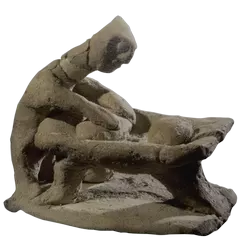
Although in all classes of Mesopotamian society men had enjoyed more rights and esteem, it is known that women of ancient Sumer enjoyed more rights and freedom than their contemporaries in later civilizations. They were allowed to own property, run their own business, and they had the right to education.
Mesopotamia - business practice
The ancient Mesopotamia was a cradle of business and entrepreneurship, the place where the trade, merchant class and numerous business and financial practices, enhanced by the legal system, were born.
The guilds
The ancient Mesopotamian merchants founded guilds (“karu”) in order to facilitate the conduct of business. It were self-governing associations that regulated distribution of capital among its members, coordinated buying and mediated conflicts.
Credit
In order to conduct long-distance trade they also developed - the institution of credit, and particularly credit at interest, as the way to finance their trading adventures. Interest rates usually varied from 5.5 to 25 percent. The credit was provided by wealthy merchant capitalist (investor/banker) who wanted to put his dormant capital to productive use. A principle of profiting through an investment of capital (instead of effort) have arisen from the original entrepreneurial society of Mesopotamia.
In order to be valid, the loans had to conclude before witnesses. The wealthy capitalist lent the sum of money to a borrower at a fixed rate of interest and with a predetermined maturity date. The lender retained the right to the money lent and his rights were specified in the borrowing arrangement. The risk of lending was reduced by the extensive use of mortgage clause in debt contracts. The loans could be secured by real estate or other valuable possessions. The Hammurabi Code allowed that farmland, houses, slaves, concubines, and even wives and children could be pledged as security on loan.
Bills of exchange
With purpose to transmit credit over long distances, the Mesopotamian merchants invented early bills of exchange inscribed on clay bricks. These instruments were drawn by one person on another for sum expressed in weights of silver or copper. They were a good solution for reducing the transport of silver or copper by land routes infested by robbers. These early bills of exchange were used to avoid the problem of bulk, as well as the need to weight and test the quality of precious metals tended in payment.
Joint stock fund
Another important invention was joint ventures and joint stock fund that facilitated more efficient pooling of capital and risk sharing.
Naruqqum (“sack” or “money bag”), a leather bag, became the technical name for a substantial amount of trading capital brought together by a number of investors and put at disposal of the experienced merchant (manager) for a contracted term in return for a share in the profits. It was a long-term investment that could last more than ten years. These investment arrangements called for the investor to gain two-thirds and the manager (or merchant) to gain one third of the total profit.
Besides these long term contracts, there could also be made contracts on the short term – as the “tappā’ūtum” partnership or the ellutum singe travel caravan organization.
Contract
Contract, a standard tool of business transactions was also invented in ancient Mesopotamia and remained in use until the present day. The Mesopotamian merchants heavily relied on business contracts in their business affairs, and the vast majority of documents excavated represent business or legal contracts. The contracts usually recorded sales of goods or property, deeds of ownership, gifts, marriages, adoptions and debts. In the cases when a person broke a contract, the court forced the person in question to pay a fine worth from three to 30 times the value of contract.
creative tools
The ancient Mesopotamian entrepreneurs also invented some innovative tools, which are a testament of their creativity and resourcefulness.
Cylinder seal
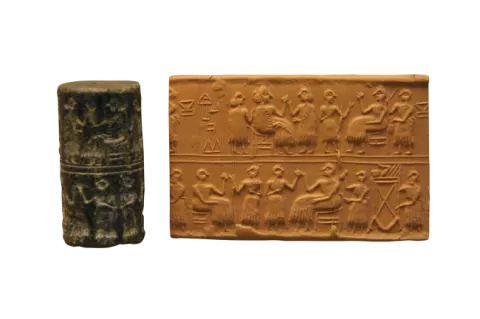
The ancient Mesopotamians also invented the cylinder seals to identify ownership of goods, and as way of signing letters and official documents. They first appeared around 3500 BC and continued to be used for more than 3,000 years. The seals were pipe-shaped tube carved with various symbols made of wood, limestone, ivory, crystal and various other stones. Each carving was unique and served to identify an individual. Many had small holes in the bottom so they could be hanged on a chain or pinned to clothing of its owner. Thus, the ancient Mesopotamian were inventors of the first trademarks in history – identifying marks like names, logos, designs and emblems with an aim to distinguish goods or services. A trademark provides protection to the owner of the mark by ensuring the exclusive right to use it to identify goods or services, and has a purpose to prevent the business fraud therefore. The trademarks are adopted and used by a company to identify its products or services and to distinguish them from products and services made, sold, or provided by others.
An envelop
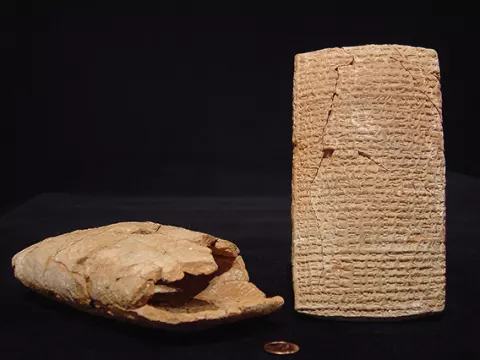
In the cases when the private and important business information supposed to be sent, officials and traders used envelopes made of clay to put their messages in. Envelope was marked with the receiver’s address and the sender’s seal. When the letter arrived, the receiver cracked out the outer envelope, removed the tablet, and read the document.
Accounting system
Development of accounting and writing systems for the purpose of record-keepin was a contribution of ancient Mesopotamians. The development of writing and record-keeping enabled merchants to control their transactions over long-distances which often involved multiple parties and commodities.
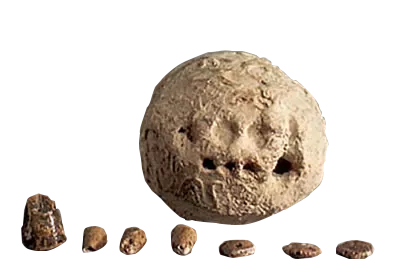
Mesopotamia cuneiform writing evolved from a system of tokens used for economic records. In order to present a large amount of goods, the appropriate number of small stones or pieces of clay was placed in a hollow ball made of clay. The ball was then verified by pressing seal on its surface. This system was replaced by another in which the number of clay pieces was substituted by carving marks on the ball or by registering it on separate clay. In the first time the kind of traded goods was not specified. But, with the development of the symbols for goods and their usage gradually appeared the letter.
Kudurru
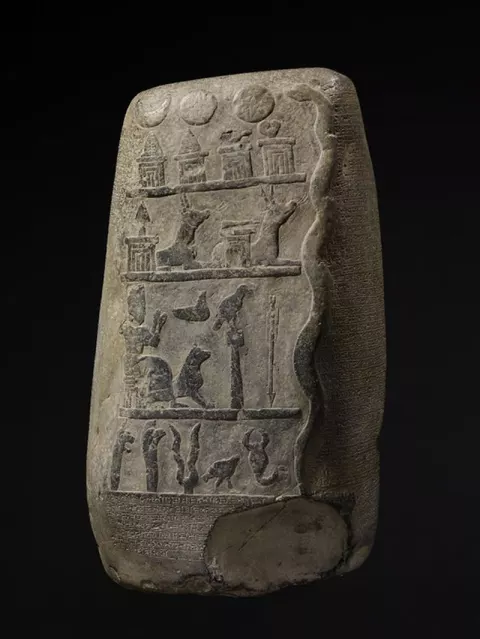
The Mesopotamians were known for keeping accurate records. One of the most important records was the sale of land. The sale was recorded by the government and was carved onto a kudurru. Unlike other contracts that were written on clay tablets, kudurru was made of stone to last longer. It listed every possible detail of the sale and was stored in temples.
The Code of Hammurabi
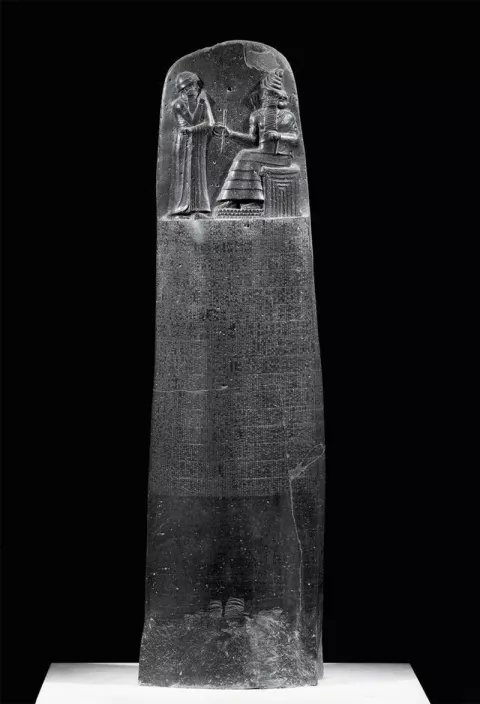
The ancient Mesopotamia provides us also with the oldest preserved regulations for business dealings. The Code of Hammurabi, discovered in 1901 and today kept at the Louvre Museum in Paris was issued in the 18th century by the Babylonian king Hammurabi. The stele of seven feet and five inches high contains a compendium of 282 laws that regulated landownership and rental, agricultural employment, commercial transactions and loan contracts. These regulations unequivocally acknowledges private property in the form of land and goods, sanctity of contracts, use of money and practice of banking, control of prices, maximum permissible interest rates for loans in grain and silver, and perhaps, the most advanced regulation which refers to the minimum wage for workers!
Also, the state took responsibility that the losses do not become too great and thereby endanger the overall system. In years of drought or flooding, the Hammurabi code exempted the peasant debtors from the obligation to repay their creditors. Similarly, the merchant’s debt was canceled if his ship was lost at sea or raided by pirates, or if a caravan was robbed. Thus, the ancient Mesopotamians were familiar with the insurance, a concept by which an individual or company can obtain financial protection against loss or harm. In other words, the state wanted to keep entrepreneurs in business, and not to destroy them.
74 lives in this room
More lives in this room
- Ku Baba 2450 BC
- Balmonahme 2350 BC
- Baranamtarra 2350 BC
- Ur-Enki 2350 BC
- Kubatum 2050 BC
- Pu’udu 2050 BC
- Turam-ili 2050 BC
- Ur-Dumuzida 2050 BC
- Ur-Dun 2050 BC
- Ur-silaluh 2050 BC
- Pushu-ken 1950 BC
- Adad-sululi 19th century BC
- Alahum 19th century BC
- Assur-idi 1850 BC
- Assur-nada 19th century BC
- Enlil-bani 19th century BC
- Idin-Lagamal 19th century BC
- Innaya 19th century BC
- Lu-Enlila c. 19th century BC
- Puzur-Ashur 19th century BC
- Sisunawirat, son of Belum 19th century BC
- Šalim-aḫum 19th century BC
- Šumšunu-watar 19th century BC
- Addu-duri 18th century BC
- Balmunamhe 18th century BC
- Bur-sin before 18th century BC
- Dumuzi-gamil 18th century BC
- Ea-nasir 18th century BC
- Idin-Amurrum 18th century BC
- Iltani 18th century BC
- Mukannishum 18th century BC
- Nanni 18th century BC
- Sidqulanasi 18th century BC
- Silli-Ištar 18th century BC
- Summunabi 18th century BC
- Šep-Sin 18th century BC
- Tehip-tilla 16th century BC
- Shilwa-Teshup 15th century BC
- Wullu 15th century BC
- Rashapabu 14th century BC
- Tulpunnaya 14th century BC
- Sinaranu 13th century BC
- Šipti Baʿal 13th century BC
- Bel-Harran-Usur 750 BC
- Kudurru 750 BC
- Nergal-erish 750 BC
- Dada-ahhe 650 BC
- Dannaya 650 BC
- Mannu-ki-Arbail 650 BC
- Mudammiq 650 BC
- Remanni-Adad 650 BC
- Bēl-etēri-Šamaš 550 BC
- Hanunu 550 BC
- Iddin Marduk 550 BC
- Ina-Esagilaramat 550 BC
- Itti-Marduk-balatu 550 BC
- Itti-Šamaš-Balatu 550 BC
- Nabu-ahhe-iddin 550 BC
- Neriglissar 550 BC
- Nuptaya 550 BC
- Shulaya 550 BC
- Marduk-nasir-apli c. 521 BC-c. 487 BC
- Abba Ben Abba 150
- Abba 250
- Hisda 250
- Dimi of Nehardea 350
- Rav Papa 350
- Ama-e
- Amat-Ningal
- Amur-Istar
- Imdilum
- Simat-Assur
- Su-Laban
- Taram-Kubi