Room · 3 chapters · 64 lives
Slave trade
Human trafficking is most enduring, ubiquitous and lucrative enterprise starting from ancient times to the present day
In ancient Greece the development of slavery went, ironically, hand in hand with development of famous Greek freedom and liberty. As the citizens of Athens began to participate in shaping of democracy the labor shortages which thus occurred were resolved by using slaves.
What is slavery?
Slavery can be defined as a system of total control over the bodies and labor power of human beings for achievement of profit. The social, economic and legal position of slaves was not uniformed in history and differed depending on the society, time and place. While the life of the slaves working in mines was the most difficult, educated slaves working as tutors, teachers or secretaries enjoyed better life conditions.
When did slavery occurred?
With development of advanced civilizations, private property and social stratification emerged an idea of exploitation of cheap slave labor by an individual or community. The slave labor was used in agriculture, mining industries, households, government apparatus, and in marginal professions.
Slaving societies of antiquity
The oldest records of the institution of slavery were recorded in ancient civilizations of Mesopotamia, Egypt, India, and China dating back as far as 3200 BC. The ancient Greek and Romans were credited with developing the world's first slave societies. The slave society can be defined as society in which slaves consist the major source of productive labor and slavery shapes all aspects of life. The ancient Romans built the slave system unparalleled in antiquity ─ it is calculated that about 10 percent of the total population were slaves, which means there was about 6 million slaves in the early empire (1st century BC─1st century). The laws developed by ancient Romans provided a framework for the treatment of slaves in later European empires.
Status of slaves
As a property slaves were completely without rights – they could be sold, bequeathed or given away by their owners. Injuring or killing a slave by another man was prohibited and the owner’s loss was supposed to be compensated. Slavery was not always a permanent state as they could be freed (manumitted) by their masters. Pasion who lived in the 5th century BC is the example of a slave who rose from slavery to become one of the wealthiest men in Athens.
Permissive medieval slavery
In the period of Middle Ages, the Catholic Church and Islam shared the belief that it was wrong to enslave co-religionists and slaves were obtained mostly through trade and conquest beyond its borders. Slavery was gradually limited throughout most of Europe, partly as a result of the spread of Christianity, and partly because of shift from slave labor to serfdom.
Peak of slavery
The Age of Discoveries stimulated the growth of international slave trade to unimaginable proportions. The need for cheap workforce on plantations and in mines of the New World led to enslavement of Africans who proved to be more resistant to disease and hard work than the natives. Since the average “working life” of a slave, meaning the time between final purchase and manumission or death, was around seven years, there was a constant need for them. In the 2nd half of the 17th century about 1.2 million slaves were sold to Europeans on the Atlantic coast, more than in the previous 200 years combined. In the 18th century, the numbers were ever higher amounting to a total of 6.5 million. For financing the slave trade the Europeans used various trifles, such as iron bars, “manila” or bracelets of brass or copper, and cowrie shells. According to estimates, only in the 18th century more than 10,000 tons of cowrie shells were brought from Asia.
There were different ways of becoming a slave ─ wars were the most common, but unpaid debts, poverty, abductions, religious affiliation, birth status and sentence for crime were not negligible reasons.
The Romans used ceremony “mancipiato” or formal transfer of property, to sell the slaves – hence the word “emancipation”.
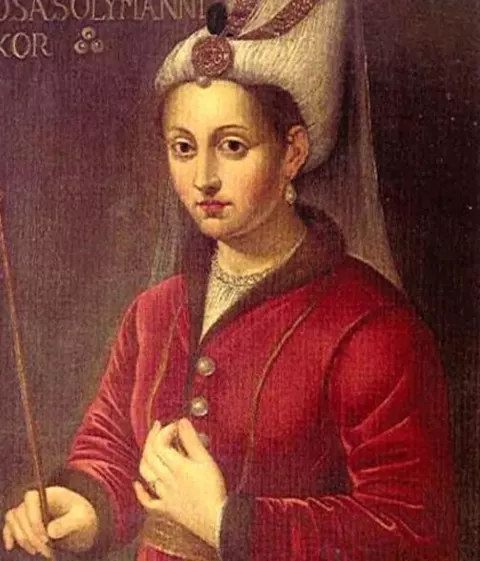
Female slaves mainly worked as servants or concubines. Perhaps, the most famous female slave in history is Aleksandra Lisowska or Hurrem (16th century), a Ukrainian slave girl that became the favourite wife of the Ottoman Emperor Suleiman the Magnificent.
Eunuchs were the most highly prized slaves in Islamic world and gained the highest price since nine out of every ten boys did not survive castration.
Despite the common belief, the European traders in Africa usually weren’t directly involved in the hunt for slaves. Dwelling on coastal posts or “factories” and spending spare time playing golf, they actually waited that their collaborators, the African rulers and middlemen, supply them with slaves.
Chapters
Emergence of slavery
Slavery is one of the most enduring and ubiquitous phenomena in human history. It can be defined as a system of total control over the bodies and labor power of others. However, the social, economic and legal position of slaves was not uniformed in history and differed depending on the society, time and place.
The hunter-gatherer societies of prehistory did not support development of slavery as they were egalitarian and there was no economic advantage in owning another human being. With development of economy and social stratification, emerged an idea of exploitation of cheap slave labor by individual person or community. There were different ways of becoming a slave. Wars were the most common, although birth, punishment for crime, unpaid debts, poverty, abductions and religious affiliation were also an important factor. The idea of achieving a profit at the expense of cheap labor is the main force behind the institution of slavery. Their labor was used in agriculture or mining industries, households, armies or government apparatus and in marginal professions.
Although slavery is no longer legal anywhere in the world, human trafficking is the second largest criminal industry in the 21st century.

Historical development
Slavery was practiced in all civilizations with the complex political and social system.
Slave trade
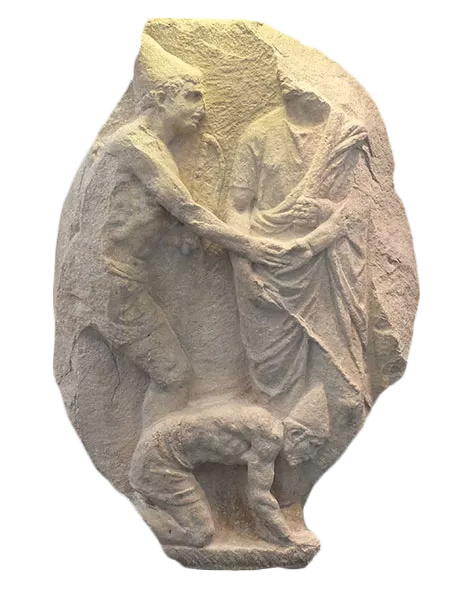
Slavery in antiquity
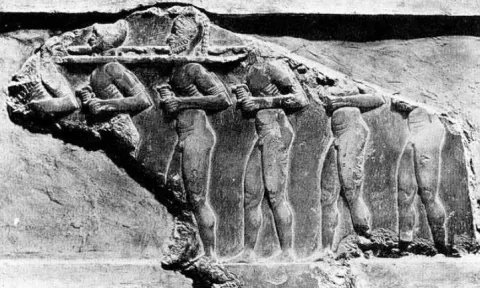
The oldest records of the institution of slavery were recorded in ancient civilizations of Mesopotamia, Egypt, India, and China dating back as far as 3200 BC. From the Code of Hammurabi which dates from the 18th century BC Babylon it can be seen that slavery was already an established institution at that time with special laws designed to regulate this practice.
The ancient Greece and Rome were the first civilizations through which we know more about institution of slavery. They developed the world’s first slave societies, that is, societies in which slaves consist the major source of productive labor and slavery shapes all aspects of life. Slaves could be in state or private ownership. Both the Greeks and the Romans recruited slaves from their own and neighboring societies around the Mediterranean.
In Greece the evolution of slavery went hand in hand with development of famous Greek freedom and liberty. As the citizens of Athens began to participate in shaping of democracy, labor shortages were resolved by using slave labor. Slaves were found everywhere in economy – from banking to trade, retail, crafts and industries, mining and agriculture, domestic service, entertainment, education and so on. In the classical period (5th-3rd centuries BC) it is estimated that perhaps 1/3 to 1/2 of the population of Athens consisted of slaves.
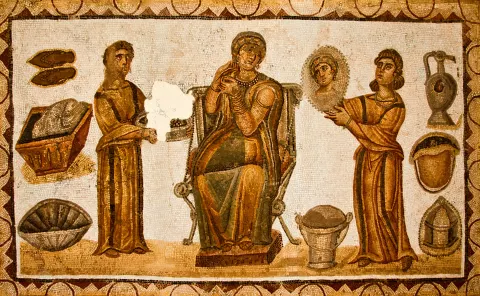
Mosaic depicting two female slaves (ancillae) attending their mistress.
The ancient Romans built the slave system that was unparalleled in antiquity. The constant wars of conquests for more than four centuries meant a large supply of slaves who began to provide the basis for economic activity. It is reckoned that about 10 percent of the total population were slaves, so there were about 6 million slaves in the early empire. Famous slave markets of antiquity were established at Chios, Delos and Rhodes, and demand for slave supplies fostered international trade.
As a property slaves were completely without rights – they could be sold, bequeathed or given away by their owners. Injuring or killing a slave was prohibited and the owner’s loss was supposed to be compensated. While the life of the slaves working in mines was the most difficult, educated slaves working as tutors, teachers or secretaries enjoyed better life conditions. Slavery was not always a permanent state as they could be freed (manumitted) by their masters. Pasion is the example of a slave who rose from slavery to become one of the wealthiest men in Athens. Attempts of slaves to change their position is embodied in the famous Spartacus uprising (73-71 BC).
The laws developed by ancient Romans provided a framework for the treatment of slaves in later European empires. The practice of slavery continued during the period of the Middle Ages both in Europe and throughout the world.
Slave trade
Slavery in medieval period
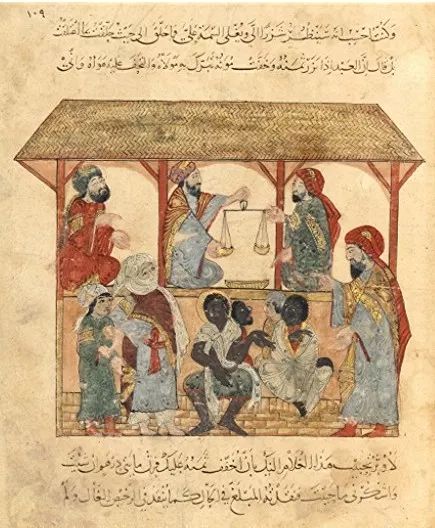
13th century slave market in Yemen.
Following the fall of the Western Roman Empire in 476 AD, the barbaric people such as the Visigoths, the Huns and others enslaved population that came into their path. According to several barbarian law codes, the slaves were treated like livestock and did not possess even the basic human rights.
Slavery was gradually limited throughout most of medieval Europe, partly as a result of the spread of Christianity, and partly because of shift from slave labor to serfdom under the feudalism. Thus the only acceptable source of slaves became those from outside of Europe, but also Greek Orthodox Christians and followers of other branches of Christianity.
Slavery in medieval Europe was greatly influenced by the rise of Islam, which from the 8th century onwards spread into Europe and across the Middle East and North Africa to the interior of Africa. Like Christianity, Islam shared the belief that it was wrong to enslave co-religionists. However, through conquests and trade networks the new Islamic states were able to acquire a large number of slaves.
Slave trade
Slavery in Early Modern period
Modern Age and its geographical discoveries further fueled the international slave trade. The need for cheap workforce on plantations and in mines of the New World led to exploitation and enslavement of millions of Africans.
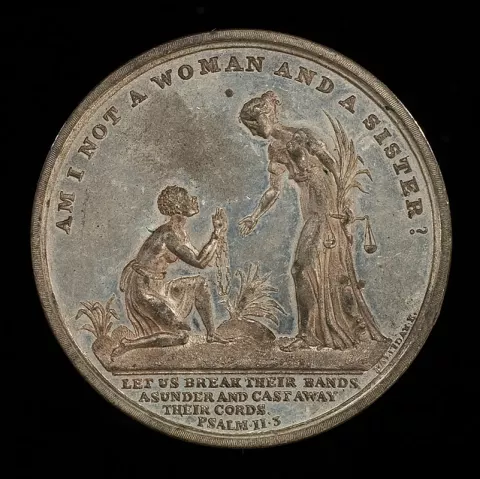
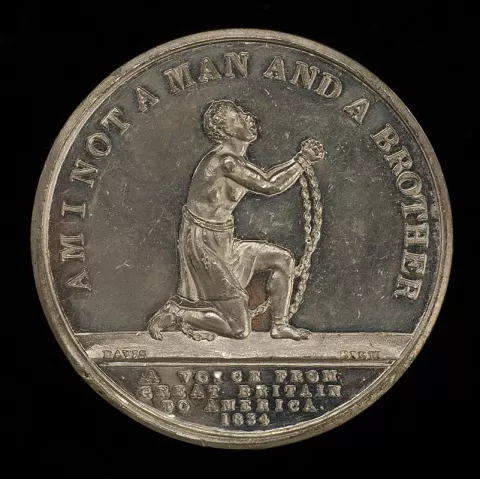
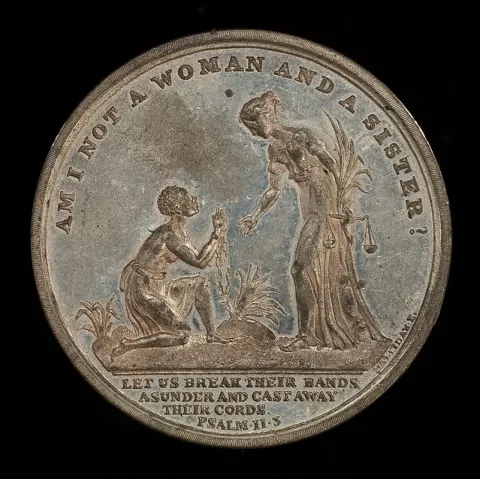
During the 19th century, occurred the shift in perception of this enterprise on both sides of the Atlantic. A public pressure to end the slave trade increased and a number of nations outlawed trafficking in humans. In 1808 The United States banned the importing of African slaves, but slavery remained legal until 1865 and the passage of the 13th Amendment. Great Britain abolished slave trading in 1807 and gradually ended slavery throughout its empire in the 1830s.
Slave trading systems
In order to meet the widespread demand for slaves, slave trading system were established from the earliest times.
Slave trading systems
The Indian Ocean trade
Indian Ocean Trade
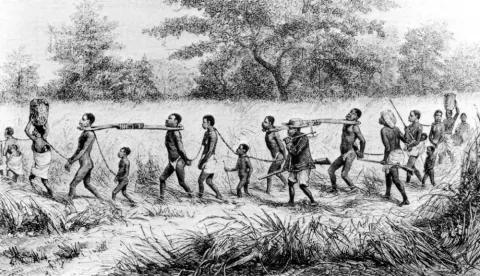
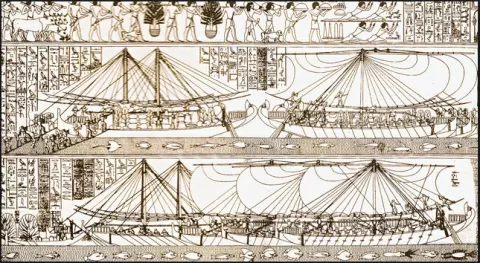
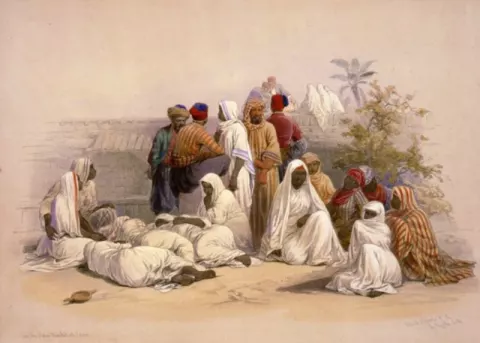
The Indian Ocean slave trade was most likely the oldest slave trade network system. As early as the 16th century BC ships were sailing from Egypt to northern Somalia, where the land of Punt was situated, to obtain slaves. Even in the period before the rise of Islam the large number of black slaves could be found in the Persian Gulf area. Arabs continued the trend, as early as the 9th century they established trade posts on the East African coast, as far south as Zanzibar. In the 19th century the volume of this trade was significantly larger than that of the Atlantic slave trade.
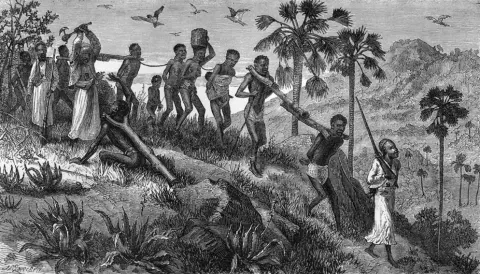
Arab slave traders and their captives along the Ruvuma river (in today's Tanzania and Mozambique).
Slave trading systems
The Black Sea and Mediterranean slave trade
Hurrem Sultan, the favourite wife of the Ottoman Emperor Suleiman the Magnificent was a Ukrainian slave girl captured by the Crimean Tartars and sold as a slave to the Ottoman
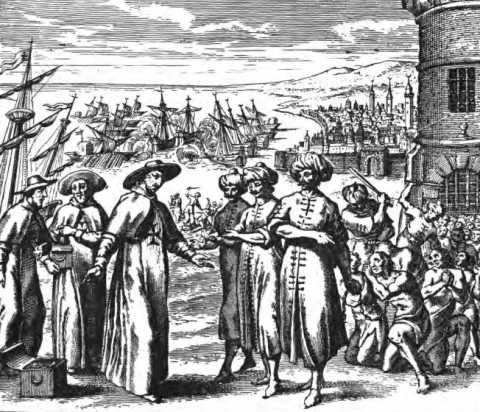
The Black Sea and Mediterranean slave trade were among the oldest slave patterns and have rose to prominence around the end of the 7th century BC. The southern regions of the Black Sea and Asia constituted an important source of slaves in antiquity. In medieval period this trading system continued to supply Spain and France. From the 13th century on, Spain and France imported slaves from Greece, Sardinia, Russia, the Crimea, and especially from among the Turks, Armenians and Balkan peoples, Africa and the Canary Islands. Italian city-states and their slave colonies in the Mediterranean islands of Cyprus, Crete, Rhodes and Sicily were an important purchaser of Tatars and other peoples from the shores of the Black Sea as well as Greeks, Bulgarians, Russians, Turks and Africans. This trade pattern was dominated by Italian and Jewish traders, although Frenchmen were prominent as well.
Slave trading systems
The medieval European slave trade
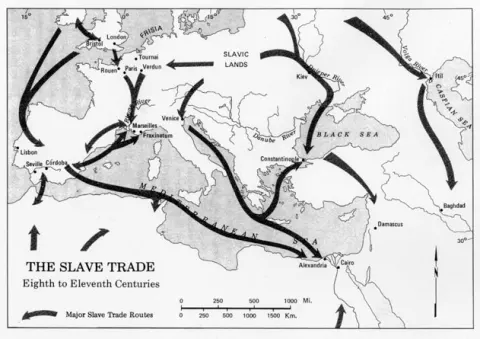
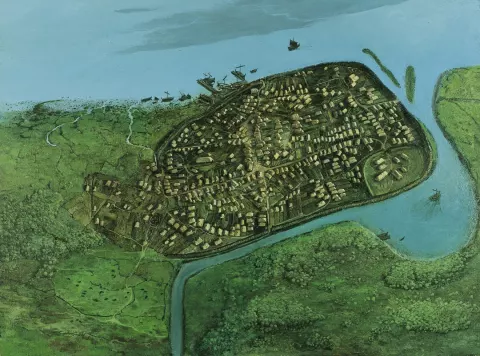
The European slave trade that flourished from the early 9th to the mid-12th century was conducted by numerous trade routes of which two principal were western and eastern. The Vikings were dominant slave traders on all of these routes and the western one ran from Scandinavia over the North Sea and across the English Channel. The eastern route ran from Scandinavia over the Baltic Sea and down the great waterways of Volga and Dnieper rivers to the Caspian Sea and the Black Sea. Prior to that period, Celts from the British Isles and the Scandinavians were the main victims of slavers. Interestingly, the Welsh were both victims and dealers in this trade. Dublin and Bristol were the main centers of slave trade from where Viking slave merchants spread out all over Western Europe, often as far as the Mediterranean. Across the western route some of slaves were delivered to Lyon and Spain, where they were sold to Muslim and Jewish merchants and further resold to south and east to the Muslim states. In smaller scale there was also the flow of slaves from south to north as African slaves could be found in the 9th century Ireland.
After the mid-9th century, the heaviest traffic in slaves was conducted across the eastern route and the Volga and Dnieper rivers known “as slave routes to the eastern market”. Birka on the island of Björkö in Lake Mälaren was the central hub and the most important marketplace. It was a point from where slaves and furs were sent south to Gotland, the South Baltic, and Hedeby, which dominated the western route; silver and Slavic slaves were sent to north and west Scandinavia; and fur and Scandinavian slaves were sent through the Gulf of Finland to the Volga, then south through Russia to Bulghar, where they met Muslim merchants from the east. The Viking raiding and selling of Slavs led to the common root for the term “slave” throughout the European languages.
Slave trading systems
The trans-Saharan trade
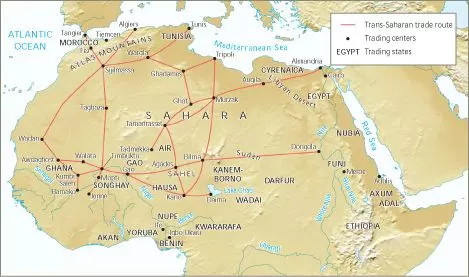
The trans-Saharan trade was carried out for almost thirteen centuries. Started back in ancient times by the Phoenicians and Romans, it has undergone considerable intensification during the Arabs. The four main routes to the Mediterranean stretched from Timbuktu to Morocco, Kano to Air and Ghadames, Bornu to Fezzan, and Wadai to Benghazi. The slaves were destined for almost all the Islamic slaveholding societies of North Africa, and the Middle and Near East. The ultimate clients were Egypt, Morocco, Libya, Tunisia, and Algeria.
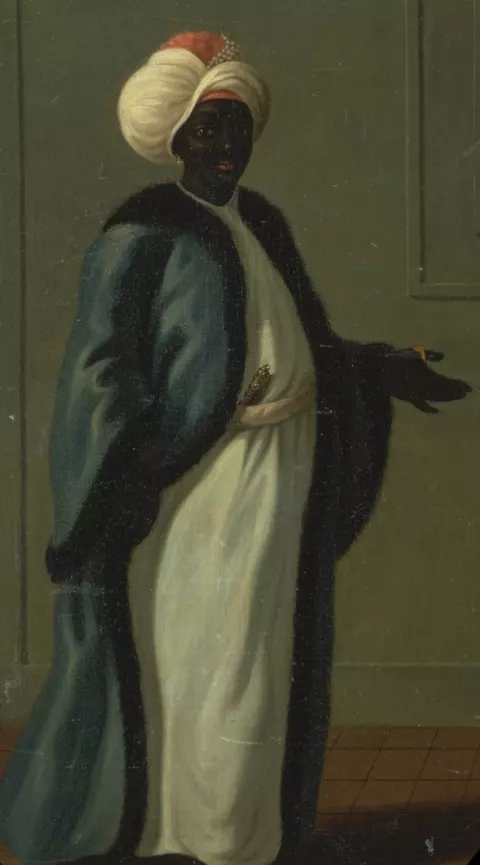
Eunuchs were the most highly prized and gained the highest price since nine out of every ten boys did not survive castration. Female slaves were mainly bought to work as servants and concubines. Others worked in agriculture and mines, or served in the military forces of Muslim rulers. The 13th century Egypt is a good example of powerful slave leaders of Egyptian army, known as Mamelukes, who deposed the sultan and established their own Mameluke dynasty that ruled nearly three centuries. Since the average life of a slave, meaning the time between final purchase and manumission or death, was around seven years, there was a constant need for them. According to modern researchers, in the 7th century the rate was at about 1,000 slaves a year and by the 15th century it reached about 5,000 a year. The end of the 17th and first half of the 18th century were the most intense, and the trade declined toward the end of the 19th century. In total, it was more than four million slaves.
Slave trading systems
Trans-Atlantic Slave Trade
An important chapter in the story of slavery begins with the arrival of the Portuguese ships in West Africa in the 15th century. Determined to find a sea route to the goldfields of black Africa, they eventually managed to open another channel for supply of slaves besides that across the Sahara.
When they reached the mouth of Senegal River in 1445, they called the local inhabitants “Guineus” after the Moroccan Berber word for “blacks”. Their initial commercial success was modest. They bartered textiles, clothing and wheat in exchange for luxury items, such as antelope skins, ostrich eggs, civet musk, gum Arabic and small quantities of gold dust.
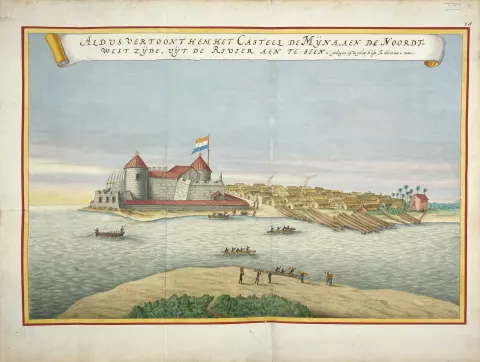
Although they initially were modestly involved in the slave trade, soon it turned to become the most profitable part of their business. Namely, slavery was an integral part and major source of wealth of African societies on the West coast. Slaves were actually a form of currency. Local African rulers, such were those of two Wolof kingdoms, Walo and Cayor, had a role as their business partners in this trade. In the period between 1450 and 1458, numerous Portuguese ships sailed for the Guinea coast each year making a profit as high as 800 per cent. After the Portuguese discovered alluvial goldfields of the Gold Coast, they involved themselves in enormously profitable gold trade. This enterprise was put under direct royal control and El Mina, a fortified base was established. By 1500, the annual trade reached about 25,000 ounces which made a significant proportion of the world’s supply. Since the Portuguese did not have enough attractive commodities to finance their purchase of gold, they began to participate in the domestic slave trade of West Africa as middlemen.
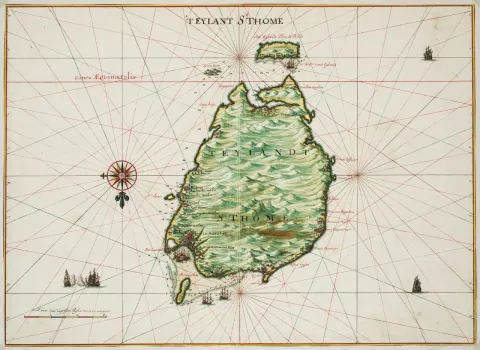
Map of São Tomé by Johannes Vingboons (1665).
During the 1500s, the slave trade operated by Portuguese got new dimension. Following the establishment of Portuguese sugar plantations on São Tomé, an island in the Gulf of Guinea they started to import slaves from the Benin coast and Kongo. The island also became the transit camp for slaves who were waiting for transport to the Gold Coast, Madeira, the Cape Verde Islands and Portugal. In 1507, in addition to around 2,000 slaves working on plantations, the island held around 5-6,000 slaves awaiting re-export. The Portuguese domination over the maritime trade with the West Africa continued until the end of the 16th century.
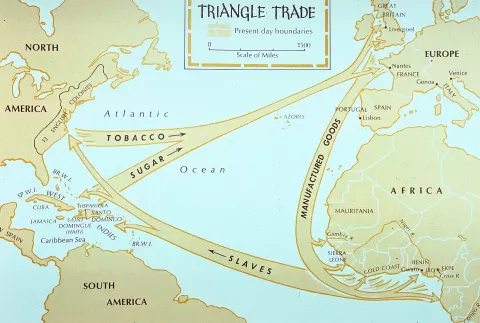
Following the discovery of the New World, the European powers soon became engaged in the colonization of the Americas and establishment of the plantation system and exploitation of mines. Colonizers initially used indigenous population for work, but, as their number drained by overwork and European diseases, they turned to African slaves. Thus, the African slave trade gained a new significance and volume. The result was a trading pattern called the triangle trade.
The first stage between Europe and Africa represented the trading of European goods for African slaves. The second stage in the triangle trade consisted of transporting African slaves to the Americas, where slaves were exchanged for cash or raw materials such as were sugar, tobacco, rum, timber products and iron. In the first half of the sixteenth century, attracted by high profits other European merchants became involved in the trans-Atlantic trade. In the second half of the 15th century, the number of slaves was around 80,000, and one century later, the number reached around 210,000, or about 4,000 a year. By selling slaves, merchants obtained or purchased goods which they took back to Europe. This was the third element of trans-Atlantic trade pattern. Since each stage had its own cargo, the European merchants were able to realize a profit at each stage of a single voyage. The profit allowed merchants in Europe and partly the Americas, to finance the Industrial Revolution.
In the 17th century, the Dutch, British, French and others like Danes, Swedes and Brandenburgers took an active role in this kind of trade. European governments sought to benefit by granting national monopolies to commercial companies involved in African business. European traders in Africa were confined for the most part to fortified posts on the coast, called “factories” from where they collaborated with African rulers and middlemen. As one English slaver at the end of the 17th century wrote: “The trade in slaves is the business of kings, rich men and prime merchants”.
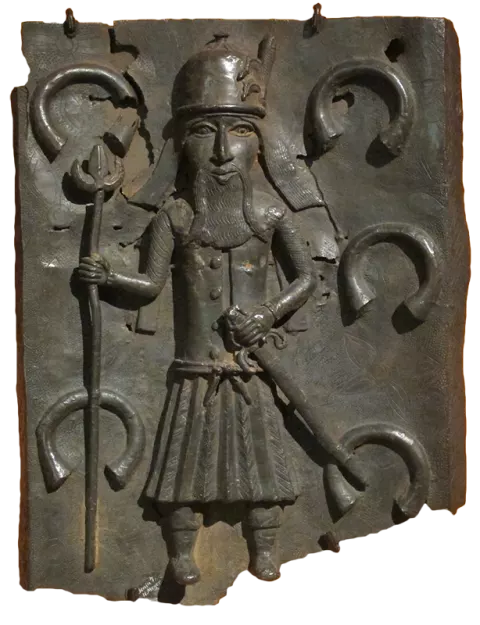
Most African slaves were war captives, but others were condemned criminals, kidnap victims, political prisoners or family members sold for debt or for food in time of famine. Once brought to the coast, slaves were held in improvised prisons. The demand for male slaves outnumbered that for females by two to one, and those selected for purchase were stamped with the mark of their European owners. Bargains were conducted in wide range of currencies and trade goods such as iron bars, “manila”, or a horseshoe-shaped bracelet of brass or copper, and cowrie shells were used as a standard value in large and small transactions in many parts of West Africa.
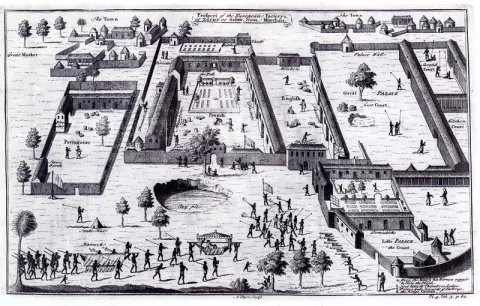
Slave factories, or compounds, maintained by traders from four European nations on the Gulf of Guinea in what is now Nigeria.
The numbers of slaves exported during the 17th century testifies dramatic increase. In the first half, the number amounted to around 670,000, an annual average of just under 14,000. In the second half, it reached about 1.2 million, an annual average of 24,000. In the last fifty years of the seventeenth century, more slaves were sold to Europeans on the Atlantic coast than in the previous 200 years combined. In the eighteenth century, the numbers raised ever higher: the annual average was 65,000, rising to more than 80,000 in the 1780s, amounting to a total of 6.5 million.
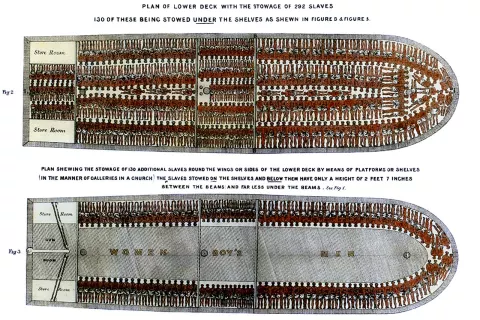
Detail of a British broadside depicting the slave ship Brooks and the manner (c. 1790) in which more than 420 adults and children could be carried onboard.

64 lives in this room
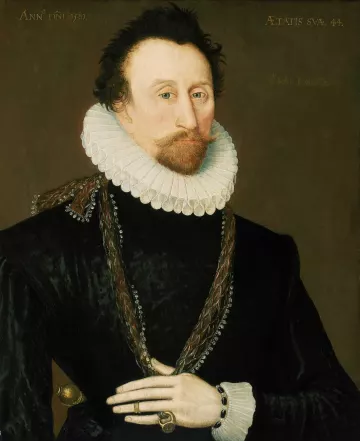 Sir John Hawkins1532-1595
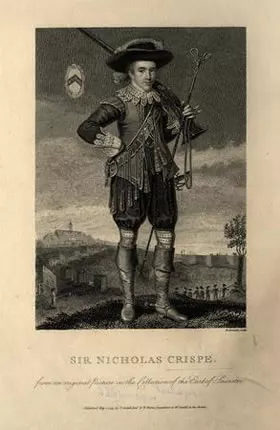 Sir Nicholas Crispec. 1599-1666
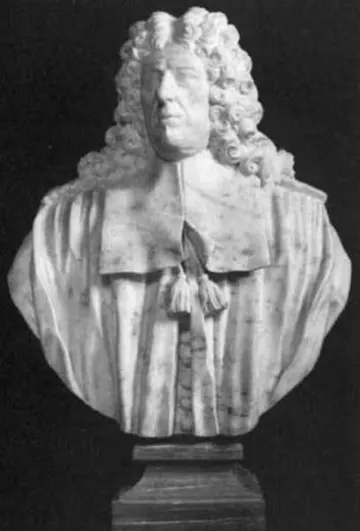 Francesco Feroni1614-1696
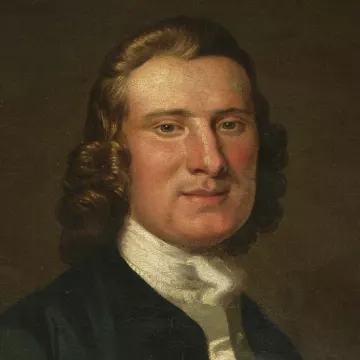 Frederick Philipse1626-1702
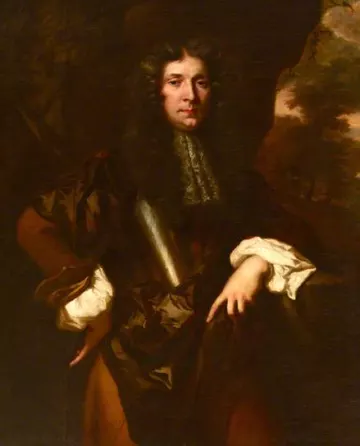 Sir John Banks1627-1699
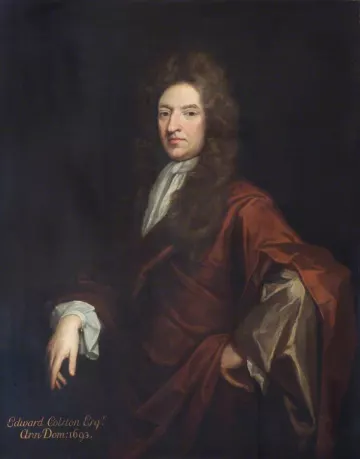 Edward Colston1636-1721
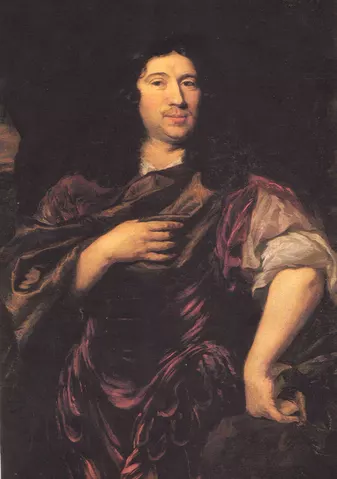 Jørgen Thormøhlensc. 1640-1708
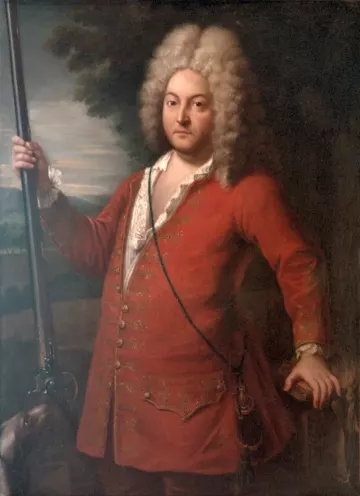 Samuel Bernard1651-1739
 Adolphus Philipse1665-1750
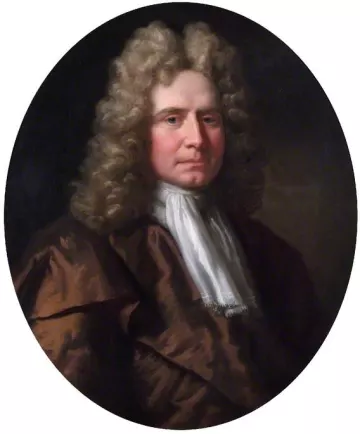 Humphry Moricec. 1671-1731
 Willem Bosman1672 – 1703
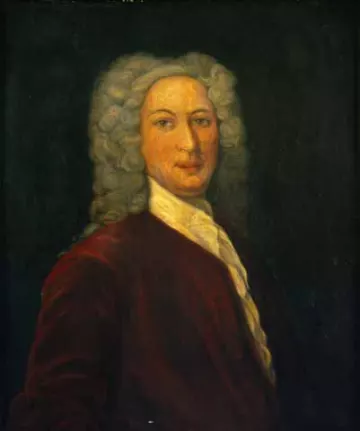 Philip Livingston1686-1749
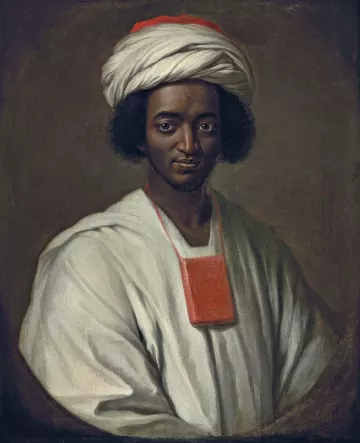 Ayuba Suleiman Diallo1701-1773
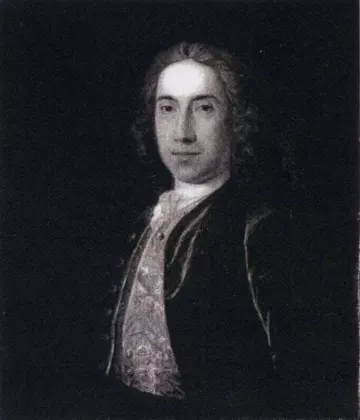 Richard Oswald1705-1784
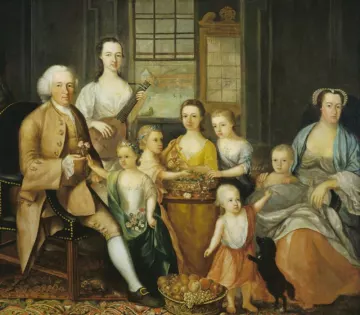 John Glassford1715-1783
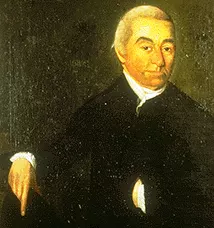 Jacob Rodriguez Rivera1717–1789
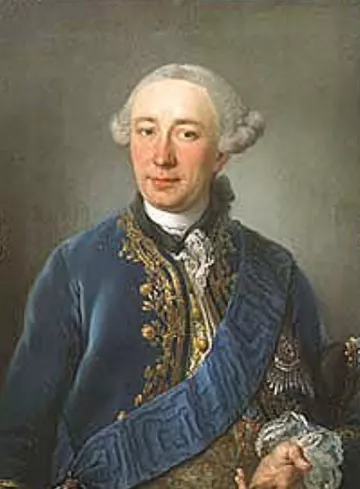 Heinrich Carl von Schimmelmann1724-1782
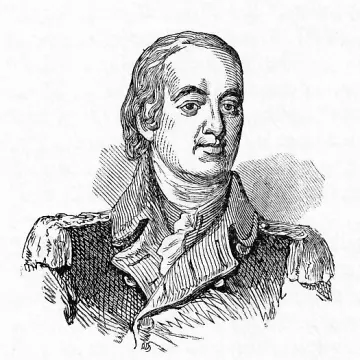 William Alexander1726-1783
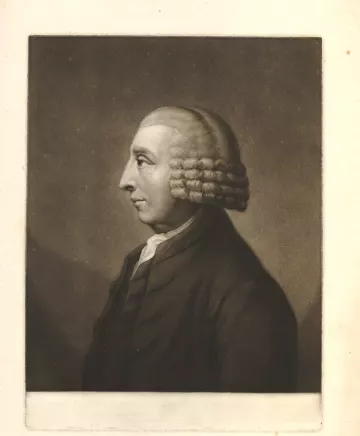 David Barclay of Youngsbury1729-1809
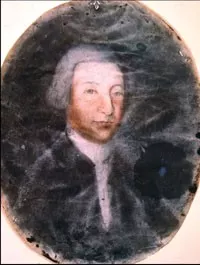 Aaron Lopez1731-1782
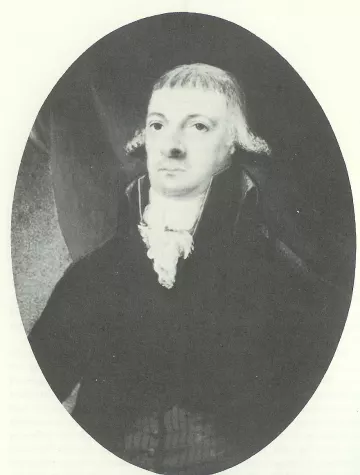 John Brown1736–1803
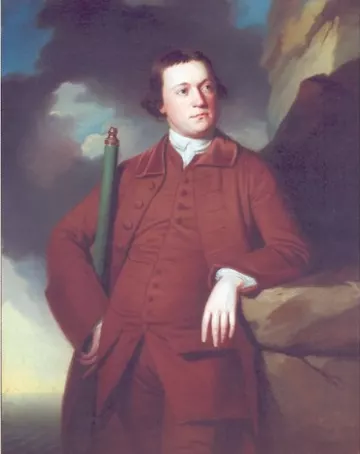 Abraham Rawlinson1738-1803
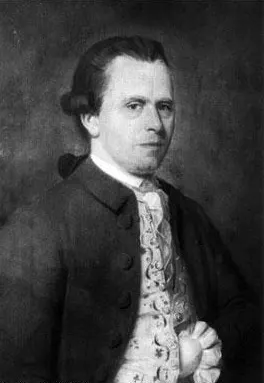 John Pinney1740-1818
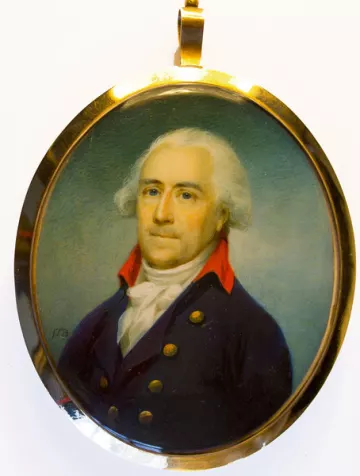 Hercules Ross1745-1816
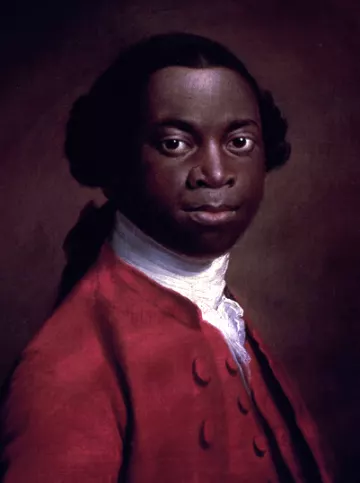 Olaudah Equianoc. 1745-1797
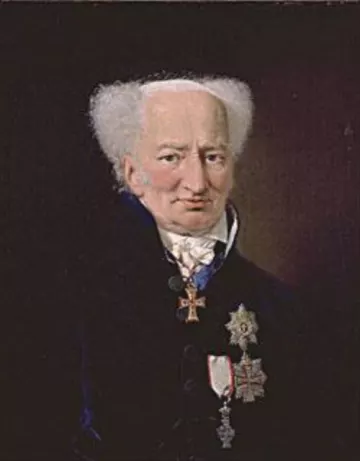 Ernst Heinrich von Schimmelmann1747-1831
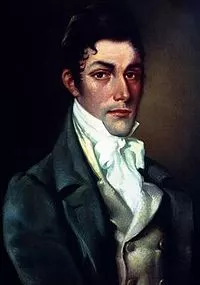 Martín de Álzaga1755-1812
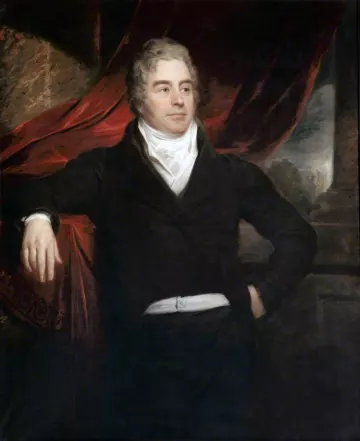 John Bolton1756-1837
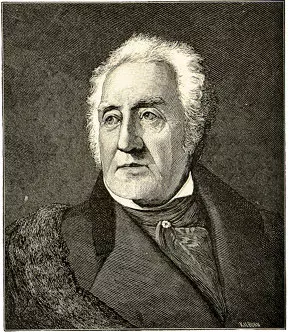 Thomas Handasyd Perkins1764-1854
More lives in this room
- Baranamtarra 2350 BC
- Balmunamhe 18th century BC
- Summunabi 18th century BC
- Kudurru 750 BC
- Majd al-Din Isma‘il ibn Muhammad ibn Yaqut al-Sallami 1272-1342
- Nāṣir al-Dīn Muḥammad Ibn Musallam died 1374
- Fakhr al-Din ‘Uthman ibn Muhammad ibn Ayyub ibn Musafir al-As‘ardi died 1381
- Bartolomeo Marchionni c.1449 - c. 1523
- William de la Founte d. 1495
- Juan Antonio Corzo Vicentelo c. 1517 - 1587
- Diego Caballero died 1560
- Anthony Parkhurst fl. 1561-1583
- Diego de Vega b. 1570
- Francesco Carletti 1573-1636
- Owen Fitzpen 1582-1636
- Khoja Murad c. 1618- c. 1700
- Sir Thomas Modyford c. 1620-1679
- Robert Aldworth died 1634
- Oliger Paulli 1644-1714
- William Freeman 1645-1707
- Abraham op den Graeff c. 1649-1731
- William Gyfford 17th century
- Daniel Campbell c. 1671-1753
- Willem Hunthum d. before 1678
- Jacob Franks 1688-1769
- Johan van Scharphuizen died 1699
- Pieter Woortman 1700-1780
- Samuel Touchet c. 1705-1773
- Isaac da Costa 1721–1783
- Abigail Minis 1750
- George Hibbert 1757-1837
- Betsy Heard 1759-after 1812
- Moses Lindo died 1774
- Antera Duke died c 1788
- Alexander Lindo died 1818