No. 1927
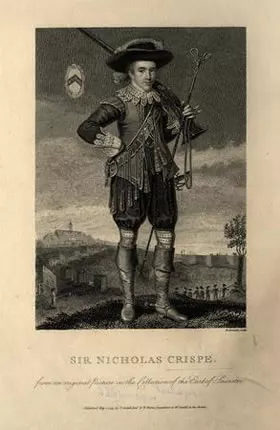
Sir Nicholas Crispe
Sir Nicholas Crispe, first Baronet was an English Royalist and a wealthy merchant who pioneered the West African trade in the 1630s.
Nicholas was born as the son of Ellis Crisp, a Sheriff of London and little is known of his early life. Like his father, he was a substantial stockholder in the East India Company. At the beginning of his career he was active as importer of wide variety of commodities from the East such as cloves, indigo, silks, pepper, elephant tusks, calicoes and shells. The shells he bought were later used to finance the purchase of the slaves in West Africa, which was his second major commercial preoccupation.
“The Company of Adventurers of London trading to the ports of Africa”, better known as “The Guinea Company” was founded as the first private company with the aim to colonize Africa for profit. Crisp, who started to invest in the company in 1625, became its controlling stock holder until 1628. The company’s charter notes that it principal goal was export of African gold, although wax, hides, and redwoods also represented a valuable export merchandise. In exchange, the English offered iron goods, beads, and woolen products. The company was also involved in the trade of enslaved Africans.
During the Civil War, Crisp supported the King which is why he was compelled by the Parliament to surrender his patents for making and vending beads, and for slave trading from Guinea to the West Indies. Furthermore, after the king’s execution in 1649 he was forced to seek the refuge in France. After the restoration of the monarchy his position was also restored as a reward for loyalty. In 1665 Charles II made him a baronet.
He died the next year at age of 67.