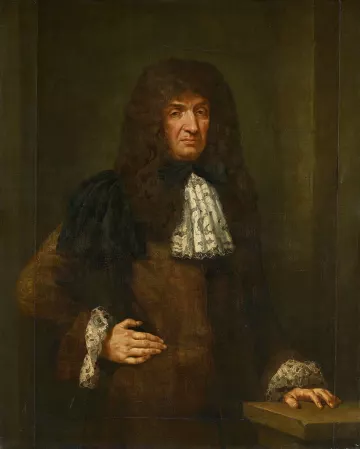
No. 8182
Abraham op den Graeff
Abraham op den Graeff was a linen merchant mostly remembered as one of the three signers of the “Germantown Quaker Petition against Slavery” (1688) which was the first protest against African-American slavery made by a religious body in the English colonies.
Born as the son of Isaac Herman, Abraham was a member of the op den Graeff family from Krenfeld, Germany. He took up the profession of linen merchant and was a follower of the Mennonite church. In 1683 he left Rotterdam and sailed aboard the ship Concord to Germantown, the Pennsylvania Province along with his family. His family was one of the original 13 which inhabited Germantown, comprising 33 in total.
Abraham used his mercantile experience to establish the linen industry in the colony. In 1686 he won the first Governor's prize from William Penn, a cousin of Abraham for the finest piece of linen woven in the Province. Abraham also is known as one of the three signers of the first organized religious petition against slavery in the colonies, known as the Germantown Quaker Petition against Slavery (1688).
In 1689 Abraham was one of the original charter grantees for the settlement, and he also served as a burgess of Germantown. From 1689 to 1692 he was elected to represent the settlement in the Provincial Assembly.
He was a subject of John Greenleaf Whittier's abolitionist poem "The Pennsylvania Pilgrim", published in 1809.