No. 1652
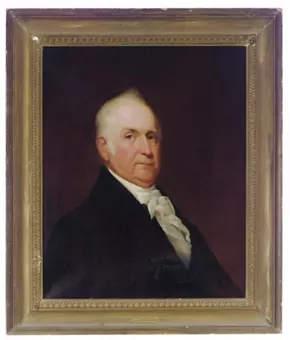
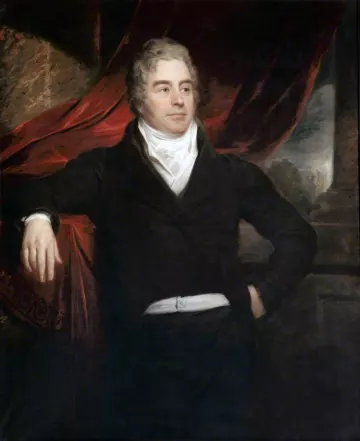
George Hibbert
George Hibbert was a West India merchant, slave and plantation owner, and renowned philanthropist from Manchester.
George was born into a family of a merchant and cotton manufacturer in Manchester. After he completed an education at Reverend Booth’s academy at Woolten Hall, he left Manchester in 1781 and joined the family counting house “Hibbert, Purrier and Horton” which was engaged in the West India trade. The company was involved in shipping and distribution of slave produced goods, particularly sugar from Jamaica, and George eventually became the senior partner in the firm.
During his long and successful career, George also served as the Chairman of the West India Dock Company, an Alderman for the City of London (1798-1802), a Member of Parliament for Seaford (1806-1812), and finally the Agent for Jamaica (1812-1831). He enjoyed a great reputation in the community and by 1816 he was acknowledged as “an eminent West India Merchant, whose family has long been considered as the head of the principal commercial house in Jamaica.”
George was also a leading member of the proslavery lobby with several large estates in Jamaica owned by his family. He gave three speeches to Parliament in 1807 during the slave trade debates which were later published.
As a renowned philanthropist, George was involved in the establishment of the National Institution for the Preservation of Life from Shipwreck in 1824, and the London Institution in 1805 intended for the diffusion of useful knowledge in the arts and sciences with an eye to increasing the productivity and efficiency of commerce and industry both at home and out in the empire.
George was a member of a number of learned societies and clubs including the Freemasons, the Linnean Society, the Royal Society and the Society of Antiquaries.