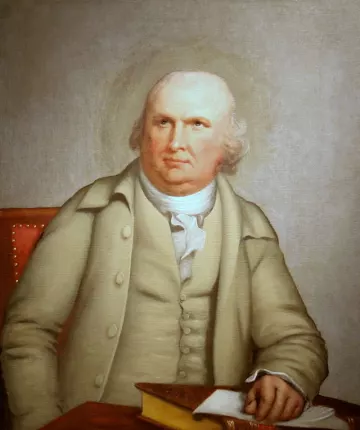
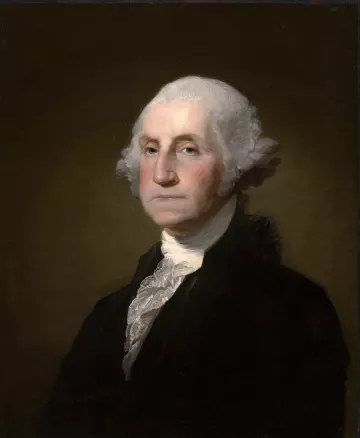
No. 1981
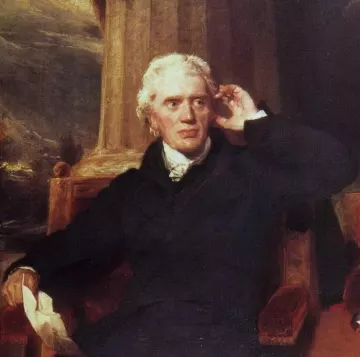
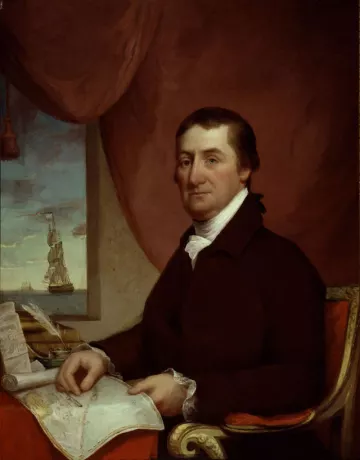
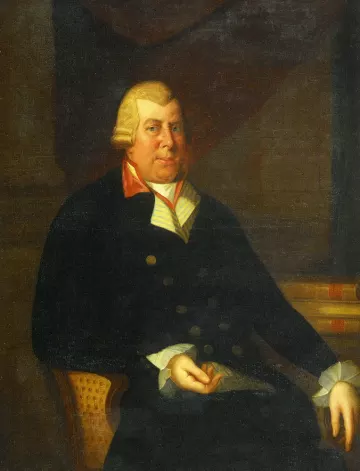
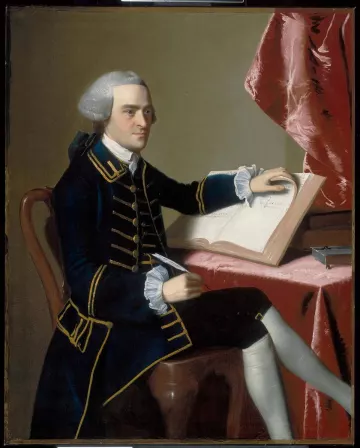
Francis Baring
Baring was a British financier who established the Baring Brothers and Company, England's oldest merchant bank.
Baring was born partially deaf, as the third son of a German immigrant and the leading textile merchant in Exeter, situated west of London. He lost his father at the age of 8, and was brought up by his mother who also had a good business sence and was able to expand the business of her late husband to London. Francis was sent to London for education, and in 1755 he became an apprentice to a London merchant. In 1762 the Baring family decided to reorganize their business and Francis made two firms with his brothers John and Charles. the firms were interlinked, one in London and one in Exeter. Eventually, Francis proved to be the leading partner and the brother with the most business sense.
Baring's firm started as a trading firm but gradually it turned to banking, particularly the financing of import-export trade. Baring acted as London agent for many Western European and North American firms. He was buying and selling consignments for them, collecting payments, arranging shipping and warehousing, making advances, and accepting bills of exchange. During the American Revolutionary War Baring had traded in supplies for the British army, and had also marketed the British debt incurred by the war. He helped his government once again during the Napoleonic Wars, when he bought up government debt over a period of fifteen years.
Except in his own firm Baring was active in other businesses. In 1771 he was appointed a director of Royal Exchange Assurance, the City's leading insurance company. He was made a director of the East India Company in 1779 and from 1792-1793 he served as the Company's Chairman. For his services he received the baronetcy in 1793. Baring was also involved in politics and he served as adviser to numerous politicians, the most famous being William Pitt the Younger.
In 1803 Baring started to withdraw from active management of his firm, which passed to his sons and was in 1807 renamed from Sir Francis Baring & Co. to Baring Brothers. In 1767 Baring married Harriet Herring, a cousin of Thomas Herring, the Archbishop of Canterbury with whom he had 12 children.
By one of his contemporaries, Lord Erskine, he was describes as "unquestionably the finest merchant in Europe; first in his knowledge and talents, and first in character and opulence."