No. 9640
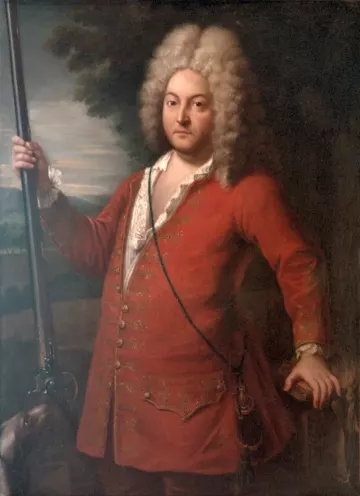
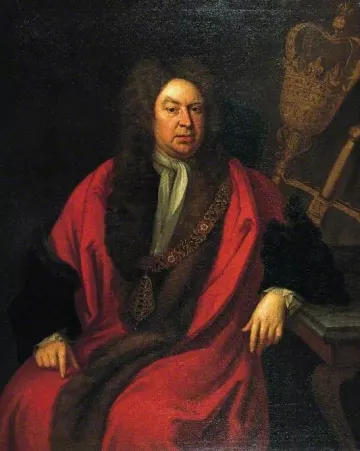
Robert Carter
Carter was one of the wealthiest men in colonial America, amassing land throughout Virginia that allowed him to engage in a large scale production and sale of tobacco and other products in colony and abroad.
Born as the youngest son of John Carter, the Virginia planter, he was sent at age of 10 to England for an education in classics and the rudiments of the tobacco trade. After returning to the colony in 1678 he became involved in farming and trade, learning from his brother, who was his guardian after their father’s death, an art of managing vast land holdings. In 1690 his brother also died, and Robert remained the sole owner of the 6,000 acre estate.
Since tobacco cultivation rapidly drew the land’s nutrients, the only way to succeed in this business was to accumulate large areas of land, and Robert was committed to the plan the next thirty years. Through purchase of other plantations and undeveloped lands subsequently used for cultivation of tobacco and other lucrative commodities, he eventually developed a small empire of tobacco plantations. At the time of his death, his estate included £10,000 and several plantations with more than 300,000 acres and 1,000 slaves.
Since in colonial Virginia wealth and land involved political responsibility, he held various public offices for most of his life. He was able to use these positions to additionally improve his business affairs and increase the family’s holdings. He was considered the richest man in Virginia.
He was not very popular among the gentry, and it is known that he was frequent party at the court as the prosecutor.
He married twice and had 11 children. He divided his properties among his children to ensure that they have sufficient capital to maintain the family status as the most wealthiest and influential family in Virginia.