No. 10677
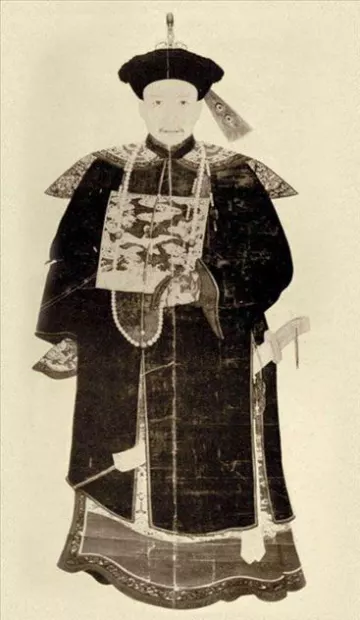
Heshen
Born in a family of humble origin, Heshen became the most powerful official during the reign of the Emperor Qianlong, owning a fortune that made him the richest man in China.
Born under the name Shanboa as a son of a military officer, he was educated in a government school and afterwards qualified for the Chinese civil service. He had good qualities for success – he was fluent in several languages, skilled in poetry, well-spoken and attractive. There are theories that he was emperor’s lover and that his close relationship with the ruler was actually the secret of his extraordinary success on the court.
However, his first assignment was that of imperial bodyguard in Beijing. Thanks to his virtues, he advanced rapidly within the hierarchy of Chinese government. By the age of 25, he achieved a high rank on the Board of Revenue, and few months later he gained the titles of grand councilor and minister of the imperial household. Heshen grew wealthy and powerful and did not hesitate to take advantage of his elevates position. Taking of bribes, embezzlement of government funds and extortion of money were among his ordinary activities. Ultimately, Heshen held around 20 significant government posts simultaneously that enabled him to establish a virtual financial control over the Empire. He appointed family members and friends for his assistants in the management of state affairs. Although the Emperor was warned about the corruption of Heshen, he rejected these accusations as false. But, in 1796 the fortune finally turned down on Heshen. The new emperor Jiaqing ordered that Heshen should be arrested, tried and condemned to “the death of a thousand cuts.” In the end, he was allowed to commit suicide, and he hanged himself. His large property which contained estates and mansions incorporating 3,000 rooms and housing 600 concubines, 8,000 acres of land, 100 gold ingots, 9 million silver ingots, more than 50,000 pounds of foreign currency, great quantities of precious stones, 100,000 porcelain vessels, nearly 500 European clocks, 14,000 bolts of silk, and 7,000 sets of clothing was confiscated.
In Chinese history Heshen is remembered as a pure evil, national symbol of the greed and degeneracy of the Qing dynasty.