No. 1710
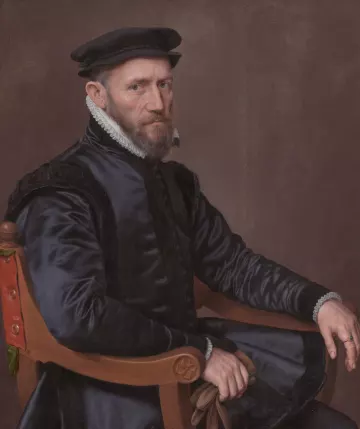
Francis Drake
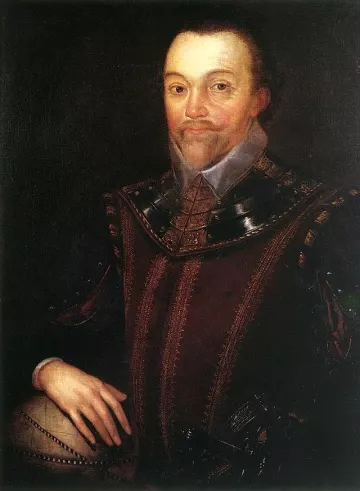
Born in a humble family, Francis amassed a fortune as a privateer in the service of Queen Elisabeth I of England and is known as the first Englishman to circumnavigate the world.
Francis was born as the oldest child of a yeoman farmer Edmund Drake in Crowndale, England. Since his father could not sustain all 12 children he encouraged them to find work at sea, and thus young Francis became an apprentice to a sea captain involved in coastal trade. Upon the captain's death, Drake inherited his ship, sold it, and entered the service of his relative John Hawkins in Plymouth. In the following period he participated in several expeditions. For example, in 1567 he was named the captain of one of six ships that were sent on an illicit trade expedition to Africa and the Caribbean colonies.
In 1577 he was licensed by the Queen Elizabeth I to sail with the fleet of five ships to the Pacific coast of South America through the Straits of Magellan in order to explore and pillage Spanish fleets and colonies. During the expedition, he lost four ships and the only ship left he renamed the Golden Hinde. In 1579 he captured the Spanish ship the Nuestra Señora de la Concepción which was carrying a massive amount of gold, silver and jewels. Reaching North America, he named all the area north of Mexico “New Albion” and claimed that area for England. By travelling across the Pacific Ocean to the Cape of Good Hope in South Africa he became the first Englishman to circumnavigate the globe. He arrived in England in 1580 as a wealthy man and famous navigator. In 1581, Queen Elizabeth knighted Drake on the deck of the Golden Hinde.
Although Drake was now a very rich man, he continued to serve the Queen. In 1585 he commanded the fleet of more than 20 ships which was engaged in attacking and plundering of the Spanish colonies and ships in America. During the expedition, he seized Santiago, Santo Domingo, and St. Augustine in Florida.
In 1588 he was the commander of the English fleet that defeated the Spanish Armada, thus helping England to establish naval supremacy on a global scale. He died in 1596 of dysentery during the expedition to Panama.