Museum / Rooms / The Medici Bank
Room · 6 chapters · 15 lives
The Medici Bank
“The Godfathers of the Renaissance” that made Florence a leading financial and cultural center of Europe
From peasants to kings
Originally of Tuscan peasant origin the highly ambitious Medici family have managed through banking and commerce to become virtual rulers of Florence and the wealthiest family of Europe in the 15th century.
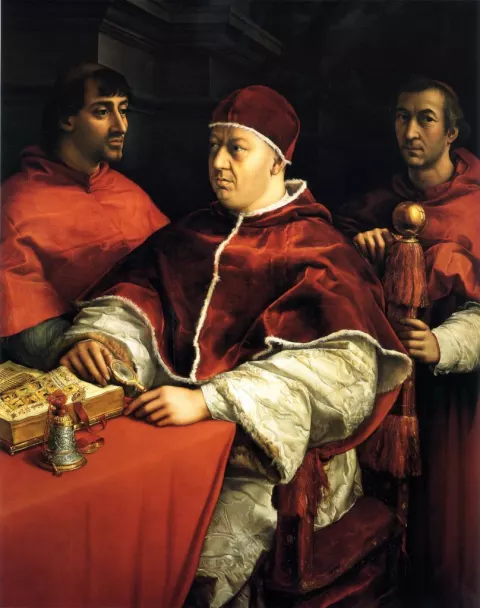
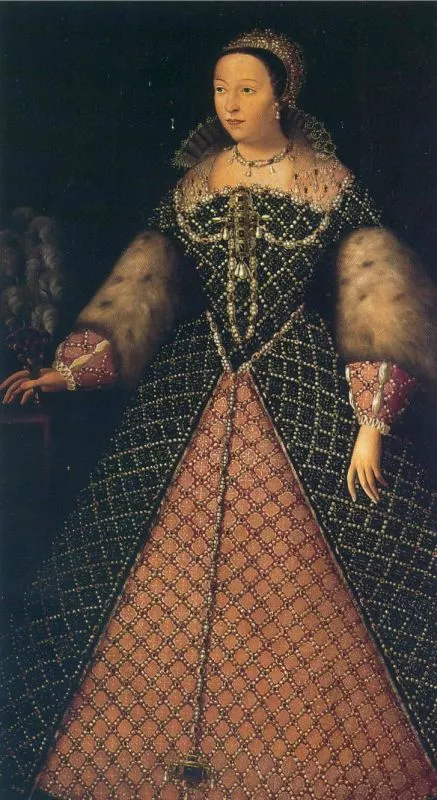
The extent of the Medici success is also confirmed by the fact that family provided four popes (Leo X, Clement VII, Pius IV, and Leon XI) and two queens (Queens Catherine de Médicis and Marie de Médicis of France)
The foundation of family’s wealth
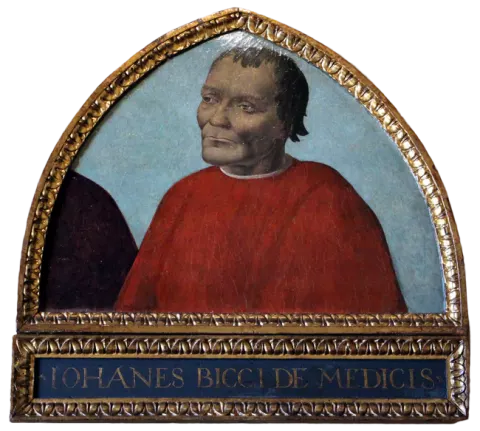
The Medici Bank founded by Giovanni de Bicci de Medici (1360-1429) at the end of the 14th century represented the foundation of the fabulous family fortune. The bank was a multinational organization comprised of several branches and correspondent banks all over Europe with large investments in trade and industry. Although it represented the greatest banking establishment of that time the Medici Bank never employed more than sixty-five people.
Trade
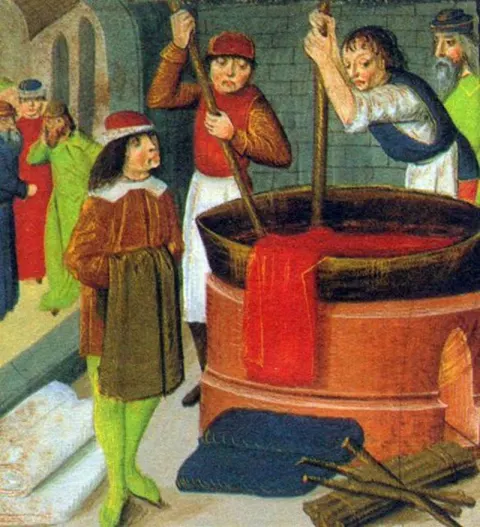
The Medici specialty was trade which brought high profits such as high quality foodstuffs (spices, citrus fruits, olive oil) and luxury items (expensive woolen and silk cloth, jewels and precious metals). The Medici also secured a near-monopoly in the extremely profitable trade in alum which was vital to the textile industry as the only known fixator of natural dyes to fabrics.
The wealthiest man of his time
During the life of Cosimo the Elder (1389-1464) the House of the Medici that consisted of the Tavola (head office) in Florence, three branches in Italy (Pisa, Roma and Venice), four branches outside (Avignon, Bruges, Geneva and London), and three industrial establishments (two wool shops and one silk shop) reached the height of its power.
The Bank of Medici was founded in 1397 under the motto “Col Nome di Dio e di Bona Ventura” or “With the Name of God and Good Fortune”.
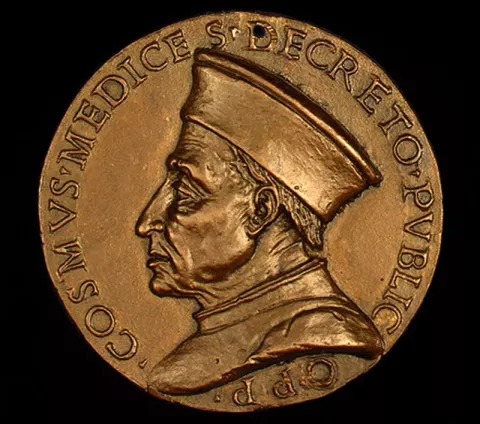
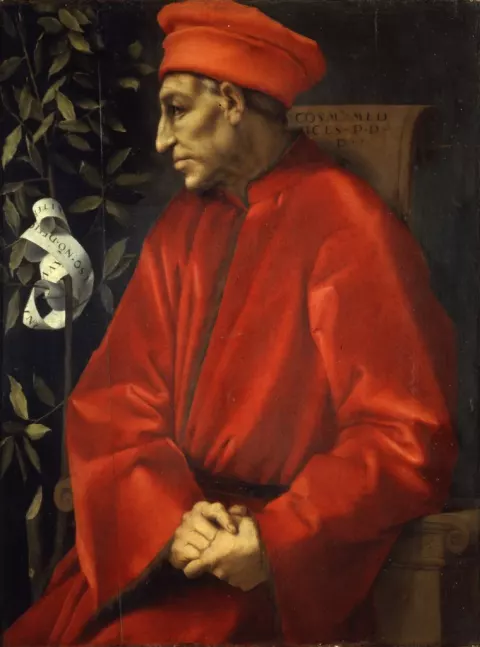
Unlike his ancestors, Cosimo was very aware of the fact that businessmen hardly thrived without taking share in the government. He survived imprisonment and exile to return in triumph and become the ruler of Florence. Because of his great contribution to the Florentine Republic Cosimo was proclaimed “Pater Patriae”.
Pope’s bankers
Being a personal banker of Vatican was considered the most desired, prestigious and lucrative function for a banker in the Christian world. Appointment on the post of Pope’s banker was the greatest source of the Medici wealth since Papacy as one of the richest entities in Europe depended on businessmen and their networks in collecting revenues from all over Europe.
The secret of Medici business success
Drawing from the experience, the Medici organized their business in a way to avoid pitfalls which drove their predecessors into bankruptcy and the continent in economic depression. Use of the latest techniques such as double entry bookkeeping and bill of exchange undoubtedly contributed to their success. However, an innovation which the Medici seem to have invented and perfected – the holding company – was crucial for their prosperity. By turning each branch in a limited partnership, the main bank had escaped unlimited liability for the debts of the branches, thus protecting a whole network from collapsing. Another invention was use of the franchise system in business. Instead of salaried managers the Medici appointed junior partners on the post of branch managers and gave them a stake in company. In this way the Medici wanted to encourage branch managers to provide greater incentive in business and to made profits and avoid losses for mutual benefit.
The branch officer was obliged to honor the holding company’s guidelines chief among them was “Thou shalt not gamble”.
Fall of the Medici Bank
During the Cosimo’s successors, Piero de Gouty (1416 -1469) and Lorenzo de Magnificent (1449 – 1492) began the gradual decline of the bank since they were trained as humanists and not businessmen. However, the ultimate collapse of the Medici business empire was rather a result of politics – on his way to Naples in 1494 the French monarch Charles VIII captured Florence and confiscated all the Medici’s assets. It was the event from which the Medici never fully recovered.
A large part of acquired wealth, the Medici used for supporting the art and humanities which made Florence the cradle of Renaissance. Among the famous artists they supported were Michelangelo, Raphael, Donatello, and Leonardo da Vinci.
Chapters
- Origins of the Medici Bank
- Heyday of the Medici Bank
- Decline
- Legacy of the Medici Family
- Organization of the Banking House
- Early years of the Medici Bank
Origins of the Medici Bank
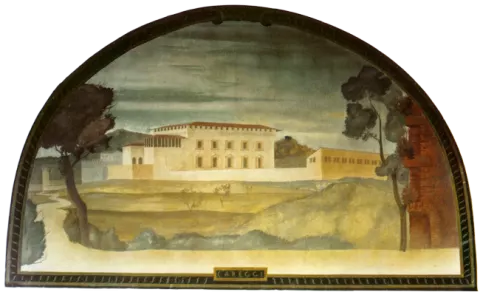
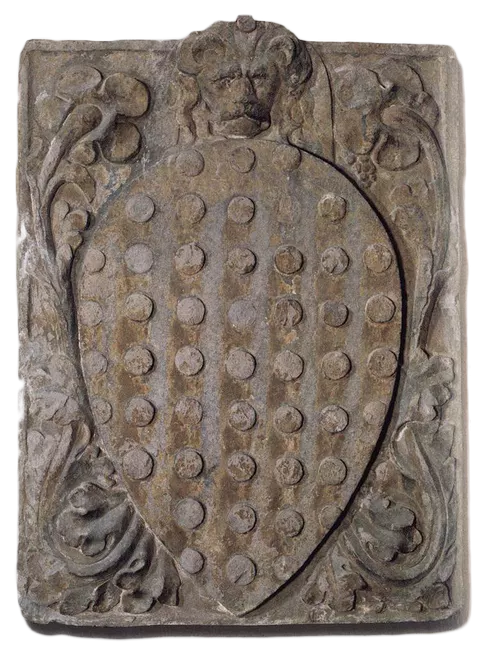
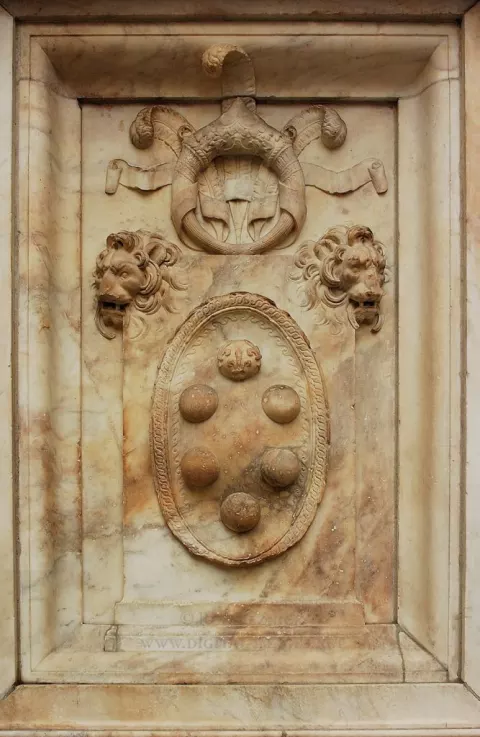
According to sources, the famous Medici family of Florence originated from the village of Cafaggiolo in the Mugello north of Florence. Its coat of arms, composed of the three round shapes which most likely representing pills, suggests that in the early history they have been engaged as pharmacists or physicians.
The first prominent member of the family and the founder of the bank was Giovanni di Bicci (1360-1429). Born in a family of a modest nonbusiness man, Giovanni was one of the five sons of Averardo di Salvestro, called Bicci, and Giacoma Spini, who following the death of his father, inherited a small share of the family assets.
Therefore, the figure who was crucial for Giovanni's professional rise and success was actually his distant relative, certain Vieri di Cambio (or Cambiozzo) de' Medici (1325-1395), at the time one of the leading bankers of Florence with business operations extending to Florence, Rome as well as
abroad. Presumably using family connections, Giovanni along with his elder brother Francesco went to their relative to work as apprentice in his banking firm, as was a usual practice in early Renaissance Italy.
Highly capable and ambitious, Giovanni took the maximum advantage of that experience for its further personal and professional development. In 1385, at age of 25 he ascended as a manager as well as a junior partner of the Roman branch of his cousin's firm, investing most likely his wife's dowry to provide the necessary capital. The partnership resulted in “joined enterprise of Vieri e Giovanni de' Medici in Rome”, and lasted till Vieri's retirement when Giovanni took over the whole business. In 1386, he became a member of the Arte del Cambio, the guild overseeing international bankers.
In the year 1397 Giovanni relocated the firm's headquarter from Rome to Florence, the principal banking center of Europe. That event marked the foundation of the famous Bank of Medici, which motto became “Col Nome di Dio e di Bona Ventura” (“With the Name of God and Good Fortune”).
Heyday of the Medici Bank
During Cosimo's management, the Medici bank became the largest banking house of its time. In the middle of the 15th century it included the Tavola in Florence, three branches in Italy (Pisa, Roma and Venice), four branches outside (Avignon, Bruges, Geneva and London), and three industrial establishments (two woolshops and one silkshop).
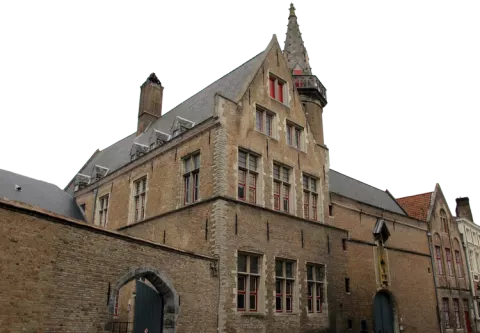
Although they have been doing business in Flanders and England from 1416 by means of correspondents, the Bruges branch was not founded until 1439 and the London one until 1446. In 1446 they also decided to open a branch in Avignon, a former papal seat and the most important center in southern France. With the possible exception of Pisa, all these branches were controlled and wholly or partly owned by the Medici bank.
The great financial power was in those days inseparably linked to political one. While Cosimo's father carefully avoided involvement in politics and forcibly performed duties of a prior and of a Gonfalonier of Justice in order to avoid
conflicts with the ruling Florentine's powers, Cosimo was of a different opinion. He was very well aware of the fact that business people don't prosper without taking a share in the government.
At the very beginning, Cosimo came under the ruling elite in Florence, which was led by the powerful family of the Albizzi, and was banished from Florence due to excuse “of having sought to elevate himself higher than others”. But, after a year in exile he managed to return in triumph and eventually to establish the rule of the Medici family over the
Florence which lasted also for his heirs.
Although the republican institutions were apparently intact, the effective and the real power were placed in Cosimo’s hands who controlled all aspects of public affairs during his lifetime. Perhaps his greatest achievement in the field of politics and diplomacy was maintenance of the famous General Council of the Greek Orthodox and Roman Catholic Churches in city of Florence in 1439 thanks to his close friendship with the Pope Eugenius IV. This event gave to him and Florence a great prestige in contemporary Europe.
Because of his great contribution to the Florentine Republic, he was proclaimed “Pater Patriae”, or the father of his country. Although he was surrounded by luxuries all his life, his last wish was to be buried simply as ordinary citizen.
Decline
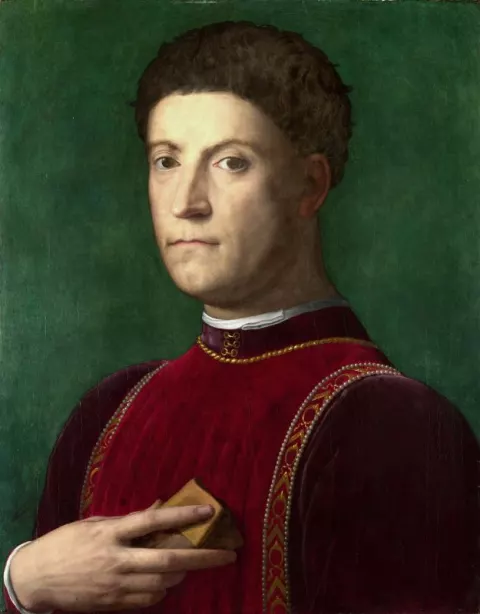
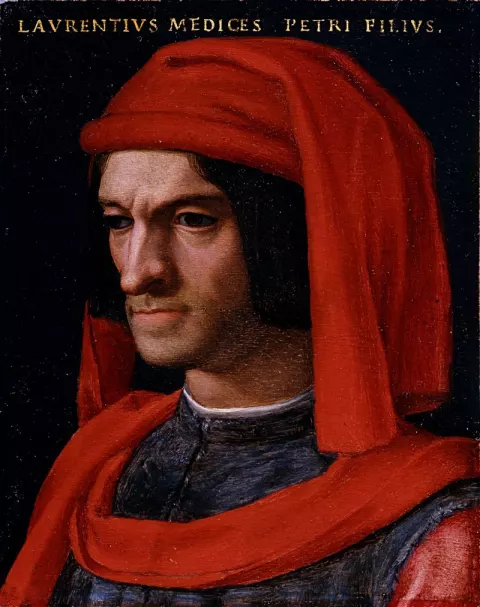
At the time of Cosimo’s death, the Medici business empire was at the height of its power. This will change in the coming years as his heirs were trained as humanists rather than a businessman. Cosimo’s successor, Piero the Gouty (1416-1469) was gravely ill during his lifetime and hence unable fully devote to issues of work. In management of the Medici house he was succeeded by Lorenzo the Magnificent (1449-1492) the great statesman and patron of arts who unfortunately did not share Cosimo’s talent and interest for business.
The crisis of the Medici house began with decline of the London branch office. The War of the Roses which was fought between 1455 and 1485 was fatal for lives and properties of many English nobles which resulted that the company could not collect its claims. The branch’s condition had further deteriorated after wool-dealers’ guild in Calais succeeded to restrict the rights of foreign merchants to export English wool on which depended Medici's manufactures. To overcome this prohibition the Medici branch managers were actually compelled to make risky loans to English king Edward IV in return for special export licenses and immunities from export tolls. Piero de Medici was aware of the unfavorable development and altered the form of London partnership in “accomenda” in 1465 to prevent any future losses. However, as things continue to develop the royal loans reached £10,500 which was a sum that no royal privilege could cover. By 1472, the London office was financed solely by deposits paying 12 to 14 percent annual interest, and in that moment Piero abandoned London and transferred the net assets of London to Bruges partnership.
The branch office in Bruges was managed by Tomaso Portinari. The Medici “maggiori” formed two separate partnerships for business affairs in Low Countries. The first included secure and profitable wool trading business. Maggiori accepted a 55 percent profit-loss sharing ratio, while the active partners received 45 percent. The second partnership was more speculative including various enterprises originating from Portinari’s poorly thought-out plans of helping financially to Charles the Bold, duke of Burgundy to build a Kingdom. Maggiori’s ratio was much higher 62,5 percent while their agents received 27,5 percent. However, the operations in Bruges proved to be unsuccessful eight years later. The rights to farm the tolls on wool imports entering the port of Gravelines did not bring profits, nor the unsuccessful exploratory voyages around the west coast of Africa in 1475. The death of Charles the Bold in battle called into question the collectability of the loans, which were amounted to 16,500 groat or three times the amount the “maggiori” authorized the branch to extend. So, in 1481 and Bruges partnership was closed down to cut the losses. On top of that, in 1478 the Medici’s finances experienced another blow when the Pazzi family that ran the second largest bank in Florence, used their vulnerability and took over the lucrative papal business.
However, the ultimate collapse the Medici Bank experienced in 1494 as result of political rather than economic reasons. The French monarch Charles VIII invaded Italy to seize the Kingdom of Naples and used an opportunity to capture Florence and confiscate Medici properties. Although the Medici succeeded with the help of Pope to return in their native city and largely retrieve their power and reputation, the great days of the Medici banking house were behind them.
Legacy of the Medici Family
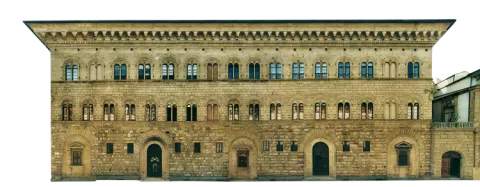
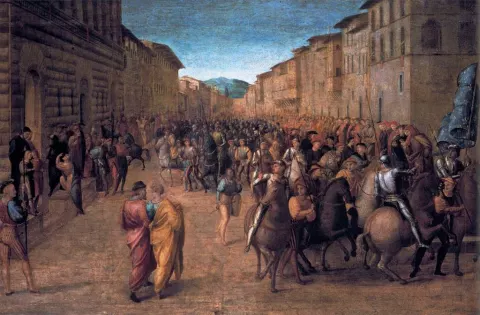
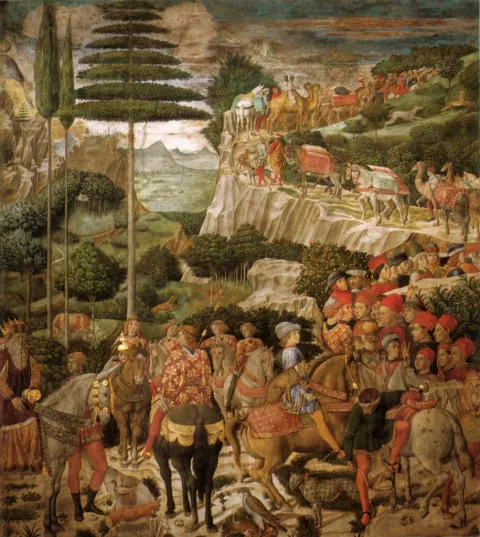
The Procession of the Three Wise Men Fresco by Benozzo Gozzoli, in the Cappella dei Magi, at Palazzo Medici Riccardi in Florence, Italy.
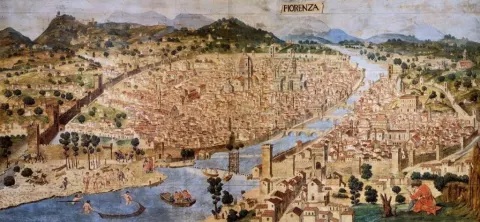
Florence is often named as the birthplace of the Renaissance. The Medici family, which controlled Florence throughout much of the Renaissance, had a significant role in its economic, political and cultural development.
Besides being successful businessmen, the Medici’s were also a famous humanists and philanthropist of the time. Under their rule, Florence became the center of the humanism, science and culture. The Medici has generously invested funds into the building, restoration and decoration of numerous churches, convents and charitable institutions of Florence and its countryside. Besides noble motives, these actions also had a strong propaganda and advertising purpose.
As a great supporter of education, Cosimo recreated the famous Plato’s ancient academy in his villa of Carreggi.
He also owned a library that has been recognized as one of the most valuable in the world, and served as a model for the Vatican library in Rome. His agents all over the Europe and Near East were buying important books and manuscripts on his instructions, thus patiently creating one of the largest libraries of Renaissance which became known as the Biblioteca Laurenziana.
Under Medici patronage, many artist as sculptors Donatello and Lorenzo Ghiberti, arhitects Brunelleschi and Michelozzo, painters Fra Angelico, Andrea del Castagno, and Benozzo Gozzoli, as well as Verrocchio, Leonardo da Vinci, Botticelli, and Michelangelo being only some of them, perpetuated the splendor of Medici rule over the Florence. It is estimated that Cosimo during his lifetime spent an extraordinary sum of approximately 600,000 gold
florins supporting architecture, scholarly learning, and other arts. In the 17th century under the patronage of Cosimo II worked a famous philosopher, mathematician and astronomer, Galileo Galilei.
The great power and prestige of the Medici family is also revealed by the fact that they successfully turned the economic power into political one – the family gave four popes – Leon X, Klement VII, Pio V and Leon XI, and two queens of France – Catarina de Medici and Mary de Medici, while their heirs became rulers of many Western European countries.
Organization of the Banking House
Scope of activities
Organization of the Banking House
Scope of Activities
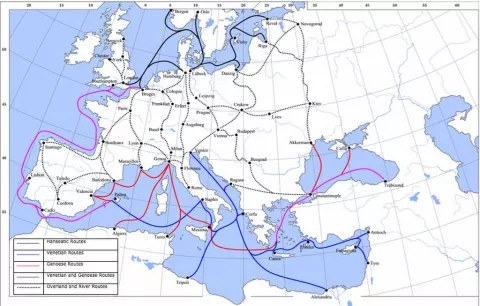
By its features the Medici Bank belonged to the so-called “Banchi grossi” (literally “large banks”) or large international merchant-banking companies whose financial activities stretched from England and the Netherlands to North Africa and the Middle East. Its business activities included large scale trading operations, manufacturing activities and extensively lending.
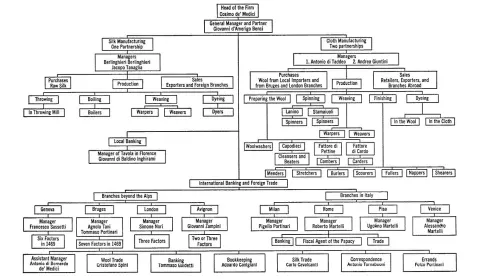
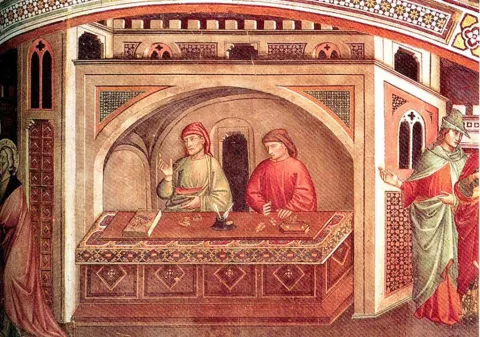
Medici Company is considered a prototype of holding company. Medici Bank represented the main company ran by a member of the Medici and his general managers. Below the bank came three semi-independent divisions. The first two were silk and woolen cloth manufacturing enterprises. Each had its own internal structure with its own accountants, production facilities, distribution and agents for purchases and sales. The third division was formed by banking and international trade which consisted of the Tavola, the banking head office in Florence and the eight foreign branches.
The great success that of the Medici business can be partly explained by the strong characters of its leaders, as well as their closely knowledge of advantages and disadvantages in running banking business.
management
Organization of the Banking House
Management
In the mid-15th century, the Medici Bank was structured as series of partnerships. At the top were the “maggiori” who were a kind of board of directors, predominantly comprised of the Medici family members. Below these was the Central Office ran by Medici who performed the function of present chairman, and by a general manager, that was the equivalent to the chief executive officer and who oversaw all operations. The Medici were very successful in finding and rewarding managerial talent. Antonio Salutati and Giovanni d’ Amerigo Benci were extremely talented managers in service of the Medici family.
partnerships
Organization of the Banking House
Partnerships
The main device for controlling those divisions and numerous branches was the partnership. The Medici were able to successfully exploit the potentials of the flexible “compagnia” contract to expand the scale and scope of their operations, and to experiment with different business strategies. Usually the same group of partners formed a number of partnerships, but occasionally they take in outsiders who had the necessary capital, skills or market knowledge. In return for their skills and knowledge the outsiders received a share of the partnership. Partnerships were of short duration and lasted usually two years whereupon they were renewed or dissolved.
The Medici policy was to avoid the pitfalls that have led large banking houses of the Bardi and Peruzzi in ruin.
Unlike the leading banking houses of the Bardi and the Peruzzi of the 14th century which organized their business in the centralized way – comprised of a home office and abroad branches which formed a single-unit, the Medici have opted for the other, more favorable form, and as it is said, their enterprise was rather organized as a combination of partnerships all controlled by a main firm.
While centralized companies have divided its capital into shares, as well as net profits which were subsequently divided proportionately to the number of shares held by each partner, in the case of the Medici bank, a parent company controlled the subsidiary partnerships by owing more that 50 percent of the capital wishing to prevent loss of control over the company.
Furthermore, each branch of the Medici bank represented a separate legal entity, so called “ragione”. The branches acted independently and owned its own capital, books and management. At running the business branches operated in the universal manner, no matter if it was a case of another branch or outside client – they charged a commission to each other, and when operated jointly they determinate in advance how the profits or losses were to be divided. In this way the Medici wanted to prevent that collapse of one branch withdrawn and others in economic difficulties.
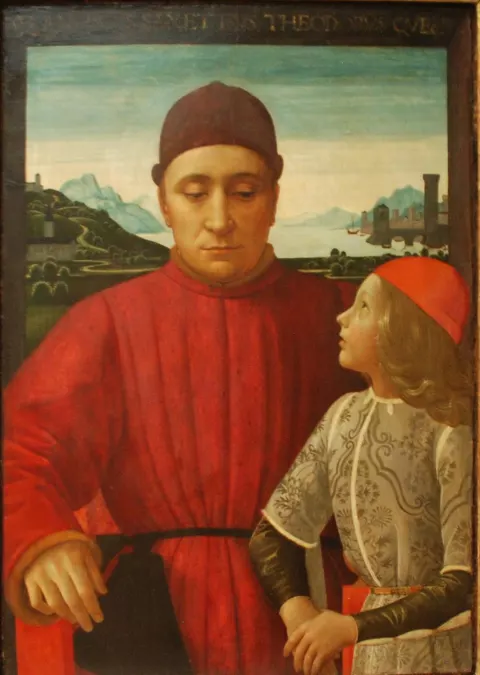
Another innovation employed by the Medici bank which greatly contributed to its performance, was use of the franchise system according to which regional branch manager owned a share and participated in the profits of his subsidiary. Appointing at that post a junior partner, and not the salaried manager (fattori) like the Bardi and Peruzzi, the Medici wanted to encourage the branch managers to provide a greater incentive when they recognize the business opportunity, and to made profits and avoid losses for mutual benefit. Several families, particularly the Benci, the Martelli, the Taddei, and the Berlinghieri enriched themselves in the service of the Medici family thanks to their competence and commitment.
During the first years after entering a new business territory, the Medici weren’t inclined to assume unlimited responsibility and usually concluded a limited partnership contracts (accomanda) as was the case with Bruges, Ancona, Avignon and others, according to which they were not liable for any debts beyond their original contribution. Later, when the new business became firmly established they returned to traditional “compagnia” partnerships.
Although the Medici senior partners (“maggiori”) did not practiced highly centralized form of decision making like their forerunners, nevertheless they did placed regal restrictions on the types of activities allowed to branch managers. For example, imprudent business moves and highly risking lending to kings was in general prohibited.
Although the Medici bank was the largest banking establishment of the 15th century it is interestingly to notice that it never employed more than sixty-five people.

Early years of the Medici Bank
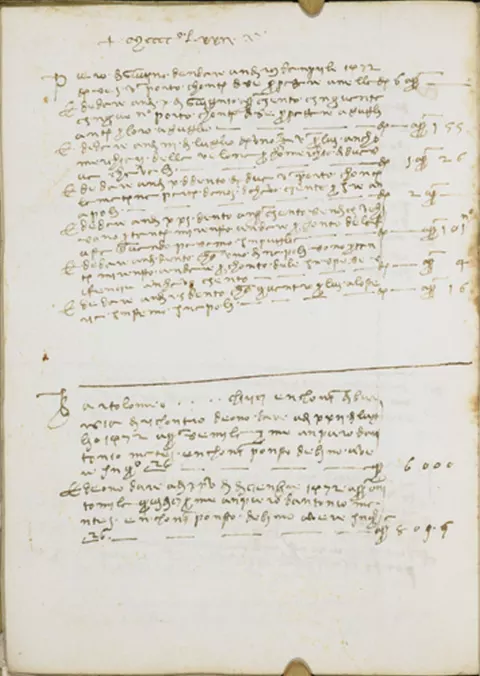
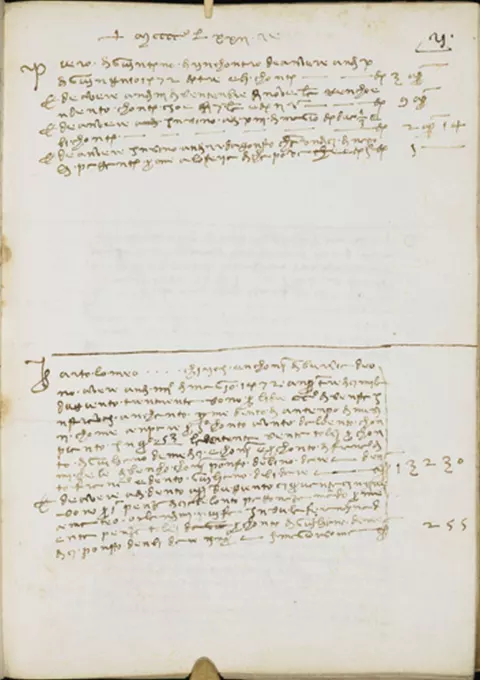
The Medici Bank was founded with equity of the modest 10,000 florins but with time it was considerably enlarged by client deposits in branch offices.
Under Giovanni’s management the Medici Company turned to other profitable activities. In 1402 the Medici expanded their business affairs to Venice, the leading trading republic of Italy. The Medici branch office provided the Venetian entrepreneurs with a necessary capital for operating long-distance trade. The same pattern the Medici applied to other key Italian cities.
Since Florence was in the 14th and 15th century a center of European wool trade, Giovanni joined to the guild “Arte della Lana” and extended its activities to wool production. Recognizing a good opportunity, he also began to trade in wool, silver and alum, which were vital products for the textile industry.
In 1402 Giovanni opened a workshop (bottega) for the production of woolen cloth, and according to an old Florentine tradition the shop was named by his elder, and in that time minor son Cosimo. In 1408 the second manufacture was established that bore the name of Giovanni's younger son, Lorenzo. Giovanni provided the most or the whole capital, while the management over the shops was entrusted to specialist in cloth industry. Although the wool shops were a considerable source of incomes for the Medici family, they were actually negligible in comparison with profits made in banking.
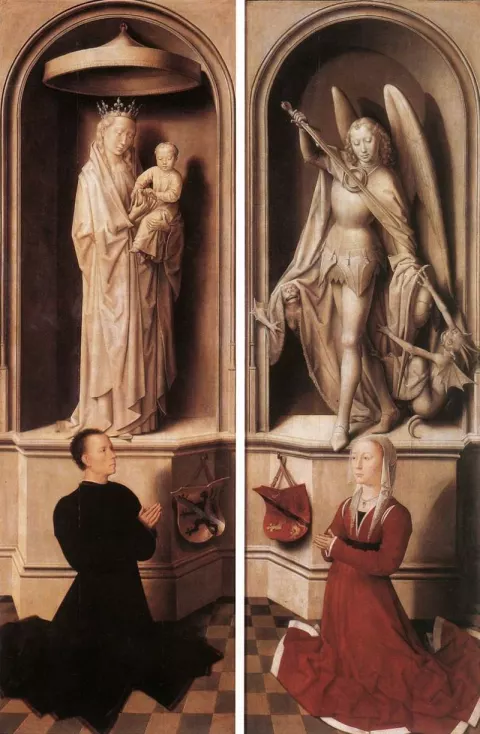
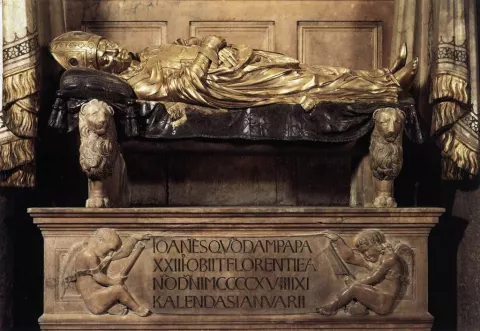
However, the greatest source of income for the Medici family came from their appointment on the post of Pope's banker. It was the most prestigious and lucrative office for the banker in the Christian world. Through history, the Papacy was the only power which collected revenues in many countries, wherefore it was forced to employ international bankers in order to transfer its funds where needed. Although Giovanni developed ties with the Papal Curia while working for his cousin Vieri, yet the acquaintance and business arrangements with Cardinal Baldassare Cosa, who later became Pope John XXIII, were crucial for obtaining the position of “God’s bankers”.
Acting as a Pope's personal bank, the Medici family gathered immense fortune. The branch in Rome was the most important and the principal source of family's profits, producing more than half of the total during the period from 1397 to 1420. Furthermore, papal connections also gave to the Medici immense political influence and paved the way for their conquest of political power.
Yet during his lifetime, Giovanni de Bicci called the “Friend of the People” became one of the richest men in Italy. His fortune upon his death was worth around 180,000 gold florins, which was astonishing sum in that time. But, the real founder of the business and political empire of the house of the Medici was in fact his son, Cosimo (1389-1464).After 1420, Giovanni had gradually given more and more authority to Cosimo, informing him about all business secrets and preparing him to assume supreme command. The old Florentine chronicle reports that even while he was lying on his deathbed, he gave to his sons and the members of his family oration full of homely advice about the conduct of business and political affairs.
Last years of his life, Giovanni spent as patron of arts and he was responsible for rebuilding the sacristy of the Church of San Lorenzo which was destined to be his burial place.
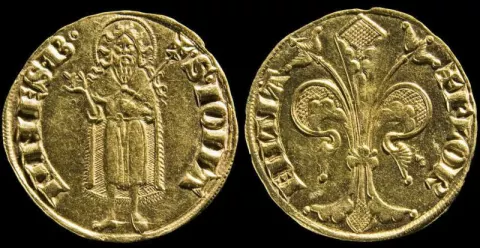
15 lives in this room
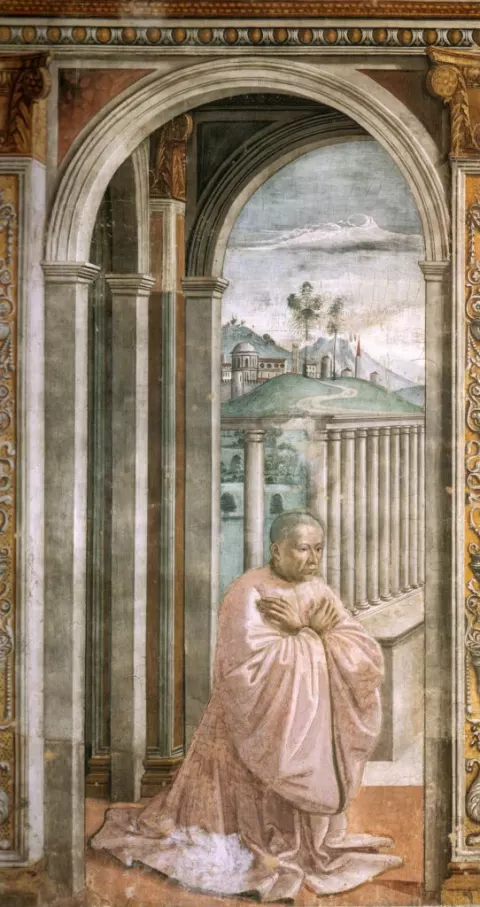
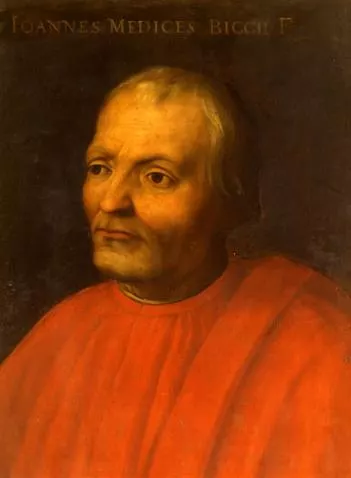 Giovanni di Bicci de' Medicic. 1360-1429
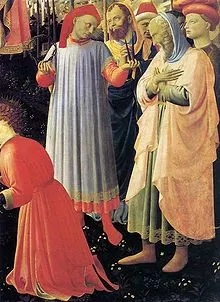 Palla di Onofrio Strozzi1372-1462
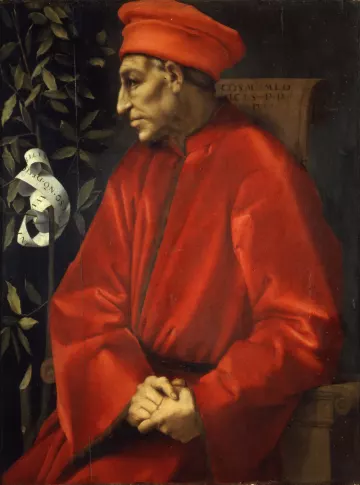 Cosimo de’ Medici1389-1464
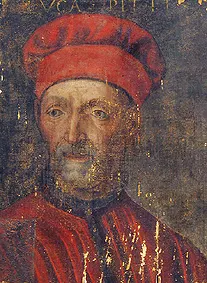 Luca Pitti1394-1472
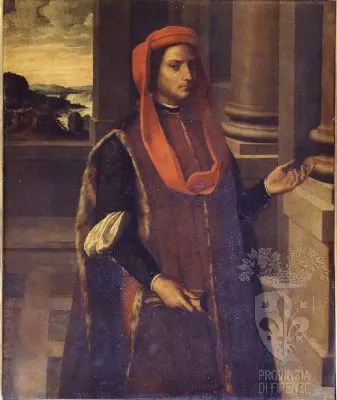 Lorenzo the Elderc. 1395 – 1440
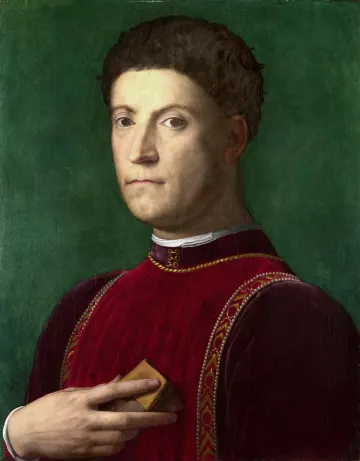 Piero di Cosimo de’Medici1416-1469
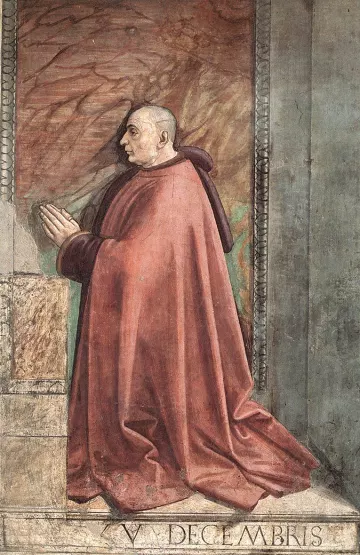 Francesco Sassetti1421-1490
 Giovanni di Cosimo de’Medici1421-1463
 Tommaso Portinaric. 1424-1501
 Giovanni Tornabuonic. 1428 - c. 1490
 Pierfrancesco de’Medici the Elder1430-1476
 Lorenzo de’ Medici1449-1492
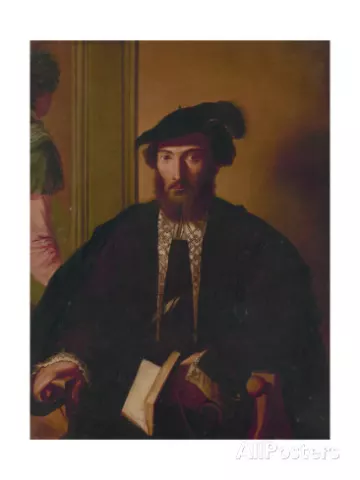 Amerigo Vespucci1451-1512
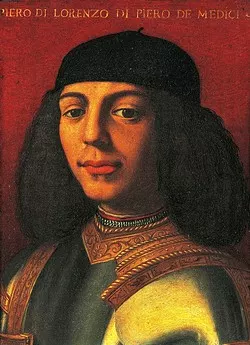 Piero de’Medici “the Unfortunate”1472-1503
More lives in this room
- Giovanni Benci 1394-1455