No. 4225
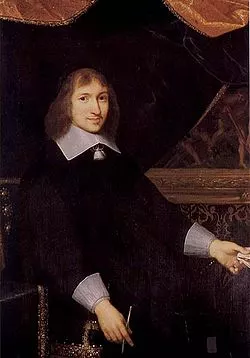
Nicolas Fouquet
Through his financial expertise, Fouquet was able to replenish the state treasury and to acquire great personal wealth which made him the wealthiest and most powerful man in the 17th century France.
Born in 1615 in Paris into a wealthy family that belonged to the court nobility, Fouquet entered the legal profession at a very young age. In 1636 he bought the post and started a career as maître des requêtes, a court office. In the period between 1642 and 1650 he was one of the intendants, that is, officials in charge of overseeing the provincial governments’ financial, policing and juridical activities. In 1650 his career went one step further when he gained the prestigious and influential office of procureur general, which is attorney-general. In 1651 he married Marie de Castille from a wealthy aristocratic family.
After the Wars of the Fronde broke out in 1648, Cardinal Mazarin and the young king Louis XIV were forced to leave Paris and were able to return in 1653. During their absence, Fouquet remained loyal to the Crown and their material interests. For his loyalty and effective service, he was in 1653 awarded with the post of surintendant de finance or finance minister. That was the highlight of his career. By controlling the king’s finances and the judicial court’s activity Fouquet became the most powerful man in France. His financial operations, some of which were conducted in an irregular manner, made him rich and replenished the royal treasury and provided necessary funds for the administration, wars and lavish lifestyle of the court.
The symbol of Fouquet’s ascendance and prosperity became Vaux-le-Vicomte, the most beautiful and luxurious château in France, which would serve as the model for Versailles. During the king’s visit, Fouquet entertained six thousands guests with a tour of his gardens, a dinner, a ballet-comedy and numerous fireworks. He also became a generous supporter of numerous artist and writers of the 17th century France.
After Mazarin’s death, Fouquet hoped to become a prime minister of France. However, Jean Baptiste Colbert, who also had political ambitions started to plot against Fouquet. Charges fell on the fertile ground since the king was already jealous of Fouquet’s great wealth and power.
In 1661 Fouquet was arrested at Nantes. In 1664 he was found guilty of conspiracy and of embezzling state funds, and sentenced banishment from France, but the king commuted the sentence to life imprisonment. He died 15 years later in prison at the fortress of Pignerol.
All his fortunes were confiscated by the Crown.