No. 4338
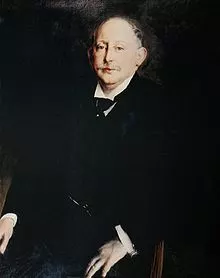
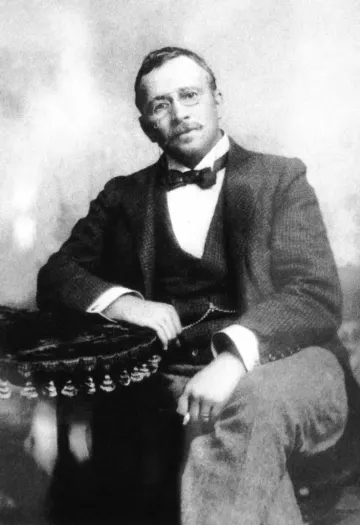
Alfred Beit
Financier
Alfred Beit was born in Hamburg to a family descended from Portuguese Jews but was Lutheran by religion. He was educated privately until he entered the office of an Amsterdam diamond merchant at the age of 18. After learning the trade he joined a firm from Amsterdam, D Lippert & Co, and was sent in 1875 to the Cape Colony in South Africa as its representative. After three years in Kimberley, the diamond mining centre, he returned to Hamburg where he contemplated on how the Cape diamonds had an entirely undeserved reputation as an inferior stone. In the same year he borrowed £2,000 from his father, returned to Kimberley, and set up under his own name as a diamond merchant. Beit recognized the potential f Kimberly and its lack of business premises so he bought a piece of land and built twelve corrugated iron sheds for offices and rented eleven out monthly and kept one for himself. The rent ultimately received by him was around £1,800 a month, and later he is believed to have sold the ground for £260,000.
In Kimberly, Beit teamed up with Julius Wernher, a fellow diamond merchant. By 1890, Beit and Wernher worked together through the firm Wernher, Beit & Co. Beit also got acquainted with Cecil Rhodes, and played an important part in Rhodes's great scheme for the amalgamation of the chief diamond mines of Kimberley as De Beers Consolidated Mines. Beit obtained the assistance of the London Rothschilds, and became a life governor in De Beers Consolidated Mines when it was formed in 1888. Beit and Rhodes also established the British South Africa Company for the administration of the territory that became known as Rhodesia. Beit had a part in the development of the country second only to that of Rhodes himself.
Alfred Beit left over £8m in his will, mostly to his brother, but his gifts to charities, hospitals, and education amounted to £2m. In 2010’s money, his fortune would have been over £4.8bn.