Museum / Rooms / The rise of the House of Rothschild
Room · 4 chapters · 9 lives
The rise of the House of Rothschild
The name of these famous bankers, philanthropists and patrons of arts is a synonymous for wealth and prestige for more than 250 years
Before he died in 1812, Mayer Rothschild left strict rules for his descendants on how they should handle the family's finances. In order to keep the fortune within the family the Rothschilds practiced intermarriages. Four of his granddaughters married grandsons (first cousins), while one married her uncle.
Who are the Rothschilds?
Beginnings of the Rothschild family are related to Mayer Amschel Rothschild, the family patriarch who lived in the 18th century Frankfurt on the Main and served as a Court Jew or personal banker of German nobility. He established the banking business in 1760 and by 1820s he turned it to international enterprise by dispatching his five sons to Europe’s financial capitals – Germany, Austria, Britain, Italy and France.
The Rothschilds coordinated the banking activities throughout Europe and emerged as the wealthiest family in the world. They formed close connections with the ruling dynasties in the countries where they established banks. Beside their ability to successfully perform financial transactions, the Rothschilds were also renowned for their rapid system of communication and discretion.
Financial wizards
The Rothschild provided services to many of European governments at a critical time during the late 18th and early 19th centuries. However, the Napoleonic Wars (1803-1815) fought between European monarchs and Napoleon Bonaparte were the foundation of their wealth.
During the war, the brothers managed and financed various subsidies that the British government sent to its different allies and loaned funds to pay the Duke of Wellington’s army in Portugal and Spain. In the post-war period, they also handled a huge French indemnity loan (£120,000,000) to the allies. Allegedly, when the war ended in 1815 the Rothschild were among the richest, if not the richest men in Europe.
Waterloo 1815 – or what means having the right information at the right time
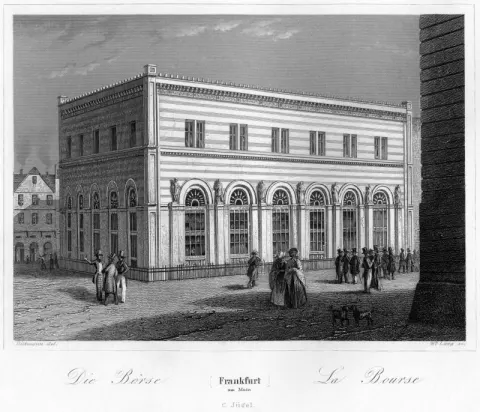
Determined to make a huge gain or loss based on the outcome of the Battle of Waterloo in 1815, Nathan performed one of the wildest financial moves ever. According to urban legend, he was first to hear the news of Napoleon’s defeat by way of courier pigeons and he used it maximally in its favor. He went on stock-exchange and start selling all of his bonds, encouraging rumors that Napoleon had won and that English government paper would soon be worthless.
The English in panic followed his move. The mass selling resulted in total collapse of the stock exchange. Then, Nathan sent his agents to grab bonds and stock at record low-prices, and made a fortune. Two days later it was officially confirmed that Napoleon lost the war.
From the ghetto Jews to the European nobles
In gratitude for their service in 1822 the Austrian Emperor ennobled the brothers who were declared barons and members of the European social elite. However, Nathan, to his dying days, never used the title.
The Rothschild coat of arms is quartered with a fist holding five arrows; symbolizing the father and brothers and their unity. Their motto “Concordia, Integritas, Industria” referred to the qualities which lead to their success – unity, integrity and hard work.
Mayer Amschel Rothschild was honored by Forbes as the seventh-most influential businessman of all time.
Bold, temperamental and highly intelligent Nathan was a key figure in family's expansion. With funds of £20,000 and not knowing the language, Nathan came to England and raised the family’s fortune to unimagined proportions.
N M Rothschild & Sons Ltd founded by Nathan in 1811 is the country's seventh oldest bank in continuous operation.
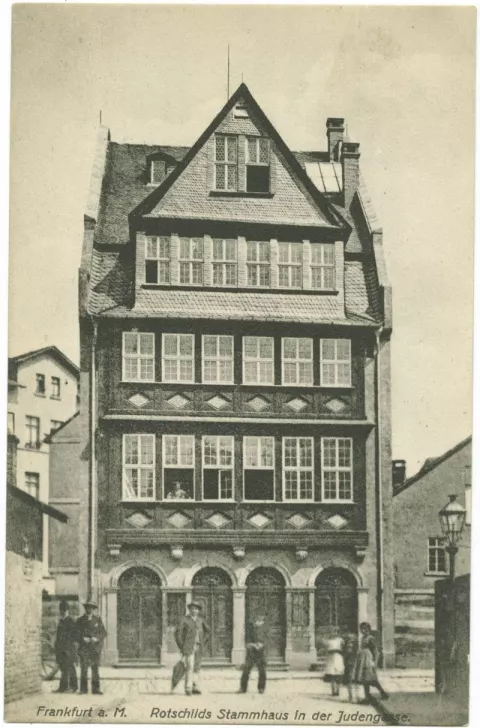
The name of the family is derived from the German "zum rothen Schild” meaning "with the red sign", in reference for a sign of recognition on the house in Ghetto where the family lived for many generations.

Chapters
- Living on margins
- Mayer Amschel Rothschild
- Political events as positive entrepreneurial impulses
- Financial wizards
Living on margins
The story starts in the 18th century Frankfurt on the Main, the city which due to its favorable position served as a natural gateway for the trade of Germany with the western states and England, and represented one of the most important cities in the Holy Roman Empire. Although it was a place of business opportunities, at the same time it was a place of different limitations for one group of people – the Jews. Restricted to a particular quarter of the city, to the so-called “Jewish City” situated between the city walls and trench, they were subjected to various rules and prohibitions, both professional and physical. Treated as a foreign element in the town, they were obliged to purchase the protection of their persons and property, and to pay a poll-tax. An occupation as farming or handicrafts were forbidden to them, as well as possessing a land, while trading, although allowed in general, was approved only in specific commodities. Visiting public taverns and more attractive walks in the city was not allowed as well. Largely limited to the area of ghetto, the Jews were additionally forbidden to leave it by night, on Sundays, and holy days.
The houses in the “Jewish city” of Frankfurt, comprised by one narrow and sunless street, differed among themselves by a sign or a shield of particular color posted on a front door. One of the houses had for a sign of recognition a small red shield. It was the house of the Rothschild family.
From this humble and unfavorable conditions marked by a physical, professional and social marginalization have emerged one of the brightest business dynasties in history.
Mayer Amschel Rothschild
The Rothschild’s ancestors were present in Frankfurt from the mid-16th century and were engaged in various kind of retail trade and in small scale money changing. But, it wasn’t till the birth of Mayer Amschel Rothschild in 1743 that the family started its ascent.
Already as a child, Mayer was introduced by his father in changing coins of every kind although he was destined for the rabbinate. His life path suddenly changed at the age of 12 when following his father’s death he left the Talmudic college and spent the next eight years acquiring banking skills in the successful firm of the Oppenheims in Hanover. About 1760 when his apprenticeship expired, he returned to Frankfurt and started business for himself.
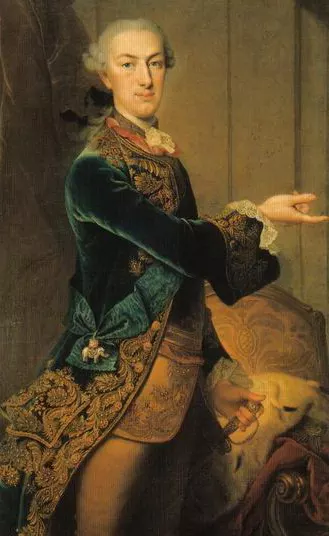
In that time the German state, that was divided into numberless small principalities, cities and spiritual jurisdiction all of which had their own currency system, was a perfect environment of gaining profit for those who recognized opportunity and possessed an entrepreneurial spirit. But, an opportunity that opened a door to Mayer Amschel’s rise appeared to him, surprisingly, because of his hobby. Namely, since childhood Mayer Amschel was interested in numismatics and possessed rare and historically valuable coins. Eventually, this brought him close to another ardent coin collector -- William IX, hereditary Prince, Landgrave and after 1803 Elector of Hesse-Kassel, a small principality in the central Germany. Its ruling dynasty, related with English and Danish royalty, was one of the wealthiest ruling houses of Europe. Its core business occupations were training and hiring of professional armies to different rulers for waging wars, mostly to the English king, as well as money lending on a large scale all over the Europe.
After the death of his father, Prince William’s personal fortune augmented by the hereditary one made him perhaps the richest man in Europe. Bankers involved in his business operations could made fortune from buying and reselling his English bills and from placing his constantly growing capital in secure investments. Mayer was well aware of what significance for his business would be the intertwining of their life paths, and he patiently worked on creating of that opportunity.
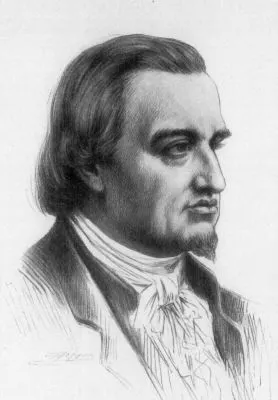
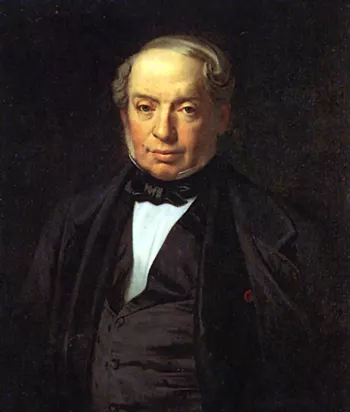
In the meantime, Mayer also worked on improving his social and material position. In 1770 he married Guetele, the daughter of a prosperous tradesman Wolf Solomon Schnapper, who bore him twelve children. Five of them were sons -- Amshel (1773-1855), Solomon (1774-1855), Nathan (1775-1836), Carl (1778-1855) and Jacob, called James (1792-1868) -- represented in Rothschild’s coat of arms as five arrows. They will become his most reliable and devoted business partners, entirely dedicated to rising of the family's business.
The next fifteen years, Meyer continued operating on a small scale in commodities as tea, coffee, sugar and spices, changing money and expanding his coin-collecting business. However, that brought him an annual income from 2,000 to 3,000 gulden that provided to his family a quite comfortable life and a new house, marked by the green shield. The business world of Landgrave William, that is, his biggest and most profitable business transactions were still elusive for him – the situation that will gradually change, thanks to his persistence, greater business capacity and the close connections with the William’s financial adviser, Carl Federick Buderus.
Political events as positive entrepreneurial impulses
The real foundation of the future Rothschild’s fortune actually came with one political event in their neighborhood – the French Revolution. The French Monarchy which relied on the wealthy nobility and clerical class was in one blow brought down and replaced by the Republic. The revolutionary armies, inspired by the ideas of liberty and equality, were eager to spread their achievements to other countries. But, the old, noble and conservative Europe looked at these events as a major threat to its survival and aimed to preserve the “ancien régime” at all costs. The conflict was inevitable and soon the war spread all over the Europe.
In the period between 1793 and 1816 altogether seven coalitions of states opposed to Napoleon, one of the greatest general in world history. Frankfurt as well as the Rothschild’s family will derive great benefit from these events. The war trade soon started to flourish and Frankfurt became the center of that trade.
The Rothschild’s, that is Mayer Amschel and his oldest three sons, were increasingly engaged in trading requirements such as cloth, foodstuffs and wine, amassing a huge profit. Until 1794 their annual profit was 2,000 gulden, in 1795 it was doubled and the following year they belonged to category of those whose property was worth 15,000 gulden or more. As early as 1800 Mayer Amschel had been the tenth richest Jew in Frankfurt.
In 1798 the firm has entered into a phase of expansion by opening its first branch office in England. The aim of this action was to extend the field of operation and to bypass the English intermediaries. Since the two eldest sons, Amschel and Solomon were already involved in the Frankfurt business; the choice fell on the 21 year old Nathan. Bold, temperamental and highly intelligent, he was a perfect person for that task and soon he will become a key figure in family’s expansion. As Salomon in one letter wrote “… he is the commanding general” and “I am his field marshal…”. With funds of £20,000 and not knowing the language, Nathan came to Manchester where he established himself as a textile and general merchant. In that time, on the Continent there was a great demand for cheaper and more quality textile from England. In 1804 he established himself in London, and a marriage with Hannah, the daughter of a leading London merchant Levi Barent Cohen provided him with necessary capital and social relations. There he developed banking activities, dealing in bills of exchange and arranging foreign loans. Within a few years, Nathan had established his own bank N.M. Rothschild and Sons (1811), at New Court, St Swithin’s Lane, and founded the Alliance Assurance Company (1824).
When in 1806 Napoleon imposed the continental blockade of England in order to weaken its economic power, the state remained cut off from its supplies of raw materials, as well as export markets on the Continent. Colonial products such as coffee, sugar, and tobacco became extremely expensive on the Continent. In smuggling activities which were almost immediately established, the Rothschild’s having the bases both in England and in Northern Germany and an efficient network, were more than successful. By 1808 Nathan already succeeded to earn a reputation as a man who had, thanks to his superior “management, judgment, foresight and connections,” regularly “succeeded in getting goods to the Continent”—though “not a word was passed about . . . how the goods had been sent.”
In the same year when the blockade of England was established, Napoleon founded the Confederation of the Rhine (1806-1813) comprised of all the German states except Prussia and Austria. The Landgrave William was forced to find a refuge in Denmark. His business affairs were entrusted to the Rothschild’s, who in the meantime finally became his court agents involved in various business operations, and who during his exile became his main debt collectors and confidential advisers in various difficult matters.
Nathan who resided in England was in charge for purchase of huge amounts of British securities on Landgrave’s behalf. By discreet and excellent speculation, Nathan successfully amassed a fortune without damaging his interests. Although he accomplished a lot in a very short time, his largest business ventures have only been on the horizon. Nathan’s next move was to enter into business ventures with the British government itself.
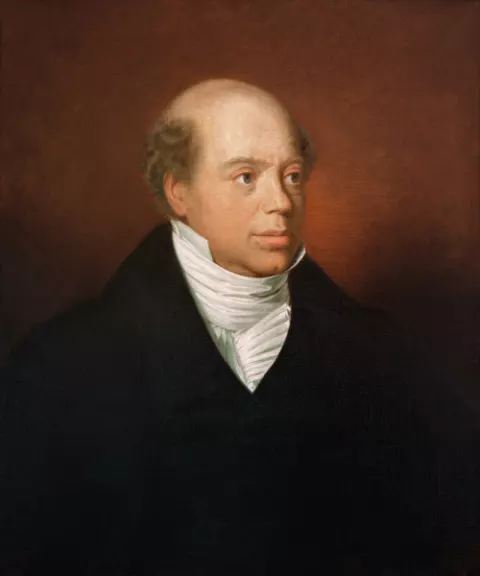
Financial wizards
In 1809 the British government faced a huge obstacle in provisioning of an army that was sent under the Lord Wellington as a support to insurgents against the Napoleon’s rule in Portugal and Spain. The situation gone out of control and Lord Wellington wrote that the troops “were selling their shoes and clothing for food and medicines”. Nathan, who was very well informed about these events, went into it.
Using all his funds, as well those entrusted to him by Landgrave, he bought a cargo of gold brought by the ship of the East India Company at a public auction for £800,000. This extravagant purchase brought him in contact with English Commissary General, John Charles Herries. In the outcome of situation, Nathan sold that gold to the state at a large profit and provided for himself the task to deliver those funds to Wellington. It was a delicate mission. But, possessing resources, branches in England and on the Continent, and agents in Spain and France he was able to performe this task successfully. This success had opened the way for further co-operation with the British authorities.
After disastrous outcome of Napoleon’s invasion of Russia in 1812, Nathan was again contacted by the British government regarding the extremely difficult task of transporting the British subsidiaries in amount of many millions to its allies – Prussia, Austria and Russia. There wasn’t enough gold for this purpose, while sending the bills could have disastrous effect on international exchange, particularly the British one. It was some kind of stalemate. With the help of the family Nathan succeeded to manipulate the foreign-bill market so that the English bills and pounds would not decline in price and that the money would be transmitted to their allies without loss and without upsetting the foreign-exchange market. They were proclaimed “financial wizards”. Beside their ability to perform complex financial transactions, thanks to this venture they also became known by their rapid system of communication and discretion.
Allegedly, when the war ended in 1815, they were among the richest, if not the richest men in Europe. In the post war period, they continued performing various financial services – they handled of a huge French indemnity loan (£120,000,000) to the allies and participated in many governmental reconstruction loans and bond issues.
Meanwhile, the small banking house founded in Frankfurt’s ghetto by the 1820s became an international bank with its branches in London, Paris, Vienna and Naples managed by the five brothers who have enjoyed a good reputation in the highest government circles.
In gratitude for their contributions, in 1822 the brothers were ennobled by the Austrian Emperor and declared Barons. But Nathan, to his dying day, never used the title. Their coat of arms is quartered with a fist holding the five arrows; symbolizing the brothers and their unity. Their motto “Concordia, Integritas, Industria” referred to the qualities which lead to their success – unity, integrity and hard work.
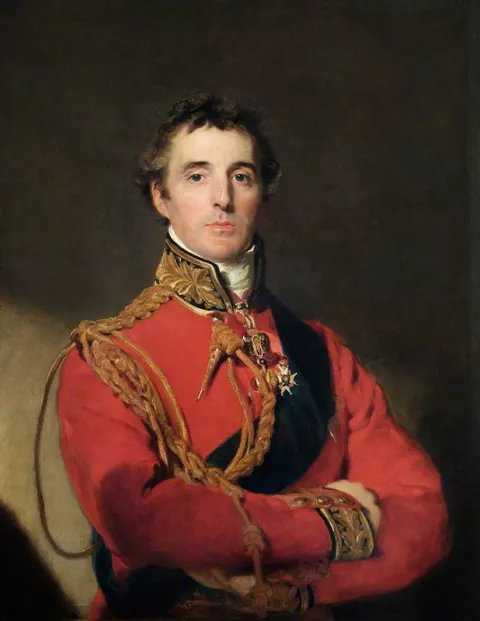
9 lives in this room
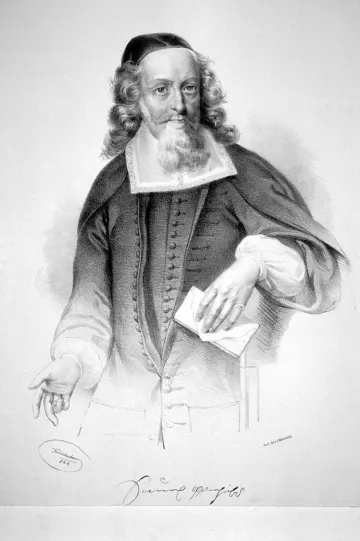 Samuel Oppenheimer1630-1703
 Levy Barent Cohen1740 – 1808
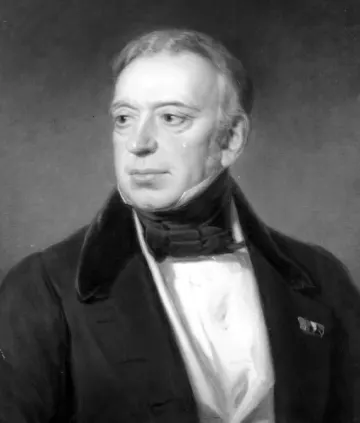 Salomon Mayer von Rothschild1744-1855
 Amschel Mayer Rothschild1773-1855
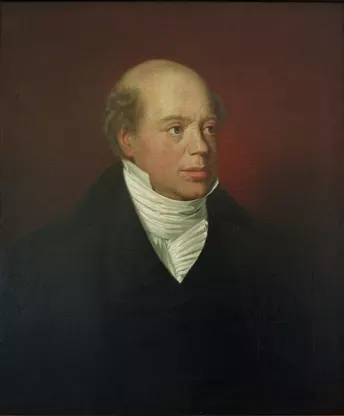 Nathan Meyer Rothschild1777-1836
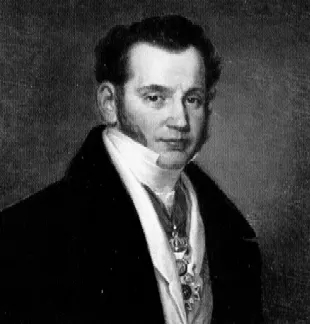 Carl Mayer Rothschild1788-1855
 James Mayer Rothschild1792-1868
 Alfred Beit1853–1906
More lives in this room
- Baron De Stern 1815-1887