Museum / Rooms / Banking in Ancient Rome
Room · 5 chapters · 5 lives
Banking in Ancient Rome
Tremendous volume of Roman economic activities brought into existence the most advanced and sophisticated financial system of Antiquity.
The ancient Romans created one of the largest and most populous empire of Antiquity. At its heights, the Roman Empire stretched from the Atlantic Ocean on the west all the way to the Euphrates River in the Middle East, and from Britannia on the north to the North Africa on the south, controlling about a quarter of Earth’s population.
Main protagonists of Roman banking
The world of Roman finances was dominated by three groups of people – the “mensarii” or public officials, the “argentarii” or professional bankers, and the Roman aristocracy. While the first group was appointed by the government, the other two carried business on their own account.
Public bankers
Economic stability of the population was an issue of major importance for the government of all periods since it was a precondition for social peace. In delicate times of crisis such as general shortages or wars, the Roman government founded public banks wherein the special officials called mensarii (lat. “mensa” means “bank”) were appointed to regulate the problem of citizen’s debts. Somewhat different type of public bankers represented “numullarii” who were employed as officers of the mint in charge for testing the quality of new coins, exchange of old coins for the new ones, and placing the new coins in circulation.
Roman elite
As a privileged and ruling class of the Roman society whose wealth was based on landholding and public offices, the Roman nobles considered direct involvement in business affairs despicable and not suitable for a nobleman. However, the high profits from business were a temptation to which they could not resist. Through system of patronage and by using the intermediation of their slaves and freedmen, they were able to participate in business without damaging their public image. The funds that the patricians provided to their slaves and freedmen as well as to other clients were deceivingly called “peculium” and “gifts”. In reality, they were extensions of credit that required repayment. The slave could use this incentive to return debts, purchase its freedom and run business independently. The patronage system was actually an explanation why so many businesses in ancient Rome belonged to slaves and freedmen.
Professional bankers
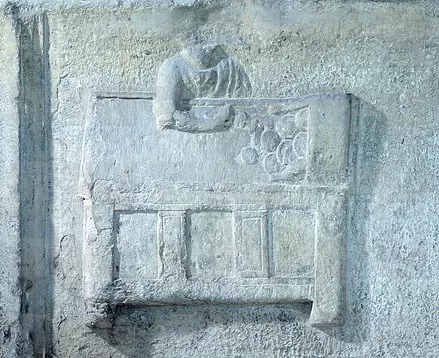
The professional money dealers in the Roman world were the argentarii (lat “argentum” meaning silver). An argentarius had to be a freeman and he usually belonged to the class of “equites” whose level of wealth was high, but below that of senators. Their banking shops called “tabernae argentaria” were located at the Forum from where they offered their financial services to clients of different economic power. A successful and skillful argentarius who ran business on a large scale enjoyed an honorable place in society.
To gain the access to business capital provided by wealthy nobles through the system of patronage many ambitious people went so far to sell themselves voluntarily into slavery.
The business books (“codices”) made of wax-covered tablets of wood, and led by argentarii were very accurate and could be used as evidence in the court of justice.
Functions of Roman bankers
The ancient Roman financial services covered various functions, ranging from testing and exchanging coins for a fee, receiving money, valuables and legal documents in deposit, collecting money at auctions, advancing and mediating loans, circulating newly minted coins and other related functions. Using primitive exchange bills, the Roman bankers practiced cashless transfer of money called “permutation”. However, the money lending business remained the activity which brought the highest profits. The regular rate for loans in antiquity was the so called “centesima” or the 12 percent a year, although it could be much higher for the maritime loans and amounted up to 30 percent or more, depending on how risky the venture was deemed.
To test the purity of gold and silver coins, the Roman bankers similarly like the Greeks relied on touchstone, a small black siliceous stone, and on comparing the color of streaks left on the touchstone.
Forgotten knowledge
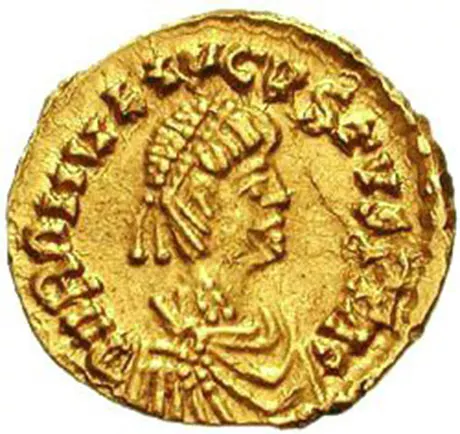
With the fall of the Western Roman Empire in 476 the level of economic and cultural prosperity dramatically deteriorated under the rule of barbarian kingdoms generally of lower cultural development. The knowledge of the advanced banking practices of the Roman was gradually forgotten and revived only in the 13th century with the economic rise of the Italian city-states.
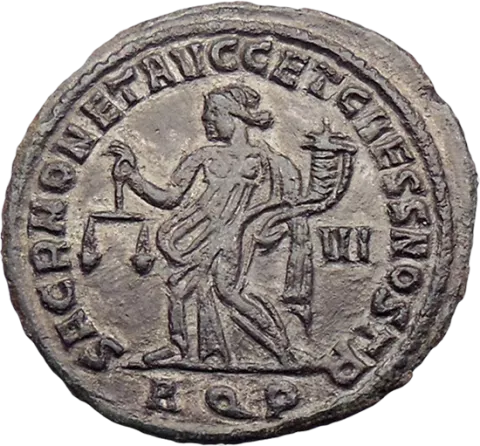
The word “money” derives from the temple of Juno Moneta in Rome where coins were made in the early times.
Chapters
- Introduction to Roman Banking
- Roman Elite
- Professional bankers
- Functions - Banking in Ancient Rome
- The end of banking activities
Introduction to Roman Banking
The ancient Romans, who were strongly influenced by Greek civilization, soon become acquainted with the banking concept that originally emerged from the Near East.
Following the same developmental sequence, the Roman banking was also initially linked to the religious temples such as temple of Artemis of Ephesus or Castor and Pollux in Rome. As time passed, the Roman bankers applied the same patterns that were found in Greece – they were in charge for receiving deposits, granting loans, maintaining accounts whose registers were accepted as proof in court; and managing customer's assets. But, the Romans who were fond of administration also made a significant progress in the administrative aspect of banking by making its institutions and practices more advanced and competitive. As a result of these efforts, in Roman times it was possible to transfer large sums of money between individuals or between places in different provinces without actually moving coins.
Various financial activities in the ancient Rome have been the field of interest of two main group of people − elite members of society and professional dealers in money.
Roman Elite
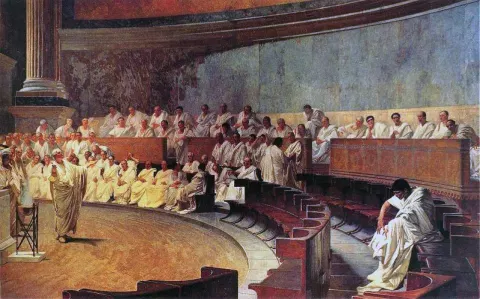
The patricians, or landowning elite that monopolized political and social life of the Roman state, derived its large income from estates and political functions, but also from their financial activities. Seneca, a famous philosopher and statesman liberally describes a fortunate man as one who was “sowing and lending a lot”. On the one hand, awareness of their ranks and dignity in society prevented them from specializing in economic field no matter how lucrative it was. On the other hand, business was bringing profits that most could not resist.
Through the system of patronage, the Roman elite was able to advance funds to their slaves, freedmen and other clients, both for personal and business purposes, without being compromised. The sums advanced to slaves and freedmen were called “peculium”. “Peculium” was usually a small amount which became a founding capital for many business and most likely most of the small ones. If everything went well, the slaves were able to repay their debts, buy freedom and retain the business for themselves. To gain access to this business opportunities which patronage system made available, some people actually sold themselves into slavery for it. Business advances to their “clients”, of which the closest were termed “amici” or friends” were called “gifts” although they were actually investments, that is, extensions of credit that required payment. The patronage system was actually an explanation why so many businesses in ancient Rome belonged to slaves and freedmen.
For conducting various business enterprises, the Roman businessman could form a legal business partnership “societas” to allocate risks and profits. “Societas” was a business association in which partners own and control business together, thereby sharing profits and losses. Liability in “societas” was joint and unlimited for all partners forming “societas” which is why “societas” tended to be limited to a few participants who trusted one another. Also, the partnership automatically ended if a partner died, bankrupted or renounced is partnership. These were the reasons why “societas” was generally not suitable for large scale ventures.
Professional bankers
Professional bankers were a special group of the Roman society, usually belonging to class of the “equites” whose level of wealth just below that of senators. In Rome, one of the business spots that they frequented was the “Janus medius”, an arch or vaulted passageway that was probably situated at one end of the “Basilica Aemilia”.
Economic stability of the population was issue of major importance for the government which wanted to avoid social unrest. In order to help citizens to overcome economic difficulties in times of crisis such as shortages and war, the state formed public banks where specially appointed officials called “mensarii” (lat. “mensa” means “bank”) were appointed to regulate the problem of citizen’s debts.
Like the ordinary bankers, they had their banks around the forum where they, in the name of public treasury (“aerarium”), offered money to debtors who could give security for it. They were mentioned for the first time in 352 BC.
A somewhat different type of public bankers represented “nummulari” (lat. “numus” – a silver coin) who were employed as officers of the mint. Their main task was to test quality of the new coins, exchange of old coins for the new ones, and placing the new coins in circulation. They appeared in Rome at the end of the 1st century BC and remained active up to the beginning of the 4th century BC.
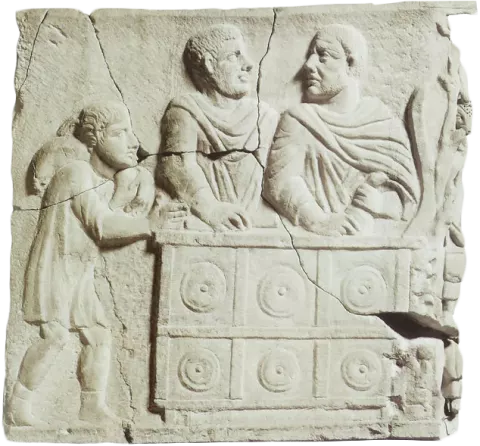
And finally, the professional money dealers of ancient Rome were called “argentarii” (lat “argentum” meaning silver), the freemen who formed a “collegium” which provided professional and social ties to its members. Their banking shops or “tabernae argentaria” were located in the Forum offering their financial services to clients of different economic power. Some “argentarii”, called “coactores argentarii”, active from the mid-2nd century BC until the mid-2nd century, also offered credit facilities to those purchasing goods at auctions in addition to making arrangements in the auctions.
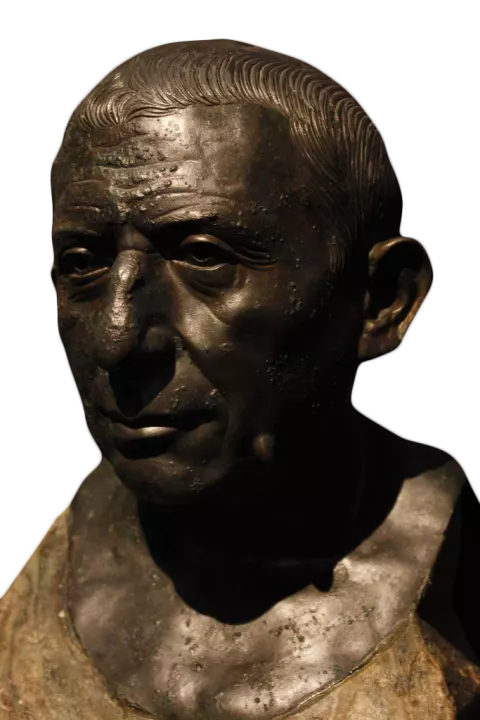
A successful and skillful “argentarius” who ran a business on a large scale enjoyed an honorable place in society. Some of these, such as Jucundus of Pomei and Pompeius Trimalcion, who became extremely rich, were highly esteemed in society.The business books (codices) made of wax-covered tablets of wood and led by “argentarii” were very accurate and could be used as evidence in the court of justice.
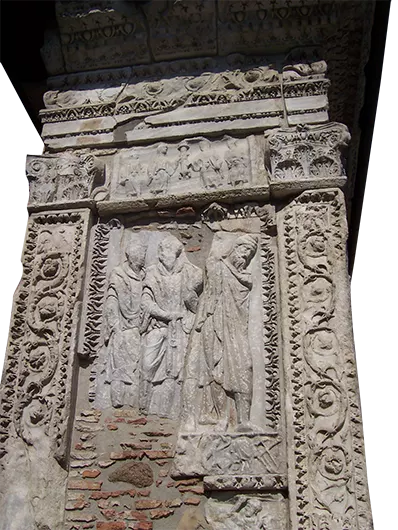
Arcus Argentariorum, arch of the money-changers on Forum Boarium erected in the 3rd century AD by local money changers in honour of imperial Severus dynasty
Functions - Banking in Ancient Rome
Functions
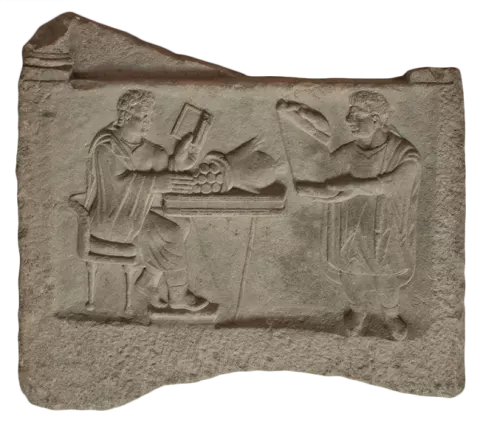
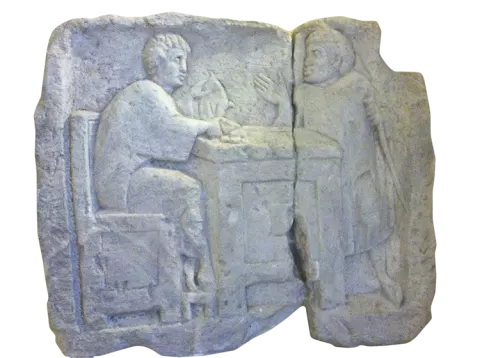
In the ancient times, bankers carried out various functions – they tested and exchanged coins for a fee; received money, valuables and legal documents in deposit; collected money at auctions, advanced and mediated loans, and performed various related functions. Diversity of activities enabled to bankers to choose their field of specialization, although in practice these fields often overlapped.
One of the oldest functions that they performed was called “probation nummorum” or testing of coins and ascertaining of their genuineness. The very nature of banker’s occupation made them qualified for performing this task. To verify the value of the coins, particularly the valuable gold ones, the ancient bankers relied on touchstone as well as on empirical techniques. This implied observing the coin, feeling it and tapping it to make it ring in order to determine its worth, and ascertain that it was not filled or covered with some other substances. They also checked dimensions, its origin and whether the coin was mined by an officially authorized workshop. Finally, they weighted it on a “tratina”, a small pair of scales with arms of equal length, designed to be held, not set down, and equipped with two plates, curved to form bowls. The aim was to ascertain that a coin was not worn with use, and that it had not lost too much weight. Since the Roman state was more unified then the Greek one, consequently, there was less need for foreign exchange operations. The services for changing high-value coins into smaller ones (gold into silver or bronze), or for changing various categories of money that were minted over one state into the other, were more in demand.
After the “argentarii” became acquainted with the custom of using bills of exchange, they take part in cashless transfer of money called “permutation”, literally meaning the exchange of one thing for another. The point of these transactions was to transfer funds without having to transport coins from one location to another. The procedure was the following – the “argentarii” received sums of money which had to been paid at Athens, and then drew a bill payable at Athens by some banker in that city. This mode of transacting business implied acquaintance with the current value of the same coin in different places and at different times, as well as involving a network of relationships and obligations.
One of their most ancient duties was related to commerce and public auctions. In these times, various commodities could be sold by auctions that were held in ports, fairs and in wholesale and retail markets. Auctions were also the mechanism for the sale of the estate of a deceased person or an insolvent debtor as well as of goods of a debtor in default. The aim was to achieve sale to the highest bidder. There was also an important difference between a public and private auction. The former was connected to collection of debts from an impecunious or insolvent debtor, while the latter was a way of distributing goods in market place.
“Coactores argentarii” who operated at auctions were in charge of keeping detailed registers relating to these auctions (“tabulae auctionariae”) in which they wrote down dates, descriptions of the objects sold and its prices, and the names of the sellers and buyers. They also participated in auctions by paying over the purchase price to the sellers and advancing a short-term loan to the buyers. Their mediating role was particularly required in the cases when one of the protagonists, the seller or the buyer, was absent.
The bankers also served as a general receiver of deposits. The deposits that they received belonged to two different categories: some produced interest for the depositors, and others did not. When the money was deposited by its owner in order to facilitate its keeping and for making payments, it was called “depositum”. In these cases, banker paid no interest and the money was called “vacua pecunia”. But, in the cases when the money was deposited for a specified period of time and with condition that banker was paying interest, it was called “creditum”, and the banker was allowed to use it in lucrative manner.
Function performed by banker called “per mensam” was related to payments made through banker and previously authorized by the owner of the funds. Payment could be made either in cash, or if the receiver kept an account with the same banker, in the book to his own deposit. This latter practice was called “rescribere” or “scriber”.
In addition to these deposits, bankers were also involved in lending business which appears to have brought a major part of their profits. In the period of the late Republic and early Empire, the most prevalent range of interest for loans was between 6 and 10 per cent. In outlaying provinces this rate could be much higher because of the greater risks, as well in cases of maritime loans. However, the “centesima” or 12 per cent rate became established as the regular rate of ancient interest, and thus, it remained throughout the later Republic and under the Empire.

The end of banking activities
With the decline in the power of the Roman Empire, and the subsequent collapse of commercial activities, the need for banking services has also decreased. The fall of the Western Roman Empire in the 5th century was symbolic on several levels. Chronologically, it marked the end of the Antique and the beginning of the Middle Ages. In cultural and economic terms, it has been a period of regression.
Banking activities were labeled as a moral offensive due to hostilities of the Christian church to the charging interest. The revival of banking practices after the long period of stagnation, which was partially alleviated by the activities of Jews and the knights Templar, will appear with the flourishing trade of Italian city-states in the 13th century.
5 lives in this room
More lives in this room
- Titus Pomponius Atticus 110 -32 BC
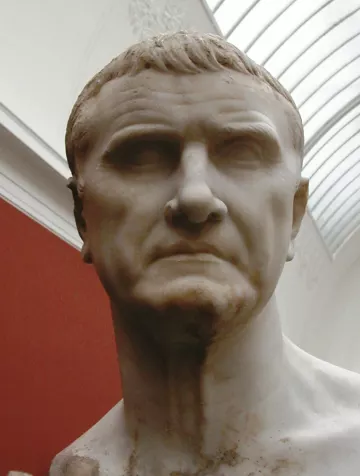
- Gaius Postumus 1st century BC
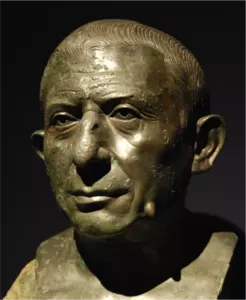
- Titus Flavius Sabinus 1st century BC