No. 6637 · dated by century
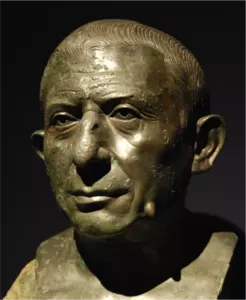
Lucius Caecilius Iucundus
Lucius Caecilius Iucundus was a prominent banker from the Roman town of Pompeii. He was a son of a freedman named Felix who was also active in banking. The remnants of his house, partially destroyed by the eruption of Vesuvius in 79 AD, can still be seen today.
Iucundus belonged to a type of banker called the argentarius. He was surrounded by network of numerous freedmen and slaves who performed many small tasks, such as signing receipts as witnesses and collecting payments from clients. Transaction records with the names of elite citizens suggest that Iucundus also had dealings with the upper class of his native town.
In 1875 in his house were found wax tablets on which he kept many private records of his business transactions. Of the 153 tablets discovered, 16 tablets belonged to contracts between Iucundus and the city of Pompeii, 137 represents receipts from auctions on behalf of third parties while 17 tablets record loans advanced to buyers of auction items. The tablets also serve as a source for names of vendors and witnesses to the business arrangements, giving insight into the social structure of Pompeii.