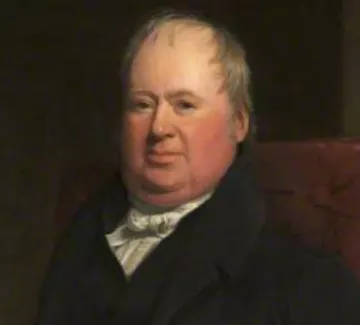
No. 555
Suncoo Chinna Kistnama Chetti
He was an Indian businessman that had in the late 18th century obtained the rent of the betel and tobacco farms in Madras. Besides the wholesale trade of betel and tobacco he also had his own shops.
In the late 18th century Suncoo Chinna Kistnama Chetti was one of the leading Indian businessmen of Madras. Under agreement (cowle) with the English East India Company (EIC) he was the renter of the tobacco and betel farm, which supplied Madras with these commodities at a fixed price. Suncoo Chinna was also the headman of the Komati caste, a caste of the right-hand section of castes and one of the leading business communities of Madras. As head of the caste he held in his name a charitable garden, Komati Tottam, the site of today Kotwal Chavadi, the great wholesale vegetable market.
Suncoo Kistnama had contracted to grow betel and tobacco on EIC land, paying rent to the Company, and to supply these products, graded by quality, at fixed prices to the betel and tobacco wholesalers and retailers in Madras. He was also to keep open and supplied a certain number of warehouses according to a specified time schedule for the purpose of easy distribution. In 1790 he was accused by shopkeepers that he did not meet any of the obligations from the contract, that he sold inferior qualities labeled as superior, that he charged twice the specified fixed prices, that he sold directly through his own shops and that he failed to open warehouses, or when he did, he did not properly supplied them.
Suncoo Kistnama noted that while it was true that he had operated some of his own shops, he had done so according to conditions specified in his cowle, which allowed him this avenue as a means of recouping losses incurred as a result of a 'gale of wind' three months after he took over the betel gardens, which had destroyed much of his crop. For the rest of the charges he said it was fabricated by the enemy of his family lead by Collah Ravanapah. In short, Suncoo Kistnama's claim that the charges were the instigation of his caste rival and enemy seems to have been true. However, Suncoo Kistnama was fined, despite the lack of evidence, and had to pay a fine amounting to a year’s rent of the betel and tobacco farm. Unable to pay this huge fine, Suncoo Kistnama was imprisoned, and was imprisoned for nine years, until his death on 14 September 1800. His property was confiscated, and according to the Company's own assessment made some thirty years later, all this was done illegally.