No. 9593
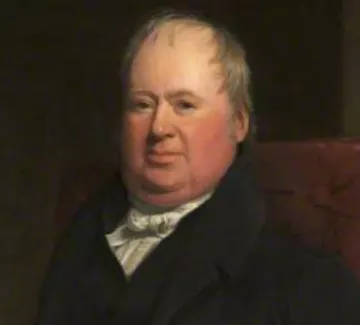
Charles Alexander Bruce
Charles Alexander Bruce was a soldier, explorer and author who is best known for being the father of the tea industry in India. Bruce's brother Robert first discovered the indigenous Assamese tea plant in 1823, but he died in 1825 and Charles decided to prove that true tea did not grew only in China.
Many British officers became aware of Assam tea during and after the first Anglo-Burmese war 1824-1826, but systematic efforts began with two Scottish brothers, Major Robert Bruce and Charles Alexander Bruce.
In 1824, Charles Bruce offered his services to the British to fight in the First Anglo-Burmese War and was appointed to command gun boats at Suddeah. Bruce’s employer David Scott (1786-1831), who occupied the important post of Agent to the Governor General on the North East Frontier of Bengal from 1823 until his death, tried to obtain the official recognition of the Assam tea but had failed. Assam tea was officially recognized as true tea in 1834.
From then on things moved fast, on 11 February 1835, Charles Bruce was appointed in charge of nurseries to be developed in Upper Assam, at Sadiya and other places. In the January of the next year Bruce was designated Superintendent of Tea Plantations. The first consignment of eight chests of Assam teas were auctioned in London in January 1839. The next consignment was a considerable improvement on the earlier one, it contained 95 boxes of which 10 were distributed free of charge while the remaining 85 were sold by public auction on 17 March 1840. This marked the beginning of the end of Chinese domination of the tea market that had lasted a century and a half.
In 1840 The Society of Arts in London presented its gold medal to Charles Bruce “for his meritorious Services in discovering the Indigenous Tea-Tracts, and cultivating and preparing Tea in Assam”. Bruce also received from the Indian government a land grant for his “discovery” of tea, and more importantly, for “his subsequent services in fostering the cultivation of the shrub and manufacture of tea”.