No. 547
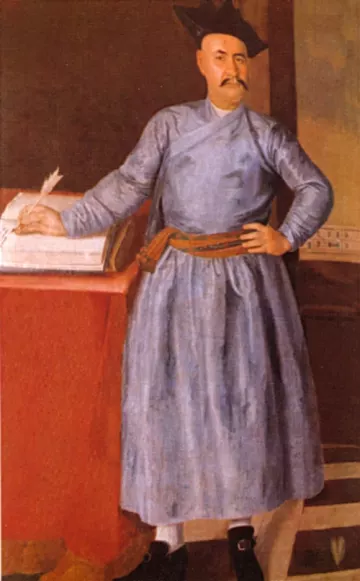
Khojah Minas
Khojah Minas of Surat was one of the most prominent Armenian merchant in India involved in 17th century sea trade to the Gulf, Red Sea and South East Asia. He belonged to one of the most prominent families in New Julfa.
His brother Khoja Karikose was in Europe in 1668, carrying a letter from the King of Persia, Shah Sulaiman I (1666-1694), asking the English, French and Dutch for assistance in his endeavor to buy some goods and procure certain rarities for him. Karikose also gave hopes to the English that they will be able to get concession for their trade in Persia from the Safavid King.
Khoja Minas was in partnership with his brother in 1676, when both of them had their interests linked to the ship St Francisco that had sought shelter owning top its poor condition at Bombay. They were obviously very influential because at their insistence the Surat Council asked the Bombay authorities to exempt the ship from anchorage charges and provide it with warehouse facilities. By marriage he was also related to another important Armenian merchant, Khoja Phannos Kalantar, who in 1688 concluded an agreement with the English East India Company which granted the Armenians many trading and other privileges in the Company’s territories.
Already in 1663, Minas was considered by the English “an able and well reputed Armenian merchant” and in 1665 was referred to as “President of the Armenians”. In 1672 he had four large ships: St. Michael, Selimony, Queddah Merchant, and Hopewell. These ships undertook voyages to the Persian Gulf, the Red Sea, and to South East Asia as far as the Philippines. He was also trying to send his ships from Surat to Macau in China as well as Mombassa in East Africa, but the permission for this was refused by the Portuguese crown in 1670.
During the 1660s Minas was at the height of his career but at the end of this period his troubles began. In 1669 the Surat Council decided to sell all the ordinary broadcloth expected by the next fleet to Minas at 4.75 rupees per yard in advance, but the prices of broadcloth fell in the market, and in 1671 he declined to lift 2000 pieces from the Company’s warehouse. From then onward Minas had difficulties with the English and paying his debt. In 1680, the English factors reported that “the large outstanding debt” oh Khoja Minas to the English was reduced, though he had become an “absolute bankrupt”.
However, the English were wrong. In 1684 Minas shifted to Diu, under Portuguese protection, continued his trading business and had capital enough to take up the contract for the Diu customs house in that year. Within a short period of time, Minas cornered the market to everyone distaste, including the real power in Diu, its captain Manuel Furtado de Mendonca. Minas realized that if he wanted to overcome Furtado he had to apply directly for King Dom Pedro II’s intervention, which he did in December 1685. Dom Pedro II and the Ultramarine Council in Lisbon accepted Minas’ proposal, but when the answer reached Goa in 1687, Minas had passed away, probably in 1686.