No. 110
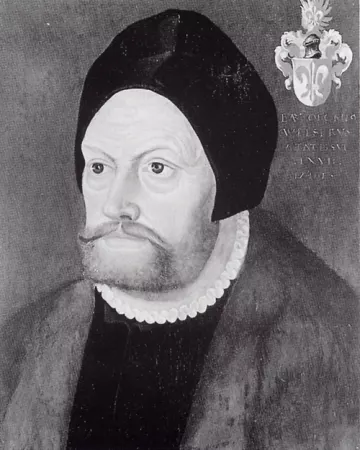
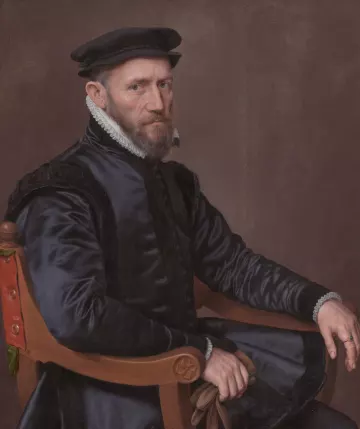
Bartholomeus Welser
Born in a prominent Augsburg merchant family active in business and public life since the 13th century, Bartholomeus additionally strengthened the name and material welfare of the house of Welser. His funding of a German colonization in Venezuela was instrumental in the European settlement of South America.
From an early age Bartholomeus participated in the family business that comprised of import-export trade in the eastern Mediterranean and silver mining interests gaining a valuable business experience. After his father’s death in 1518, along with his brother Anton the Younger he founded Welser and Company, and expanded business interests in banking. They used their capital to finance the elections of the Holy Roman Emperor Charles V in 1519, and in later period they also financed his numerous wars in Europe at the cost of 12 tons of gold.
As a reward for their financial support, the Emperor appointed Welser his privy councilor and in 1532 he elevated him to a position of nobility. In addition, he gained other privileges to conduct business such as safe-conduct passes and tax exemptions. When Emperor failed to repay loans, these were augmented with the right to establish trade in sugar, precious metals, textiles, pearls, and slaves between Europe and Hispaniola (now Haiti and the Dominican Republic).
The most important privilege was an exclusive concession to explore and exploit the newly discovered Spanish province of Venezuela (“little Venice”) in the New World. This enterprise proved to be a very bad investment and cost the Welsers more than 3 million gold florins in the end. Several ships were staffed with Flemish and Spanish mercenaries and German miners with the aim to establish settlements for colonization, to exploit mineral deposits and import slave labor from West Africa. However, the hostilities between the Spanish and Germans, and desire for finding treasures prevailed when they stepped on American soil. But, instead of El Dorado, the fabled lost city of gold they found only hardship, disease, and death by starvation or in conflicts with belligerent natives.
In 1546, his Venezuelan concession was revoked and formally terminated ten years later. Around that time, Welser retired from business and died in 1561 leaving a decreasing business to his sons and nephews. The house of Welser went bankrupt by 1614.
However, the expeditions that Welser financed resulted in the founding of Bogotá, Colombia, and Buenos Aires, Argentina, and were an important step in conquering of South America.