Museum / Rooms / Trade in the Roman world
Room · 7 chapters · 15 lives
Trade in the Roman world
The Roman Empire created a common market of the geographic size which was not reached again until the European Union in the 20th century
Boundaries of the Roman state
The ancient Romans during their millennium long history created one of the greatest empires in world history. At its heights in the 2nd century the Empire stretched from Britannia and Gaul on the north to Spain on the west, North Africa on the south and Mesopotamia on the east with the population of 60 to 70 million people. At that time the only power that could compare with the great Roman Empire was China at the other end of the world.
Economic centers
From business point of view – the needs of the huge army stationed at borders, the capital of Rome with more than one million inhabitants and the large urban population of the Empire – provided an excellent opportunity to make money both for the producers and purveyors.
The Romans had two main types of businessmen that dominated the Roman commercial world – the “negotiatores” who were engaged in trade of more general kind of products and the “mercatores” who were active in specific commodities and operated locally. The special type of merchants were “navicularii” ─ a private traders and shippers contracted by the state which didn’t have merchant marine for delivering food provisions.
Commercial network
The Romans conducted commercial activities at all levels, ranging from regional and inter-regional to international trade with Eastern Africa, India and distant China. The greatest part of Roman trade, however, took place within its boundaries and consisted of food shipments from Egypt, North Africa, Spain and Gaul to Rome, other cities and to military posts on the frontiers. After the discovery of the monsoon by a Greek sea-captain Hippalus lucrative trade with India became increasingly extensive in the course of the 1st and 2nd century.
Transport
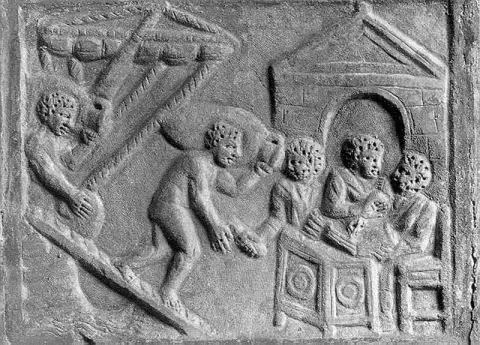
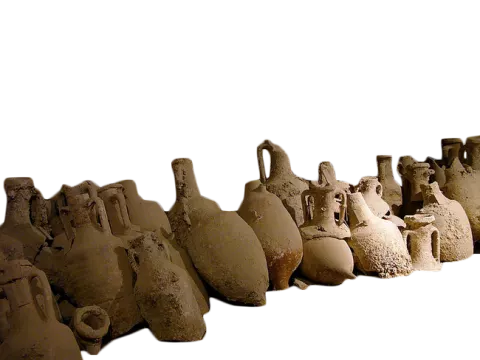
In transport of merchandise the Roman entrepreneurs used both land and sea trade networks. By the end of the 1st century they had at their disposal more than 50,000 miles of paved highway and around 200,000 miles of secondary roads across the state. The overland trade was carried by using pack animals, donkeys and mules, while the long-distance trade was conducted exclusively by sea using the cargo-ships. For transport of goods the Romans used various containers such as amphorae, sacks, barrels, baskets or leather skins.
Trade goods
Luxury items praised and well-paid by the Roman elite such as spices, perfumes, silks, precious stones and other goods the Roman merchants procured from East Africa, India and China. At first they purchased these items with gold and silver. Later they added to their exports animals and manufactured goods like glass, cloth, jewelry and purple dye. After gold, the Rome’s most valuable export to India was coral from the Mediterranean.
Business organizations
To realize some business venture the ancient Romans had at their disposal “societas” or business association in which partners own and control business together, thereby sharing profits and losses. Liability in societas was joint and unlimited for all partners forming societas which is why societas tended to be limited to a few participants who trusted one another. Also, the partnership automatically ended if a partner died, bankrupted or renounced is partnership. These were the reasons why societas was not suitable for large scale ventures. Although there were large scale business enterprise that resembled joint stock corporations called “societas publicanorum” they were only used for state contracts and not for private businesses.
In maritime trade which was characterized by high risks, the Romans relied on a maritime loan which was the sole form of marine insurance until the 13th century. “Foenus nauticum” was a contract between an investor and entrepreneur especially designed to bear the risks of trade. It differed from a straight loan in that repayment was contingent upon a successful completion of a voyage – in that case the borrower was obliged to return to investor the principal plus the agreed interest rate which could be 30 percent or even higher, depending on risks involved.
The Roman government sought to unify different areas and create a favorable ground for the rise of business by introducing a single currency, common institutional framework in the form of laws, market supervision and regulation, and by investing in road networks, canals and harbors.
From the Roman traders called “mercatores” derives the term “merchant” in modern language.
To enhance the sale, already the Roman entrepreneurs relied on advertising to promote their products and services around the Mediterranean region.
The Romans were also engaged in a large scale slave trade to support their economy. Only Italy needed around 100,000 new slaves every year.
Rome can praise to have the world’s oldest shopping mall built around 100 AD. It was a multi-level structure with more than 150 outlets that sold everything ranging from food and clothes to spices.
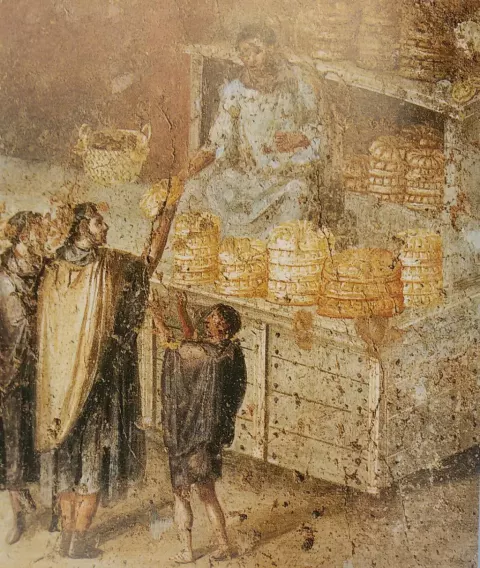
Chapters
The Roman world
Ancient Rome was a powerful and advanced civilization that ruled much of Europe for nearly 1000 years leaving a great impact on the political, economic and cultural development of the Western civilization.
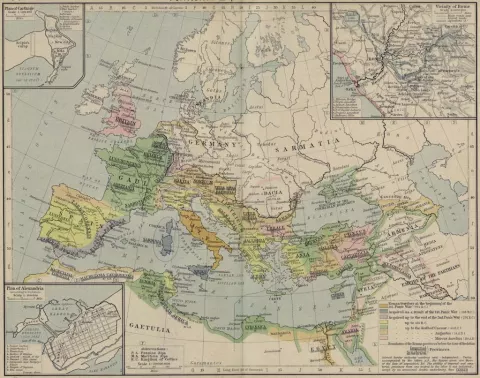
The expansion of the Roman state began with the unification of the Apennine Peninsula, and eventually extended to the entire Mediterranean stretching at its height from the Gaul and Britain on the north to Syria, Armenia, and Mesopotamia on the east. The Roman Empire covered a vast and densely populated territory which comprised a population of perhaps around 60 to 70 million people, which at that time could be compared only with China.
With territorial conquests and associated economic expansion, the Romans became part of centuries old exchange network and came into a possession over some of the richest regions of the Mediterranean.
While the local peculiarities remained intact, the state sought to unify different areas by introducing a single currency, common institutional framework in the form of laws, market supervision and regulation, and by investing in road networks, canals and harbors. All these state measures created a favorable ground for the rise of business.
Trade
Although the agriculture remained the stronghold of state economy, territorial expansion affected the rise of trade on a large scale.
During the period of the “Pax Romana” period which lasted for two centuries (27 BC to 180 AD) business enjoyed better conditions that ever before. Business would not reach these heights again for another thousand years. Commercial taxes were minimal and the empire’s customs duties were much lower than those prevailing at other times and places.
Improvements in the maritime skills enabled wider commercial activities, first in the Mediterranean region, and as empire expanded, in the farthest provinces and areas beyond the Rome’s boundaries.
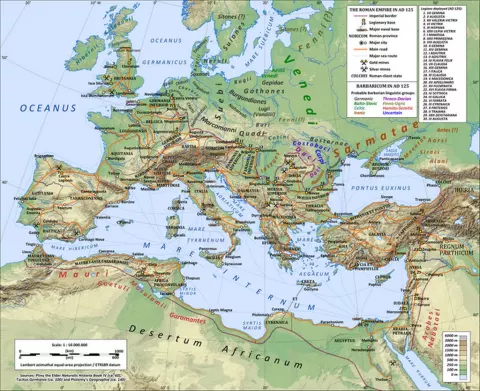
The commercial activities under the Romans flourished at all levels, ranging from regional and inter-regional to international trade. They relied on trade routes that spread over land, sea and rivers. Three centers in the Roman state required a continuous supply and thus stimulated the international trade – these were army, the capital of Rome and the urban population of the empire.
Most interregional trade consisted of food shipments from Egypt, North Africa, Spain and Gaul to Rome, other cities and military posts on the frontiers. The goods could be delivered from parts of the Empire such as Spain, North Africa and Italy along the rivers Rhone, Saone and Rhine to the Rhineland and Britain.
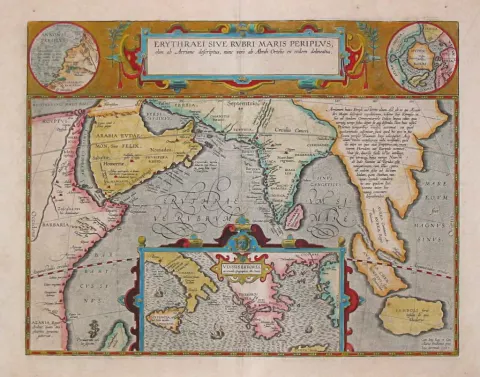
In the 1st and 2nd century the trade with India became increasingly extensive. Discovery of the monsoon by a Greek sea-captain Hippalus significantly shortened the time needed to reach the Malabar Coast from the ports on the Red Sea coast of Roman Egypt. Various goods were provided from the Tamil states of the Pandyan, Chola and Chera dynasties in the southern India and Sri Lanka. The presence of the Roman merchants was evidenced by the Chinese records even in remote areas such as Malaya, Java, Vietnam, and at the boundaries of China. As archeological evidence of their activities serves the Roman gold and silver coins that have been found in Afghanistan, India and Indochina.
The source written in the 1st century, the “Periplus Maris Erythraei” provides more detailed information on trade between East Africa and eastern India north of the Ganges delta, and the goods that could be bought and sold on that route.
Trade goods
As one historian wrote: “The Roman man in the street ate bread baked with grain grown in North Africa or Egypt, and fish that had been caught and dried near Gibraltar. He cooked with oil from North Africa in pots and pans of copper mined in Spain, ate off dishware fired in French kilns, and drank wine from Spain and France”.
At different times the different centers of production were active and flourished along the Roman state. In the period of late Republic and early Empire, unprecedented expansion of trade in terms of quantity, variety and transportation distance was evidenced.
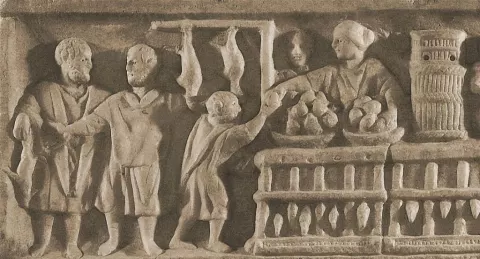
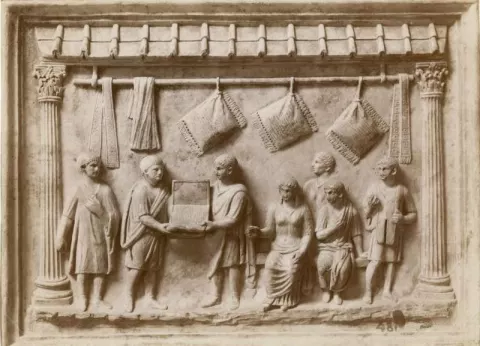
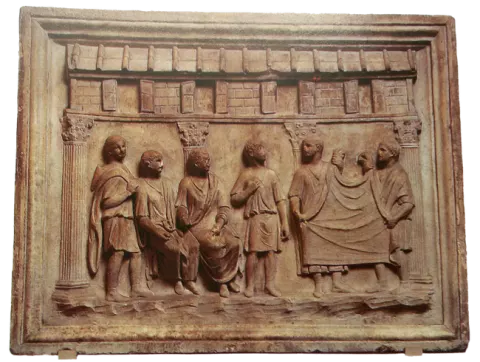
Trade was primarily conducted in foodstuffs (olives and olive oil, wine, fish, meat, cereals, salt, fish sauce…), animals and animal products (leather and hides), different objects made from wood, glass, or metal, textiles, pottery, and different raw materials such as glass, marble, wood, wool, bricks and metals such as gold, silver, copper and tin. There was also a large scale trade in slaves since Italy needed some 100,000 new slaves every year. A Roman slave market, the Saepta, specialized in homosexual slaves, while slaves destined for the farms or the mines were auctioned off in the streets. For transport of goods the Romans used various containers such as amphorae, sacks, barrels, baskets or leather skins.
Egypt and North Africa, along with Sicily and Sardinia which importance with time decreased, were the main source of grain in the Roman state. Spain, Gaul, Rhodes and Cnidos were known for their production of wine. Wine made the widely contaminated waters potable which is why the Greeks and Romans so often diluted their water with it. In Italy was produced “defructum”, a sweet wine or grape syrup made from juice boiled to half its volume. Spain was famous for metals, glass and fish sauces “muria”, “garum” and “liquamen” made from fermented fish which were highly in demand. Britain served as a source of tin, lead, silver, cattle and oysters. Italy, and in later period Gaul and Germany, became centers of production of small teracotte or bronze oil lamps used for lightening. Wool came from the coastal Asia Minor; honey, statues and paintings from Greece; while the fuller’s earth used for finishing and cleaning clothes came from the Greek islands.
The trade with India was of great importance. It was on large scale and comprised spices of all kinds, perfumes, silks, cottons, steel, certain drugs and precious stones. The spices were also imported from China, Persia, Arabia and East Africa. In 3rd century the silk had value in the Roman Empire of its own weight. Sumatran pepper was highly praised. In 410 BC Rome gave three thousand pounds of pepper to keep the Visigoth chief Alaric from sacking Rome.
Although Romans originally bought their imports with gold and silver, after mid-1st century they sent horses, donkeys, saffron, grain, wine or manufactured goods like glass, metal ware, and cloth of purple and other colors. The Romans also exported finished goods such as jewelry, cut gems, glassware, clothing, amber, coral and purple dye. After gold, the Rome’s most valuable export to India was coral from the Mediterranean.
Transport
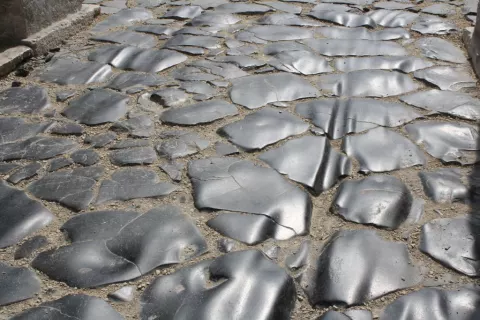
The skill of road construction the Romans adopted from the Etruscans and the Greeks. The original purpose of the roads was to facilitate the movement of the Roman troops and to improve communications and administration with the established colonies. Its economic purpose emerged as a consequence of its suitability. They represented a convenient mean of travelling and transporting goods from one location or market in the empire to another. By the end of the first century, the Roman citizens had at their disposal more than 50,000 miles of paved highway and around 200,000 miles of secondary roads. Width of the main roads was about 8 feet, while of the important crossroads might be from 14 to 18 feet.
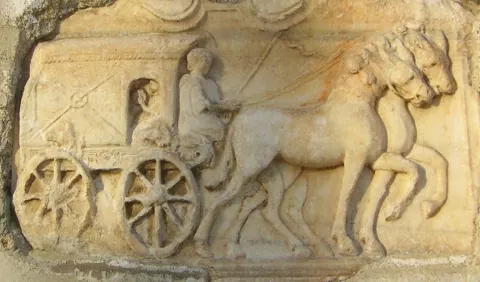
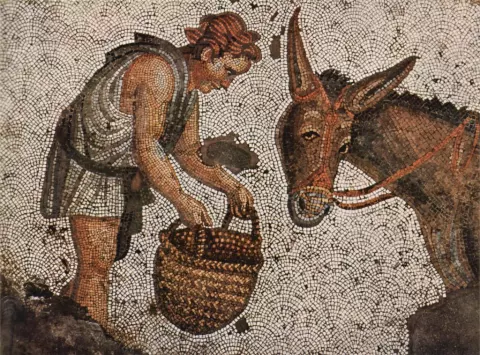
The overland transport had always serious deficiencies in comparison with the maritime, especially in terms of quantity of transported goods and necessary time to accomplish that. While for the very small loads the porters or human carriers could be engaged, the chief mean of transport were the pack animal. Since horses were expensive to raise and feed, donkeys and mules have provided much better solution. Donkey could carry the load of the maximum 250 pounds, and mules were even more durable and could be loaded with 450 pounds. Also, the mules were additionally convenient because they could use the secondary country roads that were unsuitable for wheeled vehicles as carts and wagons.
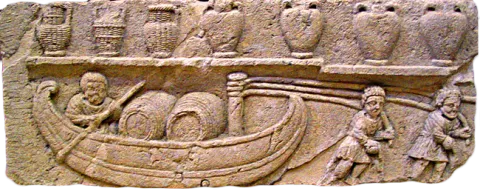
A significant lack of land transport was its expensiveness which grew proportionally with the growth of the burden weight. Where it was possible the river transport was used to transfer the goods from one inland town to another or from harbors in port cities to inland towns and surrounding villages. Rivers Tiber, Anio, Arno, and Po in Italy; Rhone and Saone in Gaul; the Rhine along the German border; the Nile in Egypt; the Tigris and Euphrates in Mesopotamia and so on were just some of the water routes.
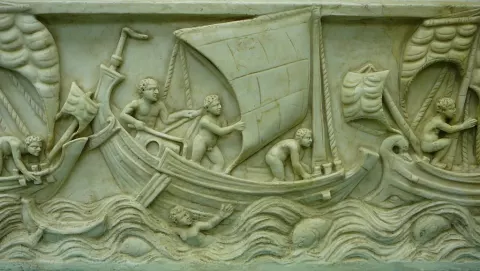
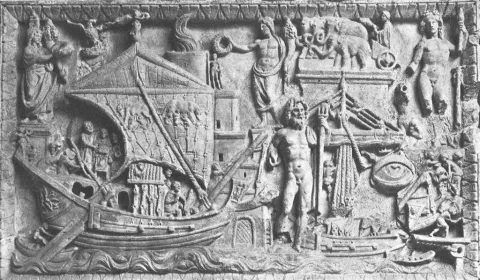
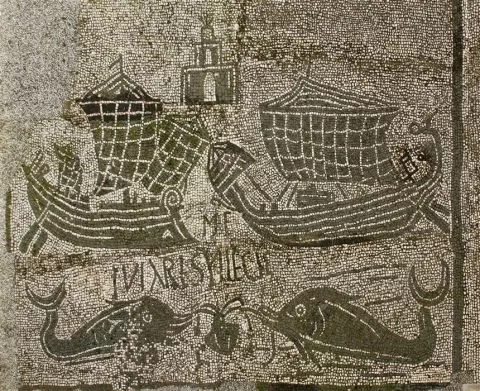
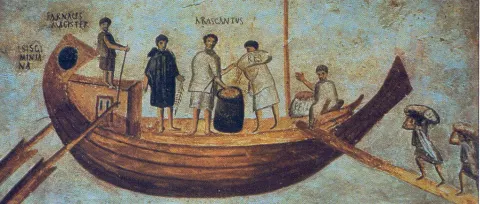
The long-distance trade in the Roman Empire was conducted exclusively by sea using the cargo-ships. Since the Roman mariners didn’t possess compass, in the navigation they relied on observation of familiar landmarks and wind in day, and on stars at night. Coastal light-houses were also built in order to facilitate sailing. Information about rivers, ports, distances between various ports, and sources of freshwater were contained in “periploi”. In the winter months, spanning from 12 November to 10 March the navigation was extremely hazardous venture due to the storms and reduced visibility.
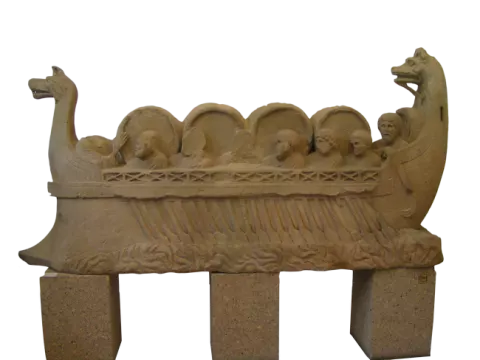
In running of trade business, the Romans relied on wooden sailing vessels usually 60 to 100 feet long, 17 to 30 feet wide, and which could carry the cargoes ranging from 50 to 250 tons. For the transport of grain from Egypt to Rome or for heavy stone artifact they used much larger vessels. The Roman merchant ships used the power of sails, usually of square-rig and fore-and-aft rig types. Oars are rarely used because they demanded a large crew.
During the trips and docking, traders and sailors usually stayed in small inns (“tabernae”) in ports that bore interesting names like “The Wheel”, “The Elephant” and so on.
Trade also enjoyed great hidden subsidies. Shipping was expensive, and merchant were allowed to add their shipments to those of the state for virtually no cost.
Roman merchants
Since ancient times, entrepreneurs engaged in buying goods in one location and selling them in another were present in the history of the Roman state.
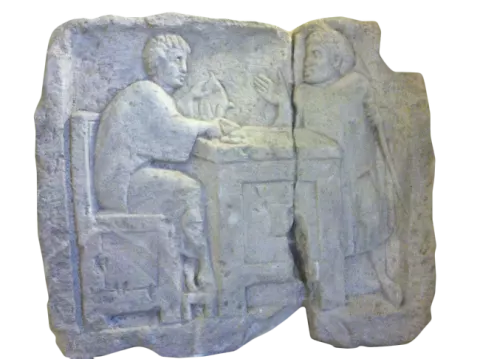
There were two main types of merchants. In the period of late Republic, the “negotiator” (pl. “negotiatores”) was present as a kind of financial dealer or banker, and also as someone who was generally engaged in the exchange of goods. “Negotiatores” could handle the business for themselves; act as agents of large trading companies or being active members of groups of investors. They were engaged in trade of more general kind of products.
The second group of Roman merchants consisted of “mercatores”, from which derived the term “merchant” in modern language. They were traders active in specific commodities and usually locally based.
The special type of merchants were “navicularii”. These were private merchants and shippers who were working under contract to the state. Since the Roman state didn’t possess a merchant marine, a grain supply on which the capital of Rome heavily relied was entrusted to these entrepreneurs. The large number of involved merchants testifies that a food provisioning was obviously a profitable business.
In accordance with prevailing mentality of the noble class, the only proper and dignified source of wealth for aristocrats were land-ownership and agriculture. However, the wealthy landowners were open to invest one part of their wealth in financing of trading activities where the risks, as well as profits, were considerable. In order to carry out the long-distance trade, the Roman merchants often resorted to the services of moneylenders.
Use of maritime loans is documented at Romans as early as second century BC, and was heavily influenced by the Greeks who were dominant on that field. The loan “pecunia traiecticia” or “money that travelled” was provided by private investor or professional banker to a merchant or ship owner for the duration of the voyage. The loan and interest had to be repaid only if and when the trading voyage was accomplished. Ship and cargo itself could be regarded as securities for the loan. In the case of accident – shipwreck or attack by pirates – the creditor was obliged to bear the loss. In that point the maritime loans were crucially different from other types of loans – in the case of loss of the ship and cargo, the borrower was freed from all obligations to repay the loan. But, if the voyage was successful, the borrower had a right to collect interest at rate much higher than the 12per cent which was allowed by law. The rate about 30 per cent, perhaps even higher, provided a considerable profit and held the creditors motivated in participating in this type of business.
The Roman marine loan was instituted in the Roman law and represented the sole form of marine insurance up until the 13th century.
Decline
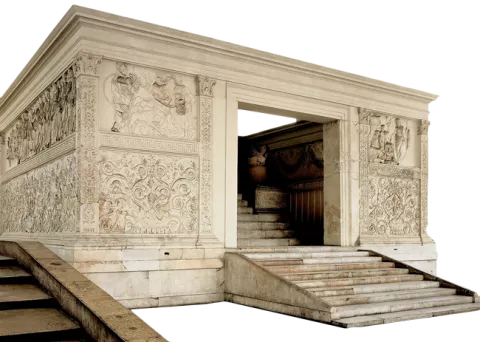
Ara Pacis, an altar consecrated during the reign of Emperor Augustus is said to represents the peace and prosperity of the time period known as the Pax Romana (c. 27 BC -180 AD)
It is generally accepted that the death of the emperor Marcus Aurelius (180 AD) marked the end of the “Pax Romana”, a period of peace and stability which lasted for two centuries. During the 3rd century, several factors negatively affected the Rome’s economy and caused its decline. After the Empire had reached its territorial limits, the state was left without sources that eventually resulted in inflation – a drastic fall in the value of money combined with a rise in prices. The hostile tribes were attacking the borders of the empire. Agriculture which represented economic and social basis of the state also faced serious problems. Political life was marked by the military and political turmoil that resulted in political instability of the Empire. In such circumstances, the trade network was disrupted and started to deteriorate.
In order to provide efficient protection of the Empire, the state was divided into two parts – the Western Roman Empire with the capital in Rome, and the Eastern Roman Empire with the capital in Constantinople. The western part survived until Germanic invasion in 476. Period that followed was marked by regress in almost all spheres of human activity. Regarding the commerce, it took centuries for trade in the Mediterranean to reach the level it had in Roman times.
Roman economy
Economy
Like in all premodern economies, agriculture and trade were the mainstay of the Roman economy. With great military expansion, the Romans came into possession of vast lands, rich natural resources and a large labor force from the enslaved population. This allowed them to set up two the greatest businesses of antiquity to that time.
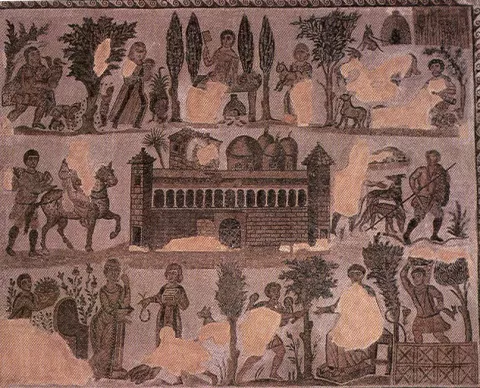
The first was the agribusinesses – or business of agricultural production, which became the chief supplier to the growing city and armies. The basis of agribusiness was the latifundia (Latin: lātus, "spacious" + fundus, "farm, estate"), an extensive farm estate that usually included several farms and operated for profit. It was the closest approximation to industrialized agriculture in antiquity. Latifundia could be devoted to livestock (sheep and cattle) or to cultivation of olive oil, grain and wine. It relied on slave work since the slaves were abundant and according to estimation, more profitable that peasants. It is estimated that 20 slaves could be fed on what eight peasants and their families consumed.
The second extraordinarily profitable business was the public contracting, that is, use of the private firms by the government for operating public properties (mines, quarries, forests…) and farming taxes in the conquered lands. Namely, in that time the Roman state which was rapidly expanding didn’t have an adequate bureaucracy for managing state resources in newly founded provinces. Since state contracts were too large, risky and long lasting for individuals the state supported foundation of the “publican societies”. As a large scale business enterprise that resembled joint stock companies the “societas publicanorum” were considered the first business corporations in Western history. The publicanii profited not only from state contracts, but they were involved in anything that would turn a profit. Since “Publican societies” were extremely profitable virtually the entire Roman elite became eventually involved in their ventures. Shares of ownership in societies called “particulae” (“little parts”) were traded in the Forum, near the Temple of Castor in Rome making it perhaps the first stock exchange in history.
Another consequence of acquiring the vast lands by the Roman state was development of the first real estate market in western history. The Roman law made purchases and sale of land much easier. The only procedure necessary was a ceremony called “mancipiato”. The procedure was the following: in front of five witnesses and a man holding bronze scales, the buyer would take the property in one hand – in the case of land, a clump of its dirt – and a piece of bronze in the other and recite, “I declare this (thing) to be mine by the law of the Quirities and purchased by me with this piece of bronze upon these bronze scales.” He would then strike the scales with the bronze and hand it to the seller. Romans also used “mancipiato” to sell slaves – hence, the word “emancipation”.
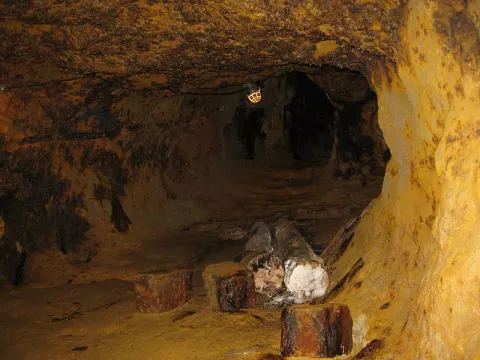
The largest and very profitable industrial enterprise in the Roman history occupied mining. Mining operations required large number of labor force. It was considered the most miserable job in antiquity. At any one time, around 150,000 prisoners and slaves labored in Roman mines. However, it is known that the Spanish silver mines in the Guadalquivir River basin managed to quintuple production from 3 hundred to 15 talents per year under the Roman managers using 40 000 slaves. In times when food shortages caused serious starvation epidemics, food production and processing, was very important enterprise. After metals and food processing, the largest private manufacturing business in the ancient world – in fact, in all Europe until the 19th century, was textiles which generated considerable wealth. Although not the largest Roman industry, pottery making is the best known to us due its durability and among common products we can mention oil lamps for lightening, bricks and jars.
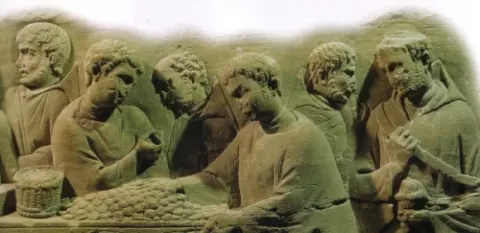
15 lives in this room
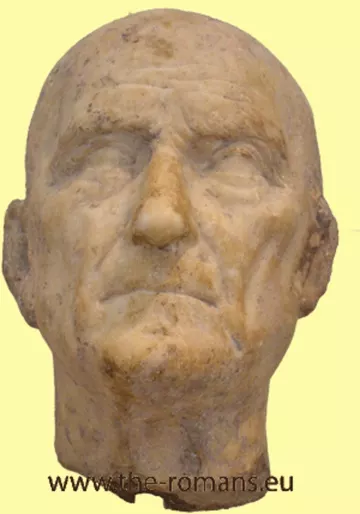 Spurius Maeliusdied 439 BC
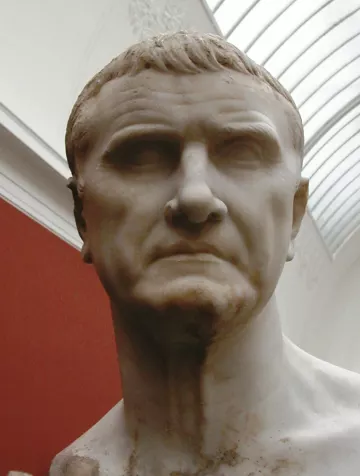 Marcus Licinius Crassusc. 115 BC – 53 BC
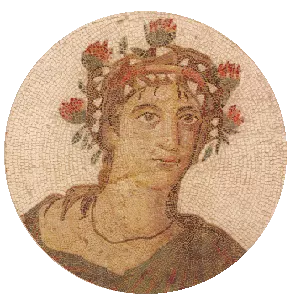 Marcus Gavius Apicius1st century
 Domitia Lucilla Minordied 155-161
More lives in this room
- Gaius Peticius 1st century BC
- Annius Plocamus 1st century
- Caius Sergius Orata 1st century
- Marcus Julius Alexander 1st century
- Nicanor 1st century
- Aelia Isidora 2nd century
- Aelia Olympias 2nd century
- Hiyya 2nd century
- Maes Titianus 1st-2nd century
- Marcus Ulpius Iarhai 2nd century
- Julius Aurelius Salamallat 3rd century