Museum / Rooms / The Dutch East India Company
Room · 6 chapters · 74 lives
The Dutch East India Company
Dutch company which held a trade monopoly in all the waters and countries between the Cape of Good Hope and the Cape Horn
To keep the prices of spices high VOC even destroyed already imported spices by burning them, most notably in Middelburg where, on such occasions, the air in the city and surrounding area was filled with the aroma of burned spices. Also, they used to destroy spice trees on some Indonesian islands to ensure their monopoly and prevent decrease in prices.
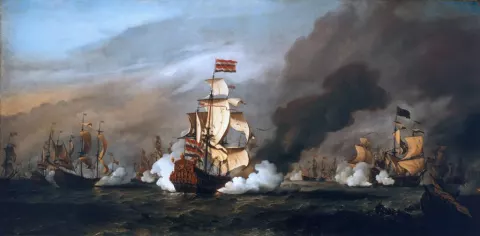
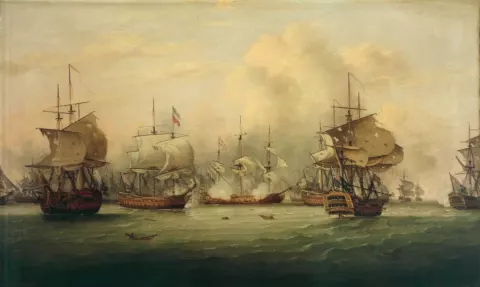
The Battle of the Texel, 21 August 1673, painted 1683. The ship at the centre is Dutch Admiral Cornelis Tromp's flagship Gouden Leeuw, 82 guns.
Looking East
Geographical discoveries from the late 15th and early 16th century had a profound impact on history of business. Portuguese were first to monopolize the long distance ocean trade with the East and its most profitable commodity – spices. Until the late 16th century the Dutch acted as intermediaries in the spice trade – they came to Lisbon to purchase spices and distributed them to other European markets. At that time, for political and mercantile reasons, the Dutch decided to break that monopoly and emerged as the world’s largest spice producers and traders in the 17th century.
Organization in Europe
The first Dutch trading expedition to East Asia was organized in 1595, and the Verenigde Oostindische Compagnie (VOC) or United East India Company, most commonly known as the Dutch East India Company, was established in 1602. VOC was organized as a joint stock company. Starting capital of the VOC was 6,424,588 guilders which was raised by 1800 investors, some of them were “participanten”, a limited partners, and others were “bewindhebbers”, an active partners. The company was administrated by “Heren XVII” or Gentlemen Seventeen, the board of directors that met two or three times a year in the presiding chamber, either Amsterdam or Middelburg.
In Asia
VOC held all the islands in the Indian Ocean and had in their possession strategic points for controlling and accessing Asian markets: the island of Saint Helena, the Cape of Good Hope and the island of Mauritius. In some parts of Asia they established themselves as a governing power. When the initial plan of trading European commodities for Asian ones failed due to a small interest, the Dutch started to develop intra-Asian market, from Persian Gulf to Japan, to decrease the export of bullion from Europe with which they bought Asian commodities.
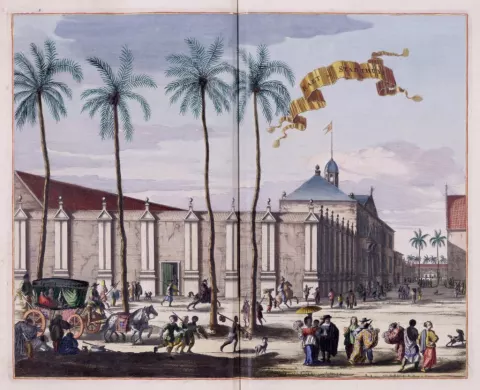
VOC’s seat of power in Asia was at Batavia, modern Jakarta, Indonesia, concentrated in the hands of governor-general who represented the will of the Heren XVII. He was assisted by raad (council) of the Indies at Batavia. The next most senior member was director-general who supervised the VOC’s commerce in Asia, followed by visitor-general in charge of accounts, then the president of the council of justice, and the heads of the VOC’s military and naval forces. This system was duplicated at regional level throughout the VOC’s possessions.
Long decline
Voc’s gradual decline started in the second half of the 17th century due to forces both in Europe and Asia that were acting contrary to the Company’s interests. The competition from other European companies, especially that of the English East India Company became stronger. At the same time the European demand for Asian products had changed, stimulating imports of cottons, muslin, raw silk, tea, and coffee – all from regions where the Dutch possessed no garrisons. And finally, the decline of intra-Asiatic trade reduced the inflow of specie which now had to be imported from the Netherlands, which significantly affected the profitability of Dutch trade.
The distant Indonesian islands and India were the primary sources of spices which is why the prices for spices were very high in Europe.
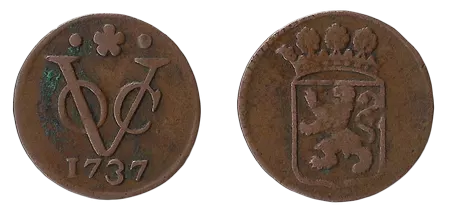
VOC had the rights that were usually of the sovereign; it could conclude treaties with native princes, build forts and maintain armed forces, it had judicial powers, and could mint its own coins.
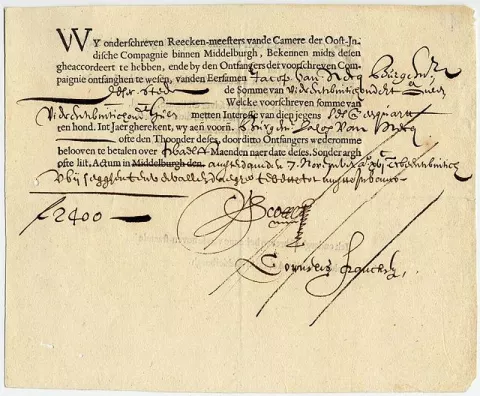
A bond from the Dutch East India Company (Vereenigde Oostindische Compagnie), dating from 7 November 1622, for the amount of 2,400 florins; written out and authorized in Middelburg, but signed in Amsterdam. On the name of Jacop van Necq.
One of the most important intra-Asian markets was Japan because it provided specie that was the most acceptable means of payment for spices in Asia. However, to secure Japan’s market and its specie, the Company first needed to secure Chinese commodities such as silk and pottery since these were in demand in Japan.
Success of the VOC is all the more impressive if we take to notice the fact that correspondence between Amsterdam and Batavia could take up to 20 months.
Chapters
- Shareholders and dividends
- Monopoly and trade goods
- Beginnings
- Asian trade and organization
- Intra-Asian trade
- Decline of the VOC
Shareholders and dividends
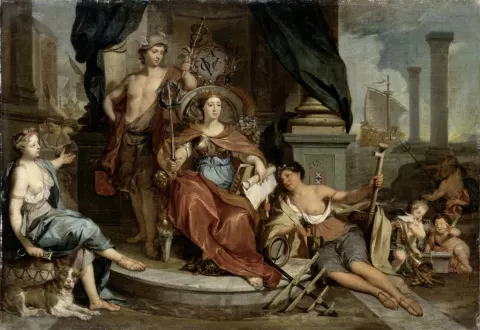
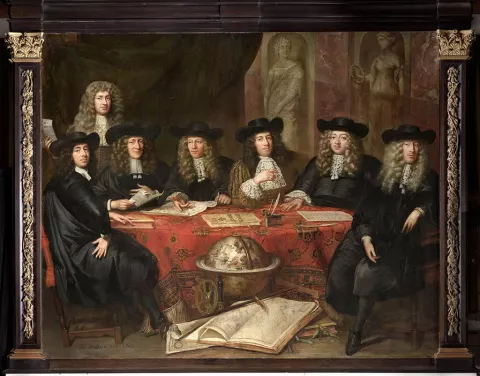
Allegory of the Amsterdam Chamber of Commerce of the VOC, Nicolaas Verkolje, 1702 - 1746. VOC consisted of six chambers of which the Amsterdam one was the most powerful; the others were in Zeeland (Middelburg), Rotterdam, Delft, Hoorn and Enkhuizen.
Starting capital of the VOC was 6,424,588 guilders. More than 1800 individuals contributed, but 200 of them accounted for half of the starting capital. Some of the investors were “participanten”, a limited partners, and others were “bewindhebbers”, an active partners. “Bewindhebbers” possessed sole authority in the management of the VOC. In the beginning there was 76 “bewinhebbers”, a number later reduced to 60. From this group the “Heren XVII”, the seventeen active directors, were selected.
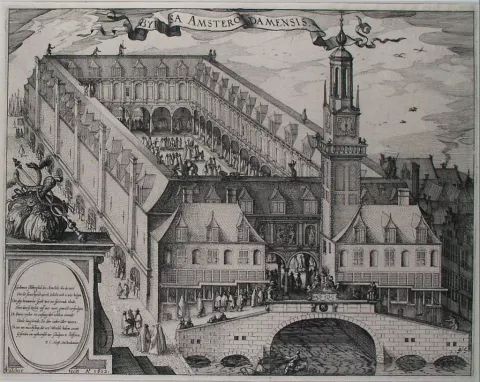
Partners who were not satisfied with the VOC could liquidate their share by selling them to a buyer at the stock exchange. A large number of mainly small shareholders exercised this option, and by the second decade of the 17th century the VOC had become Europe’s first effective joint-stock company.
Shareholders received their first dividend payment in 1610. The first dividend took form of a distribution pepper and mace. Dividends paid in merchandise was also a device by which the Company transferred to the shareholder a portion of its problems of maintaining commodity prices when large investors build it up in its warehouses. It seems bizarre to pay dividends in this way, but most of the shareholders were also merchants in Asian products. There were some who refused to accept their payment in this way. Although this group received their share in cash, they usually had to wait for it several years. The payment of dividends in kind occurred repeatedly until 1664. Only from 1699 the dividends were paid exclusively in cash.
A bond from the Dutch East India Company (Vereenigde Oostindische Compagnie), dating from 7 November 1622, for the amount of 2,400 florins; written out and authorized in Middelburg, but signed in Amsterdam. On the name of Jacop van Necq.
Monopoly and trade goods
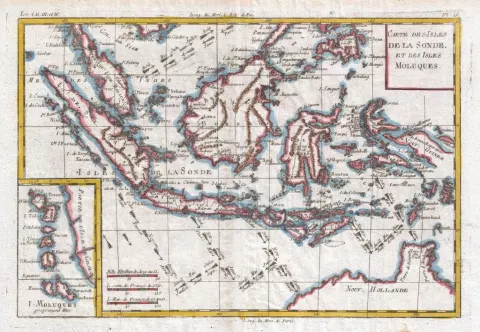
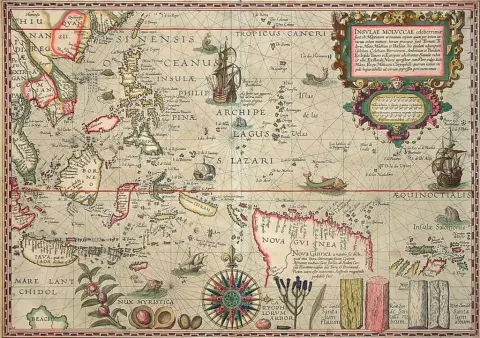
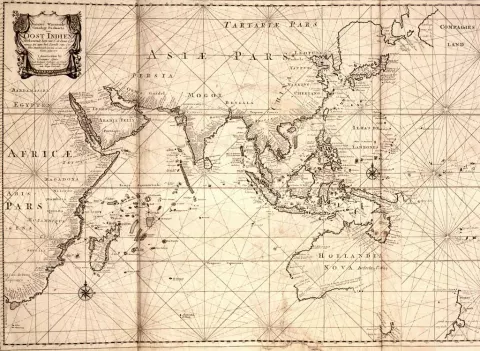
The VOC had all the islands in Indian Ocean in their possession. Moluccas, also known as Spice Islands, in the Malay Archipelago, were sources of cloves and nutmeg; the Sunda Islands in the Malay Archipelago were sources of pepper and coffee; Ceylon, or modern-day Sri Lanka, was the source of cinnamon.
A fine example of Rigobert Bonne and Guilleme Raynal’s 1780 map of the East Indies. Covers from the Malay peninsula to Australia inclusive of Sumatra, Java, Singapore, Borneo, New Guinea, and northern Australia (Nouv. Holland). Arrows in the seas show the important trade winds that facilitated commerce in this region from the earliest antiquity. Includes detailed inset of Moluccas in lower left quadrant.
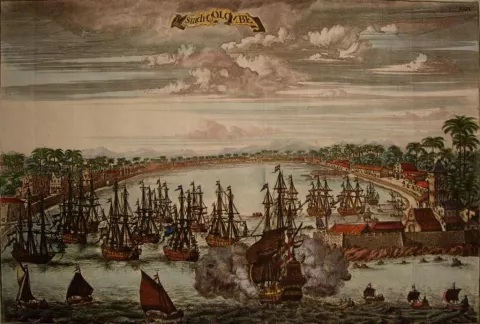
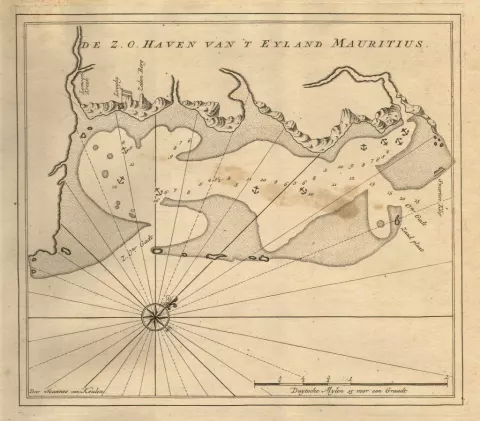
In India they established themselves on its Malabar Coast. Besides the possession of islands in South East Asia they penetrated to Malacca and Siam, modern-day Thailand. Dutch were also able to establish commercial connections with China and Japan. In fact, they were the only European traders allowed to do business in Japan. They also had in their possession strategic points for controlling and accessing Asian markets: the island of Saint Helena, the Cape of Good Hope and the island of Mauritius.
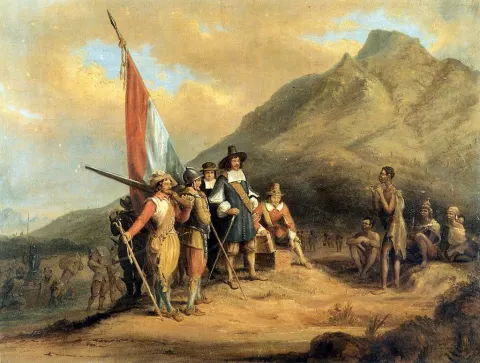
The most important of this control points was the Cape Colony, or “Tavern of the two seas”, established in 1652 to secure a crucial station on route between the Dutch Republic and the East Indies. Placed on a strategic point its main purpose was logistical – to supply outward-bound, and returning, VOC fleets with water and provisions. The demand for provisions was constantly increased. On average 33 Dutch ships docked per year in the first five decades of the Cape Town, a number increased to 69 between 1715 and 1740. As the settled area spread, by the 1690s Dutch South Africa was sufficiently productive to begin exporting wheat regularly to Batavia.
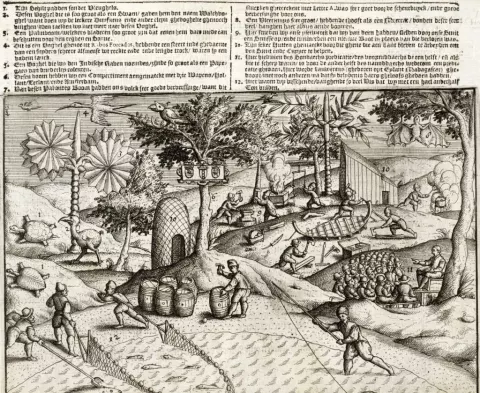
Copper engraving from 'Het Tweede Boeck' showing Dutch activities on the shore of Mauritius during the 1598 voyage of Admiral Jacob van Neck, as well as the first published depictions of a dodo (2) and a broad-billed parrot (5), both now extinct.
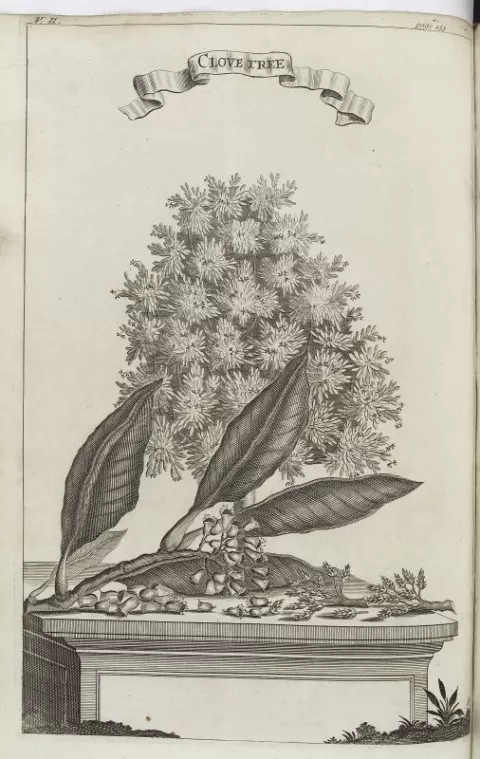
To keep their monopoly over the spice trade VOC destroyed all nutmeg trees in Moluccas Islands, except on small group of the Banda Islands. They did the same with the clove trees leaving it only on Ambon Island. To keep the prices of spices high they even destroyed already imported spices by burning them, most notably in Middelburg where, on such occasions, the air in the city and surrounding area was filled with the aroma of burned spices.
Beginnings
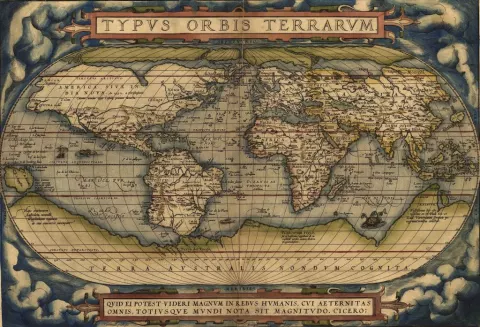
Spain and Portugal were leading powers in geographical discoveries and in the ocean trade. They were the first to exploit riches of Americas and to monopolize ocean trade with Asia. However, their monopoly did not hold for long. Already from the middle of the 16th century smuggling was wide spread. By the beginning of the 17th century smuggling became a political system for fighting against Spain’s and Portugal’s power.
Spices were one of the most profitable commodities in trade and by the beginning of the 17th century it lay in the hands of Portugal. They established monopoly that was guarded by military forts and other means. Spices were imported from Asia to Lisbon from where it was purchased by other merchants, mostly Dutch, and distributed to European markets. At that time, for political and mercantile reasons, the Dutch decided to break that monopoly and cut out the middleman. Already in 1600 the French ambassador in Holland reported to Henry IV that Portuguese will not rule for long with the riches of the East.
The first Dutch trading expedition to East Asia was organized in 1595, and the Verenigde Oostindische Compagnie (VOC) or United East India Company, most commonly known as the Dutch East India Company, was established in 1602. In this short period trading voyages to Asia gathered great popularity because profit expectations were high. For comparison; Portuguese dispatched 59 ships to Asia in period from 1591 till 1601, while the Dutch, which were newcomers to Asian trade, dispatched 65 ships from 1595 till 1602.
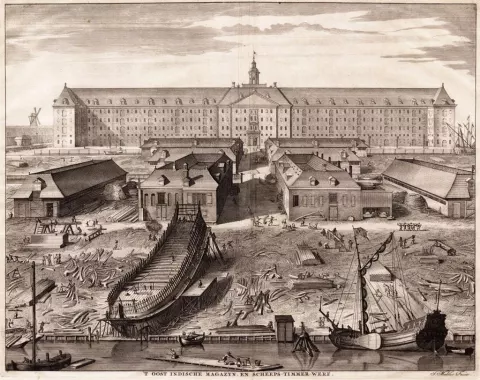
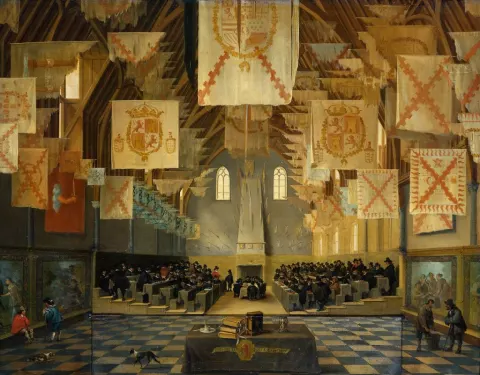
VOC was formally organized on 20 March 1602 when the States-General (Staten-Generaal) of the Republic of the Seven United Provinces of the Netherlands (Republiek der Zeven Verenigde Provinciën) issued an exclusive charter for its foundation. All the existing East India Companies of six different cities in the coastal provinces of Holland and Zeeland were merged into it.
The Dutch government granted the company a trade monopoly in all the waters and countries between the Cape of Good Hope and the Cape Horn. VOC had the rights that were usually of the sovereign; it could conclude treaties with native princes, build forts and maintain armed forces, it had judicial powers, could mint its own coins and carry on administrative functions through officials who were required to take an oath of loyalty to the Dutch government.
Asian trade and organization
The Dutch soon found out that the Asian trade had two mayor problems. Commodities had to be collected from various parts of Asia and their payment was another problem. Dutch planned to trade Asian commodities for Europeans one, but they soon find out that there was only a small Asian market for these goods. Most of the trade had to be conducted by means of precious metals. To solve this problem VOC started to develop intra-Asian market.
The VOC established the position of governor-general in their Asian possessions. The governor-general represented the will of the Heren XVII, had economic, civil and military powers in his hands.
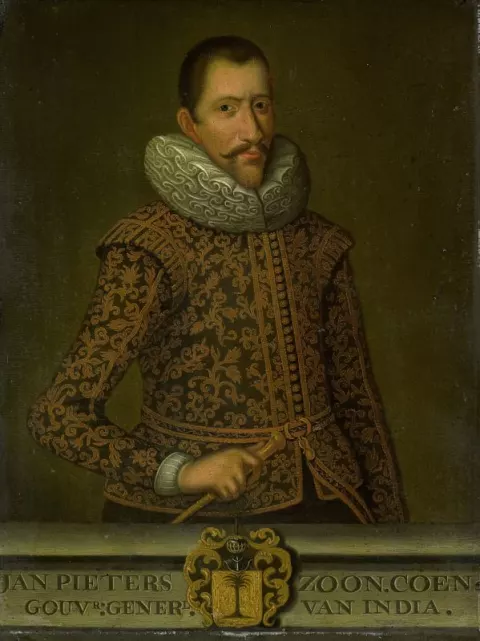
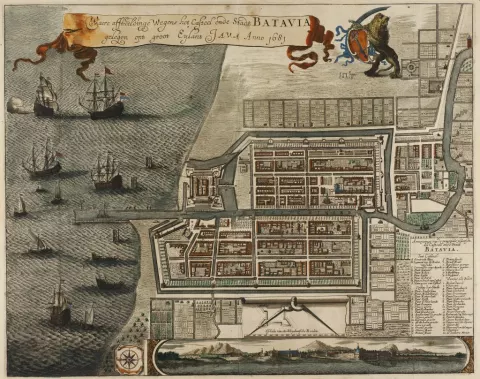
Influence that governor-general had in his hands is further clarified by the fact that correspondence between Amsterdam and Batavia took about twenty months. One of the most prominent men on this position was Jan Pieterszoon Coen. He consolidated Dutch power over the Spice Islands - naturally at the expense of the natives, founded Batavia as the central headquarters of the VOC in Asia and urged an inter-Asian trade to be established. His plan was to develop inter-Asian trade, partly by colonizing Dutch settlers in Batavia, so that profits from this trade would be used as payment for Asian spices sent back to Europe.
The governor-general was assisted by raad (council) of the Indies at Batavia. He was the first person of the raad and had to make consultations with other members. The next most senior member was director-general who supervised the VOC’s commerce in Asia. Next followed visitor-general, in charge of accounts, then the president of the council of justice, and the heads of the VOC’s military and naval forces. This system was duplicated at regional level throughout the VOC’s possessions.
Intra-Asian trade
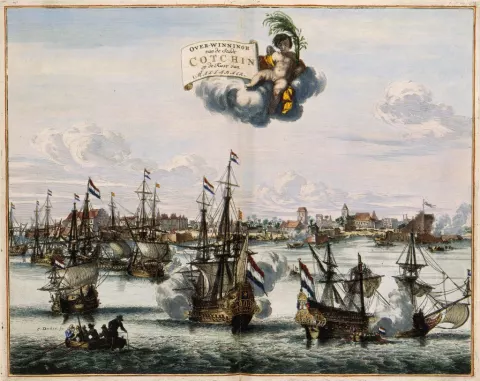
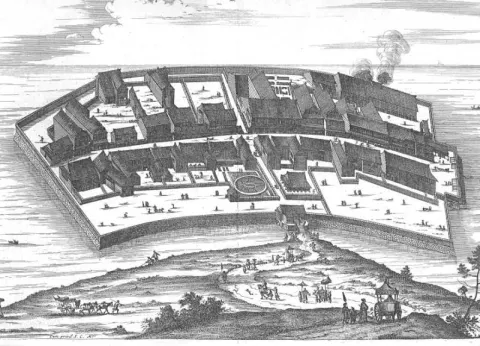
The Company’s intra-Asian trade involved them in establishing trading posts, and entering into negotiations with Asian rulers even in places that were not essential to Europe-Asia trade. Success of the spice trade depended on possessing Indian cotton textiles. To secure Indian markets the VOC had to deal with Portuguese, what they did, mostly by military means.
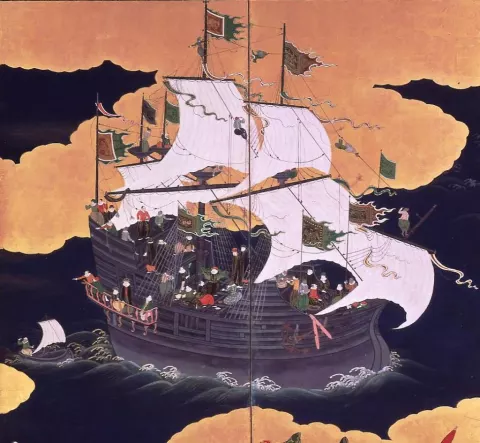
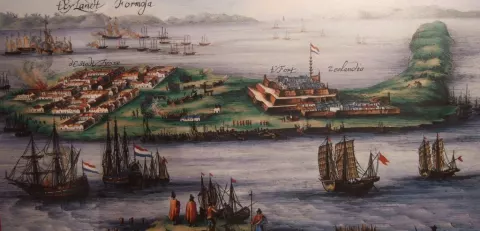
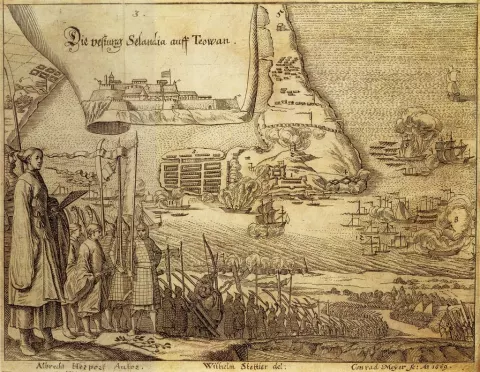
One of the most important markets was Japan because it provided specie that was the easiest and the most acceptable means of payment. However, to secure Japan’s market and its specie, the Company needed to secure Chinese commodities such as silk and pottery since these were in demand in Japan. Again military means were employed and the VOC established Fort Zeelandia on Taiwan.
In this place the VOC received Chinese junk trade and used the received commodities in trade with Japan. Another great trading zone stretched from Malabar Coast of India to Persian Gulf and the entrance to the Red Sea.
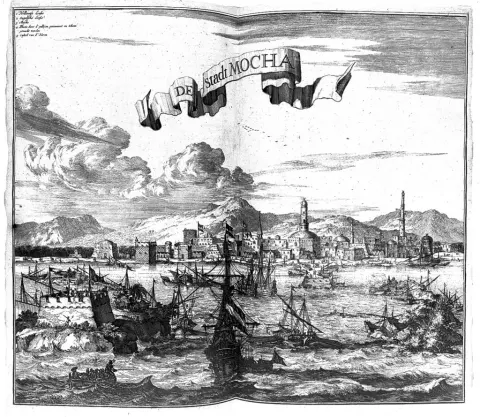
View of Mocha during the second half of the 17th century.
The Dutch flag is flying over a Dutch East India Company (VOC) ship in the foreground, as well as over the VOC factory seen toward the left of the picture. The English East India Company factory is visible near the center. Another flag can be seen flying on the right, most likely over the Danish East India Company factory. However, by the 1740s Mocha was quickly losing its commercial importance when the Dutch East Indies and Brazil became important centers of coffee cultivation.
Asian commodities were sold were they were expected to yield the largest profit. The case where one Opperkoopman (Chief Merchant) from Japan was sanctioned by headquarters in Batavia helps to illustrate how trade was conducted. The Opperkooman had shipped Persian silk from Japan, where it could not be sold above its purchase price, to Batavia to be shipped to Europe. The High Council in Batavia concluded that he made a poor commercial decision. He should have realized that the sale of the silk in Japan could enable him to acquire Japanese silver which, in turn, could be exchanged on Coromandel Coast (India) for cloth, which would realize at least a 100% profit at Batavia. In this way the merchandise would achieve a superior total return then the simple sale in Europe.
Decline of the VOC
An era of prosperity for the VOC came to an end during the 1670s and ‘80s. Forces both in Europe and Asia were acting contrary to the Company’s interests. European nations founded their own companies for Asian trade, of which the English East India Company (EIC) was the most competitive one. Pepper was one of the most lucrative commodities in trade and the VOC started to lose its profit. In the 1670s the EIC sold 38 million pounds of pepper in Europe and VOC sold 48 million pounds. The EIC had a 44% market share, a considerable growth concerning that their market share in the 1650s was 25 percent. The quantities of sold pepper also increased, and as a result the prices plummeted. For the VOC’s downfall there were also political reasons such as the English-French coalition war against the Dutch Republic launched in 1672.
The Battle of the Texel, 21 August 1673, painted 1683. The ship at the centre is Dutch Admiral Cornelis Tromp's flagship Gouden Leeuw, 82 guns.
The 1680s were also a zenith of Dutch power in Asia. The VOC had over twenty fortresses in Asia with over 100 men and in South Africa a garrison of about 200. The Company also had a string of factories without fortresses. Altogether, in the 1680s VOC had about 11,500 employees on land in Asia, of whom 7800 were military, and additional 4000 men were sailors.
The VOC also faced troubles in Asia. Their intra-Asian trade was much shaken by the loss of Taiwan in 1662 to Chinese forces.
By the 1666 Chinese authorities tolerated Dutch trade in some ports, but after that year even this was prohibited. The Chinese silk was replaced with Bengali one, but Japan itself started to issue rules further controlling and restricting foreign trade. Since Japan financed its imports chiefly with precious metals, since 1660s it brought a number of measures that restricted export of precious metals. In 1660s and ‘70s Japan raised the gold-silver exchange rate and fixed the prices of imported goods. In 1685 Japan introduced a “limited trade system” which placed a fixed ceiling on the total value to the VOC’s import to Japan. Japan no longer served as a source of specie, which now had to be imported from the Netherlands, and the VOC was soon unable to conduct its Asian trade at a profit. This was evident from the
1690s and continued throughout the 18th century.
Another trend that was not in favor of the VOC’s trade in the late 17th century was the shift in the pattern of demand for Asian products in Europe, stimulating imports of commodities such as cottons, muslin, raw silk, tea, and coffee from regions where the Dutch possessed no garrisons. The English and French showed more dynamism then the Dutch on this field.
From 1730s to 1780s VOC faced with several problems that marked its decline. The steady erosion of intra-Asiatic trade because of Asiatic political and economic changes gradually confined its operations to the belt it physically controlled, from Ceylon through the Indonesian archipelago. One of the disadvantages was central organization of Asiatic operations, goods were first shipped to Batavia and
then to Europe, while other companies shipped goods directly to Europe.
Also the company was not a good employer, salaries were low and conditions harsh. Trading on private account was not allowed and company employees became more and more bribed. After 1730 profits plummeted and the bewindhebbers only slightly decreased dividends from the earlier level. Distributed dividends were therefore in excess of earnings in every decade but one (1760–1770). The directors were therefore constrained to replenish the company's liquidity by resorting to short-term financing from anticipatory loans, backed by expected revenues from home-bound fleets.
By the 1780s the VOC was heavily indebted and the Fourth Anglo-Dutch War (1780-1784) was the last nail in VOC’s coffin. During the war VOC lost a great number
of its ships, EIC took over some of the key settlements and could trade without hindrance from the VOC. Dutch Republic came to an end in 1795, and the Batavian Republic (a French client state) was established. The VOC came under more strict government supervision until finally in 1796 the Heren XVII was disband and replaced with replaced by a Committee for East Indies Trade. Charter of the VOC was periodically renewed and the last one expired on 31st December 1800. The VOC was finally nationalized, the State took over all property and the catastrophic debt, employees were dismissed and marine infrastructure was given to the Dutch navy.
74 lives in this room
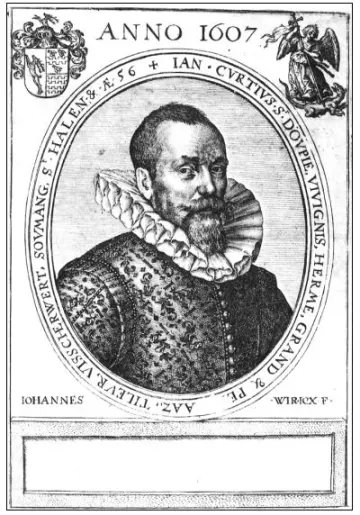 Jean Curtius1551-1628
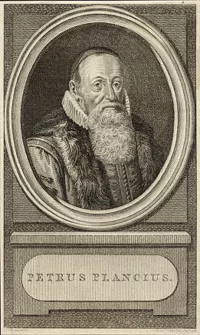 Petrus Plancius1552-1622
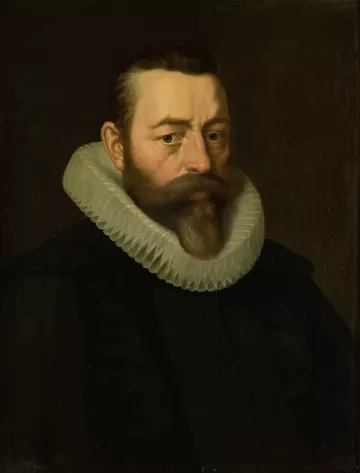 Pieter Dircksz Hasselaer1554-1616
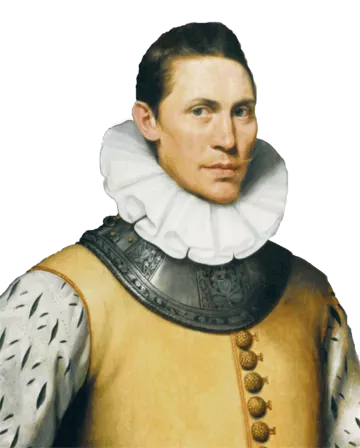 Dirck van Os1556-1615
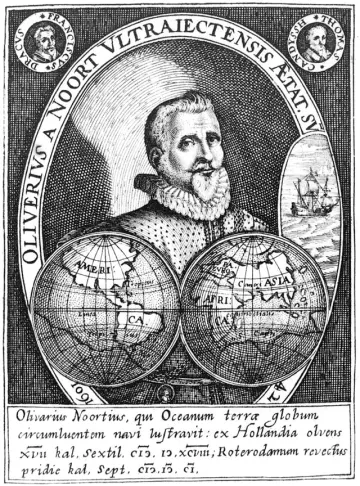 Oliver van Noort1558-1627
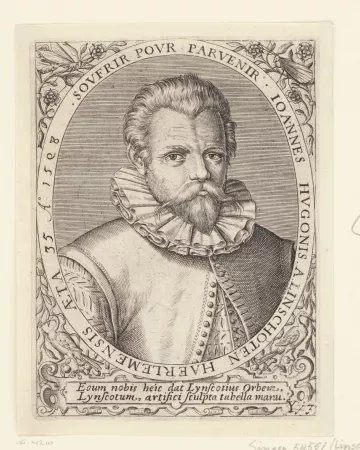 Jan Huyghen van Linschoten1563-1611
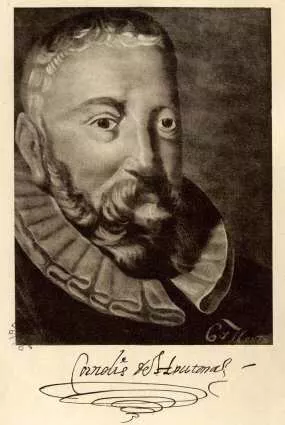 Cornelis de Houtman1565-1599
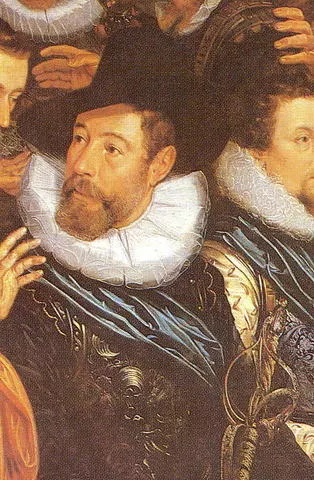 Geurt van Beuningen1565–1633
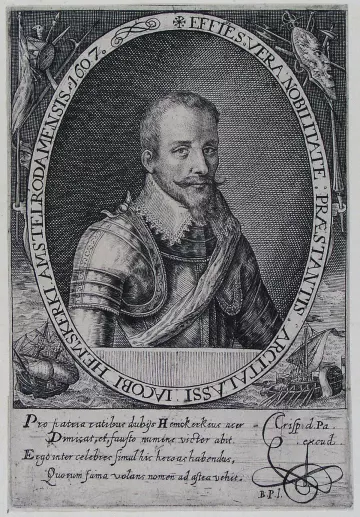 Jacob van Heemskerck1567-1607
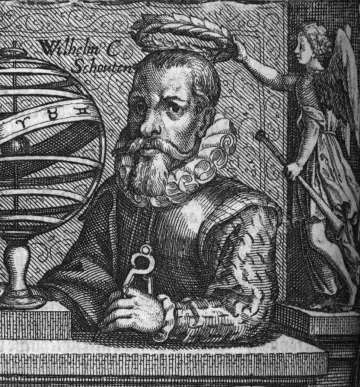 Willem Schoutenc. 1567–1625
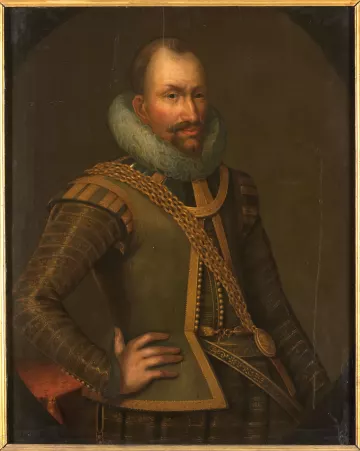 Gerard Reynstc. 1568-1615
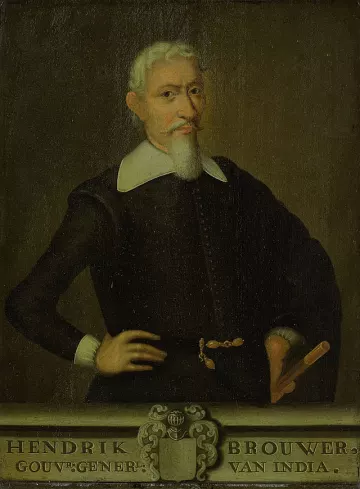 Hendrik Brouwer1581-1643
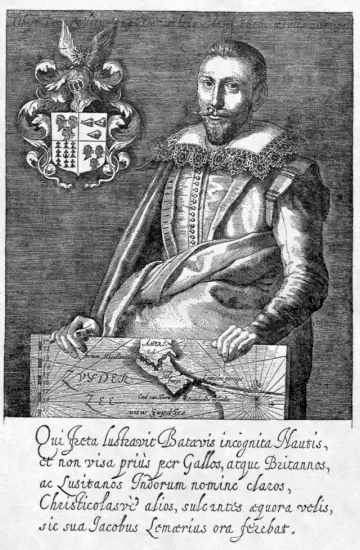 Jacob Le Mairec. 1585-1616
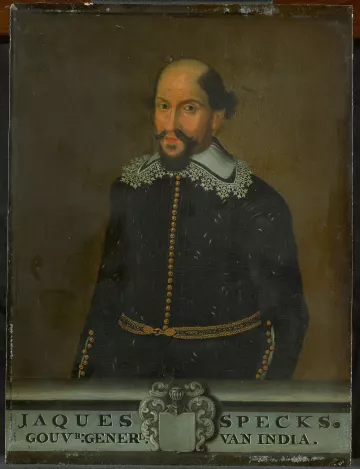 Jacques Specx1585-1652
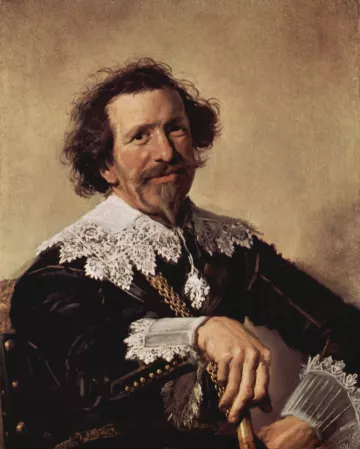 Pieter van den Broecke1585-1640
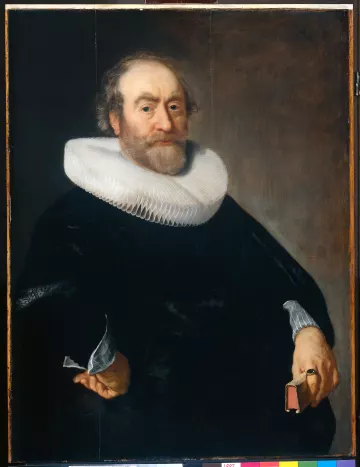 Andries Bicker1586-1652
 Pieter de Carpentier1586-1659
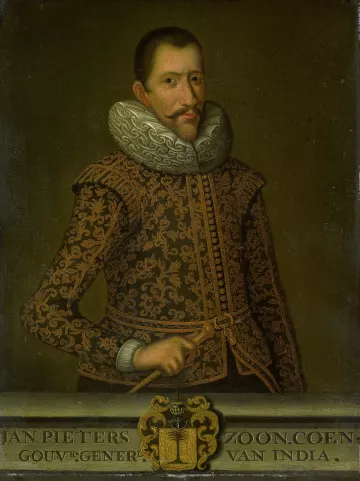 Jan Pieterszoon Coen1587-1629
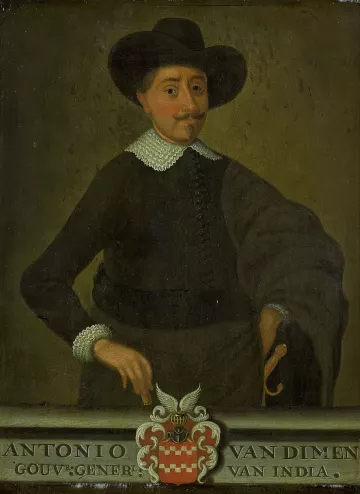 Anthony van Diemen1593-1645
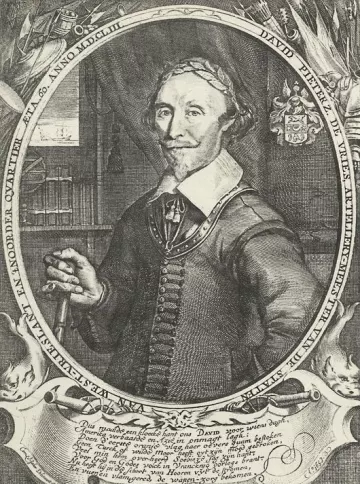 David Pieterszen de Vries1593-1655
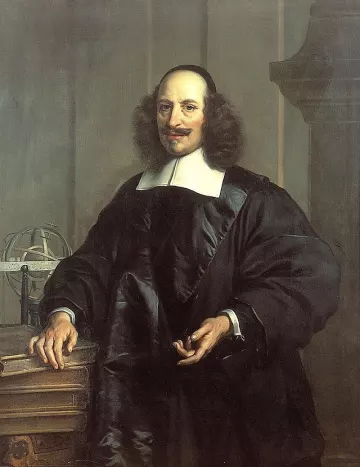 Joan Blaeu1596-1673
 Pieter Nuyts1598-1655
 Gerrit Reynst1599-1658
 Joan Huydecoper van Maarsseveen1599-1661
 Carel Reyniersz1604–1653
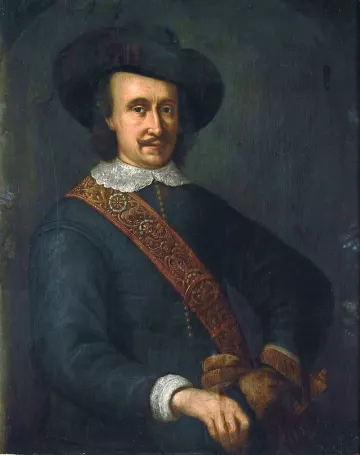 Cornelis van der Lijn1608-1679
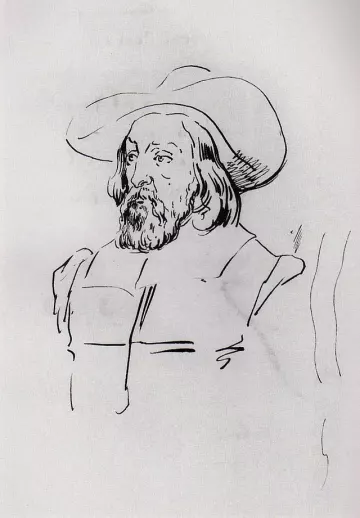 Pieter Anthoniszoon Overtwaterc. 1610-1682
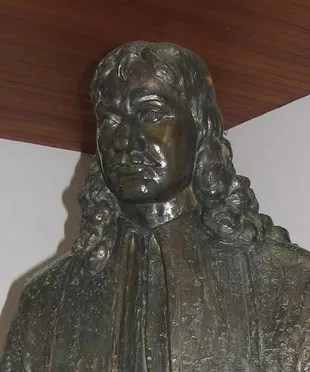 Frederick Coyettc. 1615-1687
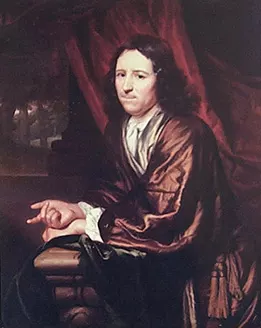 Pieter de la Court1618-1685
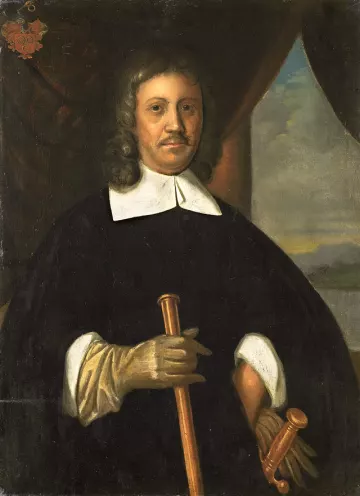 Jan van Riebeeck1619-1677
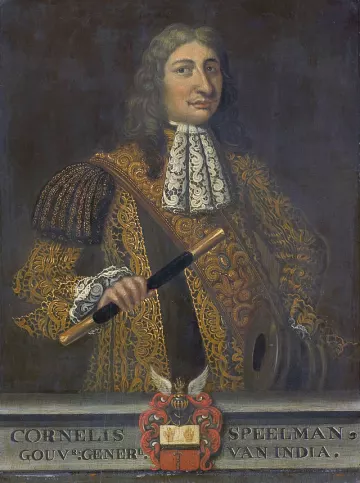 Cornelis Speelman1628-1684
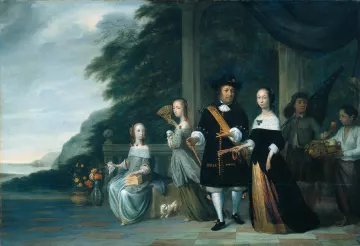 Cornelia van Nijenroode1629-c. 1692
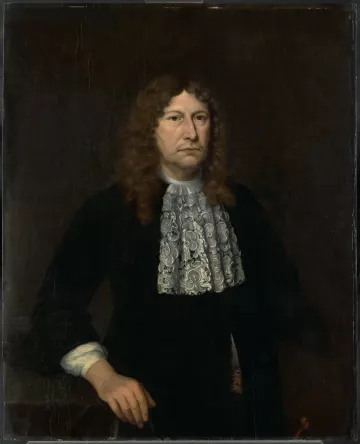 Johannes Camphuys1634-1695
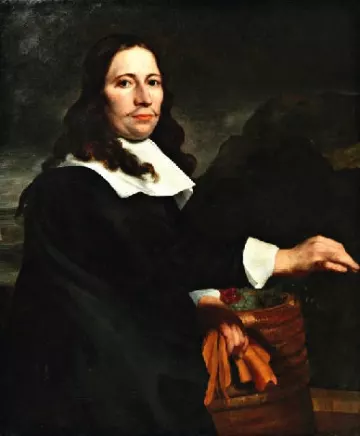 Simon van der Stel1639-1712
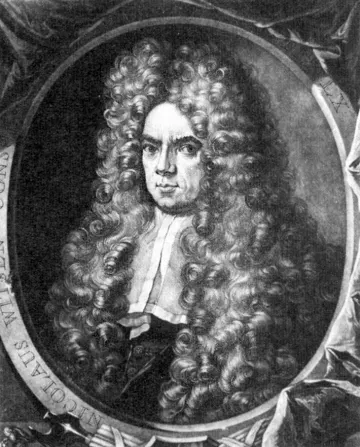 Nicolas Corneliszoon Witsen1641-1717
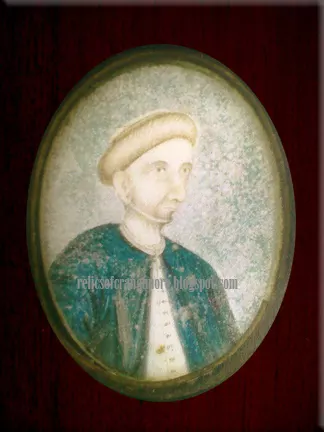 Ezekiel Rahabi1694–1771
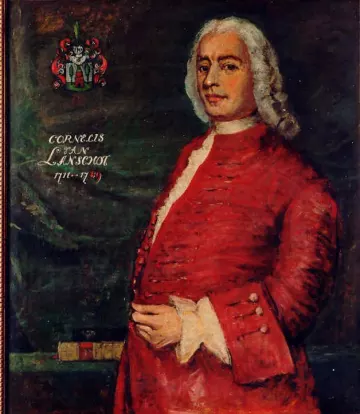 Cornelis van Lanschot1711-1789
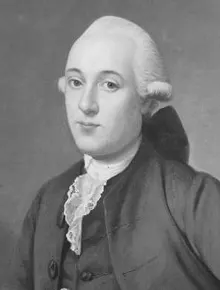 Gerrit de Graeff (I.) van Zuid-Polsbroek1711-1752
More lives in this room
- Dirck Gerritszoon Pomp 1544–1608
- Melchior van Santvoort late 16th – early 17th century
- Isaac Le Maire 1558-1624
- Jan Joosten van Lodensteijn c. 1560-1623
- Hessel Gerritsz 1581-1632
- Jacques l'Hermite c. 1582-1624
- Shantidas Jhaveri 1587-1659
- Francisco Pelsaert c. 1590-1630
- Virji Vora c. 1590-1670
- Jeronimus Cornelisz 1598-1629
- François Caron 1600-1673
- Jan Reynst 1601-1646
- Johannes van Walbeeck c. 1601 - after 1649
- Abel Janszoon Tasman c. 1603-c. 1659
- Maximiliaan le Maire 1606-1654
- Cornelis Caesar c. 1610–1657
- Herman van Speult d. 1626
- Rustamji Manekji 1635-1721
- Joan Geelvinck 1644-1707
- Mohandas Parekh 17th century
- Su Minggang 17th century
- Abraham van Riebeeck 1653-1713
- Gerrit de Heere 1657-1702
- Mattheus de Haan 1663–1729
- Hendrick Zwaardecroon 1667 – 1728
- Johannes Hertenberg 1668-1725
- Zacharias Wagenaer d. 1668
- Jacob Christiaan Pielat 1692-1740
- Stephanus Versluys 1694-1736
- Isaac Surgun 1701–1791
- Pieter Cramer 1721-1776
- Tacqua Amoy fl. 1730-1760
- Hendrik Casper Romberg b. 1741
- Tan Hunqua d. 1760
- George Manook 1763-1827
- Mancherji Khurshedji d. 1784