No. 1618
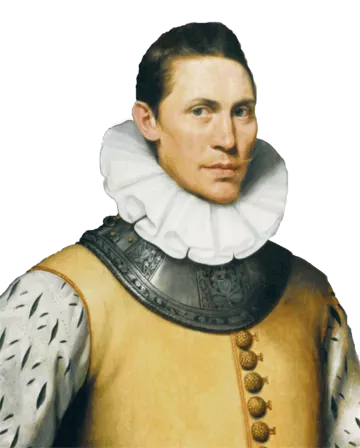
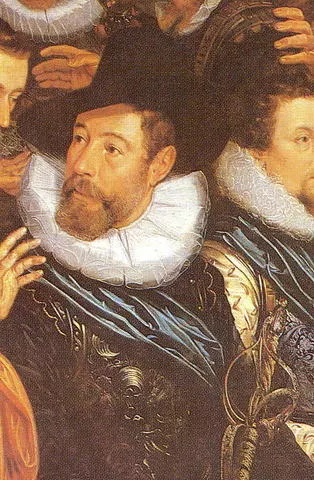
Jan Joosten van Lodensteijn
Jan Joosten van Lodensteijn, known as Yaesu-san, was a native of Delft and one of the first Dutchmen in Japan. He left Netherlands on June 27, 1598, from Rotterdam onboard the ship Liefde, which was a part of fleet of five ships sent on a trading voyage and circumnavigation of the globe.
Joossten’s ship was the only one to arrive in Japan, on April 19, 1600, in Sashifu, in the Bungo area, nowadays Usuki in Oita Prefecture. Of the originally 110 man crew only 24 had survived the journey. Joossten was received by future Shogun Tokugawa Ieyasu, who questioned him at length on European politics and foreign affairs. Joossten, and an Englishman William Adams, became confidant of the Shogun on foreign and military affairs. He also contributed to the development of relations between the Netherlands and Japan, thereby weakening the influence of Portugal and Spain.
Joossten was made a hatamoto, being granted a house in Edo and an estate at Nagasaky valued 100 koku (18 000 liters) of rice. He was also granted the overseas trading licenses known as shuinjo, literally vermilion seal documents, which permitted the holder to trade overseas. Later he also owned Japanese junks in which he conducted his trade.
Jan Joosten died in a shipwreck in the Parcel Islands in the South China Sea, probably in 1623. His name still exists in the name of Yaesu side of Tokyo Station.