Museum / Rooms / The Silk Road
Room · 6 chapters · 27 lives
The Silk Road
Cultural bridge between Asia and Europe
The term “Silk Road” was first coined by a German traveler, geographer, and scientist Ferdinand von Richthofen in 1877.
Unexpected success
Great trade route known as the Silk Road connected countries from China to Mediterranean, enabling commercial and cultural exchange of Eurasia.
Although connections between various parts of the route existed well into antiquity the formal opening of the Silk Road route is attributed to the times of the Chinese Han dynasty (206 BC - 220 AD).
Chinese envoy Zhang Qian of the Emperor Wudi was sent to a diplomatic mission to find allies in the West. Although politically the mission was not successful Zhang Qian report on the Western Regions prompted opening of the official trade contacts.
Road or roads?
Although the route is known as a Silk Road it was comprised of many different roads or routes to form a vast network of land and maritime trade and communication routes connecting the Far East, Central Asia, the Indian sub-continent, Iranian and Anatolian plateaus, the Caucasus, the Arabian peninsula and the Mediterranean region and Europe.
The Silk Road stretched through all of Eurasia and connected empires from the 2nd century BC until its decline in 15th century.
Silk and…
The most important commodity on the Silk Road was, naturally, silk. Sericulture, the process of raising silk worms and extracting silk yarn, had long been Chinese secret but eventually other people started to produce silk as well.
Because of different patterns and production technology eventually silk was not only exported from China but also imported from other regions. Silk was the most important commodity but virtually every product of the known world traversed the Silk Road.
During its history stretching through, at least, 16 centuries, the Silk Road connected various empires enabling exchange of commodities, religion, ideas and culture in general.
Like today the goods traveled more than the people who traded them. Few merchants traversed the whole length of the Silk Road. Instead, most of them traveled and traded on specific parts of the route.
Chapters
Opening of the Silk Road
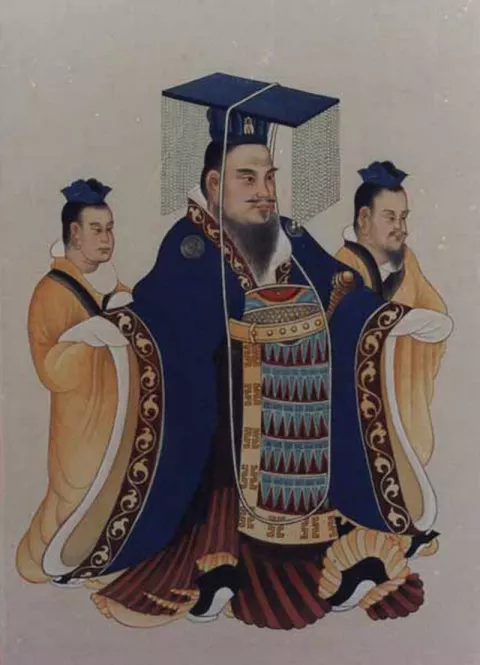
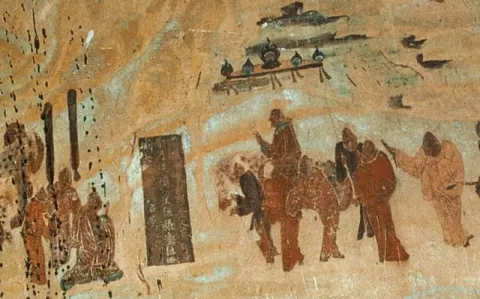
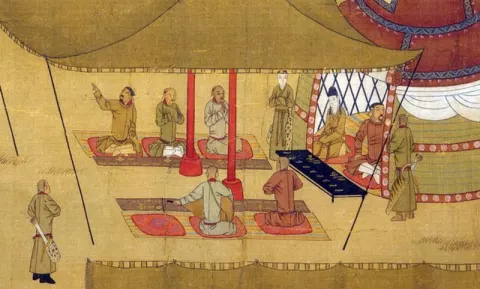
The formal opening of the Silk Road route is attributed to the times of the Chinese Han dynasty (206 BC - 220 AD). The Han Empire had problems with Xiongu people who intruded into their northern border. In search for allies the Emperor Wu (r. 141 BC – 87 BC) sent a diplomatic mission headed by Zhang Qian to Yuezhi, another people of the steppe, since they were too in war with the Xiongu.
Zhang Qian and his retinue of one hundred people, among whom was one Ganfu, a native of the steppe, had to travel west through the territory of the Xiongu. They were captured and detained for ten years moving through steppe together with Xiongu.
During his captivity Zang Qian married a Xiongu woman and fathered her children. Nevertheless, he did not forget about his mission and he managed to escape after a decade and reach the territory of Dawan (modern Ferghana in Uzbekistan).
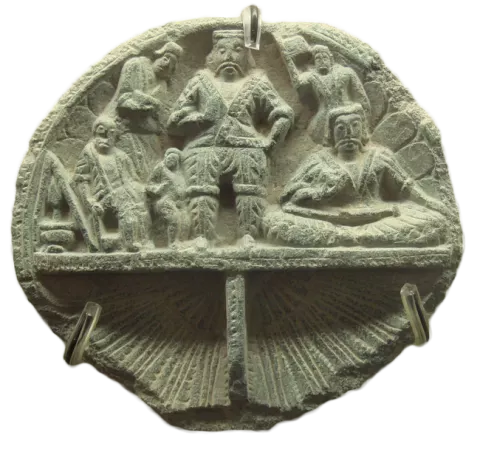
The king of Dawan escorted him south to Kanju, or Sogdiana, also in modern Uzbekistan, and from there he reached the court of Yuezhi on the bank of the Amu Darya, known as the Oxus River to Europeans of antiquity, in 129 BC. The problem was that one year before the Xiongu had defeated the Yuezhi. The Xiongu chief had killed the leader of the Yuezhi and mad a drinking vessel out of his skull, a symbol of the victory on the steppe. The Yuezhi migrated from their homeland, in what is now Xinjiang Province, across the pastures north of Tianshan range to Bactria – the former Greek colony stretching from what is now northern part of Afghanistan to Uzbekistan. Zang Qian unsuccessfully spent a year trying to convince the Yuezhi to engage in war with the Xiongu. Then he started the travel home but was once again detained by the Xiongu, only this time he managed to escape after a year and had returned to Han court in the city of Chang’an, modern Xi'an.
Although politically his mission was unsuccessful, his report on cultures, people, lands - probably to Antioch, and on foreign markets greatly interested the Han court. He was responsible for opening up the ancient Silk Road and bringing reliable information about the Western Regions. He noticed Han’s products in Bactrian markets that were reported to arrive there from India and had also reported the court about foreign products. His report prompted the Han court to facilitate trade between their Empire and the countries to the west. In 119-115 BC Zhang Qian was sent on another mission, to Wusun people roaming west of the Xiongu in the Tarim Basin, with three hundred envoys with six hundred horses and tens of thousands of cattle and sheep, gold and silk worth millions. The Han court first tried to reach Bactrian markets by India, in this way to circumvent the Xiongu, but the natives of mountainous region of Yunnan saw no benefit from Han trade routes and had killed intruders.
To secure China’s access to the routes to the Western Regions, Wu launched several successful campaigns against the Xiongu, extended the Great Wall northwestward all the way to the Gate of Jade (Yumen), the westernmost garrison town, near Dunhuang and set up a system of garrisons along this part of the Great Wall and put its headquarters in a town called Anxi.
Routes
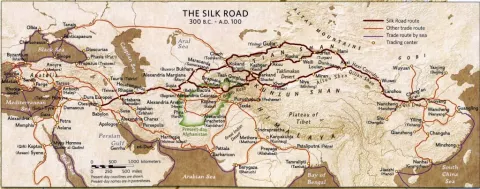
Although the route is known as a Silk Road it was comprised of many different roads or routes to form a vast network of land and maritime trade and communication routes connecting the Far East, Central Asia, the Indian sub-continent, Iranian and Anatolian plateaus, the Caucasus, the Arabian peninsula and the Mediterranean region and Europe.
The Silk Road stretched through all of Eurasia and connected empires from the 2nd century BC until its decline in 15th century. All of those empires such as Roman, Chinese, Mongolian, Kushan, Seleucid, Parthian, and Arab recognized the importance of commerce and it is safe to say that every significant locality in them was somehow connected to this great route. Even in times of instability oases cities previously developed along the route continued to facilitate trade. As all of this vast area was included in trade along the Silk Road it is difficult to pinpoint the route but a general route can be outlined.
As the formal opening of the Silk Road happened during the Han dynasty it can be said that the ancient road originated from the historical capital of Chang'an (now Xi’an). From the capital the road lead to Dunhuang, a key point of the route, where the trade road divided into three main routes: the southern, central and northern routes.
The Southern Route wandered west along the northern foot of the Kunlun Mountains, passing Ruoqiang (Charkhlik), Qiemo (Cherchen), Hetian, Yecheng (Karghalik), Shache (Yarkand) and reached Kashgar (the last point of the Silk Road in China). Then this route crossed the snow-covered Pamirs, reached Pakistan and India via Kashmir; it could also reach Europe through Islamabad, Kabul, Mashhad, Baghdad and Damascus.
The Central Route ran west along the southern foot of Tianshan Mountains, passing Loulan (now Ruoqiang), Turpan , Korla, Kuche (Kuqa), Aksu and Kashgar, afterwards went over the freezing Pamirs, wound to Mashhad via the Fergana Basin, Samarkand, Bukhara and finally joined the Southern Route. The Northern Route went west along the northern foot of Tianshan Mountains, taking merchants westwards to Hami (Kumul), Urumqi and Yining, and then reached the areas near the Black Sea, the Caspian Sea and the Mediterranean Sea.
Silk
The most important commodity on the Silk Road was, naturally, silk. Sericulture, the process of raising silk worms and extracting silk yarn, had appeared in China in the 3rd millennium BC and had remained their secret until 6th century.
Such an important commodity also gained its own legend about discovery. The legend tells that Empress Hsi Ling Shi, wife of Emperor Huang Ti, also called the Yellow Emperor, was the first person to accidentally discover silk as weavable fiber and the one that established the practice of sericulture in the 27th century BC. As the story tells, Empress was sipping tea under a mulberry tree when a cocoon fell into her cup and began to unravel. Enchanted by the beauty of the thread she persuaded
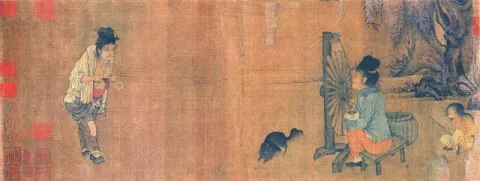
This hand scroll ‘The Spinning Wheel’ was painted in ink and colors on silk by Chinese artist Wang Juzheng, who lived during the Northern Song Dynasty between 960 and 1127 AD.
her husband to give her a grove of mulberry trees, where she could domesticate the worms that made these cocoons.
Further, she is also credited for inventing the silk reel, which joins fine filaments into a thread strong enough for weaving and with the invention of the first silk loom. By the time of Han government silk became so common in China that every household had to pay a tax in grain and silk cloth. Men were engaged in farming of the land and the women were responsible for raising mulberry trees, feeding the silk worms, extracting silk fibers from cocoons, spinning silk yarn and weaving silk textiles.
Government workshops with division of labor, high technical skills and more complicated looms produced more exquisite textiles such as brocade, tapestry, and embroidered silk cloth.
Silk came to prominence as an exchange commodity early in Chinese history. It was used as a trading commodity and as diplomatic mean. Chinese adopted nomad military tactics in the 4th century BC but as this tactic was based on cavalry they needed to acquire horses, as they did through trade for silk. From 3rd century, when the Qin dynasty unified other six Chinese states under their rule, rulers sent large quantities of silk to appease the nomads or to trade for horses. Silk garments made the chieftains of the steppe look more elegant then their followers and in such a way rare and luxurious goods from far away marked the difference between the ruling elite and their subjects.
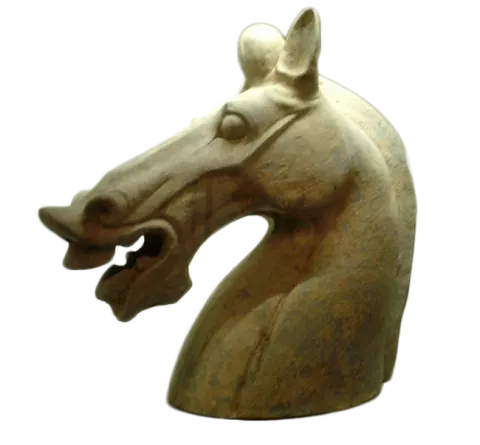
- A pottery horse head and neck, from the Late Han dynasty (1st–2nd century AD). Horses were significant trade commodity between China and nomadic people of the steppe.
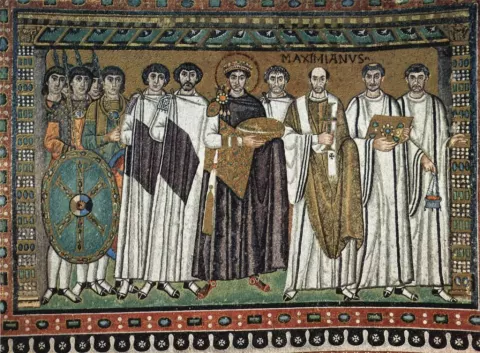
The Byzantine emperors also used silk to make their society more hierarchical. They limited silk’s availability so as to endorse their rule and enhance their different status. Purple silk was the most valued and the darker the purple on the robe, the higher the status of the person was. The rule applied both to royal court and the church. The purple color of the silk was made in Tyre; it was extracted from a shellfish harvested near the eastern coast of the Mediterranean. Since a large quantity of shellfish produced only a small amount of dye it made it very expensive.
Silk and purple color in combination was a clear sign of wealth and prestige. Although silk weaving industry appeared during Roman period in Beirut and Tyre, using imported silk yarns, the Roman ruling elite newer restricted its use or trade.
Use of purple silk was restricted from the times of Justinian
the Great (r. 527-565) who made it a government monopoly. He even started to introduce sericulture in his empire, setting the stage for the flowering of the Byzantine silk-weaving industry. This was achieved after two monks smuggled silkworm eggs in bamboo canes and presented them to Justinian in 554. Industry set up by Justinian had a great significance as symbolic representation of power in Byzantine court and church and later as effective diplomatic weapon with which to protect imperial interest.
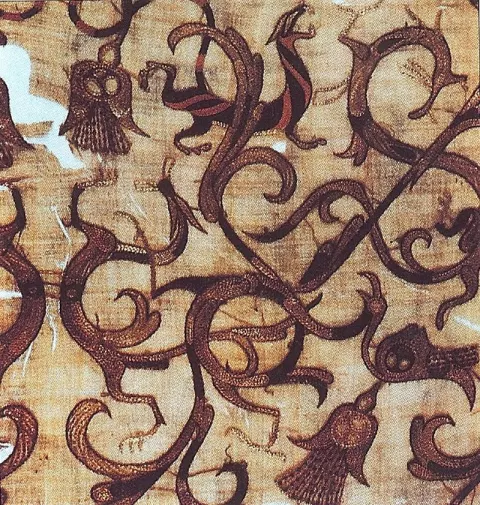
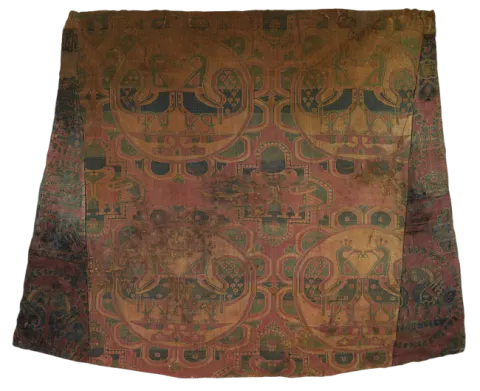
Eventually silk started to be imported in China, its homeland. Chinese consumers found foreign silk attractive because of its exotic artistic style, for example the Iranian silk that was produced by applying the weaving technology of woolen textiles to shiny silk yarn.
Another notable production center of silk was developed by Sogdians in Zandan, a village near the city of Bukhara. For centuries the Sogdians served as middleman traders between the nomadic people of the steppe who obtained silk at the Great Wall and sedentary states to the west.
As traders they gained extensive knowledge about silks and their production, which they used to start weaving silk in their homeland. By the late sixth century their silk products, known as Zandanji, became one of the most popular in Eurasia. Their silks products made of Chinese yarn often featured stiff animal motifs, resembling to those of the Sassanids, and were colored in Chinese style. While Persian silks were often woven in somber colors like dark blue and gray, the Zandanji silks often combined chartreuse, orange, and pink to create their patterns.

Other commodities
Silk was indeed the most important commodity traveling along the Silk Road but it was not the only one.
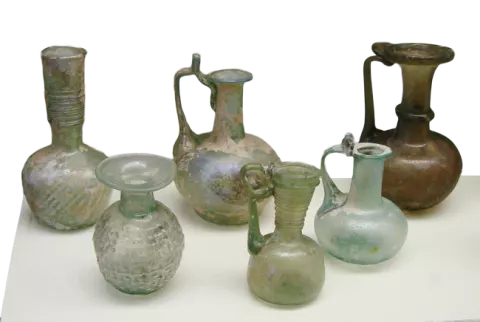
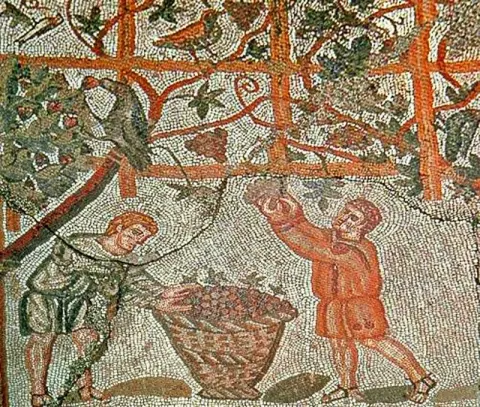
From the Mediterranean area came grape wine, various vessels associated with wine drinking, olive oil, glassware, coral, woolen and linen textiles and clothing, various artworks made of metal, including bronze, brass, silver and gold.
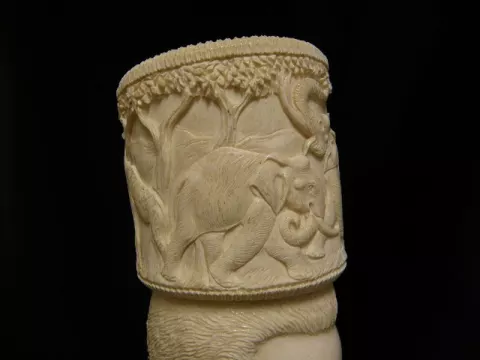
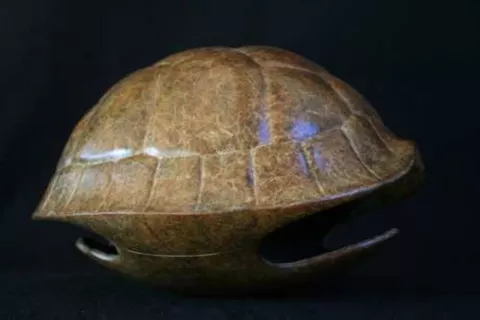
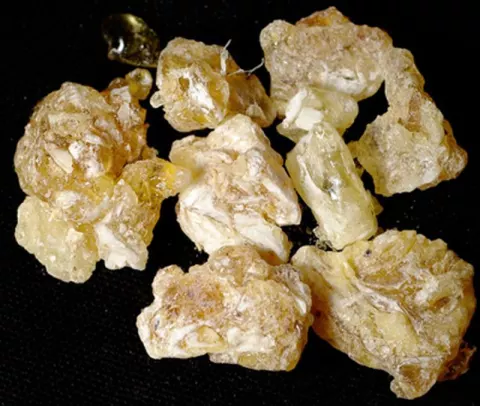
From East African coast came elephants, ivory, slaves, tortoise shells and aromatic woods such as myrrh and frankincense.
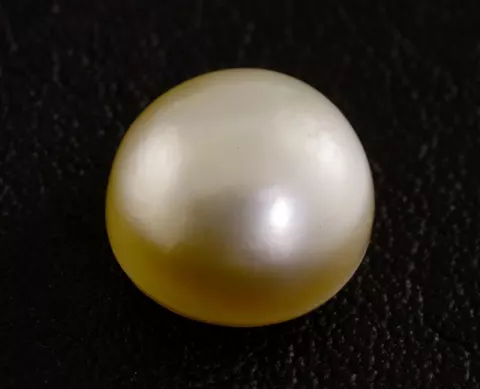
Aromatic wood, frankincense, was the most famous product of southwestern Arabia in today’s Yemen and Oman. Pearls from the Persian Gulf and India were also traded. India was famous for its fabrics, spices and semi-precious stones, dyes, and ivory. Central Asia exported camels, military equipment, gold and silver, semi-precious stones and glass items. Samarkand made glass was especially valued due to its high quality.
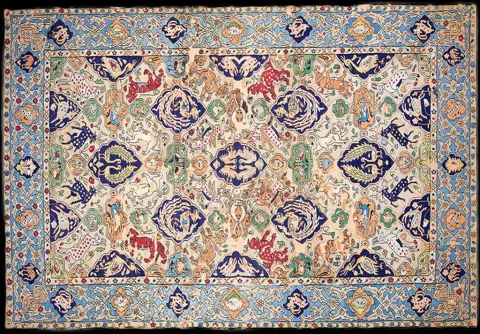
Other goods were skins, wool, cotton fabrics, gold embroidery, exotic fruits – water-melons, melons and peaches. Iranian woolen tapestries and rugs were among the most sought products in China since the Han dynasty.
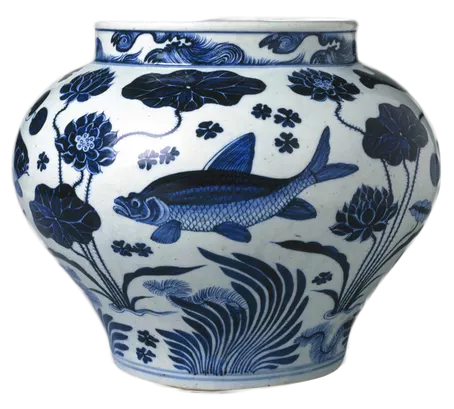
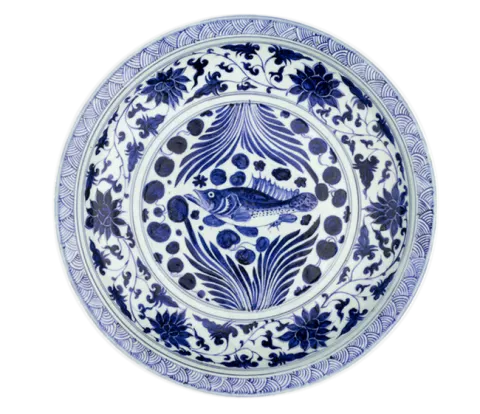
Wine Jar with Fish and Aquatic Plants, 14th century.
China also exported tea and various tea drinking vessels and other porcelain ware. All of these goods and more were traded both on maritime and overland routes.
Cultural exchange
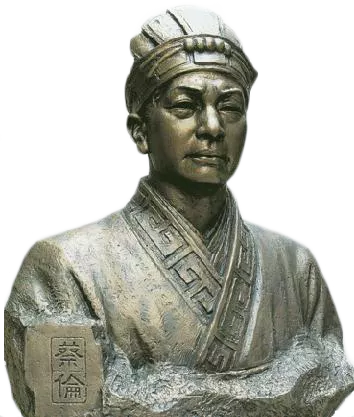
Significance of the exchange along the Silk Road was not just in material commodities, it served as a conduit of ideas and culture. Papermaking, gunpowder, printing and the compass all originated in China and were carried through Silk Road. According to Chinese written records paper was invented in 105 by an official Cai Lun. In that year the invention was presented to Emperor He (r. 88-105) and is considered to be the year marking the invention although it was invented even earlier.
Gunpowder was invented during the Tang dynasty around 850, by an accident. Somewhat ironically, it was invented by an alchemist while attempting to make an elixir of immorality. This mixture of 75 parts saltpeter, 15 parts charcoal and 10 parts sulfur spread along the Silk Road and changed the history forever.
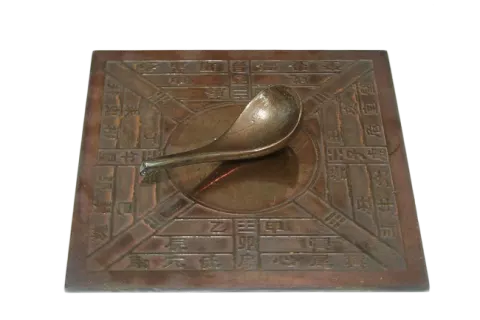
Si nan of han dynasty. The word Si means pointing to and Nan means the South.
A device called a Si Nan, invented in the 3rd century BC, became the forerunner of the compass. By the time of the Tang dynasty (7-9th century), Chinese scholars had devised a way to magnetize iron needles, by rubbing them with magnetite, and then suspending them in water. By the 11th century they seem to have become common as navigational devices on ships.
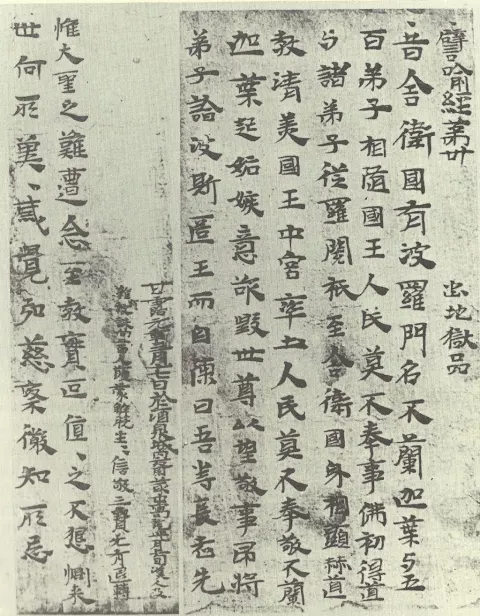
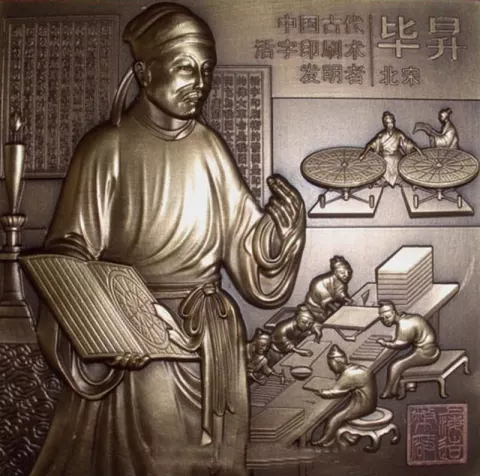
Invention of printing took place possibly between the 4th and 7th century. It began as blocks cut from wood used to print textiles and then used to reproduce short Buddhist religious texts. Later long scrolls and books were produced, first by wood-block printing and from the beginning of 11th century, by using movable type. It is thought that woodblock printing reached Europe by 1300.
Along the Silk Road also traveled ideas and religion such as Buddhism, Zoroastrianism, Manicheism, Nestorianism and Islam.
Decline of the overland route
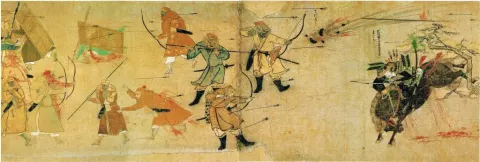
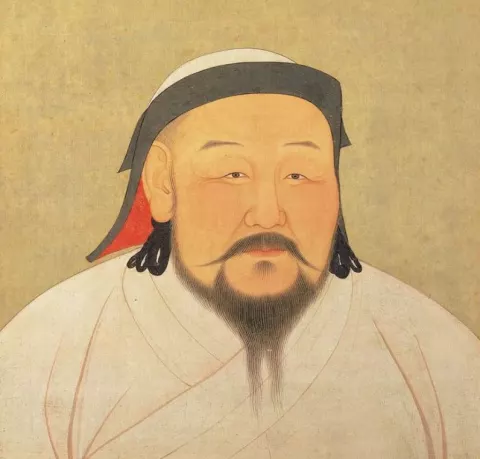
Gradual decline in the overland Silk Road happened due to a number of reasons but the most important ones were improvement of maritime trade and the policy of isolation of the Ming dynasty. When the Mongolian ruler Kublai Khan crated the Yuan dynasty in 1271 and finished his conquering of China in 1279 the Mongols came into direct contact with overseas countries. Although the Yuan Empire newer became formidable naval force, the emperors became aware of the considerable profit to be made from the growing seafaring trade. Already in 1277 formal custom offices were established in Quanzhou, Shanghai, Qingyuan (near modern Ningpo), and Ganpu (near modern Hangzhou). The customs charged one-tenth of the value for luxury goods and one-fifteenth for staple goods.
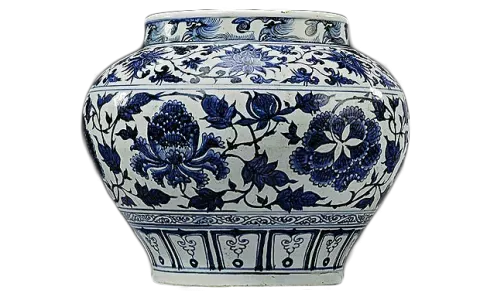
By this time tea and porcelain became China’s most valuable exports. Large amounts of China’s porcelain painted with cobalt blue pigment had to be well packed into heavy wooden boxes that were not feasible for caravans of horses or camels; it was easier to trade this commodity through seafaring trade. The sea routes gradually overshadowed land routes until it finally replaced them.
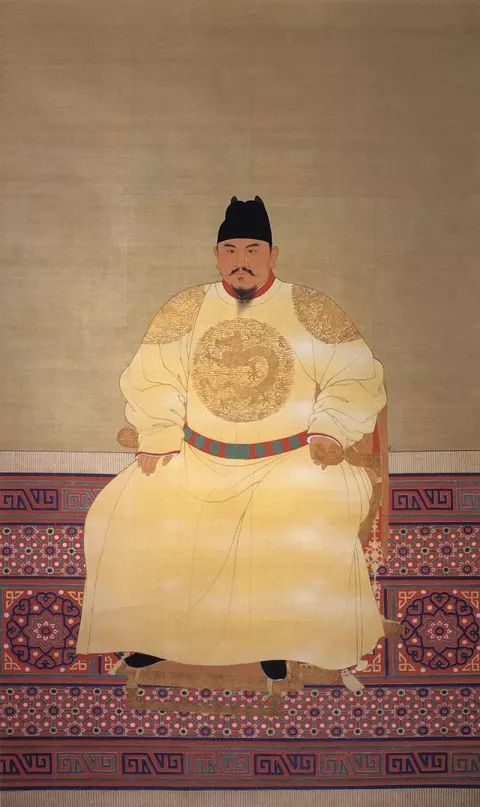
After the Yuan dynasty was replaced with the Ming dynasty (1368–1644) the founder of the later, the Hongwu Emperor (r. 1368-1398), had imposed restrictions on foreign trade and on the merchant class. Hongwu grew up as a peasant and wanted agriculture to be the source of the empire's wealth instead of industry and trade. He also relied on Confucian scholars that viewed the merchant as parasites in the Empire. Although his successors funded the great Treasure Fleet under the command of Zhang He (1371–1433), by the mid-15th century China again accepted the policy of isolationism.
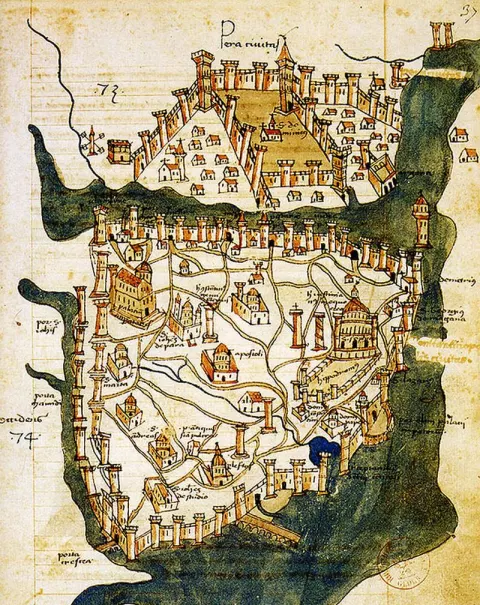
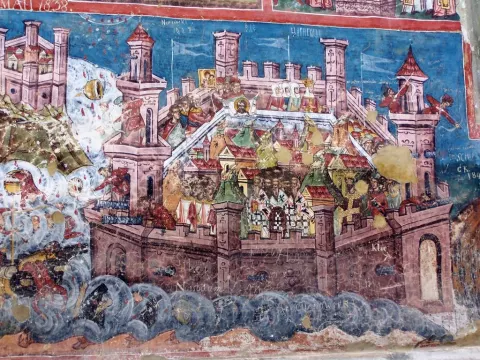
On the other end of the Silk Road the Ottoman Empire had conquered the Byzantine Empire and taken Constantinople in 1453. The fall of Constantinople and general encroachment of the Ottomans in that region also severed the main overland trade link between Europe and Asia and as a result the Christian powers of Europe started to explore the new possibility of reaching Asia by sea. Soon new routes were found and the commerce shifted to the oceans.
27 lives in this room
More lives in this room
- Gan Ying late 1st - early 2nd century
- Hiyya 2nd century
- Marcus Ulpius Iarhai 2nd century
- Su Shuang 2nd century
- Zhang Shiping 2nd century
- Honainu son of Haddudan fl. 157
- Julius Aurelius Salamallat 3rd century
- Qin Lun 3rd century
- Cosmas Indicopleustes 6th century
- Tomas Cana 8th century
- Li Susha 9th century
- Sulaiman al-Tajir 9th century
- Isaac d. c. 916
- Li Hsiin and Li Hsien 10th century
- Joseph Rabban 11th century
- Abu'l Abbas al-Hijazi 12th century
- Zaccaria Stagnario 12th-13th century
- Chao Ju Kua 1170-1231
- Tigran Honents fl. 1215
- Abd al-Rahman 13th century
- Hoca Mesud bin Abdullah 13th century
- Niccolò and Maffeo Polo 13th century
- Mahmud Yalavač ?-1254
- Lin Nu b. c. 1346