Museum / Rooms / Caravan trade
Room · 6 chapters · 41 lives
Caravan trade
Caravans served as conduits of commerce, information, and people across the network of trade routes
What is caravan trade?
Caravan trade can be described as shipment of goods on the backs of pack animals across long distance. For a long time caravans accounted for a large percentage of the world’s long-distance trade, but the competing transport eventually took over; first relatively safe and efficient sea transport, and, after 1800, the gradual expansion of long-distance railroads.
Caravan routes
There was a multitude of routes that that crisscrossed much of the Old World spanning from Western China to the Caspian and Black Seas, from Northern India through mountain passes to Persia and Middle East, and across Arabia and North Africa to the Atlas Mountains. However, the best known caravan route in history is certainly the famous Silk Road which ran on 4,350 miles (7,000 km) linking East and West for at least seventeen centuries.
Caravan
A caravan is a group of people traveling together, often on a trade expedition to reduce costs and provide protection from bandits. Its size depended on a number of factors, including distance, size of market and of capital involved, and the security needs. Since speed was related to cost, the caravan leaders looked to find an optimal balance between transporting commodities quickly without impairing the health of animals. While the number of animals could be up to 20,000 camels, the number of personnel always strived to a minimum in order to achieve the higher profits.
Pack animals
Caravans employed many types of pack animals. Before the camel was domesticated the animals used for shipments of goods were donkeys and oxen. However, once the camels began to be used around 1,000 BC they proved to be matchless in terms of carrying capacity, sturdiness and speed.
A camel could carry an average of 350 – 400 pounds on longer trips while on shorter trips the cargo could reach up to 1,200 pounds. On good terrain and fully loaded the camels normally walked at three to four miles per hour.
Advantages of disadvantages
Great uninhabited distances are usually automatically connected with thoughts of dangers and disadvantages vis-à-vis populated places. But caravans actually exploited the advantages of such trade routes. Caravans avoided the numerous customs barriers and interference from local governments or bandits common in more densely populated areas. Uninhabited places also meant free food for animals on grazing land, greatly reducing the costs of the caravan.
Safety issues
Safety issues were the reasons that caravans often included more merchants operating one caravan. Large caravans had their obvious advantages when it comes to safety: they were harder catch for bandits and mutual assistance of traders in events of misfortune was ensured.
In better traveled routes, the caravans could stop at caravanserai to refresh their animals, replenish the supplies and to obtain the necessary information. Caravanserai consisted of a large walled property with stables, locked storage facilities and sleeping rooms. They also provided services of professionals such as doctors, veterinarians, blacksmiths, and others to travelers in need.
The goods traded through caravans were usually luxuries and quite valuable in relation to their weight, such as silks, spices, and gold.
Camel remained the symbol of caravan trade and is known as the “ship of the desert”.
Caravan routes were the means by which travelled not only material and cultural goods, but also diseases. The Black Death that killed around one-third of European population between 1347 and 1349 is thought to have originated in the arid plains of Central Asia travelling via land and maritime routes to Europe.
Chapters
Introduction
The caravan trade is basically the shipment of gods on the backs of pack animals across long distances. Because caravan routes were usually through arid and semiarid places, merchants needed to pack not only their merchandise they were to sell for profit but all the supplies they needed to make the journey and the supplies that animals needed to make the journey. The goods traded in this fashion were usually quite valuable in relation to their weight: silks, spices, gold, and so on. Safety issues were the reasons that caravans often included more merchants operating one caravan. Large caravans had their obvious advantages when it comes to safety: they were harder catch for bandits and mutual assistance of traders in events of misfortune was ensured. For a long time caravans accounted for a large percentage of the world’s long-distance trade, but the competing transport took over; first relatively safe and efficient sea transport, and, after 1800, the gradual expansion of long-distance railroads.
Caravan trade routes crisscrossed much of the Old World: from Western China to the Caspian and Black Seas, from Northern India through mountain passes to Persia and Middle East, and across Arabia and North Africa to the Atlas Mountains. The caravan trade much resembled to seaborne trade. Caravans had, like the ships on seas, spent long periods in isolation since the spaces were generally sparsely populated and large settlements were located at well-watered spots often at great distances from the next one. At these spots new supplies could be acquired, information obtained, and some trading conducted. Another analogy with sea commerce is the name for camel as the “ship of the desert”. They carry goods and people across the desert as a ship carries goods and passengers across the sea, plus the rocking motion from their walk resembles rocking motion of the waves.
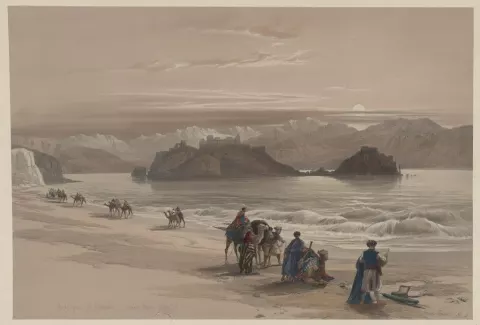
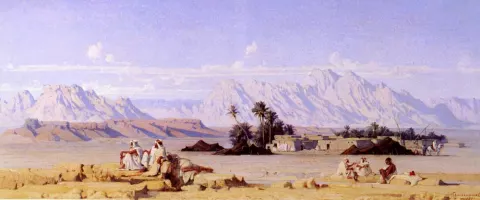
"Isle of Graia Gulf of Akabah Arabia Petraea", depicting the Pharaoh's Island in the northern Gulf of Aqaba off the shore of Egypt's eastern Sinai Peninsula. Coloured lithograph by Louis Haghe after David Roberts
Great uninhabited distances are usually automatically connected with thoughts of dangers and disadvantages vis-à-vis populated places. But caravans actually exploited the advantages of such trade routes. Caravans avoided the numerous customs barriers and interference from local governments or bandits common in more densely populated areas. Uninhabited places also meant free food for animals on grazing land, greatly reducing the costs of the caravan.
Caravanserais
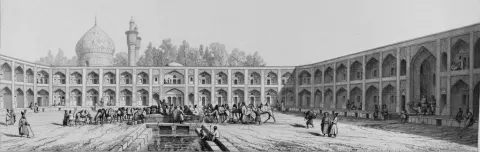
The luxurious goods brought by caravans attracted many rulers along important trade routes to construct caravanserais, places where caravans could refresh their animals and supplies could be replenished. A caravanserai was a roadside inn where travelers could rest and recover from the day's journey. Typically a caravanserai was a building with a square or rectangular walled exterior, with a single portal wide enough to permit heavily laden beasts to enter. For defense purposes, their walls were constructed like castle walls. The courtyard was normally open to sky and surrounded with bedrooms, depots, bath house and bathrooms. There were also professionals working in caravanserais such as doctors, veterinarians, blacksmiths, and others important to travelers.
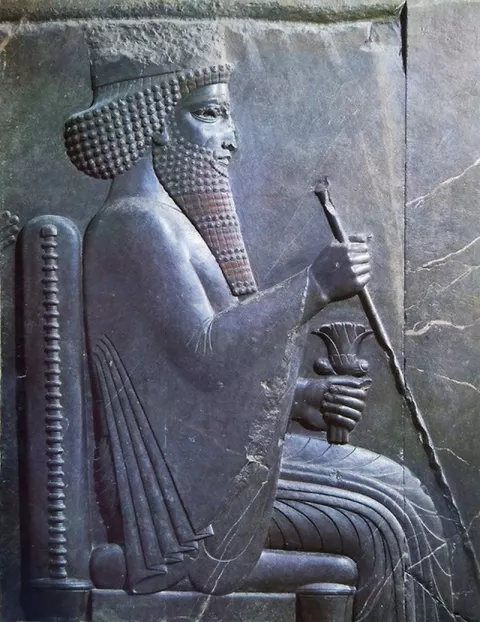
Caravanserais supported the flow of commerce, information, and people across the network of trade routes covering Asia, North Africa, and southeastern Europe, especially along the Silk Road. One such route with caravanserais was along the Persian Empire's Royal Road, a 2,500-kilometre (1,600 mi) long ancient highway that stretched from Sardis to Susa. The road was (re)built by Darius I (r. 522 BC - 486 BC) to facilitate communication throughout his empire.
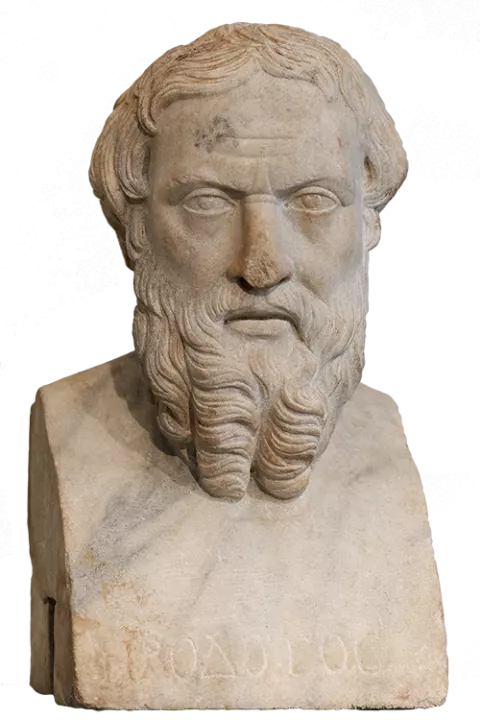
According to Herodotus (c. 484 BC – c. 425 BC): “Now the true account of the road in question is the following: Royal stations exist along its whole length, and excellent caravansaries; and throughout, it traverses an inhabited tract, and is free from danger.” The Seljuk Empire also recognized the advantages that commerce provided and especially during the times of Seljuk Sultans Kilij Arslan II (r. 1156-1192) and Kayqubad I (1220-1237), the construction of these buildings increased after the security of the trading roads was provided by the state. During that period, both domestic and foreign trades prospered.
Pack animals
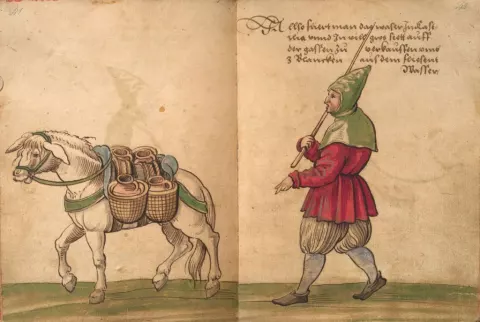
Although the word caravan immediately invokes pictures of camel trains, camel were fully domesticated only shortly before 1000 BC. Caravans and trade routes existed long before that time and the animals used for shipment of goods were usually donkeys and oxen. Sometime in the 20th century BC the Assyrian merchants established karum or trade post in Anatolia, the largest one being in the city of Kaneš or Kanesh, modern Kültepe. Trade from Assyria to Anatolia was conducted on donkey’s back. The dominant gods in trade were tin and textiles from Assyria to Anatolia and gold, silver and copper from Anatolia to Assyria.
However, camels are significantly superior to other beast of burden on ancient caravan routs.
There are two types of camels: the Arabian camel, or dromedary (Camelus dromedarius), has one back hump; and the Bactrian camel (C. bactrianus) has two humps. Both species are roughly about 3 meters (10 feet) long and 2 meters high at the hump. Bactrian camels are larger and woolier and thus more suitable for colder deserts of central Asia and Mongolia, while dromedary is more suitable for hotter deserts and areas in North Africa, the Middle East, and India. Both are extremely accustomed to dry areas and have a number of adaptations to survive in arid areas. Their heavy eyelashes protect eyes from blowing sand, and the nostrils can be squeezed shut.
When the camel exhales, water vapor becomes trapped in their nostrils and is reabsorbed into the body as a means to conserve water. Another adaptation is minimization of sweating. The fine woolly coat insulates the body, reducing heat gain. The camel also can allow its body temperature to rise to 41 °C (106 °F) before sweating at all. They can endure protein deficiency and eat food other livestock avoid; when food is plentiful they overeat, storing fat in a hump on the back. Storage of fat in one place also increases the body’s ability to dissipate heat everywhere else. Even their red blood cells are oval rather than circular in shape. This facilitates the flow of red blood cells during dehydration and makes them better at withstanding high osmotic variation without rupturing when drinking large amounts of water. The body rehydrates within minutes of a long drink, absorbing over 100 liters of water in 5-10 minutes.
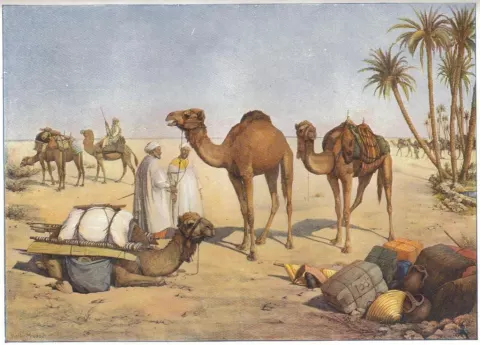
Middle East
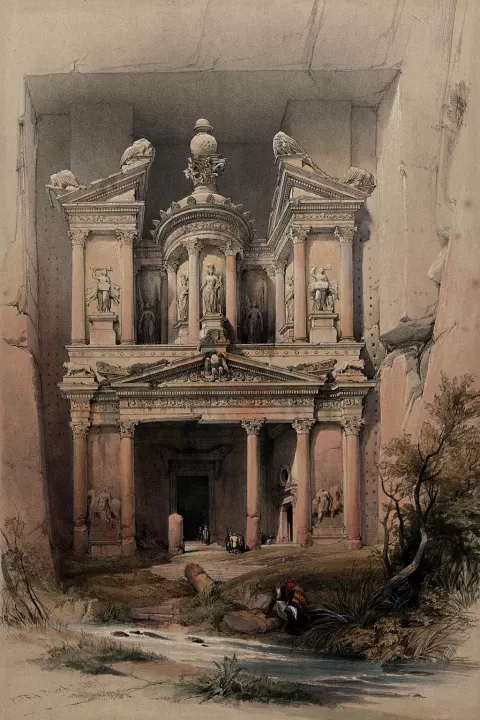
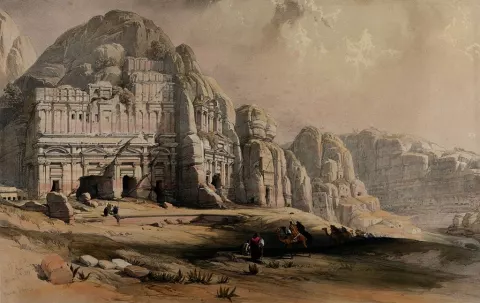
It is probable that camels were first domesticated in Arabia. By about 1000 BC caravans of camels were bringing precious goods up the west coast of Arabia, linking India with Egypt, Phoenicia and Mesopotamia. This trade route brought prosperity to Petra, a natural stronghold just north of the Gulf of Aqaba on the route from the Red Sea up to the Mediterranean coast. It’s strategically favorable location at the intersection of caravan routes that used to connect Egypt with Syria and southern Arabia with the Mediterranean, made the city an important trading center from about 5th century BC until the 3rd century AD.
El Khasnè, Petra. Petra flourished on caravan trade from the 4th century BC until the early 2nd century.
Particularly important was its position on the intersection on the Incense Road. This ancient trade route lead from Yemen along the western coast of Arabia and in Petra it forked the northwestern branch to Gaza and others who went to the northeast direction to Damascus. The Incense Route served as a channel for trading of goods such as Arabian frankincense and myrrh; Indian spices, precious stones, pearls, ebony, silk and fine textiles; and the Horn of African rare woods, feathers, animal skins and gold.
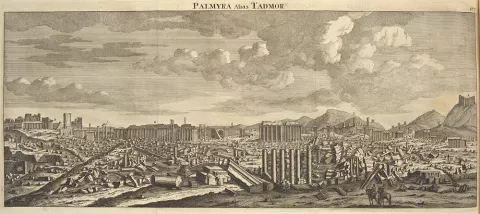
Another Arabian town that prospered thanks to caravan trade was Palmyra that reached its apex during the second century. Palmyrenes built and protected its trade route leading from Mesopotamia to Syria by maintaining garrisons along the important locations, including a garrison in Doura-Europos. The Doura-Europos, on the west bank of the Euphrates, was the first major stopping point for the caravans on the route from Mesopotamia to Syria.
Another factor leading to the rise of Palmyra was the Roman annexation of the Nabataean capital Petra in 106, which led to the collapse of Nabataean's control over the southern trade routes from Arabia, and their shifting to Palmyra. Two centuries earlier, in the 1st century BC, in addition to older trade routes, a rich new supply of goods begins to arrive from the east along the Silk Road.
From China to Mediterranean
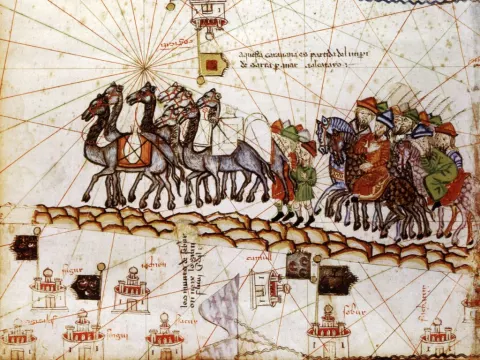
The Silk Road is the best known caravan trade route, and contrary to popular belief it was not one route but was an interconnected web of routes linking the ancient societies of Asia, the Subcontinent, Central Asia, Western Asia and the Near East. It is estimated that long-distance communication networks stretching as the crow flies to around 7,500 km but extending to in excess of 35,000 km along specific routes. The beginning and opening of this great rout is attributed to Chinese diplomat Zhang Qian. On his mission he collected and brought back reliable information about Central Asia to the Chinese imperial
Caravan crossing the Silk Road. The Catalan Atlas Spain, Majorca 14th century.
court, then under Emperor Wu of Han (141 BC – 87 BC). Zhang’s travels opened up to China the many kingdoms and products of a part of the world then unknown to Chinese. Today he is considered to play the key role in opening China to the world of commercial trade. The ancient Silk Road contributed greatly not only to commercial exchange but also to the cultural exchange between China and the West. Exchange along the Silk Road also included the exchange of diseases. The Black Death that killed one third of European population between 1347 and 1349 is thought to have originated in the arid plains of Central Asia, from where it then travelled along the Silk Road, reaching the Crimea by 1343 and southern Europe by merchant ships by 1347.
Africa
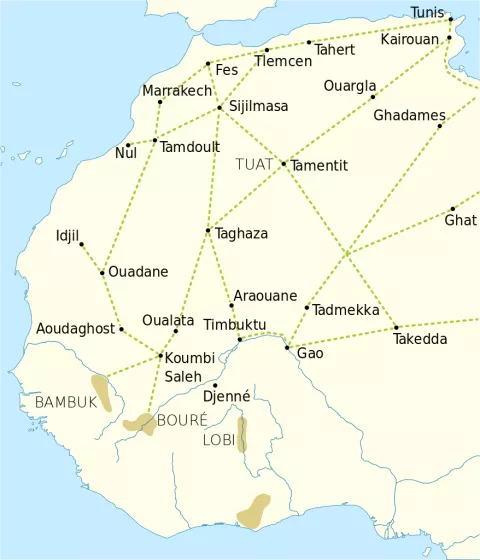
Rich gold mines in West Africa and its caravan connections with other areas enabled existence of several rich empires. The first empire that established full control over the southern end of the Saharan trade was Ghana. The state was located in what is now southeastern Mauritania and western Mali, in the triangle formed between the Senegal River to the west and the Niger to the east. It existed from 4th to 13th century. Ghana was situated at the crossroads of caravan trade routes, linking the Mediterranean markets to the north with the supply of African raw materials to the south and routes along the savannah south of the Sahara on an east-west axis. Trans-Saharan trade was ancient but after the Arab conquest of North Africa in the 7th century the trade was intensified. The primary reason for this was the need for gold from West Africa.
The route taken by traders of the Maghreb to Ghana would have started in North Africa in Tahert, sweeping down through Sijilimasa in Southern Morocco. From there the trail went south and inland, roughly running parallel with the coast. Then it curved round to the south east through Awdaghust, finally ending up in Kumbi Saleh - the royal town of Ghana.
While gold was the most valuable African commodity, slaves run it a close second. Slaves were obtained mainly from the region around Lake Chad, where the Zaghawa tribes made a habit of raiding their neighbors and sending them up the caravan routes to Arab purchasers in the north. Other African products in demand around the Mediterranean were ivory, ostrich feathers and the cola nut. Salt was the most important commodity coming south as it was essential in the diet of African agricultural communities. Traders from the north also brought dates and a wide range of metal goods - weapons, armor, and copper either in its pure form or as brass. On this route, long about 2000 km or 1200 miles, there were rarely those who passed the whole length. The goods were unloaded and packed on to new transport, as specialists undertake each very different section of the journey - to the edge of the desert, either from the Mediterranean coast or from the African forest and savannah, and then from oasis to oasis through the Sahara.
An Andalusian Muslim geographer and historian, Al-Bakri (c. 1014–1094), gives description of the Kingdom of Ghana riches:
“The King adorns himself like a woman wearing necklaces round his neck and bracelets on his forearms and he puts on a high cap decorated with gold and wrapped in a turban of fine cotton. He holds an audience in a domed pavilion around which stand ten horses covered with gold-embroidered materials…and on his right, are the sons of the vassal kings of his country, wearing splendid garments and their hair plaited with gold… At the door of the pavilion are dogs of excellent pedigree. Round their necks they wear collars of gold and silver, studded with a number of balls of the same metals.”
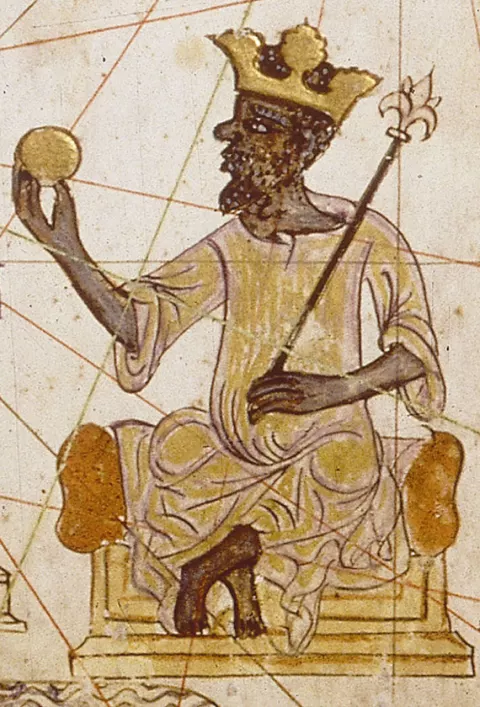
The new empire that replaced Empire of Ghana was the Mali Empire. It thrived on gold trade carried through caravans. The riches of the empire were shown to the world in 1324 when its ruler Mansa Musa set out on a pilgrimage to Mecca. He was accompanied by an impressive caravan consisting of 60,000 men including a personal retinue of 12,000 slaves, all clad in brocade and Persian silk. The emperor himself rode on horseback and was directly preceded by 500 slaves, each carrying a gold-adorned staff. In addition, Mansa Musa had a baggage train of 80 camels, each carrying 300 pounds of gold. Along his journey he shared his gold to people and in Cairo he left it so much that he flooded the market causing a decline in its value that lasted for more than a decade.
41 lives in this room

More lives in this room
- Enlil-bani 19th century BC
- Innaya 19th century BC
- Šalim-aḫum 19th century BC
- Šep-Sin 18th century BC
- Šipti Baʿal 13th century BC
- Nicanor 1st century
- Gan Ying late 1st - early 2nd century
- Hiyya 2nd century
- Maes Titianus 1st-2nd century
- Marcus Ulpius Iarhai 2nd century
- Su Shuang 2nd century
- Zhang Shiping 2nd century
- Honainu son of Haddudan fl. 157
- Julius Aurelius Salamallat 3rd century
- Qin Lun 3rd century
- Cosmas Indicopleustes 6th century
- Tomas Cana 8th century
- Li Susha 9th century
- Sulaiman al-Tajir 9th century
- Isaac d. c. 916
- Li Hsiin and Li Hsien 10th century
- Joseph Rabban 11th century
- Abu'l Abbas al-Hijazi 12th century
- Zaccaria Stagnario 12th-13th century
- Chao Ju Kua 1170-1231
- Tigran Honents fl. 1215
- Abd al-Rahman 13th century
- Hoca Mesud bin Abdullah 13th century
- Niccolò and Maffeo Polo 13th century
- Mahmud Yalavač ?-1254
- Majd al-Din Isma‘il ibn Muhammad ibn Yaqut al-Sallami 1272-1342
- Lin Nu b. c. 1346
- Antonio Malfante died 1450
- Cesare Federici c. 1530 - c. 1603
- Darya Khan Multani 16th century
- John Eldred 1552 -1632
- Setkul Ablin fl. 1653-1672