No. 733
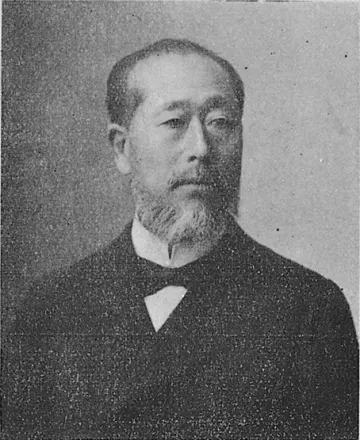
Yasudo Zenjiro
Yasuda Zenjirō was a Japanese businessman best known as the founder of the Yasuda Zaibatsu, the fourth largest family enterprise that dominated the Japanese economy until the end of WWII. Yasuda was born in Toyama in a humble family of a lower-ranked samurai. He moved to Edo as a 17-years old boy and stared to work as an apprentice. Nine years later Yasuda opened his own money-change shop, Yasuda-ya, and soon emerged as one of the most prominent financiers in Tokyo. He dealt mainly in bills, government bonds and government savings. In 1880 he opened the Yasuda Bank, and soon afterwards was appointed director of the Bank of Japan. His business activities were expanded to the life and damage insurance businesses providing him a substantial profit. In contrast with the other zaibatsu which had origins in shipbuilding, industry or commerce, the Yasuda zaibatsu was formed around finance, insurance and real estate business.
Apart from being a major lender to the Meiji government and founder of respectful banking business, Yasuda expanded into industrial enterprises purchasing railways, shipping companies and so on. Yasuda is also remembered as one of the major philanthropists of Japan. He died in 1921 in an assassination committed by an ultra-nationalist who considered Yasuda as a symbol of the corrupting influence of business on government. After the World War II the company was abolished and replaced by a keiretsu known as the Fuyo Group.