No. 9625
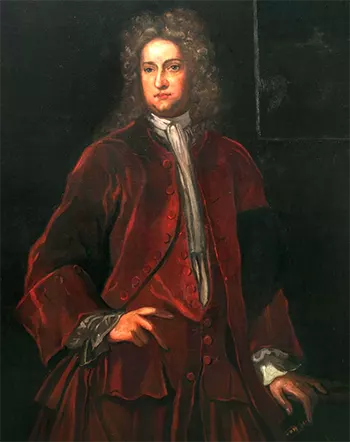
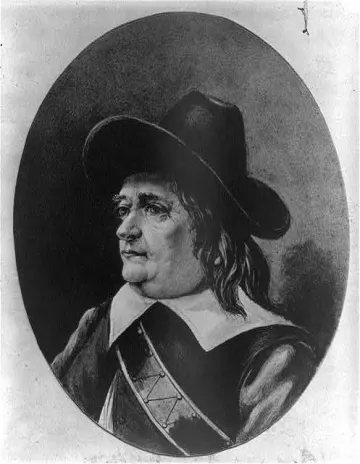
William Berkeley
William Berkeley was remembered as the most enduring and influential governor of the 17th century Virginia.
Berkeley was born into a prominent family that owned large properties in Bruton, Somersetshire, as well as in Gloucestershire and London. Educated at Oxford, and knighted by Charles I in 1639 he decided to accept the Virginia governorship with England drifting into civil war.
As a governor, he tried to diversify Virginia’s one-dimensional economic structure by imposing limits on tobacco production and paying bounties for alternative crops and industries. Within five years Berkeley was exporting rice, spirits, fruit, silk, flax, and potash through an extensive network of English, Dutch, West Indian, and colonial merchants. He also desired to develop Jamestown as an urban center of the colony.
His first term, characterized by his willingness to share power and by the rise in stature of the General Assembly in Jamestown, ended with the king's execution. His second governorship coincided with the rule of King Charles II, but it was less efficient. He failed to diversify the tobacco-based economy and was criticized for too-conciliatory Indian policy.
Discontent of settlers resulted in Bacon’s Rebellion (1676-1677) headed by Nathaniel Bacon during which Jamestown was burned. Although the rebellion was suppressed, Berkeley lost his authority and reputation and was replaced by Herbert Jeffreys in 1677.
Berkeley left Virginia and sailed to England hoping to restore his position after the meeting with the king, but he died soon after arrival.