No. 3906
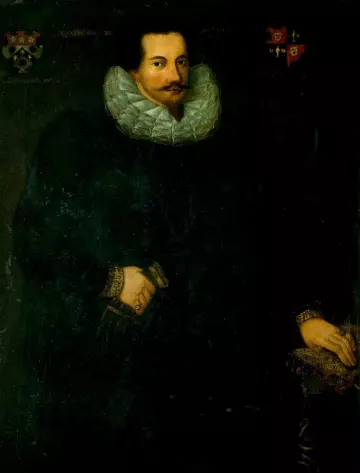
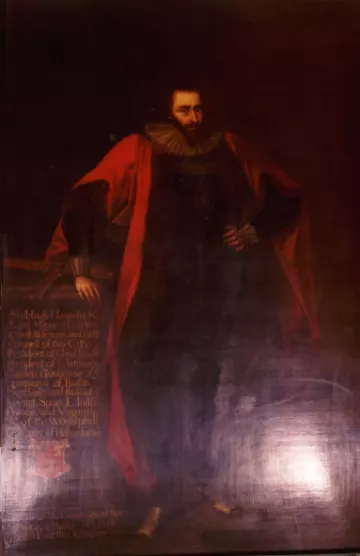
Sir William Cockayne
William Cockayne was a prominent 17th English merchant who contributed to depression of the national cloth trade for decades.
Born in a merchant family, William was apprenticed to his father and became a freeman of the Skinners’ Company in 1590. He was an active member of the East India Company and one of the farmers of the customs. He was knighted by the King James I in 1616, and three years later he was elected Lord Mayor of London. He also possessed estates at Denchworth, Berkshire, Elmesthorpe, Leicestershire and Rushton Hall in Rushton, Northamptonshire.
During his business career, Cockayne served as Governor of the London planters in Ulster, and of the Eastland Company. During the last service, as Governor of the Eastland Company, he managed to convince the king to grant him a monopoly on exporting dyed and dressed cloth and to put a ban on exports of unfinished cloths. Namely, the export of unfinished cloth, mostly to the Netherlands where it was dyed and finished, he saw as net loss for England. But, the English lack of necessary expert, the Dutch retailing ban on imports of English cloth and competitors on continent caused the failure of his project. Moreover, Cockayne and his project were widely blamed for the economic slump that followed and continued during the 1620s.