No. 10000
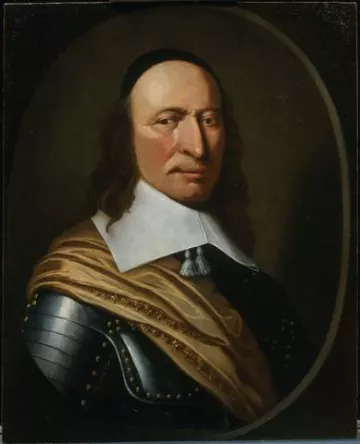
Peter Stuyvesant
Peter Stuyvesant served as the last Dutch Director-General of the colony of New Netherland from 1647 until 1664 when it was ceded to the English and renamed New York. Known for his wooden leg, he was a major figure in the early history of New York City.
Born in a family of a Calvinist minister, Stuyvesant began his career in the Dutch West India Company relatively late, at his 40. After 11 years of service, in 1643, he achieved the rank of director in the company’s colonies of Curaçao, Aruba, and Bonaire. After two years he progressed further, and become the director general of all Dutch possessions in North America and the Caribbean.
His governorship saw a large increase in commerce through obtaining the lucrative trading privileges – namely with Brazil (1648), Africa (1652) and other foreign ports (1659). He even tried to introduce a currency and to establish the mint in New Amsterdam, but these efforts proved to be fruitless in the end.
A reputation of being conservative in religious and state affairs brought him into the conflict with the citizens of New Amsterdam soon after his arrival in 1647. In 1650 he was compelled to sacrifice a large amount of territory in a settlement of the boundary dividing New Netherland and Connecticut. Comforting, he succeeded in attempt to dislodge the Swedes from their settlement in Dutch territory along the Delaware River and in establishing peace with the Indians there.
After being deprived of assistance of his fellow citizens, Stuyvesant was forced to surrender New Netherland to the British in 1664. The rest of his life he spent on his farm, “the Bouwerie” from which New York City's Bowery derives its name.