No. 3390
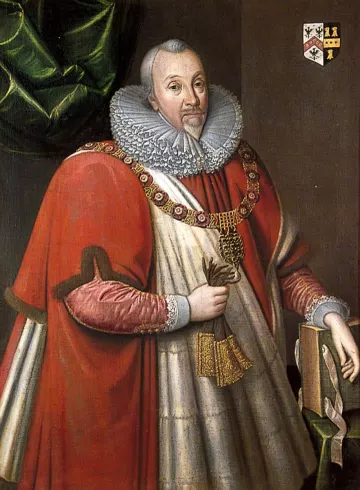
John Saris
John Saris was an English sea captain credited with commanding of the first English voyage to Japan.
Saris started his career under command of Henry Middleton on the second voyage of the English East India Company to Asia. Becoming a chief factor of the Company’s trading post in Java he was charged for improving trade ventures of the Company.
In 1613 Saris reached the island of Hirado, on south-west Japan aboard the ship called the Clove. The aim of voyage was to establish trade with Japan and to found the trading factory for the English East India Company. Therefore, this event is regarded as the official beginning of diplomatic relations between Japan and Britain.
In Japan, Saris was helped by William Adams, the first Englishman in Japan who arrived in that distant land in April 1600 on a Dutch ship The Liefde, and had become the shogun's advisor on foreign affairs. As result, Saris was able to meet with the retired shogun, Tokugawa Ieyasu, and his son, the Shogun Tokugawa Hidetada.
On behalf of King James I, Saris exchanged gifts and formal letters with shoguns. Among many gifts, the Shogun got a telescope, the first ever to have left Europe and made as a presentation piece. In return, the Shogun sent to the King James I two suits of armour – one of which is still on display in the Tower of London and the other is on display in St. James’ Palace.
Besides that, the Shogun also wrote a letter to the King giving official permission for trade between the two countries. The Company’s factory was established at Hirado, and Richard Cocks served as the first head of that factory. Unfortunately, the factory was closed ten years later.
Since in Japan there were no spices or porcelain at that time, Saris brought back to England art which knew he would sell for a good price, and some pieces of erotic (shunga). The later was defined as scandalous in England and destroyed.
Despite that, the Clove’s mission to Japan was considered as a great success since it marked the beginning of cultural exchange and trade between these two countries.