Museum / Rooms / Trade between the Roman Empire and India
Room · 6 chapters
Trade between the Roman Empire and India
The Roman merchant fleet that reached India numbered more than a hundred vessels which imported thousands of tons of Eastern cargo into Roman Alexandria every year
Alexandria became the major port for spice and incense trade with Arabia, East Africa and India.
Link between Rome and India
During the antiquity Egypt was a key point in lucrative trade between Europe and East. Long and dangerous coasting voyages were greatly facilitated by the discovery of the use of monsoons and were replaced by direct trade with India under the rule of the Ptolemies (305 – 30 BC).
However, until the Roman conquest of Egypt in 30 BC Egyptian trade with the East was only a shadow of what was to become. The Romans would raise the commercial exchange between Europe and India to astonishing proportions bringing prosperity to numerous merchants, sailors, artisans, and governments on both sides of the trade route.
Source of knowledge
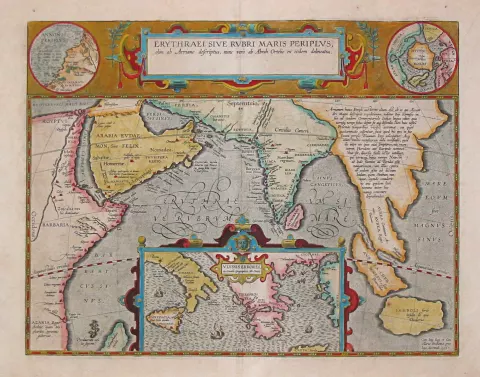
Regarding the trade between the Roman Empire and India, "Periplus Maris Erythraei" is the only literary source which has the spice and silk trades as its primary subject. Allotted to the middle of the first century AD, it is a merchant’s handbook of the Red Sea trade which provides not only copious information on the trade routes and ports of call in India, Africa and Arabia which Egyptian based ships used, but also lists of goods traded at each port.
The unknown author of the "Periplus" was a merchant with considerable first-hand experience of the trade, and was a Greek-speaking resident of Egypt. His work was intended for as a guide for other merchants like himself who intended to be involved in the Red Sea trade.
Roman desires
In great part Roman trade with the East consisted of luxuries, but many of the commodities had culinary, medicinal or religious applications. Fashionable Romans enjoyed eastern silks, decorated cotton, ,b>pearls and various gemstones, as well as other decorative materials such as shells, tortoiseshell, coral and ivory. However, Romans had their sense of fashion and these commodities underwent a process of manufacture, reprocessing and resale before they reached their intended market. With this in mind, it is possible that the bulk of money which was spent on eastern goods may very well have gone not to foreign traders, but rather to those who traded in and reprocessed the goods within the empire itself.
The Romans provided the eastern commerce with relative security on the trade routes and offered a unified market of the Mediterranean basin.
The importance and widespread of pepper can be seen from the Roman cookbook "Apicius" in which 80% of the recipes contain the spice.
Government’s spice warehouses in Rome known as the "Horrea Piperataria" (the Pepper Warehouses) is presumed to have held over 9000 tons of spice when fully stocked.
Chapters
- Introduction to trade between the Roman Empire and India
- Beginnings of eastern trade under the Ptolemaic dynasty
- Development of the eastern trade under the Roman Empire
- Eastern goods within the Roman Empire
- Items of the eastern commerce
- From Egypt to India
Introduction to trade between the Roman Empire and India
Roman merchants trading at Red Sea often went across the ocean to India and the Bay of Bengal. The Roman merchant fleet that reached India numbered more than a hundred vessels and thousands of tons of Eastern cargo was imported into Roman Alexandria every year.
Egypt was the link between the Mediterranean cultures and India. Direct trade with India began under the Ptolemies and was greatly facilitated by the discovery of the use of the monsoon. But until the Roman final conquest of Egypt in 30 BC this trade was only a shadow of what was to come. The Romans provided the eastern commerce with relative security on the trade routes and offered a unified market of the Mediterranean basin. Almost immediately trade between the Roman Empire and India began to flourish bringing prosperity to numerous merchants, sailors, artisans, and governments on both sides of the trade route.
Regarding the trade between the Roman Empire and India, "Periplus Maris Erythraei" is the only literary source which has the spice and silk trades as its primary subject. Allotted to the middle of the first century AD, it is a merchant’s handbook of the Red Sea trade which provides not only copious information on the trade routes and ports of call in India, Africa and Arabia which Egyptian based ships used, but also lists of goods traded at each port. The unknown author of the "Periplus" was a merchant with considerable first-hand experience of the trade, and was a Greek-speaking resident of Egypt. His work was intended for as a guide for other merchants like himself who intended to be involved in the Red Sea trade.
Beginnings of eastern trade under the Ptolemaic dynasty
Before the Egypt became Roman territory, the Ptolemaic dynasty (r. 305 BC – 30 BC) begun to exploit the trade with both India and Arabia. They reopened ancient canal between the Nile and the Red Sea to commerce, maintained various caravan-routes between the river and the sea by providing them with wells and stopping places, and have established ports along their Red Sea coast. Although the efforts of the Ptolemaic kings facilitated commerce on the Indian Ocean, it is likely that their interests originally lay in obtaining war elephants and gold. Nevertheless their efforts have encouraged entrepreneurs to make trading voyages to these places.
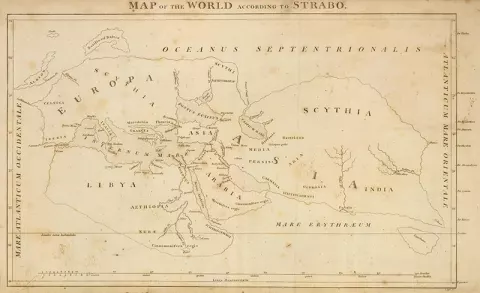
Strabo (c. 63 BC – c. 21 BC) left us in his "Geografia" description how the Ptolemaic government first received accurate information about a maritime trade route to India. In 118 BC a Ptolemaic navy patrol discovered wreckage in the Gulf of Aden from which they rescued a starving Indian sailor. This sailor was taken to the court of Ptolemy VIII (d. 116 BC) and informed him of his voyage with the offer to act as guide for any Geek sailors willing to return with him. A Greek explorer Eudoxus of Cyzicus was appointed as chief officer of Ptolemy’s mission to establish direct contact with India and under the direction of the Indian as pilot he sailed to northwest India.
Eudoxus was sent to another mission to India by Cleopatra III (d. 101 BC), but both times the government seized precious eastern goods from him as the mission was sponsored by the government and thus the cargo was considered as a gift for the monarch. Eudoxus realized the profits he could make by supplying Mediterranean markets with Indian goods, and thus tried to find another route to India which would avoid Egypt. Unfortunately he disappeared on the coasts of western Africa. However only a few merchants dared to travel this far into the distant East during the final decades of the Ptolemaic era, and instead most of them sailed only as far as the city port of Aden on the coast of southwest Arabia where they could acquire Indian goods from visiting Eastern traders.
The trade with India was greatly facilitated by the discovery of the use of the monsoon winds, which enabled the ships trading with India to travel there directly instead of being forced to make a long and dangerous coasting voyage. The "Periplus" ascribes the discovery of the knowledge of how to use these winds to a sailor Hippalus who probably lived during the first century BC. Before sailors and merchants began to use the monsoon winds to trade directly with India most of the trade was conducted in Arabian ports. In the ancient times when there was no direct sailing from Egypt to India, Aden had been a major commercial city receiving cargoes from both Egypt and India. By the time of the "Periplus" it was little more than a village settlement offering passing ships supplies of fresh water, but prior to its demise it was known as Eudaimon or “Blessed Arabia”.
Although the Ptolemies successfully established the sea trade all the way to India, the volume of the commerce was not anywhere near as large as after the Roman takeover.
Development of the eastern trade under the Roman Empire
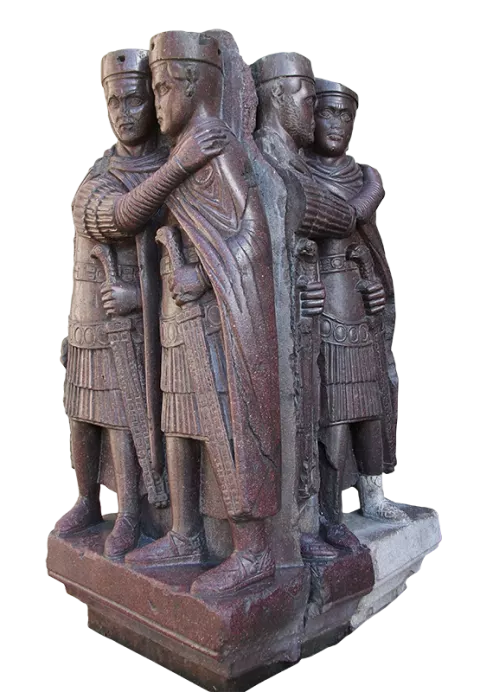
When Rome took control of Egypt in 30 BC, it continued to build on the administration of the former Ptolemies. Rome also started to exploit the natural resources available in Egypt’s Eastern Desert, including its ancient gold and emerald mines. Rome also exploited Egyptian stone for the State-organized building projects in Rome, and thus the new regime increased activity at Mons Porphyrites and Mons Claudianus, where convicts quarried decorative porphyry and granite. Because of these projects Rome improved travel conditions along the desert roads that connected these sites with the Red Sea Ports and the Nile River, the main conduit for communication throughout ancient Egypt.
Romans upgraded the desert routes by installing additional watering stations to facilitate travel and they also built military outposts to protect desert traffic from bandits and hostile nomads. The military outposts were called "phrouroi", while the improved caravan stations were called "hydreumata" and were equipped with wells, water cisterns and other vital amenities to accommodate passing travelers.
The volume of commerce with the East increased almost immediately upon the Roman takeover of the whole Mediterranean basin in 30 BC. Strabo, who was living in Egypt during the early Roman rule, confirms this upsurge. He reports on the events in 26 BC:
“When Gallus was prefect of Egypt, having accompanied him and ascended to Syene and the borders of Ethiopia, we found that even one hundred and twenty ships were sailing from Myos Hormos to India, but under the Ptolemaic kings only a very few dared to sail and to trade in Indian goods.” At another point he mentions that under the Ptolemies only twenty ships sailed for India. It is presumed that his figures mean the number of ships per year.
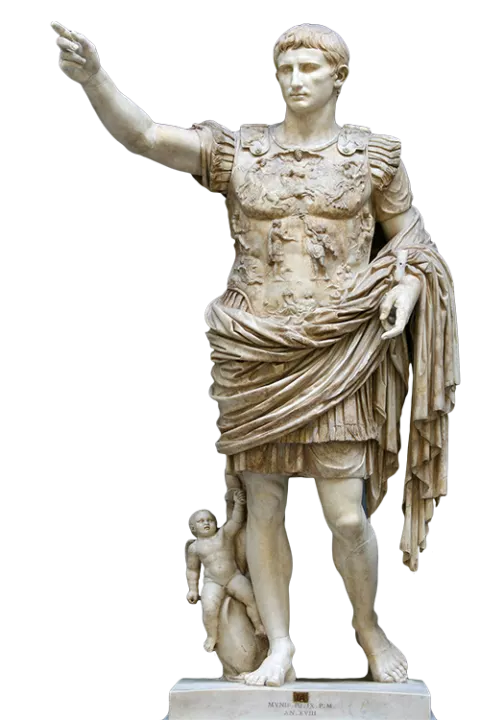
It is thus clear that from the beginning of Octavian’s reign and the unification of the Mediterranean basin under a single government there was a significant increase in the volume of trade. Extant knowledge of the monsoon, greater care for the trade routes, less taxing points and relative peace of the first two centuries of the Roman Empire provided the merchants of the Indian Ocean with an opportunity for profit which they wholeheartedly exploited. The combination of a strong market and the means of effectively servicing that market explain the vigor and prosperity of the spice and incense trade under the Roman Empire with Alexandria as the principal port for trade with Arabia, East Africa, and India.
Eastern goods within the Roman Empire
Most of the eastern goods imported to Roman territory underwent a process of manufacture, reprocessing and resale before they reached their intended market. Thus the eastern commerce of Rome consisted of a large group of merchants engaged in the purchase of goods coming into the eastern part of the empire and in the subsequent reprocessing of the goods and eventual sale to the consumer.
For example in Capua existed an area called Selapsia, frequented by the "unguentarii" who bought, sold and manufactured perfumes of which significant amount of ingredients came from the eastern trade. Similarly, silk and cotton were also reprocessed so that the final product would be more appealing to Roman citizens. Reprocessing also added a considerable amount to the value of the items imported in the eastern commerce. With this in mind, it is possible that the bulk of money which was spent on the goods may very well have gone not to foreign traders or “middlemen”, but rather to those who traded in and reprocessed the goods within the empire itself.
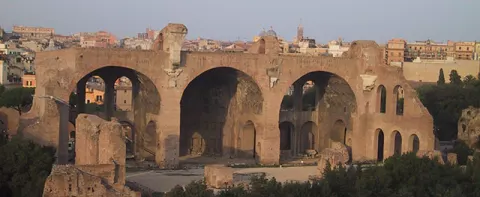
The greatest demand for these goods was in the city of Rome itself and soon the government realized the profits that could be gained from the eastern trade. Among the biggest expenses for Roman merchants trading with India was the cost of paying the quarter-rate customs tax imposed on the imperial frontiers. As many traders had all of their capital invested in the return cargo, they lacked the necessary cash funds to pay the tax. Because of this it was allowed for merchants to pay their import taxes by handling over a quarter-share of their incoming cargoes. Some of these goods were sold at an auction in Alexandria, but others were shipped to warehouses in Rome and by the mid-first century there were large government-owned stock-piles of eastern products. During the reign of Vespasian (69 – 79) the imperial government took greater interest in eastern goods. They realized that these goods would sell for higher prices in Rome than they did in Alexandria so more goods were shipped to the imperial capital where it could be stored and sold when prices were high and profits guaranteed. For this purpose Vespasian’s son Domitian (r. 81 – 96) oversaw the completition of large purpose-built spice warehouses in Rome known as the "Horrea Piperataria" (the Pepper Warehouses). It stood on the current site of the Basilica of Maxentius and Constantine and is presumed to have held over 9000 tons of spice when fully stocked.
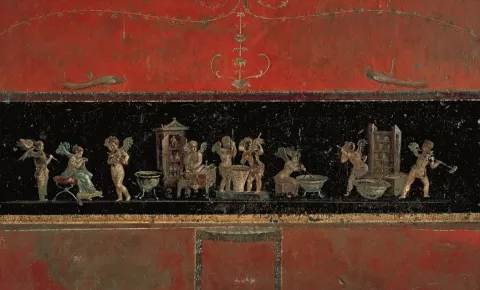
Wall painting in Pompeii of cupids preparing scented oils to be used as perfume. From right to left - crushing flowers and working with the press to extract their oils, mixing the oil in vats, selling perfumes to a young woman
Items of the eastern commerce
Roman trade with the East is frequently described as a trade in luxuries, but this view rose out of moralistic view of decadent tastes and desires, especially at the height of Roman power and wealth under the empire. Romans even related two vices to the use of eastern luxury goods; luxuria and mollitia. Luxuria was connected with import of luxury goods to the Roman Empire from the Principate of Augustus onward, no doubt due to the recent Roman subjugation of the Eastern Mediterranean and the newly established peace which allowed the merchants free access to the markets of Rome. Among these luxury items significant factors were large quantities of textile raw materials as well as luxury dyes. These commodities caused a moralistic reaction from Roman writers who saw them as unnecessary expenditures and as a factor of effeminacy in their society (mollitia).
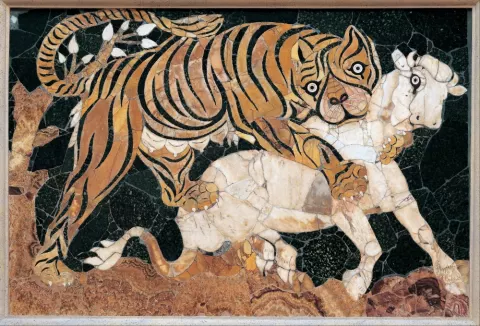
Although many of these goods were indeed luxury goods, they, and many other commodities, also had medicinal or religious applications. Therefore it is incorrect to brand all of Rome’s long-distance trade with the East a ‘luxury’ trade, as items of a religious nature for example would certainly not have been regarded as luxury items by the Romans, expensive though they might be. A great part of these goods consisted of items for the production of clothing and adornment. These were silks, decorated cotton, pearls and various gemstones, as well as other decorative materials such as shells, tortoiseshell, coral and ivory. Other commodities in trade between Rome and India were used chiefly as perfumes and unguents, including nard and aloe, and culinary items, such as pepper, cinnamon, cassia and others, most of which could also be used in the manufacture of perfumes, ointments and unguents. The importance and widespread of pepper can be seen from the Roman cookbook "Apicius" in which 80% of the recipes contain the spice. Even exotic animals such as tigers and ostriches were a part of the commerce.
For religious purposes the most common import into Rome were frankincense and myrrh, Arabian products that could be purchased on return trip from India. These goods were also used for perfumes and as ingredients in a compound medicine. The "De Materia Medica" of Dioscorides (c. 40 – 90 AD), which dates from approximately AD 65, describes the use of several Arabian and Indian spices, either on their own or as an ingredient in a compound medicine, for the treatment of assorted ailments. These goods, one of them being pepper, were especially prized for their perceived properties as antidotes to poison.
Although these commodities traversed great distances, what added to their price, they were not so expensive as to make them the exclusive preserve of the very rich. Their demand on the Roman market indicates that, regardless of the route taken by a trader or the amount of tax he had to pay, he could be assured of a good price for his wares in Rome.
From Egypt to India
The first mayor point for the trade between the Rome and India was the city of Alexandria. From there the route led almost 650 kilometers south along the Nile River to reach Coptos, a major river port and an important commercial clearing house for eastern goods arriving across the desert from the Red Sea ports. All who intended to cross the Eastern Desert to reach the Red Sea ports would be issued a travel permit in Coptos that would be inspected along the route. Roman subjects who intended to reach India traveled from Coptos through Eastern Desert to reach the two most important Red Sea ports under Roman rule; Myos Hormos (present-day site of Quseir al-Quadim) and Berenice. Distance between Coptos and Myos Hormos was approximately 180 kilometers and the journey took about a week. Berenice was 370 kilometers from Coptos and the journey took 12 days. During the reign of Emperor Trajan (98 – 117) the ancient canal linking the Nile to the Red Sea was re-opened and allowed direct sailing from Alexandria to Clysma (Suez). However, because of the persistent northerly winds in the upper regions of the Red Sea this route was not convenient for the returning voyages.
From the Red Sea ports ships sailed in July so that they could exploit the northerly winds which took them, after thirty days of sailing, to the Arabian port of Ocelis (near the modern-day Ra’s Shaykh Sa‘īd, Yemen). From August on, ships could exploit the southwest monsoon to carry them across the Indian Ocean. Some ships would first trade on the Arabian coast as far as the trade port of Qana (near modern-day Al Mukalla, Yemen), while others sailed along northern Somalia to visit African markets as far as Cape Guardafui. When the Roman ships reached their first destination in India it would have been almost three months since the travelers had left Alexandria. The return voyage could begin with the onset of the northeast monsoon in early November, while the ships visiting the Malabar Coast would delay their return until December.
The first mayor stop for Roman traders using the northern route was Barbaricum (near the modern-day city of Karachi, Pakistan) the most important trade emporium in Indo-Scythia. It lay near the estuary of the Indus and served as a great inland capital called Minagara (probably near the modern-day city Brahmanabad). The next stop was in the Saka kingdom which controlled the Gujarat territories of western India. The main port was Barygaza (modern-day Bharuch), which lay on the Narmada River, over 50 kilometers inland from where it flowed into the Cambay Gulf. Further south was the Western Deccan with numerous inland market centers connected by a wide network of overland trade routes. The region was ruled by the Satavahana dynasty whose authority stretched across the Deccan Plateau to the eastern coasts of India. The mayor trade port was Kalliena (modern-day Kalyan), which lay on the Ulhas river system.
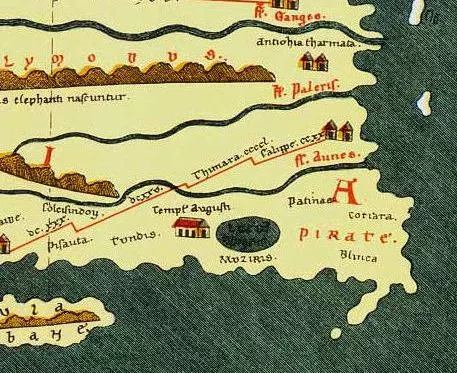
Some ships sailed further south to reach Tamil territories but many Roman ships sailed directly from the Gulf of Aden to southern India. This area was governed by three rival Tamil dynasties; the Cheras controlled a large part of the Malabar Coast, the Pandyas ruled south of the Cheras as far as Cape Comorin, and the Cholas controlled a large stretch of the eastern peninsula including the Coromandel seaboard. Muziris (modern-day Kodungallur) was the main trade port for the Chera chiefdom and pepper was its main commodity. The Roman merchants spent months in this region awaiting favorable conditions for return sailings to the Empire and it seem that they constructed an Augustan Temple there, as recorded on the ancient Peutinger Map. It is also possible that some Roman merchants remained at Muziris throughout the year to make arrangements on behalf of colleagues who arrived seasonally on the trade ships.
Nelcynda (near modern-day Kottayam), 90 kilometres south of Muziris and situated 19 kilometers inland on the Pambiyar River, was the main trade port of the Pandyan chiefdom. It seems that Pandyan rulers at some point succeeded in diverting the trade from Muziris to Nelcynda by sacking the former. According to the "Periplus" the Chola dynasty controlled three major trade stations on the eastern coast of India: Puhar, Poduke, and Sopatma (near modern-day Poompugar, Arikamedu, and Mahabalipuram).
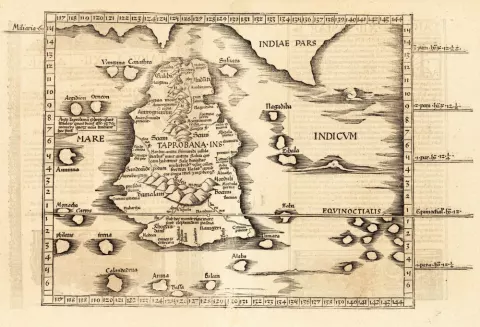
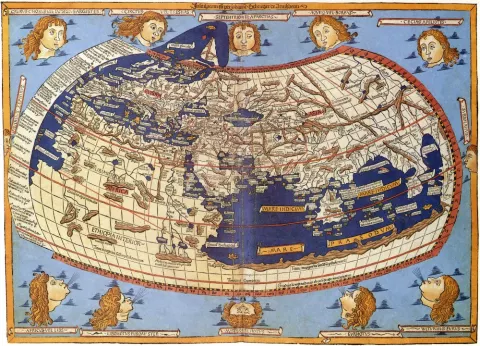
At first Roman traders knew little about Sri Lanka and had not traded directly with Sinhalese, but through the Tamil middlemen. By the Ptolemy’s "Geographia" (mid-second century AD) Roman merchants were visiting two emporia on the Sinhalese coast to acquire stocks of rice, honey, ginger, beryls and amethysts. They also sailed around Sri Lanka to reach eastern India. From "Geographia" it is also evident that Roman-Indian trade flourished as it mentions about 60 emporia were operating between Barygaza and the Ganges delta, while "Periplus" listed just over 20 trade sites in India.
By the late second century Roman merchants were aware of places distant as far as Vietnam. At the same time it was the period of the greatest potential of the Roman eastern trade and, unfortunately, the period of its decline. From this time on there are fewer references to Roman involvement in eastern commerce, large quantities of Roman coins stopped reaching the distant East, and the archeological evidence suggests a sharp decline in activity at the Red Sea ports.