Museum / Rooms / The Republic of Dubrovnik
Room · 3 chapters
The Republic of Dubrovnik
An aristocratic republic which based its power on trade, strong fleet and skillful diplomacy
As a place of unique cultural and historical relevance, Dubrovnik was designated as a UNESCO World Heritage site in 1979.
Pearl of Adriatic
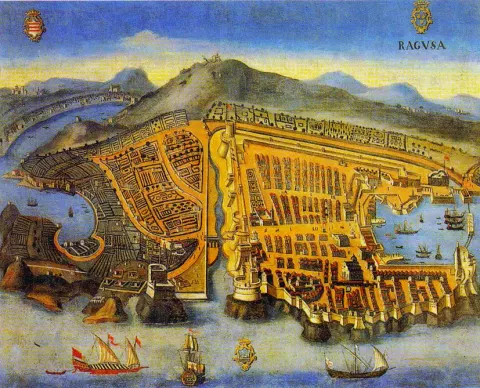
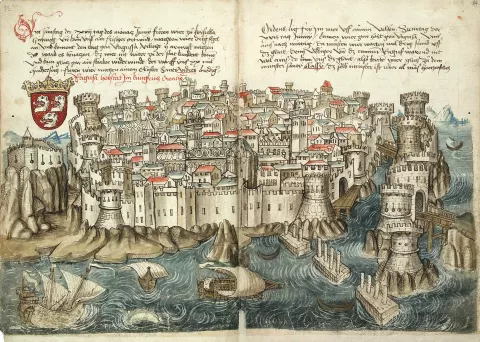
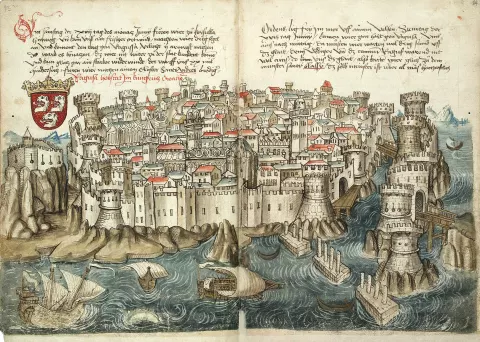
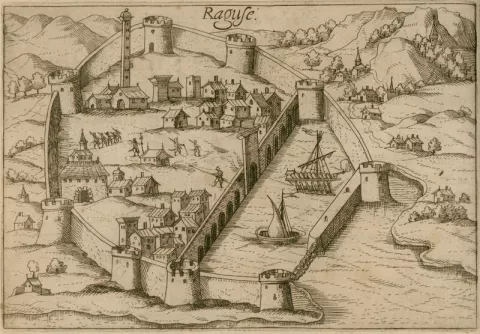
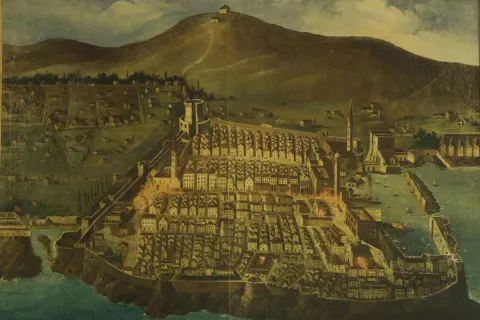
The Republic of Dubrovnik (Republica Ragusina) was one of the greatest trading and cultural powers of the medieval and early modern world. Ruled by the wealthy merchant class and supported by skilled diplomacy this Pearl of Adriatic was able to preserve its political neutrality and to obtain favorable trading and maritime privileges.
In the period of its greatest prosperity from the late 14th to late 16th century, Dubrovnik was one of the most flourishing cities in Europe, owning around 80 trading consulates and one of the greatest merchant fleets in the Mediterranean. Annual revenues from trade amounted to more than a million ducats in the late 16th century. Its powerholders guided by the slogan “Obliti privatorum publica curate” (“Forget private affairs, take care of public ones”) provided in 1377 the first system of quarantine in the world.
Balkan hinterland
The Balkan hinterland, especially Bosnia and Serbia were a large source of commodities such as timber, hides, furs and beeswax that were highly valued in the West. Owing to its strategic position the merchants from Dubrovnik were able to reap huge profits from this trade. The most valuable Balkan’s export were metals, especially silver which was in high demand in Western Europe. Around 1400, the overall Balkan silver production was almost 1/3 of the European total. From that amount almost ½ (or around 16% percent of the European total) was exported through Dubrovnik. The Ragusans traded in other metals, such as copper and mercury but on a smaller scale as they did not bring big profits as silver and gold.
The main commodity that the merchants of Dubrovnik imported to interior was salt necessary for maintaining the health of both humans and animals. From the mid-15th century this lucrative trade in metals was stopped as the Ottomans conquered the area and forbade its export.
Maritime tradition
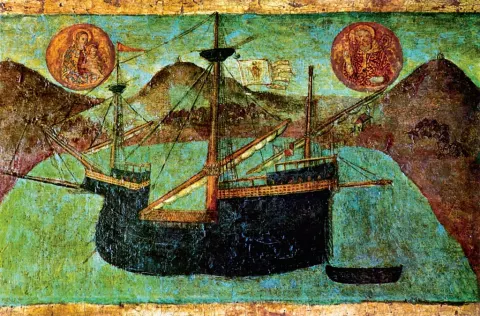
Dubrovnik’s maritime tradition dates back to the 8th century but its full potential was developed after Dubrovnik gained its independence in the 14th century. The cornerstone of Dubrovnik’s maritime trade was its role as mediator between the prosperous economies of the Eastern Mediterranean and growing economies of the Western Europe. Not only that Dubrovnik’s ships traded throughout Mediterranean and North Sea, but its ships sailed as far as North America in the West and to India in the East.
Ragusa derives from the Greek word "lau", meaning rock or cliff, which changed from Laus, Labes, Labuseum, and finally into Ragusa. Dubrovnik derives from the word "dub", a type of oak which covered the Srđ Mountain.
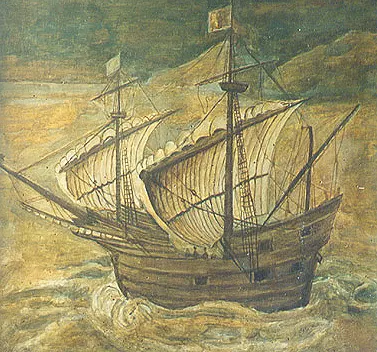
The largest Dubrovnik’s ships, called "karake", left such a deep impression upon Englishmen that the word "argosy" (distorted from Ragusa) in English marked any large sailboat.
Salt was an important economic asset of the Dubrovnik Republic. Dubrovnik harvested its salt in Gruž, Slano, on the islands of Šipan and Mljet, while its salt works on the Pelješac peninsula were the only major source of salt in the Adriatic that was not controlled by Venice.
Chapters
Outlines of Dubrovnik’s development
Foundation
There are several theories about how Dubrovnik was founded. The most prominent one is that Dubrovnik was founded sometime in the late 6th or early 7th century on a cliff named Laus. This first settlement was probably inhabited by former residences of the Roman city Epidaurum, today's Cavtat, which later expanded to the foot of Srđ Mountain and increased its population by incoming Slavs. Lausa and its part on the mainland soon existed as one entity and were physically connected in the 12th century when the shallow channel dividing them was filled. The site of the filled channel is on site of Dubrovnik’s most famous street - Placa or Stradun. Newer theories place the foundation of the settlement even into few centuries BC, in time of the Greek colonization of eastern Adriatic.
Dubrovnik was also known as Ragusa, and as well as there are several theories about its foundation, there are also several theories about its name. It is most accepted that Ragusa derives from the Greek word "lau", meaning rock or cliff, which changed from Laus, Labes, Labuseum, and finally into Ragusa. Dubrovnik derives from the word "dub", a type of oak which covered the Srđ Mountain.
Outlines of Dubrovnik’s development
Territory
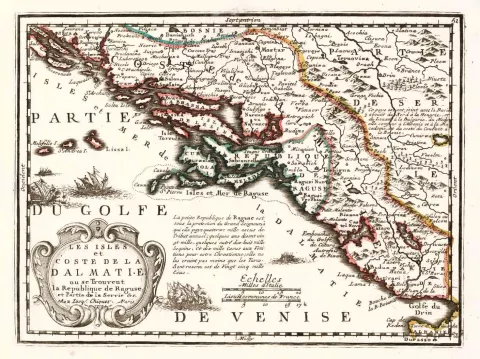
The area of Dubrovnik was divided into "civitas" (the city), and "districtus" or "distretto" (the surrounding area) which was further divided into landed part called "Astrea" and islands called "insulae". At first Astrea stretched from Višnjice to Kantafig, and from the 10th century it stretched from Cavtat to Zaton. Dubrovnik was also in possession of islands of Šipan, Lopud, Koločep and other smaller islands of the Elaphites archipelago. Dubrovnik further increased its territory in the 13th century with the island of Lastovo, in 14th century with Pelješac peninsula, island of Mljet, and territories in Dubrovnik’s immediate hinterland, and in the 15th century Dubrovnik bought Konavle, one part in 1419 and the other in 1426. For a brief period (1414-1417) Dubrovnik also ruled Korčula, Brač and Hvar, but was forced to release them to Venice.
Outlines of Dubrovnik’s development
Foreign powers and independence
From its foundation until 1205 Dubrovnik was under protection of the Byzantine Empire whose sovereignty over Dubrovnik was interrupted for several times from the 11th century. For short periods (1000-1018; 1125-1145; 1171-1192) Dubrovnik was under sovereignty of Venice and from 1081-1085 and 1172-1192 under protection of Normans from southern Italy. Between these years and the years under Byzantine sovereignty (1018–1069; 1167–1171; 1192–1205), Dubrovnik had periods of formal independence, especially after 1069 when it was closely tied to Croatian Kingdom.
After the Fourth Crusade (1202-1204) Dubrovnik came under the sovereignty of Venice (1205-1358), and by the Peace Treaty of Zadar in 1358 it became part of the Hungarian-Croatian Kingdom. Dubrovnik was granted the entire self-government, bound to pay only a tribute to the king and to provide assistance with its fleet. From the mid-14th century Dubrovnik started its life as a free state and by the mid-15th century the earlier name "Communitas Ragusina" evolved into "Republica Ragusina".
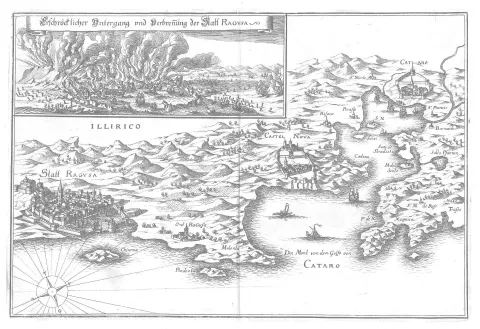
As an independent republic, Dubrovnik continued its development based on strong economy centered on trade and successful diplomacy maneuvering between the great powers of the day. Republic finally fell to the great changes that effected all of Europe at the beginning of the 19th century when it was occupied by French forces on 27 May 1806 and was formally abolished on 31 January 1808.
Overland trade
Dubrovnik traditionally traded with the Balkan but the Venetians pushed it even further in that direction because they imposed certain restrictions on Dubrovnik’s maritime trade since it rivaled theirs.
Overland trade
Salt
One of the most important commodity which merchants from Dubrovnik exported to its Balkan hinterland was salt. Dubrovnik harvested its salt in Gruž, Slano, on the islands of Šipan and Mljet, and after acquiring Pelješac peninsula the most important production center became Ston.
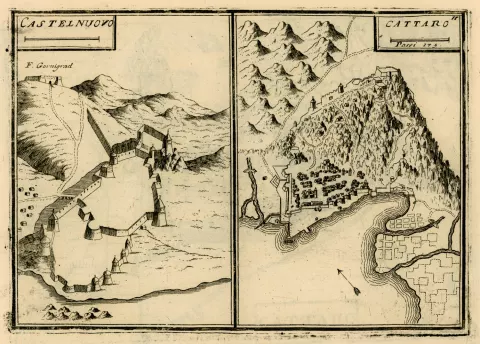
Drijeva, situated on Neretva River, was the most important market and sort of an entry point for Adriatic salt for hinterland. Dubrovnik’s merchants maintained a colony there, supported by Dubrovnik’s government, and tried to establish a monopoly on the salt trade. They successfully maintained their domination, and continued to do so after Ottoman conquest of Drijeva in 1493. Other important center for the salt trade was in Herceg-Novi which fell to the Ottomans in 1482. Ottomans tried to develop it as an independent trade center but they soon abandoned their plan and concluded a treaty by which they left the salt market to merchants from Dubrovnik, while the profit was shared equally. Similar arrangement was made in Drijeva, but over time Dubrovnik’s merchants negotiated even better terms for profit sharing.
Overland trade
Metals
While salt was the most important commodity which Dubrovnik’s merchants exported to Balkan hinterland, precious metals were the most important commodity which they imported. Serbian and Bosnian mines produced copper, iron, mercury, antimony, but the most important ore during the 13th, 14th and 15th century were silver and lead. Demand was increasing as well as production; in Serbia there were two active mines in the 13th century, at the beginning of 14th century five, and at the beginning of the 15th century there were seven active mines; in Bosnia there were thirty active mines by the mid-15th century.
Businessmen from Dubrovnik played crucial part in Serbian and Bosnian mines. They acted as owners and investors in mining operations and as traders of the ore produced. They also lived near the mining settlements working as goldsmiths or merchants, forming colonies such as in Srebrenica where almost 500 people from Dubrovnik lived.
Once formed into bars, panels, or other forms suitable for transport, metal was sent to Dubrovnik on horse caravans which sometimes numbered as much as 300 horses. Caravan leaders were usually Vlachs known as "ponosnici", and the precious cargo was guarded by an armed escort of other Vlachs. Once in Dubrovnik some of the metal was used for domestic purpose, in Dubrovnik’s mint for example, but the bulk of it was shipped to Italy or other European countries.
From the mid-15th century this lucrative trade in silver was stopped as the Ottomans now held the silver mining areas and they forbade the export of silver.
Overland trade
Other commodities
Other important commodities imported from Balkan were hides of cows, buffalos, goats and sheep, furs of wild animals, and wool. Beeswax was also valuable commodity which was used for candles and from the early 15th century it was the basis of lucrative trade with Italy. This trade was continued under the Ottoman Empire and Sultan Suleiman the Magnificent (r. 1520-1566) even gave Dubrovnik’s merchants monopoly on export of hides, furs, beeswax, and wool to Italy. Dubrovnik’s merchants were also active in exporting Italian woolen cloths to Balkan, and along the caravan routes from Dubrovnik to Constantinople.
From the early 16th century merchants from Dubrovnik shifted the bulk of their trade from Bosnia to southern Serbia and Bulgaria. The items in trade were traditional Balkan’s commodities (mentioned above) which were traded in bulk because of their small relative value. In 1590 only one Dubrovnik’s merchant sent 10500 buffalo and cow hides to Dubrovnik from Sofia. Large caravans could consist of up to 1000 horses and 200 men.
Overland trade
Slavery
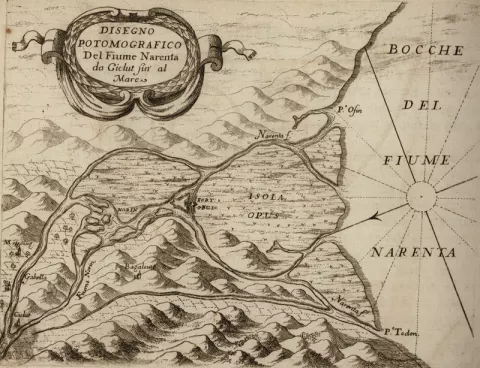
Map of the outfall of Neretva (Narenta) river by Vincenzo Coronelli, 1687. Drijeva or Gabella which is also depicted was an important market for merchants from Dubrovnik
Importation of slaves flourished from the late 13th century, and it seems that the most of them came from Bosnia because part of the population were members of the heretical Bosnian Church, and were thus regarded as a “free pray”. Most of them were exported to Italy, although some of them were sold in Marseille and Mallorca. However, on 27 January 1416 Dubrovnik’s Grand Council forbade the slave trade on its territory and for its subjects, thus becoming one of the first European states to make such decision. Part of the original proclamation states that the government had frequently received complaints from the neighboring rulers against slave practices of Dubrovnik’s merchants but it also states that such decision is made by “Bearing in mind that such trade is shameful, vicious, inhumane and against all humanity…”.
Maritime trade and tradition
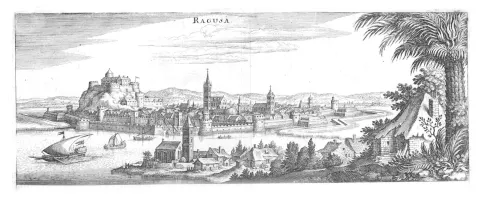
Dubrovnik’s maritime trade was inseparable to its trade on land. As mediators between East and West Dubrovnik’s merchants swiftly and efficiently transported goods acquired from the Slavs and the Turks to Europe on their ships from their harbor. Hides and furs from the East which were transported and traded in the West, and cloths from the West which were transported and traded in the East were the foundation of Dubrovnik’s maritime trade. However, importation of grains was crucial for Dubrovnik’s survival.
Dubrovnik lacked enough of suitable land for grain cultivation, so the supply of grain was an important issue for Dubrovnik’s government. Traditionally grain was imported from Apulia and Sicily, and from Albania and Greece. At first the government stored grain beneath the monastery of St Andrija and St Marko. In 1541 a decision was made to build new storage which was completed in 1590. The new storage was called Rupe (holes), it was an underground structure carved into solid rock with storage capacity of 1500 tons.
Maritime trade and tradition
Maritime tradition
First records about Dubrovnik’s maritime tradition dates back to 8th century but its full potential was developed after Dubrovnik became free of Venetian governance. From that time Dubrovnik’s fleet was steadily increasing and reached its peak in the second half of the 16th century.
Dubrovnik’s maritime tradition was important for the city’s economy and detailed regulations concerning shipping were written in the city’s Statute, "Liber Statutorum Civitatis Ragusii", in 1274 to codify regulations in existence and to provide safe and regulated environment for ship-owners, merchants, sailors, and others involved in its maritime economy.
Sailors could be payed in form of arranged wages, an arrangement called "ad marinariciam", or by sharing the profit earned from the enterprise, an arrangement called ad partem. There was also a third way of profit sharing called "entega" in which the crew received one part of the profit, and the ship-owner and the businessman who payed the cargo would share the remaining two thirds of the profit.
Maritime trade and tradition
Peek of the maritime activities in the 16th century
Dubrovnik’s trade covered all of Mediterranean, its traders founded a colony in Goa, India, and were active in trade with England, Flanders, and Germany. By 1515 Dubrovnik’s merchants were well established in England and by the mid-16th century they probably exported more of English cloth to eastern Mediterranean than all Italian merchants combined. The largest Dubrovnik’s ships, called "karake", left such a deep impression upon Englishmen that the word "argosy" (distorted from Ragusa) in English marked any large sailboat.
During the 1560s and 1570s total capacity of Dubrovnik’s merchant fleet is assessed to 35000 kola or carro, while 1 kola is approximately 1900 liters. At this point Dubrovnik’s fleet capacity was equal to those of Venice. However from the late 16th century capacity of Dubrovnik’s fleet started to decline due to multiple reasons. Some of them were inner problems of the Ottoman Empire which affected the value of trade in the Balkan, increased activity of English, Dutch, and French ships in the Mediterranean, and losses incurred by raids from Berber pirates and pirates from Ulcinj.
Maritime trade and tradition
Decline and recovery
The measure of this decline can be seen from the fact that in 1599 Dubrovnik’s fleet had capacity of 21000 kola, by the half of 17th century it had 100-120 ships with joint capacity of 12000 kola, in 1695 it had 75 ships, and by the beginning of the 18th century Dubrovnik had only 40 ships with joint capacity of only 2900 kola.
The situation started to turn for the better from the 1730s because of intensive trade with Italian and Greek cities. By the end of the century Dubrovnik reopened about 80 of its Consulates, it had 150 ships with 2200 sailors which traded from Istanbul, Alexandria, Livorno, Marseille, Spanish harbors, and all the way to United States Atlantic cities of New York, Philadelphia, and Baltimore. In 1805 the Republic had 278 ships under its flag with total capacity of 24 772 kola. Regardless of the fall of the Republic in 1808 and its consequences, Dubrovnik remained maritime, shipbuilding and trading center of Dalmatia until 1850s.