Museum / Rooms / The Phoenicians
Room · 6 chapters · 2 lives
The Phoenicians
Called by contemporaries “the Princess of the Sea” these famous mariners, merchants and colonizers formed the first trading nation in the world history
Phoenicia
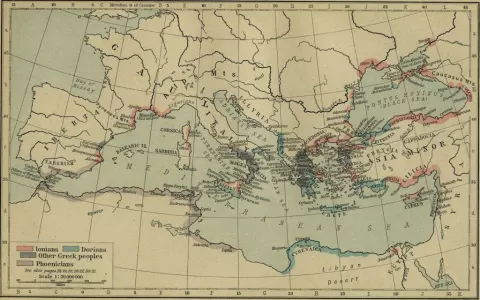
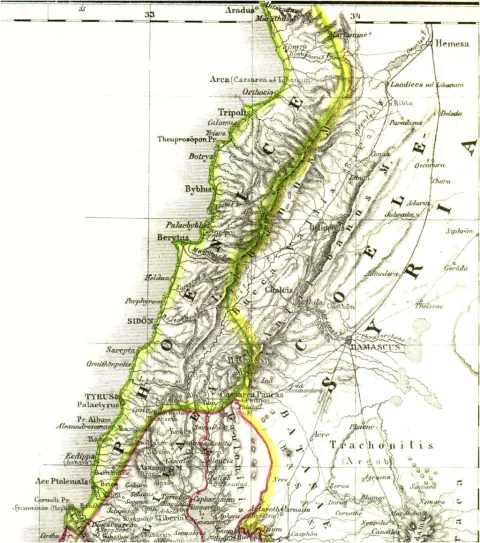
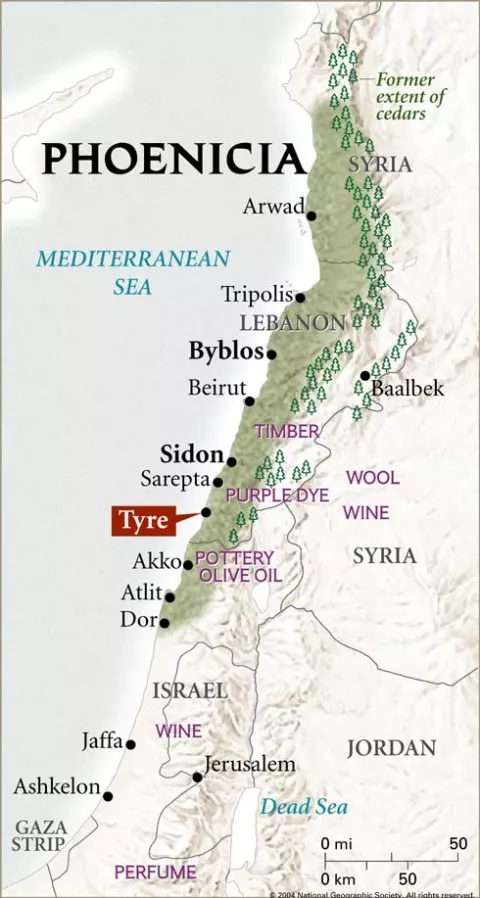
The Phoenicians occupied narrow and infertile area between the east coast of the Mediterranean Sea and the mountains of Lebanon where they developed confederation of maritime city-states that flourished in the 1st millenium BC.
The name Phoenician is Greek invention from the word “phoenix”, meaning “red people”. It is unknown how Phoenicians called themselves, perhaps the “Canaanites” (from Hebrew “kenaʿani” meaning a “merchant”).
First colonial empire in the Mediterranean
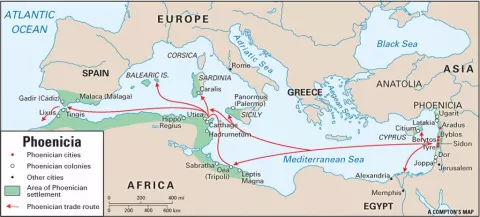
In pursuit for sources of raw materials and markets for their products the Phoenicians established a large colonial network across the Mediterranean, founding more than 300 colonies from Spain to France and Italy, and Mediterranean islands to the North African coast. The Phoenicians were the first people that sailed through the Pillars of Hercules (Straits of Gibraltar) which were until then considered the end of the world. Archaeological findings confirm that they sailed as far as the shores of Britain.
The Phoenicians were the first sailors in history who circumnavigated the African continent. This event took place in the 7th century BC in the service of the Egyptian pharaoh Necho II ─ two thousand years before the Portuguese explorer Vasco de Gama officially did that.
Phoenician economy
Phoenician economy was based on international trade and backed up by highly skilled manufacturing production in homeland. Their shipbuilding, glass, metal and textile industries were regarded as the major industries of the ancient world. The Phoenician specialty was trade in metals (gold, silver, copper and tin) and in manufactured merchandise.
As the part of the Phoenician business genius was mastering the art of mass production and their ability to copy other civilizations’ art and manufacturing styles to produce and sell those goods at a cheaper price.
The main Phoenician product
The main commercial product of the Phoenicians, after which they were named “phoinkes”, meaning “Red people”, was the purple color. In the times preceding the Phoenicians, the textiles were dyed by plants which consequently in the encounter with water or sunlight faded. By using the Murex sea-snail the Phoenicians were able to produce long-lasting purple color. The method of its production the Phoenicians kept in great secrecy from the rest of the world.
The purple color became a symbol of wealth and prestige. Thousands of snails were necessary for production of a single ounce of dye. That made the dye extremely expensive and available only to royalty and wealthy elite.
Polaris
Due to limited navigational and technological skills, in ancient times prevailed coastal, small-range navigation linked to short distances and day travelling in order to keep the coast in sight. By discovering the navigation by using celestial bodies and the “Phoenician star” or Polaris the Phoenicians became the first people to travel on long distances and at night. As a consequence, quality of their services were improved as duration of journey across the Mediterranean and transport costs were drastically reduced.
It is said that the Phoenicians were able to transport commodities from Tyre to Rome in around 20 days, and between Carthage and Ostia in three to five days.
Financial tools
As the generally accepted means of conducting business the Phoenician entrepreneurs used unwrought ingots and promissory notes, and continued with this practice for centuries after the invention of coinage. The concept of insurance was unknown in their times. To protect their ships that frequently sailed at great distances, Phoenician businessmen used to send ships in convoys and to diversify their investments across many ships to reduce risks.
The greatest contribution of the Phoenicians to the future
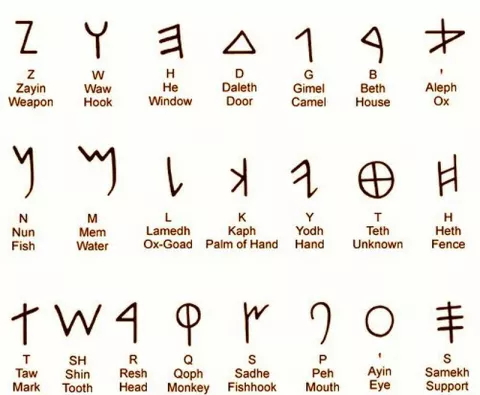
Busy entrepreneurs, the Phoenicians needed simple and easy way to keep track of their business transactions. Thus they invented a new type of writing system: an alphabet of 22 consonants. Their alphabet is an ancestor of the better known Greek alphabet. It is said that when the Greeks first saw Phoenician writings with its mysterious signs were truly frightened because they thought it was some kind of magic.
It is less known that the alphabet – whose name derived from its first letters, aleph and beth – originated from commercial needs, and it was the Phoenicians who made the greatest contribution to the present written word.
Chapters
Ancient Phoenicia
In the ancient times the coastal area of Mediterranean, what is today Lebanon and parts of Syria and Israel, was inhabited by one of the most prosperous civilizations of the ancient world – the Phoenicians.
Situated between the two great cultures – Egyptian and Mesopotamian, Phoenicia absorbed civilizational achievements and served as cultural intermediary between East and West. The favorable geographical position of Phoenicia and the presence of the powerful political empires in its hinterland naturally turned its people to the sea and seafaring. From that set of circumstances emerged the first trading nation in world history – the “princes of the sea”, famous sailors, traders and explorers who significantly influenced the cultural and economic structures of the ancient times.
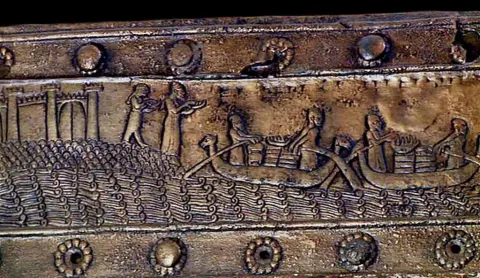
Detail of bronze decoration on the gates of the Palace of Balawat shows the king and queen of Tyre at the shore of their island city seeing off boats with tribute and gifts for the Assyrian king Shalmaneser III (858-824 BC).
The loose federation of Phoenician city-states, with Tyre and Sidon as the most powerful trading cities, shared a common interest for trade and maritime affairs although they never created a unified state. From the 12th century BC, Phoenicia emerged as a significant cultural and political power on the Mediterranean. Their entrepreneurs and elite were credited with establishing of a large colonial network across the Mediterranean based on seafaring and commerce.
Economy
Phoenician economy was based on the international trade and domestic industry and manufacture. Phoenician business activities relied on simple recognition of the supply and demand patterns on the market. Over time, they become so proficient that they were regarded masters of the export and import business. In conduct of business, the Phoenicians used unwrought ingots and promissory notes and continued that practice centuries after the invention of coinage.
In their pursuit for trade, the Phoenicians eventually established a colonial empire along the Mediterranean Sea. The period of main expansion takes from the 8th century BC onwards.
In addition to present day Spain where they founded Gadir, present day Cadiz, they were active on various islands – Cyprus, Crete, Malta, Sicily, Sardinia,
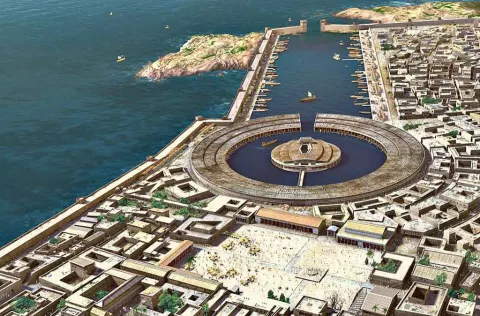
Harbour of Carthaga - an artist’s idea based on ancient descriptions and recent archeology findings. The round part of the harbor was for war vessels, while the other was for the merchant fleet.
Corsica and Balearic islands – as well as on the European mainland (at Genoa in Italy and Marseille in France) and north Africa with Utica and Carthage as the most prosperous colonies. Altogether, the Phoenicians founded around 300 colonies. The greatest and most important was Carthage, established by colonists from Tyre in 813 BC in present Tunis. Carthage would represent the biggest obstacle to the Roman maritime expansion.
Thanks to the Greek historian Herodotus remained preserved evidence of trading methods practiced by the Carthaginians (Carchedonians):
“There is a place, they say, where men dwell beyond the Pillars of Heracles; to this they come and unload their cargo; then having laid it orderly by the waterline they go aboard their ships and light a smoking fire. The people of the country see the smoke, and coming to the sea they lay down gold to pay for the cargo and withdraw away from the wares. Then the Carchedonians disembark and examine the gold; if it seems to them a fair price for their cargo, they take it and go their ways; but if not, they go aboard again and wait, and the people come back and add more gold till the shipmen are satisfied. Herein neither party (it is said) defrauds the other; the Carchedonians do not lay hands on the gold till it matches the value of their cargo, nor do the people touch the cargo till the shipmen have taken the gold.”
Through the extensive trade network, the Phoenicians imported metals and other raw materials from different parts of the Mediterranean to some extent intended for domestic manufacture. Part of Phoenician business shrewdness was their ability to copy other peoples’ art and manufacturing styles in order to produce and sell those goods at a cheaper price.
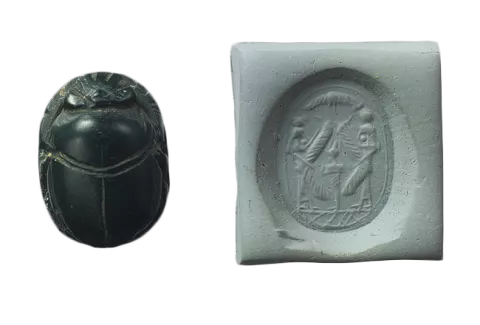
Phoenician stamp scarab seal with winged figures, 6th–5th century BC. Phoenician scarab seals reached a peak of popularity in the 5th to 4th centuries BC, when they spread throughout the Mediterranean. The city of Tharros on Sardinia was a major center of production and distribution.
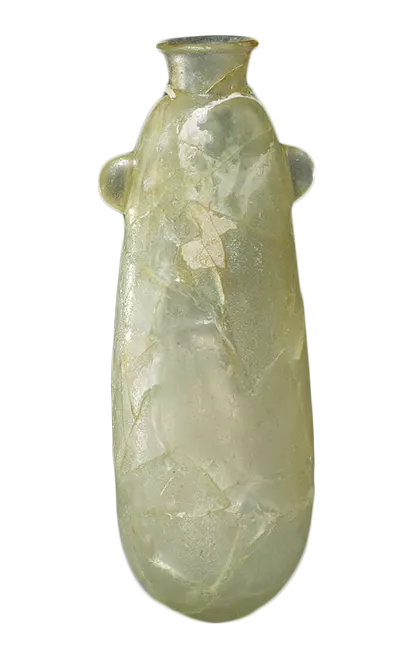
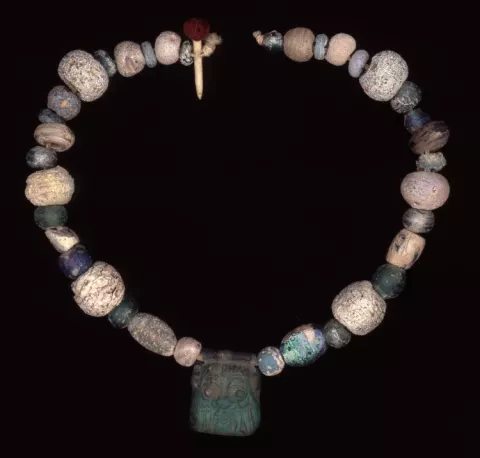
Their craftsmen were very skillful in making desirable objects such as tools, weapons and jewelry. Furthermore, there are some indications that they have developed the art of mass production which allowed availability of the large quantities of the similar artifacts. Their glass industry was major in the ancient world.
Ship-building have been perfected at city of Byblos. The most significant, perhaps, was textile production due to a significant contribution in terms of invention of the purple color. The name of Phoenicians came from the Greek word “phoinkes”, meaning “red people” and referring their main commercial product.
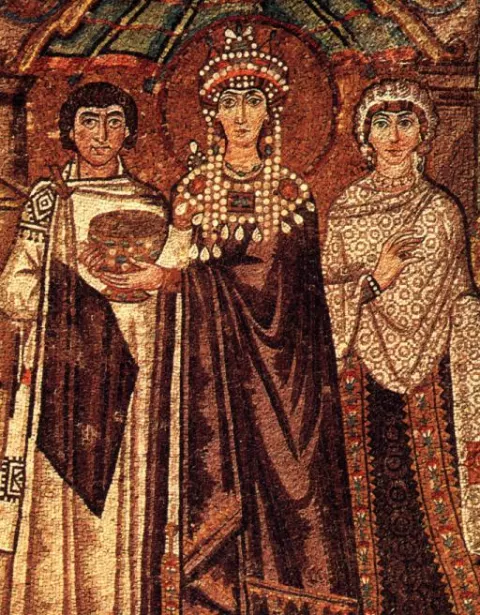
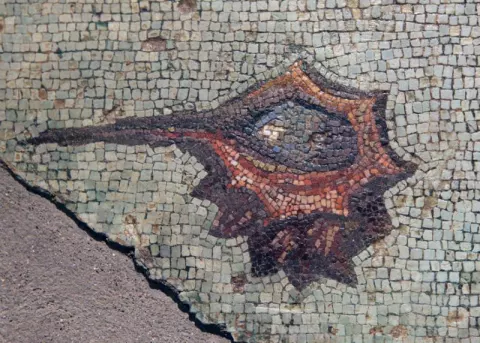
Namely, the Phoenicians discovered a method of producing a long-lasting purple color, the secret which they carefully kept from the rest of the world. In the times preceding the Phoenicians, the textiles were dyed by plants which consequently in the encounter with water or sunlight faded. The dye made from the shells of the Murex sea-snail that could be found on their coasts had a different effect. The procedure was following. The snails were gathered and left in the salt pools to die and rot, and a hormone which thereby secreted was used for a production of a precious dye. Sidon, its main producer was worldwide known by its bad odor deriving from rotting snails. But, the results were magnificent. A wide range of colors, from deep purple to red and a pale pink could be obtained from different snails, and thousands of snails were necessary for production of a single ounce of dye. That made the dye extremely expensive and available only to royalty and wealthy elite. It became a symbol of wealth and prestige.
Maritime trade network with system of colonies and rapid transfer of goods represented highly efficient system which enabled provision of customers with diverse goods originating from different parts of the Mediterranean and beyond. It is said that they were able to transport commodities from Tyre to Rome in around 20 days, and between Carthage and Ostia in three to five days.
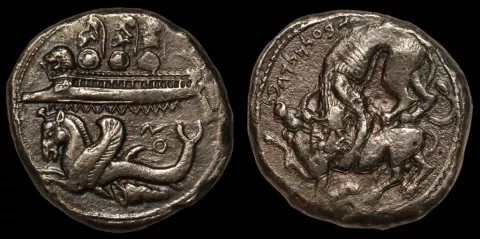
Commodities
Natural resources such as wood from cedar pine and pine trees necessary for building of ships, houses and temples were highly in demand in the Middle East which lacked timber. The cedar wood was an important Phoenician export product, and its traditional meaning for that area is confirmed at today’s flag of Lebanon. Its oil was also a valuable trade product used for mummification of pharaohs in Egypt.
Foodstuffs such as dried fish, wine and indispensable salt were also in the repertory of the traded goods.
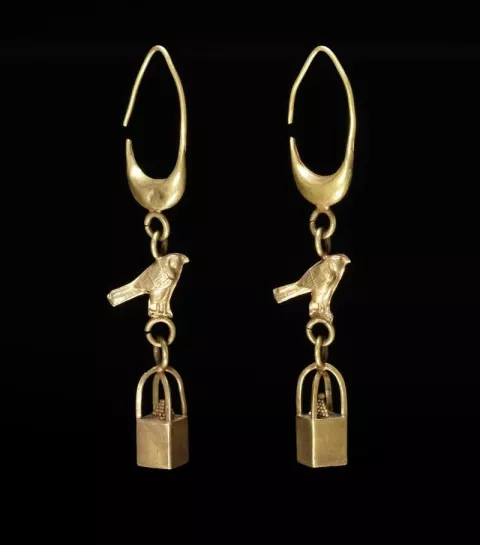
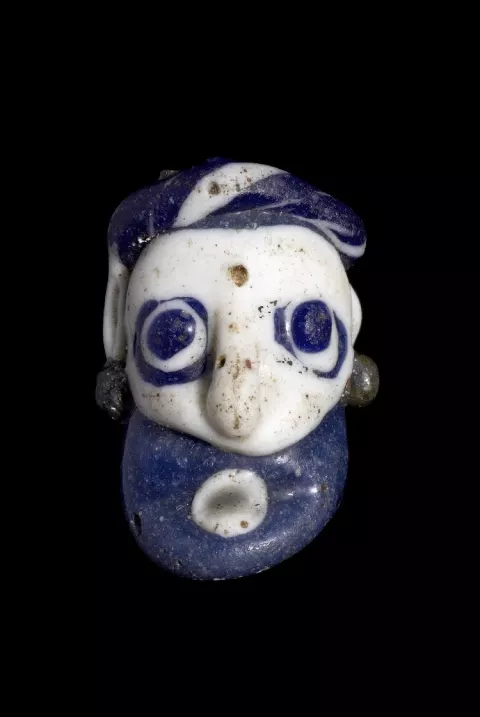
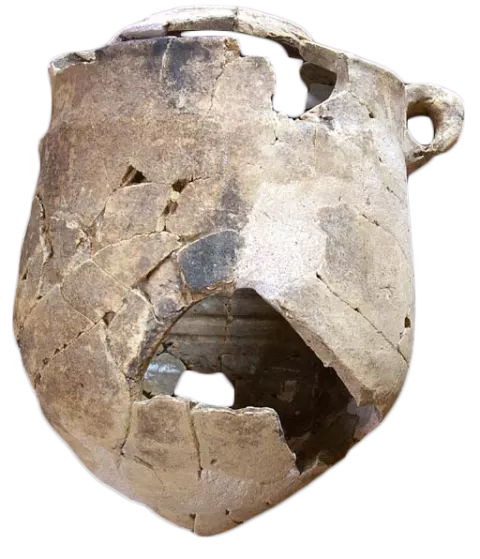
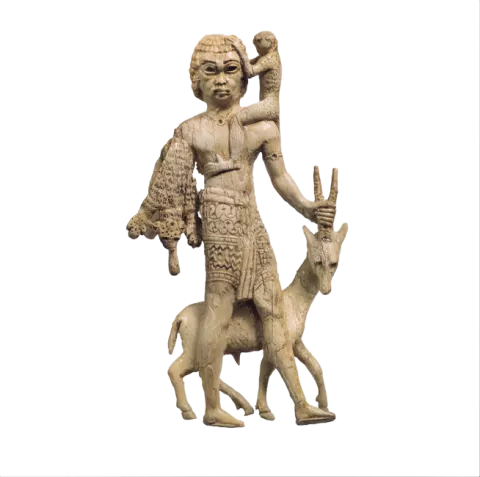
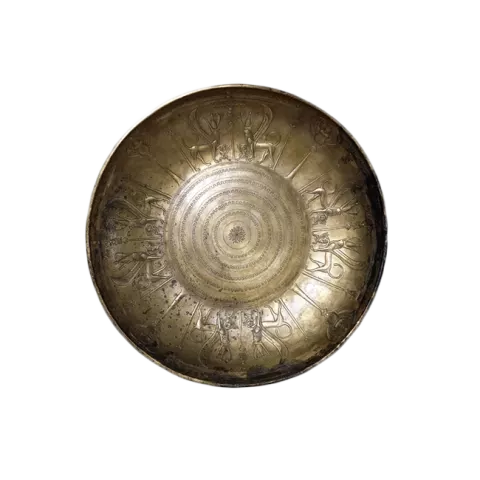
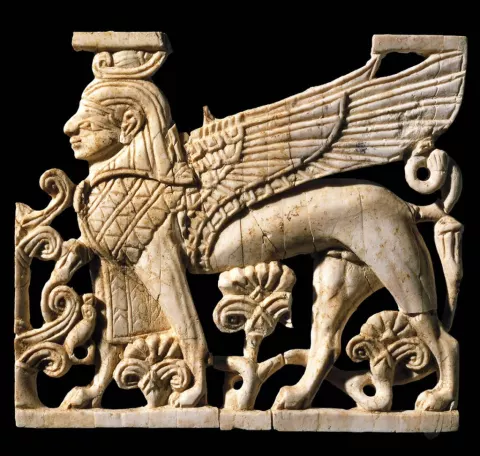
Manufactured goods of Phoenician provenience, such as textiles and dyes, pottery, colored glass, metalwork, jewelry, ebony and ivory carvings were in high demand in the ancient world.
They also acted as middlemen for other people’s products such as perfume, spices and incenses that were carried by the Arabs. They also traded for other raw materials such as silk, cotton, wool, animal skins, wheat, corn, honey, oil and ostrich eggs, ebony, ivory, gemstones, amber, papyrus, oak timber, and horses.
The trade in metal products – gold, silver, copper and tin – was an important part of Phoenician trade. Copper was brought from Cyprus, while Spain, Italy and Turkey were providing silver, copper and tin. Their secret source of tin represented remote Britain. According to some theories, the name of Britain may come from “barr” (land) and “tannic” (tin).Finally, according to ancient sources, the Phoenicians were engaged in one of the most permanent phenomena in human history – in slave trade.
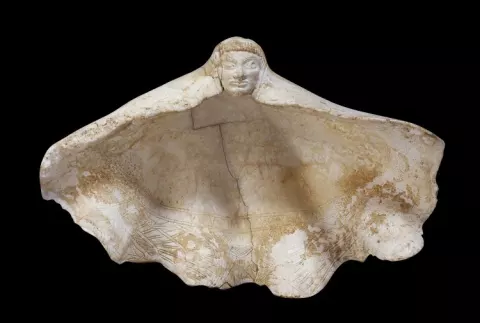
Tridacna squamosa shell carved with a human head on the apex, c. 7th century BC, found in Vulci, Italy. The shell served as a container for cosmetics.
Transport
To sustain long-distance trade that represented, as previously mentioned, the framework of Phoenician economy it was necessary to develop linked and efficient system of transportation.
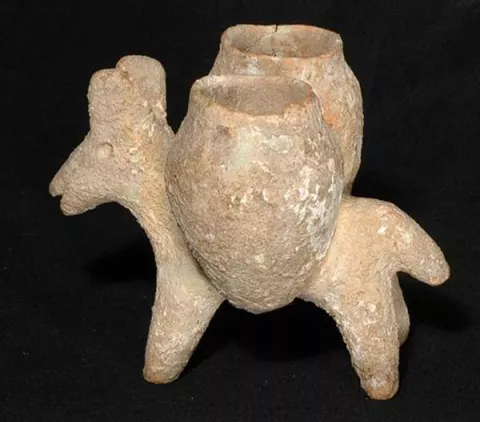
One part of Phoenician trade which related to the mainland transport was carried on ingrained way – in caravans or wheeled carts which were pulled by draft animals – mules, horses and camels.
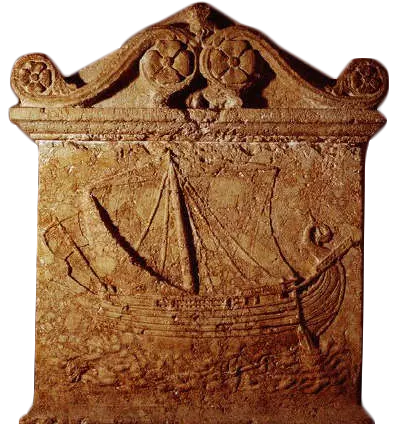
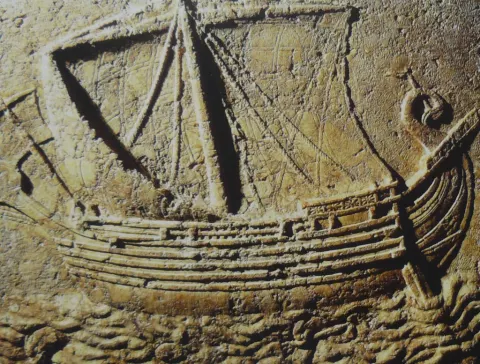
The sarcophagus that probably belonged to a wealthy merchant in Sidon on which trading vessel is carved.
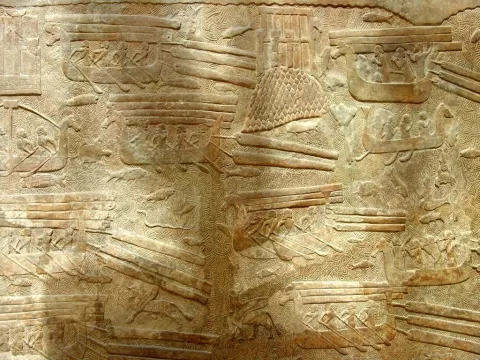
But, most of the trade was conducted by sea. Shipbuilding was one of the major industries in ancient Phoenicia that continued the legacy of ancient Minoans of Crete and the Egyptians. Consequently, the Phoenicians were known as, perhaps, the best shipbuilders of the time.
“Gauloi” or “round” ships were the ships intended for trade and transport of goods named by the shape of the hull. Usually they were between 65 and 100 feet long, and about 20 feet wide. Stern and bow of the ship were curved – the stern with fishtail or spiral decoration, while the bow had a figure of a horse’s head at the top. On both sides of the bow eyes were painted. Cargo ships had a mainmast with a rectangular sail that enabled the ship to sail only with the wind coming from behind. It was placed
on a yard that could change direction of navigation with the wind. Ruder in the form of a broad, oar-like blade was attached near the stern. Besides the cargo, cargo ships could carry a crew usually no greater than 20 people.
These trade ships often sailed in convoy for protection. Although the concept of insurance was unknown in antiquity, Phoenician businessmen reduced risk by diversifying their investments across many ships, each carrying goods from numerous traders.
Navigation
The Phoenicians remained remembered as the unsurpassed sailors of the ancient world who have made significant contributions to the field in terms of technological advances and new insights.
In ancient times prevailed the coastal, small-range navigation linked to short distances and day travelling in order to keep the coast in sight. It was a product of limited navigational and technological skills. Phoenician contribution for maritime history was the discovery of navigation by using the celestial bodies and the Polaris or the North Star which became known as “Phoenician star”.
This finding revolutionized the history seafaring, as well as general course of human history. With the knowledge of prevailing winds and sea currents, it enabled to the Phoenicians to be the first people to travel on long distances and at night.
Equipped with advanced ships and sailing techniques, the Phoenicians were the first people who sailed through the Pillars of Hercules (Straits of Gibraltar), which according to the common belief and knowledge of the time represented the end of the earth.
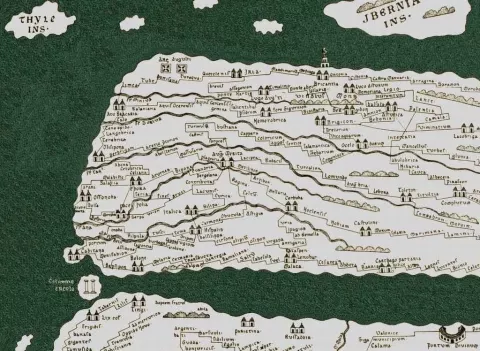
Pillars of Hercules (Columne Ercole) displayed on Tabula Peutingeriana, an illustrated itinerarium of Roman origin.
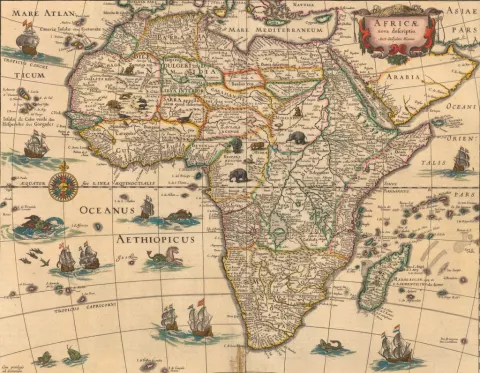
According to the ancient Greek historian Herodotus, the Phoenicians commissioned by the Egyptian pharaoh Necho II (610-595 BC) in the 7th century BC made the first circumnavigation of the African continent in history that occurred two thousand years before the Portuguese explorer Vasco de Gama. Allegedly, they sailed along the Red Sea and all the way around Africa, returning to the Mediterranean by passing through the Strait of Gibraltar.
A large amount of Phoenician coins found in Britain is evidence that the Phoenicians were also the first sailors who have reached its shores.
Legacy and decline
The most important civilizational achievement inherited by the Phoenicians was certainly the letter. Since the Phoenicians were a prominent trade nation heavily engaged in business they needed simple and easy way to keep track of their business transactions. The cuneiform script and hieroglyphs were too complicated for use on a daily basis and inconvenient for business matters. Therefore, the simplest form of letter with small number of characters was developed by the Phoenician merchants. It consisted of 22 consonants and had no vowels.
Through commerce this invention was extended to other countries and people of the Mediterranean world motivated to improve and facilitate their affairs. It is said that when the Greeks first saw Phoenician writings with its mysterious signs were truly frightened because they thought it was some kind of magic. However, about 800 BC they began to adopt the letter and eventually they improved it by adding vowel sound.
Therefore, it is interesting to notice that the alphabet – whose name derived from its first letters, aleph and beth – originated from commercial needs, and that it was the Phoenicians who made the greatest contribution to the present written word.
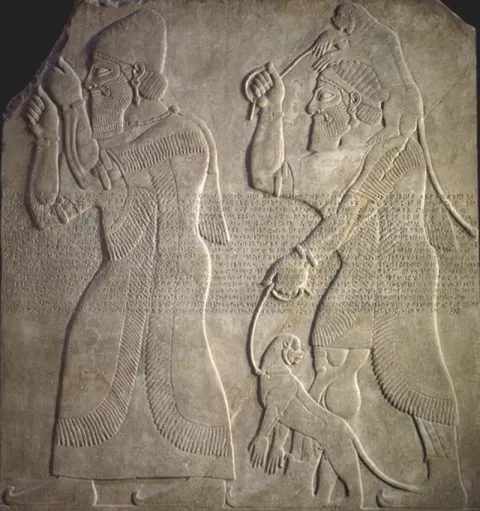
During its history, Phoenicia was subordinated to various powers – the Babylonians, Egyptians, Assyrians, and Persians being just some of them.
But, the real decline of Phoenician power actually came with emergence of the new Mediterranean maritime forces – the Greeks, and after a while, the Romans. The Greeks took over much of the regional trade, thus depriving the Phoenicians of their monopoly. With the emergence of the Roman state, the Phoenicia was conquered in 64 BC and became a part of the province of Syria.
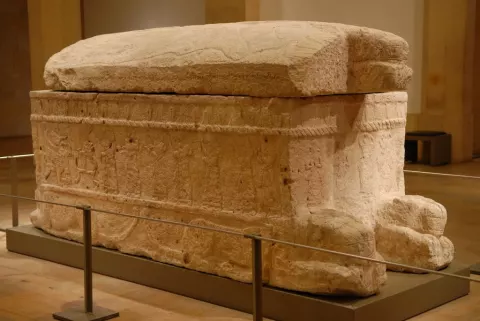
Ahiram sarcophagus - the sarcophagus of a Phoenician king of Byblos (ca. 1000 BC) is written in the Old Phoenician dialect of Byblos and is the oldest witness to the Phoenician alphabet of considerable length discovered to date.