Museum / Rooms / The Hanseatic League
Room · 7 chapters · 23 lives
The Hanseatic League
Founder of the first international economy in northern Europe
What was the Hanseatic League?
For more than 400 years (mid-13th up to the mid-17th century) trade in the Baltic and North Seas was dominated by a confederation of northern German merchant guilds and towns known under the name Hanseatic League or simply the Hansa. At the heights of its power the Hansa comprised around 200 towns and was headed by Lübeck called “the Queen of the Hanseatic League”.
What motivated merchants to form Hansa?
In times of political insecurity when royal authority was not able to provide adequate protection, the merchants gathered in Hansa to negotiate the best economic terms for their business abroad and to provide physical protection and safe navigation to its members.
Hanseatic motto “Navigarre nesecesse est, vivere non necesse” or “It is necessary to sail seas, it is not necessary to live” reveals the entrepreneurial zeal of these renowned merchants and sailors.
Hanseatic League had its own flag, laws and diplomatic representatives to negotiate the economic privileges with foreign governments.
Foundations of Hanseatic power
The basis of Hanseatic power represented favorable commercial monopolies and privileges that ensured their primacy over the foreign and domestic merchants. In order to gain and preserve favorable terms the Hansa used different means that ranged from loans and gifts to rulers and persons of importance which were actually bribes, to more aggressive methods such as embargoes, blockades, and armed conflicts. Acting as a grain brokers, buying surplus in times of plenty and distributing it in times of famine to most critical places, the Hanseatic merchants were able to optimize their profits and enlarge their political power.
The most effective blockade occurred in 1284 against Norway. The League blocked the import of grain into the country sparking a famine, what resulted in granting of extensive privileges to the Hansa.
Hanseatic business network
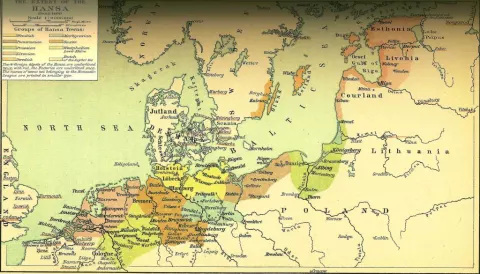
The business network of Hanseatic merchants comprised of towns and factories scattered on territories of present day Poland, Estonia, Latvia, Netherlands and Germany. “Kontor” was the name for Hanseatic establishments abroad, of which the most prominent were Steelyard in London, Peterhof in Novgorod, the Bruges kontor in Flanders, and kontor in Bergen.
From the merchants living in kontore it was expected to live in strict discipline, celibacy and commitment to business.
Commodities
The Easterlings, as the Hanseatic were called, operated as intermediaries in wide range of high bulk, low valuated cargoes like foodstuffs and industrial raw materials, as well as in high-valuated low-weight commodities like clothes and spices. However, the mainstay of their trade represented grain, salt, and clothes.
Specially designed Hanseatic ships called “kogge” and “hulks” were invented both for commercial and war purposes and were means of their commercial and maritime supremacy.
Business methods
In running business the Hanseatic merchants relied on somewhat backward way of doing business comparing with the Mediterranean trading powers – they accompanied their merchandise and avoided bills of exchange and double entry-bookkeeping for a long time. Besides, since they were not familiar with insurance policies they used to reduce the risk of loss by spreading cargo among a number of ships.
The usual way of doing business in the Baltic region was through partnerships and commission trade (“sendeva” meaning “goods sent out”) which resembled the Italian “commenda”, except that it usually gave the clerk a fixed salary and not a share in the profits. The most frequent form of partnership was “wedderlegginge” or “contrapositio” according to which each partner provided capital while one of two partners also agreed to accompany the merchandise and take care of the sale. Profits were divided in proportion to the capital invested, while loss was limited on the partners’ initial investment. The partnership could be extended until such time as one of the partners wanted to withdraw.
Decline of the Hanseatic League
The decline of the Hanseatic League began already in the late 14th century with the rise of national states which preferred indigenous entrepreneurs. However, the final blow the Hanseatic League experienced with the Age of Discovery and subsequent establishment of world global economy.
Although guilds were a common association in medieval Europe, the “hanse” formed by the merchants and towns of northern and central Germany is remembered as the most important association of that kind in history.
Chapters
- The Baltic area in the Middle Ages
- Foundation of the Hanseatic League
- Internal organization and policy of the Hanseatic League
- The Hanseatic League - Commodities
- The Hanseatic League - Decline
- Hanseatic Merchant
- Business practices
The Baltic area in the Middle Ages
In the Middle Ages, a historical period preceding the Age of Discovery and subsequent establishment of the global economy, there were two main epicenters of European trade. The first focal point represented the Mediterranean and its leading maritime power, the Venetian Republic, while the other was related to the North and the Baltic Seas where commercial activities were led by the powerful association of German merchants joined in the Hanseatic League.
The League, also known as Hansa, participated in commercial activities in northern Europe from the 13th to the 17th century, and is credited for creating the first international economy in northern Europe.
Foundation of the Hanseatic League
The term “hanse” was a medieval German word for “guild” or “association” usually used to indicate a group of merchants or towns. Although guilds were a common association in medieval Europe, the “hanse” formed by the merchants and towns of northern and central Germany is remembered as the most important association of that kind in history.
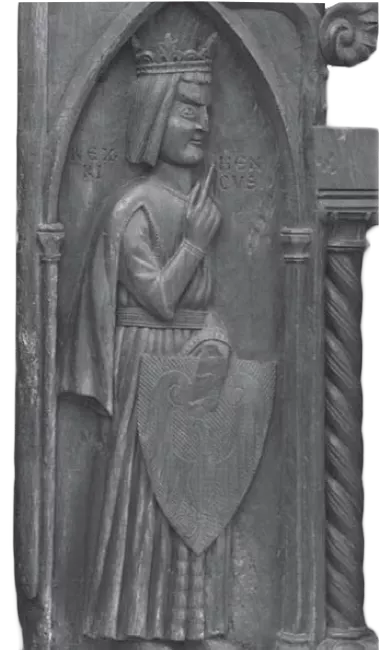
Representation of the King Henry VII of Germany (r. 1220-1235) on a 13th century carved pew-end during whose troubled reign many German mercantile cities strengthened their autonomy.
In the second half of the 13th century, the lack of protective imperial authority encouraged the north German merchants in the Holy Roman Empire to form regional town leagues in order to improve their business positions abroad and to protect commercial interest against pirates.
The reason for their initiative could be found in an unfavorable position of merchants since the governments were unable to provide an adequate protection for the merchants and their businesses in the cities and markets of that time. Upon arrival of merchant in the foreign port, the local authorities could confiscate merchant’s goods without remuneration or could simply deny him the ability to participate in markets if it was estimated to be disadvantageous for the interest of local merchants.
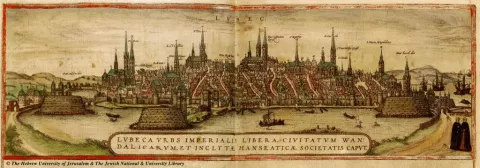
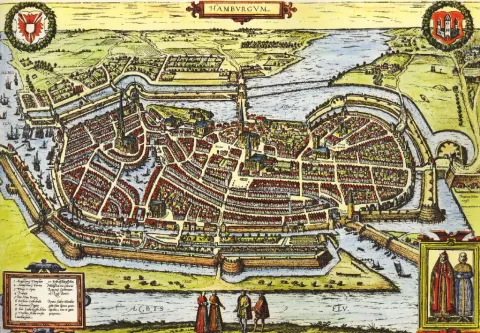
In 1241 the first agreement between the cities of Lübeck and Hamburg was signed which eventually led to broader involvement of towns and foundation of the Hanseatic League. The purpose of the Hanseatic agreements had been the protection of intercity trade from attacks on land or sea, provision for safe navigation, and securing the most favorable terms and conditions possible for their members and business operations.
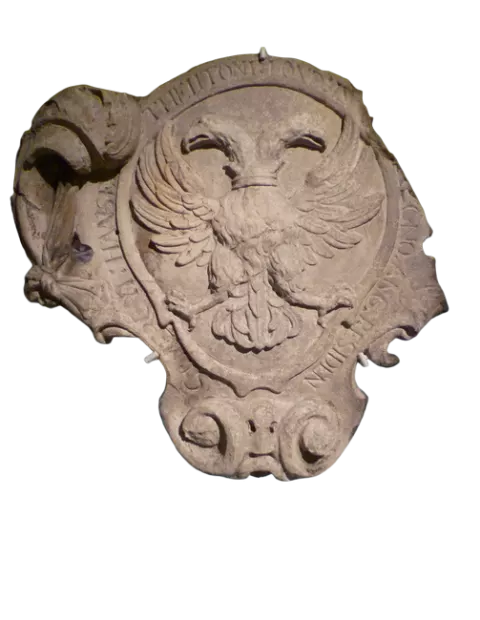
Eventually, two main groups of merchants and towns (hansas) profiled. The first one was headed by the Lübeck and controlled the Baltic coast where by the early 13th century had a near-monopoly of long-distance trade. Lübeck, also called “The Queen of the Hanseatic League” in 1358 became administrative headquarters of the Hanseatic League.
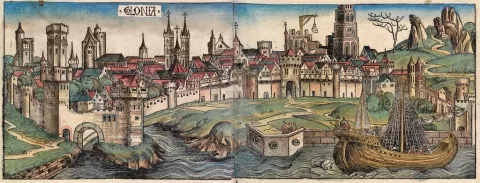
The second was situated in northwest Germany and in Rhineland and was led by Cologne (Köln) whose merchants possessed trading privileges in Flanders and England. In 1280s this two confederations of merchants joined.
Favorable conditions for its members attracted numerous towns to join the Hanseatic League. In the 14th century their number was around one hundred, and in the 15th century amounted to approximately two hundreds. But, only about seventy towns actively participated in hanseatic affairs, at the same time representing the interests of one hundred thirty smaller towns. The most important element of Hanseatic cohesion represented the material gain for its members.
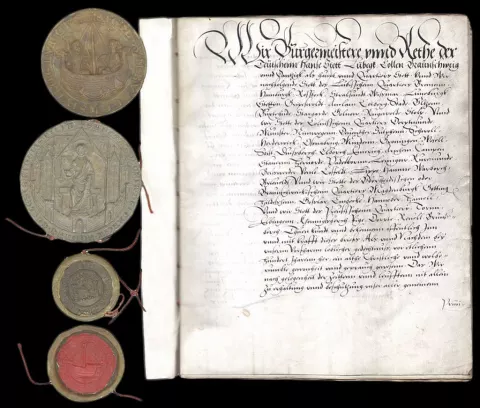
Agreement of the Hanseatic League at Lübeck, 1557 concluded by 63 Hanseatic towns .The agreement reconfirmed previous obligations and rights of the League members, such as common protection of trade routes, expenses for diplomatic missions and defense against enemies.
At periodic assemblies (diet) of the Hanseatic League were defined negotiations with foreign towns or rulers, ratification of trading agreements or privileges, trade and commerce blockades, financial matters, military issues, membership expansion or exclusion of a member town, conflicts within the members and competition policy.
Internal organization and policy of the Hanseatic League
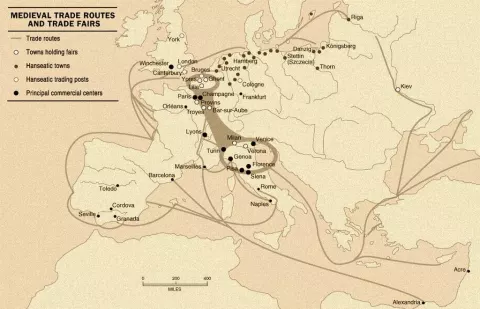
One of the secrets of Hanseatic trading longevity was a successful linkage of the sea, river and land routes on the area of their activity.
The Hanseatic towns and factories spread on the territories of today Poland, Estonia, Latvia, Netherlands and Germany while their activities extended as far as Mediterranean on the south and Iceland on the north, covering the area of activity of about six million square kilometers.
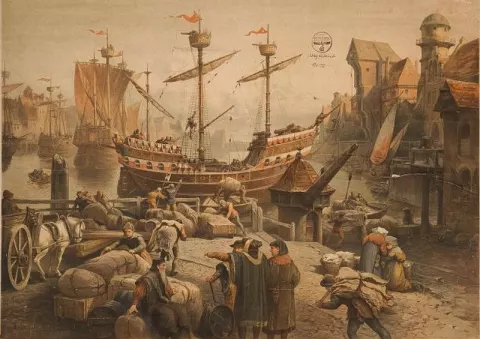
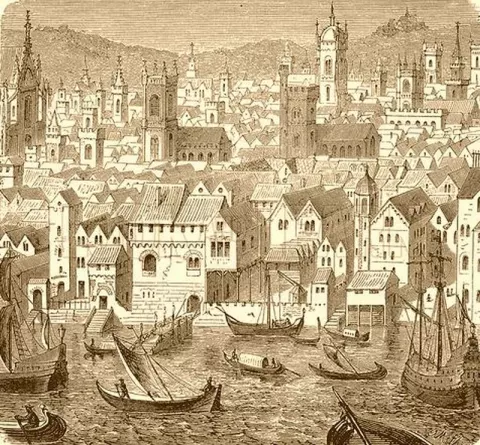
Hanseatic harbour in the Baltic Sea (middle of 15th century).
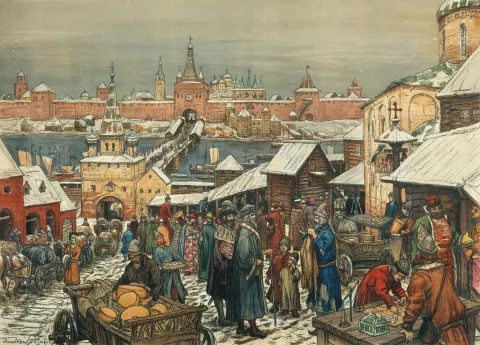
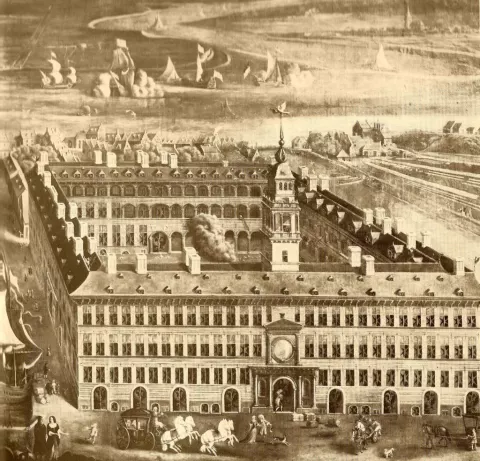
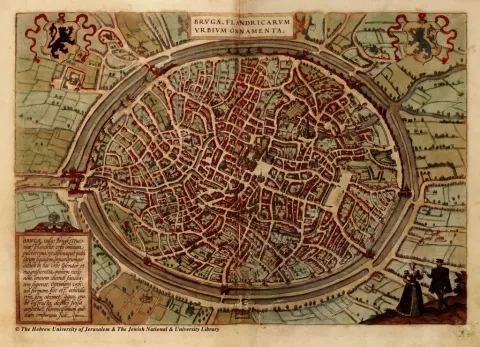
The major Hanseatic kontors, that is, quarters for residence and conducting of business in foreign countries were: the Steelyard in London, with its export trade in English wool and cloth; the Peterhof in Novgorod, with its trade in Russian fur and wax, and other eastern and Asian products acquired from the northern junctions of the Silk road; the Bergen kantor, with its trade in Norwegian stockfish (dried cod), whose primary markets lay in Boston (England) and London; and the Bruges kontor in Flanders which was the most important with its staple trade in Flemish and Brabantine woolen textiles. The life inside the kontor was subjected to strict discipline regulations. For example, in Bergen the young German merchants had to spend ten years in apprenticeship and celibate during which they learned the language and commercial customs of the country.
In foreign towns, the power base of the Hanseatic League consisted of privileges and monopolies thanks to which they were able to supersede domestic and foreign merchants from commercial traffic. For instance, in the harbors of the English and Dutch towns only the ships of the Hanseatic towns could sail. Merchants who didn't belong to Hansa were equally not allowed to sail into Hanseatic ports or to cooperate with merchants of the Hanseatic League. But, it is important to emphasize that favorable privileges and protection were valid and common to all the members of the Hanse only in northern Europe. In Mediterranean Europe, where trade was conducted by individual German merchants, different rights and privileges were in force.
Marketplace in Novgorod, a painting by Appolinary Vasnetsov (1856-1933).
In order to obtain new and preserve the old commercial advantages which were the basis of their ascendancy, the Hanseatic League used different means. Usually these were loans and gifts to the kings and influential persons, as it was the case with the Norwegian and England kings. When peaceful means proved to be inadequate, the League was inclined to withdraw its trade and occasionally led embargoes and blockades. The most effective blockade occurred in 1284 against Norway when the League blocked the import of grain into the country sparking a famine, what in turn resulted in granting of extensive privileges to the Hansa. In the cases when their monopoly was physically threatened, the League didn't hesitate to engage in organized warfare. In 1368 the Danish king Valdemar IV, who tried to end Hanseatic control over the southwestern Baltic was severely defeated. The Peace of Straslund (1370) by which Denmark was forced to recognize the League's supremacy over the Baltic, in the same time marked the heyday of Hanseatic power.
The Hanseatic League - Commodities
Commodities
Following the economic and demographic growth of the Medieval Europe in the 12th and 13th centuries, the Hanseatic merchants benefited from commercial trends and demands for high bulk, low-valuated cargoes, especially foodstuffs and industrial raw materials, as well for high-valuated low-weight commodities.
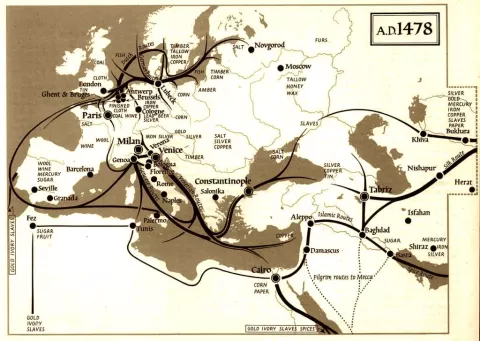
The Hanseatic merchants served for centuries as intermediaries in exchange of western commodities such as high quality clothes, spices and wines from Flanders and England for minerals, agrarian and sylvan products from the North and East Europe.
From Prussia and Livonia they obtained dusk grains, hemps and flax, unprocessed timber deal boards, masts and klapholz, which was used for barrel making. Vast Livonian, Russian and Scandinavian forests were used for production of tar, pitch which was used for the shipbuilding industries and potash for glass making. The mines in Sweden and Poland provided the League with iron and copper, while the Russian and Finnish hinterlands were the main providers of such high-value products as wax, honey, furs, leather and skins. The whale oil and code League's merchants obtained from Norway, they also participated in the Baltic herrings and beer trade, and had a monopoly on the export of salt from Luneburg.
However, the main product of the Hanseatic trade was grain. Hamburg, Stettin, Danzig, Bremen, Stralsund, Wismar and Rostock were a gathering place for grain which came from Denmark, Sweden, northern Germany, Bohemia, Silesia and Poland. From there, the grain was transported in Holland, England, Scotland and France, and partly in Novgorod and on the Scandinavian Peninsula. The Hanseatic primarily acted as grain brokers, buying surplus in times of plenty and distributing it in times of famine on the places where the shortages were the largest in order to optimize the profits.
The League’s wealth depended also on linen, used for underclothing and for luxury dress in Europe together with silk, and wool which was also used by the poor. Another source of wealth represented the salt which was an essential commodity in the north desperately needed to preserve the fish.
The Hanseatic merchants were also progressive in the technological field and naval technology that enabled their commercial supremacy. For the transport of commodities they developed the special types of ships, called the "kogge" or "cog" generally built of oak.
They ranged from about 15 meters to 25 meters in length, with a beam of 5 to 8 meters and possessed ample cargo space. The largest cargo ship could carry up to about 200 tons. For defense against pirates the fore and stern castles could be installed, in this way these merchant vessels acted as warships. In 15th century, the cogs were replaced by the "hulks" or "holks", another type of cargo ships with flat bottom that were able to transport heavy loads of salt and forest products.
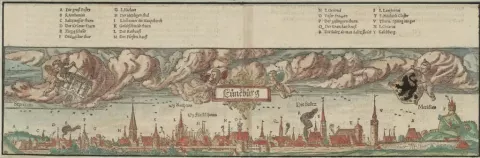
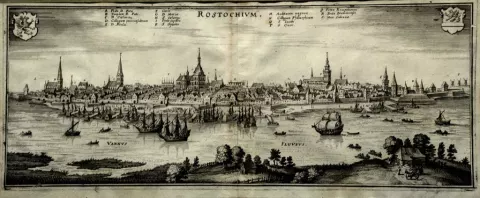
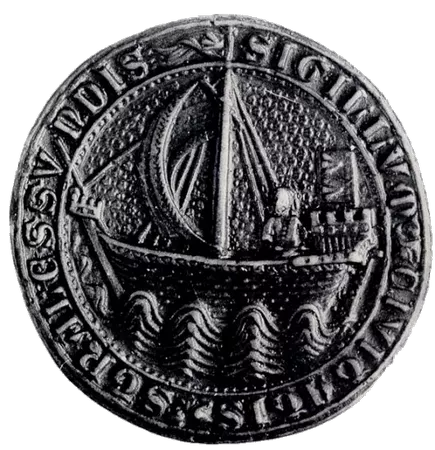
The Hanseatic League - Decline
Decline
A medieval ship flag captured from a Danish ship by forces from Lübeck in 1427 displaying the arms of Denmark, Sweden, Norway and Pomerania.
The reasons for decline of the Hanseatic League, which could be traced from the second half of the 15th century, lay in changing economic and political circumstances in the world. At the borders of Hanseatic commercial zone started to emerge powerful nation states – namely, the Polish-Lithuanian state (1386-1795) and the Kalmar Union (1397-1523) comprised of Denmark, Sweden and Norway. The centralized new governments preferred their indigenous merchants instead of those of Hansa. Furthermore, competition between the very Hanseatic towns became increasingly prevalent, additionally weakening the cohesion of the League.
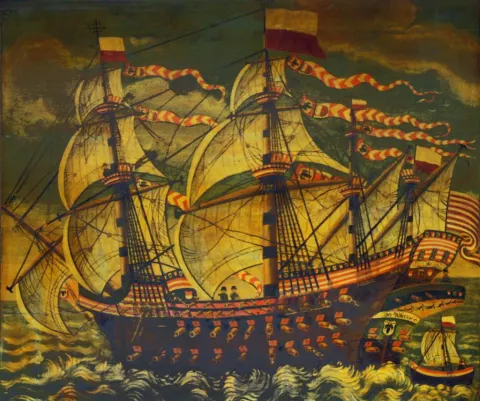
The “Adler von Lübeck” was a 16th-century warship of the Hanseatic city of Lübeck built during the Northern Seven Years' War.
Among the nations which were interested in the Baltic's lucrative trade, the Dutch were most successful in their attempts seriously undermining the formerly quasi-monopolistic position of the German merchants in the Baltic trade. The final blow to existence of the Hanseatic League, as it was the case with the Venetian Republic, occurred with the discovery of new continents. The transfer of economy and trading routes on Atlantic Ocean had a favorable impact on the economical rise of the Atlantic states – England, Holland, France, Spain and Portugal. From 1600 on, Hanseatic seaborne trade was confined to short relation between the Scandinavian and the southern Baltic ports, with only sporadic long-distance voyages to the Mediterranean.
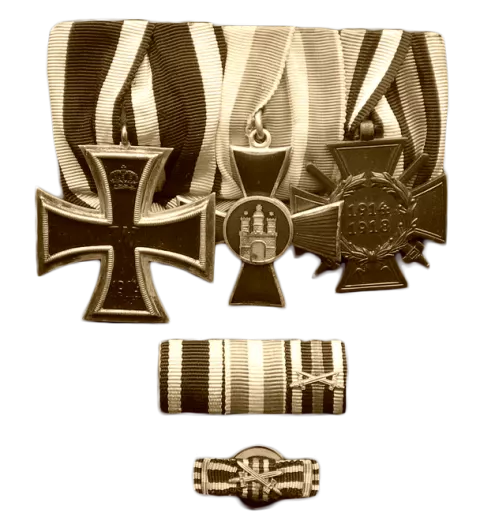
The memoirs of the Hanseatic League remained present in these areas long after its disappearance. In 1897, in Hamburg was established society called “Hanseatische Kolonisationsgesellschaft” with the purpose of carrying out the colonization in the south Brazilian state Santa Catarina. Also, during the First World War towns Lübeck, Bremen and Hamburg founded accolade “Hanseatenkreuz”, which was awarded for exceptionally meritorious service.
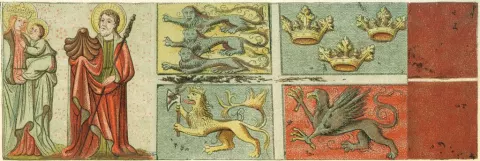
Hanseatic Merchant
Up to the 13th century, the average Hanseatic merchant was an itinerant trader as was every other in the Europe at the time that travelled in groups which provided protection from danger on land and at sea. He travelled abroad in company of his servants, where he exchanged his merchandise usually through barter and returned home to sell the goods he acquired abroad. Usually this itinerant merchant was illiterate and kept only rough accounts and used rudimentary commercial practices.
In the course of the 13th century, this travelling merchant was replaced by a sedentary one. A sedentary merchant now no longer accompanied his merchandise himself, but entrusted a clerk with this duty. As land and sea routes became safer, the clerk extended his traveling from local to long-distance trade.
From his home office, the sedentary merchant was able to conduct several enterprises at the same time in different areas through correspondence with his business associates or clerks in other Hansa towns or in the Kontore abroad.
His travels were limited mainly on important voyages to deal personally with important matters. The usual practice was to dispatch the goods, stamped with his own trade-mark and to entrust them to a clerk or to the captain of the cargo vessel. The goods dispatched were accepted at their destination by a representative or agent.
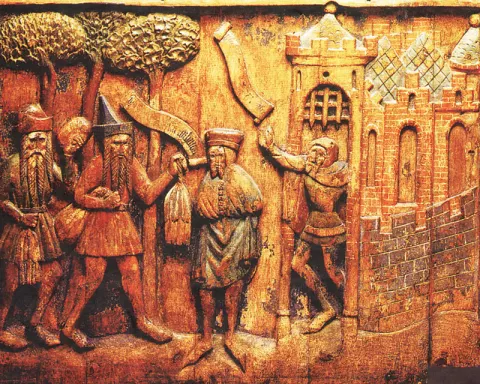
At the end of the 13th century occurred a great step forward when now literate merchants began to keep their municipal registers of debts and accounts as a common business practice. However, the sophisticated double entry bookkeeping remained unknown to the Hanseatic merchants until the 16 th century and they were not thrilled with the bill of exchange either. According to some theories, in this manner they wanted to keep foreigners from breaking into their trade.
Business practices
In running business the merchants of the Hanseatic League favored somewhat backward way of doing business compared to the Italian trading powers – they accompanied their merchandise and avoided bills of exchange and double entry-bookkeeping for a long time. For trading ventures they usually used different form of partnerships and commission trade. Commission trade or “sendeve” (meaning “goods sent out”) was by its features similar to the Italian “commenda” although it was not a business partnership, and it usually gave the clerk a fixed salary instead of chare in the profits. Furthermore, the clerk was not necessarily an employee of the master – he might be a correspondent, a citizen of another town who carried out the commission for free in exchange for similar service. The master entrusted his clerk with goods and detailed instructions or with money with which to buy goods. The agent was legally responsible for the merchandise, but if he acted for the best according to instructions, responsibility was entirely on the master.
Through partnerships the merchants were able to raise more capital and to divide the risks. Partnerships were known under various names, such as “vera societas” (“vrye selschop” or “kumpanie”) or “contrapositio” (“wedderlegginge”). In the first type, that resembled the “sendeve”, one partner provided capital while the other carried out the commercial operations. According to this arrangement profit and loss were shared equally, but in some cases the risks of the business was entirely covered by the sedentary partner.
The second type or “contrapositio” was the most common form of partnership. Each partner contributed with the share of capital, and one or two of them conducted the business as well. Profits were shared in proportion to the capital invested. In case of loss each partner was responsible only for the original amount invested. The partnership could be extended beyond the date fixed in the contract, until one of the partners wished to withdraw.
It is important to emphasize that Hanseatic merchants were unfamiliar with a large commercial firms such as those in Italy at that time at least until the 16th century. Also, since they did not have insurance policies the risk of loss they have reduced through the method of spreading cargo among a number of ships.
23 lives in this room
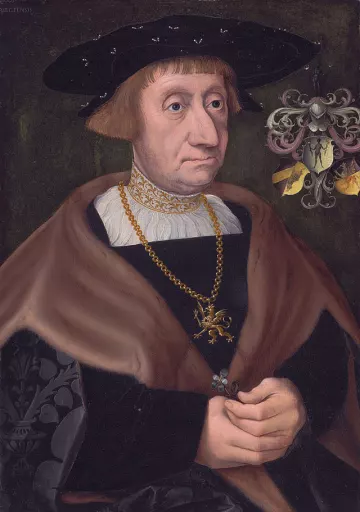 Mathias Mulichc. 1470-1528
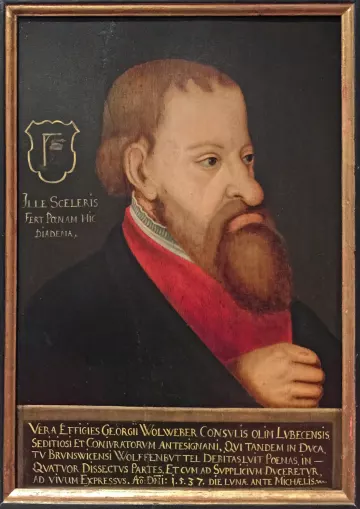 Jürgen Wullenweverc. 1492 – 1537
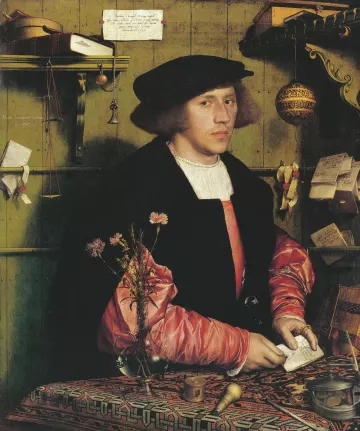 Georg Giese1497-1526
 Derich Bornc. 1509 - 1549
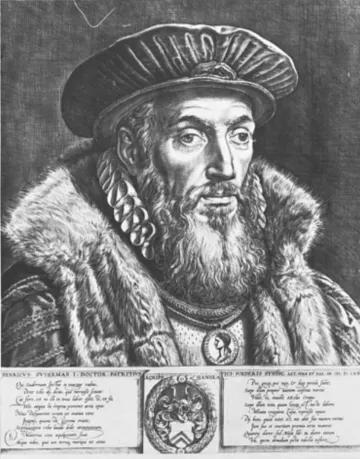 Heinrich Sudermann1520-1591
 Johann von Bodeck1555-1631
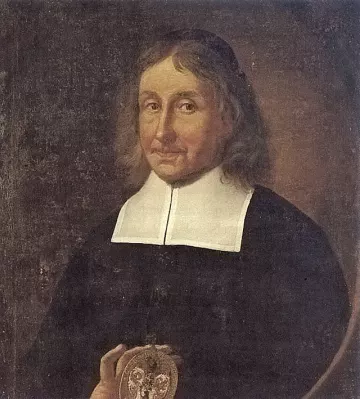 Cornelius Berenberg1634-1711
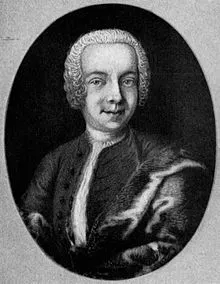 Johann Berenberg1718-1772
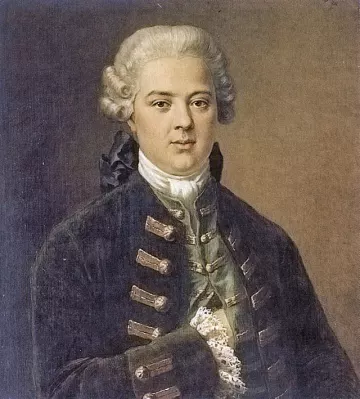 Johan Hinrich Gossler1738-1790
 Elisabeth Berenberg1749-1882
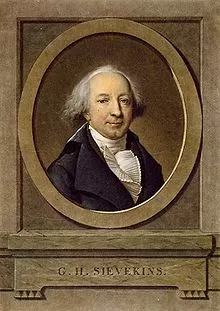 Georg Heinrich Sieveking1751 – 1799
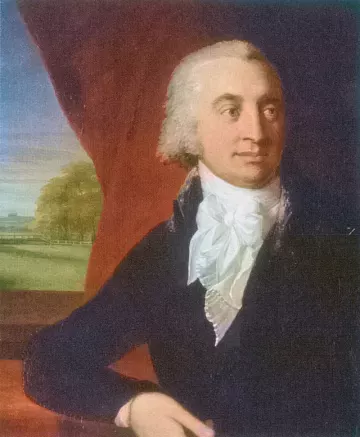 Caspar Voght1752-1839
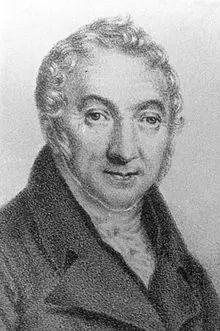 Ludwig Erdwin Seyler1758-1836
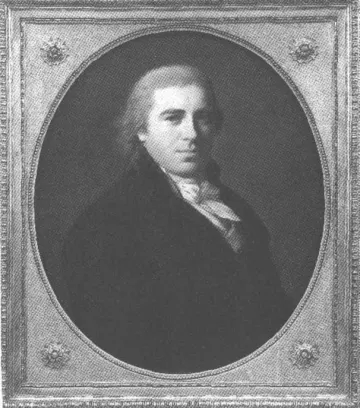 Judah Herz Beer1769-1825
More lives in this room
- Gertrud Morneweg d. 1301
- Hildebrand Verkinchusen c. 1370 - 1426
- Jácome de Bruges b. 1415
- Hinrich Castorp c. 1420-1488
- Affras Rachmaelovich 16th century
- Rudolf Berenberg 1680-1746
- Paul Berenberg 1716-1768
- Margaretha Donner 1726-1774
- Abel Seyler 1730 – 1801