Museum / Rooms / The Genizah Merchants
Room · 5 chapters · 18 lives
The Genizah Merchants
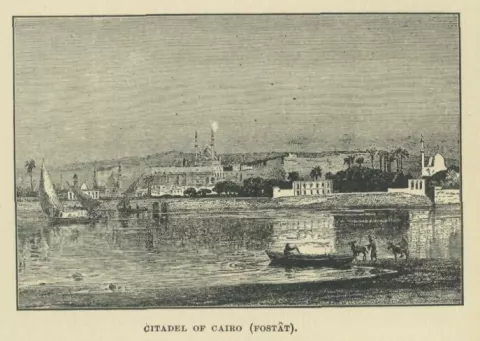
The Genizah Merchants refers to medieval Jewish merchant community in Fustat, now part of the modern city of Cairo, Egypt
Egypt and medieval trade
During the rule of Fatimid caliphate (10th-12th centuries) Egypt was the commercial hub of international trade between Europe and India. Eastern spices and luxury items travelled from India via Aden in Yemen and the Red Sea to Egypt, from where they were transshipped across the Mediterranean. Prominent place in the Fatimid trading pattern occupied the Jewish community of Fustat, a political center of the Caliphate.
What is genizah?
A genizah is a sacred repository in which the Jews deposited all written documents that contained the name of God before they were given a proper ritual burial in their cemeteries. Written documents that mention God were in Jewish culture treated with the same respect as human body.
Cairo Genizah
The Genizah merchants are known to us from the documents deposited at the genizah or storage room of the ancient Ben Ezra Synagogue in Fustat. Cairo Genizah documents contain a large amount of merchant letters which illuminates in detail trade routes, business methods, commodities and prices. The documents does not only provide information about commercial activity in Egypt, but, as Fustat Jewish merchants were prosperous long-distance traders, they provide information on commercial activities beyond Egypt, to Indian Ocean and across the Mediterranean.
Area of operation
Their priority concerns, such as the spice and flax trades, brought great wealth to the Nile region between the tenth and the thirteenth centuries. The Genizah merchants seem to have favored long-distance trade, and particularly maritime routes. They favored express travel, sailing on ships bound for the markets of greatest renown that skipped the lesser ones, although quite important such as Tripoli. Although Genizah merchants preferred the sea routes to those overland, some of them did, however, engaged in overland trade.
Reorientation
The rise of European presence in the Levant and protectionist policy of Muslim rulers brought an end to the period of great prosperity of the Genizah Merchants who, from the 13th century on, became more heavily concentrated on local Egyptian trade.
Trade between Europe and India was dominated by European demand for spices, perfumes, dyes, but also included pearls and gems, medicinal plants and drugs, metalwork, and textiles, ivory and exotic wood. In exchange, merchants heading East carried Mediterranean and Egyptian products such as textiles, glass, metal vessels and ornaments, paper and books, coral, oils, silks, and even various foodstuffs, as well as copious amounts of gold and silver.
Cairo Genizah documents provide a millennium of continuous historical sources of Middle-Eastern history and comprise the largest and most diverse collection of medieval manuscripts in the world.
The Genizah merchants were not usually specialized in West or East trade, they operated on several fronts, spreading their portfolio widely.
Chapters
- Cairo Genizah
- The mercantile community of Cairo Genizah
- Long distance trade
- Partnerships
- Decline of the Genizah Merchants
Cairo Genizah
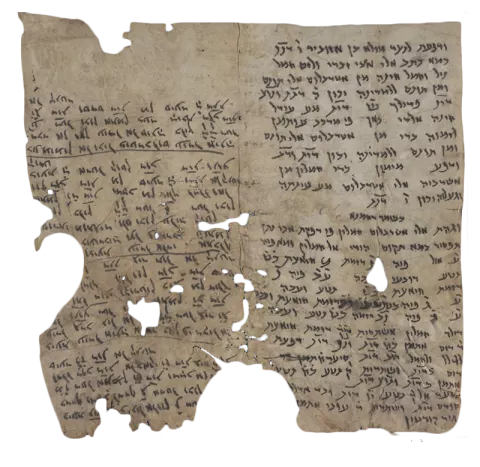
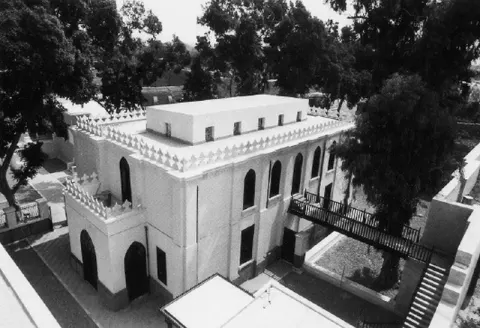
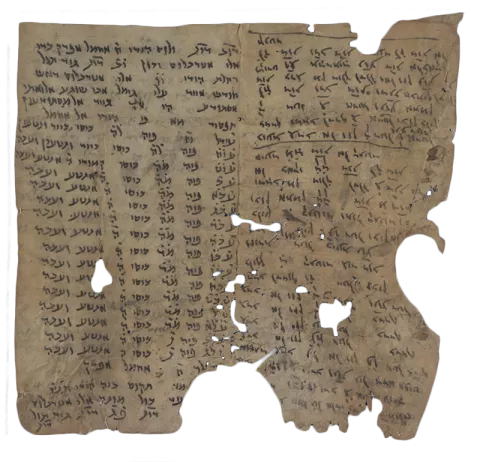
The Cairo Genizah refers to documents found in the genizah or storage room of the ancient Ben Ezra Synagogue in Fustat, now part of the modern city of Cairo, Egypt. A genizah is a sacred storeroom, inside a synagogue or can be standalone building, for the interment of old Jewish writings, which, because they contain names of God or use the sacred Hebrew alphabet, cannot be simply discarded. Documents are provisionally stored in the genizah prior to proper cemetery burial. The genizah of the Ben Ezra Synagogue was placed in its attic and the Jewish community of Fustat (Old Cairo) stored their documents in it for more than 1,000 years until they were (re)discovered by scholars in the late 19th century and dispersed around the world. They provide a millennium of continuous historical sources of Middle-Eastern history and comprise the largest and most diverse collection of medieval manuscripts in the world.
According to estimates there are some 350,000 fragments written on papyrus, vellum, or paper to be found in public collections worldwide.
Simon von Geldern, German poet traveler and book dealer, appears to be the first modern visitor to Cairo Genizah in 1753, as he mentioned it in his 1773 book, The Israelites on Mount Horeb. Von Geldern did not examine its contents because of the local superstition that claimed disaster would befall anyone who touched the sacred pages. The legend protected the documents from inquisitive travelers, up to one point, but the dark, sealed room and the arid Egyptian climate contributed to the preservation of the documents.
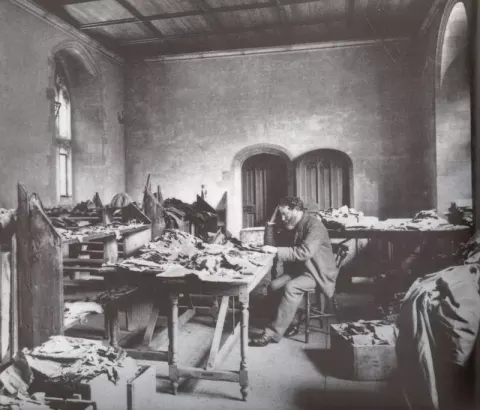
Solomon Schechter studying documents from the Cairo Genizah, c. 1895.
By the late 19th century local dealers in antiquities began the clandestine task of removing certain fragments from their old hiding place. The importance of the Cairo Genizah became apparent in 1896, when the English travelers, the twin sisters Agnes S. Lewis and Margaret D. Gibson returned from Egypt with fragments from the Geniza they considered to be of interest, and showed them to Solomon Schechter at Cambridge University. The fragments proved to be the earliest known Hebrew writings of the “Book of Wisdom”, ascribed to Ben Sira, which became part of the biblical cannon (Ecclesiastics) when translated into Greek. In the late 1896 Schechter led an expedition to Cairo, where, with communal assistance, he found the legendary Genizah hidden in a sealed room on the roof of the Ben Ezra Synagogue. After obtaining the permission of the synagogue officials to empty the Genizah, Schechter shipped the bulk of the Genizah's contents, over 140,000 documents, to Cambridge for further research.
Given the length of time during which documents were collected and various languages they were written, especially Hebrew, Arabic and Aramaic, they provide scholars with priceless information on linguistic, religious and historical maters. Today the bulk of Genizah’s documents are available at Cambridge University Library and at the Jewish Theological Seminary in New York. Smaller collections are to be found in university library collections across the globe, among them London, Oxford, Manchester, Paris, Geneva, Vienna, Budapest, St Petersburg, New York, Philadelphia, Washington and Jerusalem; some are housed in private collections. There is also The Friedberg Genizah Project, which is aimed at digitizing the entire corpus of manuscripts discovered in the Genizah.
The mercantile community of Cairo Genizah
Cairo Genizah documents contain a large amount of merchant letters which illuminates in detail trade routes, business methods, commodities and prices. The documents does not only provides information about commercial activity in Egypt, but, as Fustat Jewish merchants were prosperous long-distance traders, they provide information on commercial activities beyond Egypt, to Yemen, India, Sicily, Tunisia and elsewhere.
The mercantile community discovered by the Genizah letters was the Jews of the Ben Ezra synagogue who were Rabbanite, or orthodox, Jews of Palestinian rite. One of their distinctiveness in business is that they steered away from a wide range of business enterprises which other Egyptians — Karaites, “Babylonian Jews”, Copts, Muslims — must have handled. They were little involved in the grain trade, or in trade in Morocco, the Spanish Levant, southern France and Byzantium. In those areas the “Babylonian” Jews, whose liturgy was generally used in Spain, may have been much more active. The Genizah merchants stood at the center of the economic organization of Egypt and the Islamic world. Their priority concerns, such as the spice and flax trades, brought great wealth to the Nile region between the tenth and the thirteenth centuries. They acted as the middlemen who were central in transfer of eastern spices and luxury items through Arab countries to the Christian West.
Genizah merchants were active both in the transit trade through Egypt and in the supply to Egypt of items required by domestic consumers. Another important part of their trade was export of Egyptian industrial produce, most notably cotton cloth and processed and unprocessed flax. Genizah merchants were involved in all stages of flax production; from the examination of the crop and its handling in the Egyptian countryside, via the sale of flax in Tunisia and Sicily, to the retailing of finished linen goods. There was also a mixed weave of linen and cotton that became known throughout the Mediterranean as “cloth of Fustat” — that is, “fustian”. Another activity linked with textile industry was production of paper from cotton-rags and its selling to Tunisia and Genoa.
Long distance trade
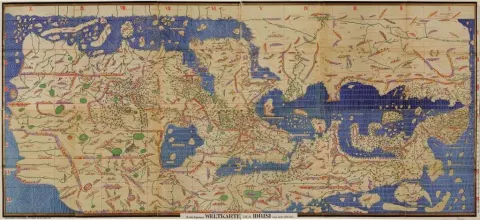
World as it was seen in the 12th century. The modern copy of the Tabula Rogeriana, upside-down with North oriented up. The Tabula Rogeriana, an early world map was drawn by Muhammad al-Idrisi for Roger II of Sicily in 1154.
The Genizah merchants seem to have favored long-distance trade, and particularly maritime routes. In their trade prominent place is occupied by mayor shipping routes linking Egypt to Tunisia, Sicily and the coast of Syria. These mayor routes were linked by shorter sea routes, connecting the major Mediterranean ports to subordinate outlets. Also, a large network of land routes ran all along the coast of North Africa and far into the Saharan interior. As the principal point of interchange stood the city of al-Mahdiyyah (Mahdia) in Tunisia. In 920, the city was established as a political and commercial center by Fatimid Caliph Abdallah al-Mahdi (r. 909-934). Mahdia soon seized primacy from Qayrawan, but succumb to Tunis in the 12th century. Other Tunisian towns, such as Sfax, channeled their major sea-bound trade through it, although smaller ports were also visited. Genizah merchants probably found it easier and more practical to trade in major ports such as Mahdia. There they could expect to find the whole range of North African products such as oil, textiles, coral, raw fibers; it also made it convenient to compare the quality of goods from a variety of sources.
The business habits of Genizah merchants make them a sort of aristocrats of commerce. They favored express travel, sailing on ships bound for the markets of greatest renown that skipped the lesser ones, although quite important such as Tripoli. One of such direct route was the one from Alexandria to Béjaïa in Algeria. The northern routes of Genizah merchants led to Constantinople, along the coast of Syria and Anatolia. It seems that the ports of Palestine were skirted, though about fourteen Syrian ports appear in the Genizah letters, including Laodicea, Tyre, Acre and Ascalon.
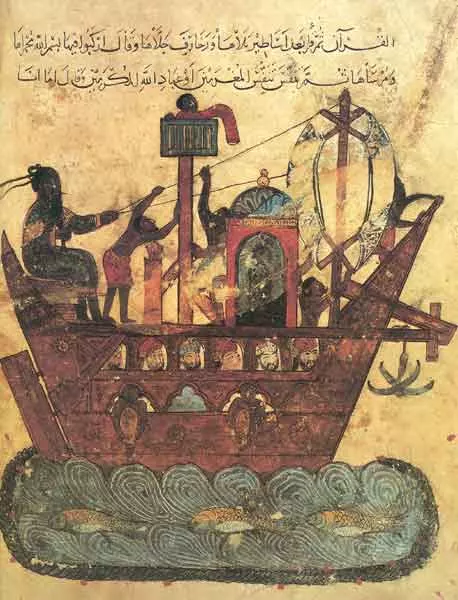
The Genizah merchants also traded to the Red Sea and India. The role of Tunisia for the merchants trading to the West, was fulfilled by Yemen to merchants trading to the East; it was the point of concentration for those looking towards India. The principal port in Yemen was Aden. Goods from the East arrived via Aden at the port of Aydhab on the Red Sea Coast of Egypt from where they were transported overland to Qus where it were loaded on Nile boats for the trip to Fustat and further away. The trade with the East was thought as more perilous then with the West and merchants trading on this route were considered as more venturesome. Interestingly there was a tendency for merchants facing bankruptcy to flee to the Red Sea port of Aydhab, where they were less likely to be found than in the Mediterranean.
However, the Genizah merchants were not usually specialized in West or East trade, they operated on several fronts, spreading their portfolio widely. The merchants of Cairo Genizah tied together the Indian Ocean trade routes and the Mediterranean ones. For illustration there is a good example to be made with the case of Nahray b. Nissim (fl. 1045-1096) who exported flax from Egypt to Sicily and Tunisia, imported silk from Sicily and Spain, brought lacquer, indigo and brazilwood from the Far East for export westwards, and handled precious stones (turquoises, pearls, tortoise-shell), many of which had an eastern origin.
Although Genizah merchants preferred the sea routes to those overland, some of them did, however, engaged in overland trade. This practice was particularly adopted after the Italian merchants took over the Mediterranean trade. One of the important land routes was from Fustat to Aydhab on the Red Sea. Another land route connected Egypt to Tripolitania, Tunisia and — ultimately — Morocco. Merchant traveling along this route would visit and conduct business in many small towns along the route. Merchants doing business over land routes would travel in caravans, leaving one and joining another along the way. This method of travel was essential if a merchant was to reach lesser centers, off the main trade routes. It is no wonder the merchants of Genizah preferred the sea routes. Land routes were more dangerous, travel was slow and it was hard to predict the dates of arrivals, and, for Jews, there were problems in travelling on the Sabbath which did not really apply on board ship. Other routes in use were those of inland waterways. The Nile acted as a channel for the transfer of eastern goods to the markets of the Mediterranean, but the catch was that it was more suitable for taxation by the government then land or sea routes.
Partnerships
A lone merchant was a rarity. Merchants tended to form short-terms partnerships, often for the length of specific commercial venture. Also, Jewish merchants tended to follow Muslim practices when entering partnerships. Partnerships were usually based on Islamic “qirad” or “mudāraba”, where one partner provided capital and the other one personal effort. The financier is known as “rabb al-māl” and the worker or entrepreneur as “mudārib”. In this kind of contract the loss is borne only by the owner of the capital, in which case the entrepreneur gets nothing for his labor. In the parlance of the Jewish courts this arrangement was called “qirad al-gōyīm” “mutual law according to Muslim law” and was differentiated from the “qirad betōrat ‘isqā”, the Jewish partnership, in which the worker received two-thirds of the profits but was also responsible for losses.
The ‘isqā form was less practiced since the merchant who invested work but no capital often did not have much money and consequently his responsibility was of only limited value. There was another form called shirka, partnership in the strict sense of the word, a contracts in which a number of partners placed different shares, distributing eventual profits on the basis of labor provided and capital invested.
Partnerships were formed between members of the same community, family, foreign Jews and Muslims. However, the business contracts between the members of the same family were preferred. There was the issue of trust and some of the successful Jewish merchants had relatives scattered throughout the Islamic world.
Decline of the Genizah Merchants
The specialization in eastern trade is connected with gradual decline of the Genizah merchants. The merchants from Islamic world, Fustat Jews included, dominated the trade routes of both the Mediterranean and the Indian Ocean. As the Italians gained the upper hand in Mediterranean trade routes Fustat Jews turned more to trade in Indian Ocean. Europeans also started to show interest in trade with the East to such an extent that it posed a threat to Muslim trade. This kind of development had encouraged Saladin (r. 1174-1193) to introduce protectionist policies aimed at preventing Europeans from penetrating the Red Sea and Arabian Gulf ports, thus securing the route for Muslim merchants.
Protectionists’ policies encouraged the rise of the Karimi merchants who came to dominate the route between Egypt and the Far East. They were granted extensive political favors against which Fustat Jews possessed little leverage, and were thus,
obliged to concentrate more heavily on local Egyptian trade. The large mercantile world stretching from Andalusia to the Indies largely disappear from the Genizah, after about 1200, compared to the vast mass of mercantile correspondence which can be dated between the tenth and late twelfth centuries.
18 lives in this room
More lives in this room
- Manasseh ben Abraham Ibn Qazzāz 950
- Abu Ali Jepheth ibn Bundār Ḥasan 11th century
- Judah ben Joseph of Kairouan late 10th – early 11th century
- Nahrai ben Nissim 11th century
- Wuhsha of Egypt 11th–12th century
- Ḥalfon ben Nethanel Ha-Levi Abu Saīʿd 12th century
- Madmun ben-Japheth ben-Bundar d. 1151
- Kamāl al-Dīn 14th – 15th century
- Zakī al-Dīn Abū Bakr 14th century
- Badr al-Dīn Muḥammad b. Muḥammad died 1361
- Ṣalāḥ al-Dīn Aḥmad b. Muḥammad died 1368
- Nāṣir al-Dīn Muḥammad Ibn Musallam died 1374
- Nūr al-Dīn ʿAlī al-Kharrūbī died 1400
- Burhan al-Din Ibrahim al-Mahalli died 1403
- Sirāj al-Dīn ʿUmar b. ʿAbd al-ʿAzīz died 1422
- Fakhr al-Dīn Sulaymān al-Kharrūbī died 1460
- Isaac Sholal d. 1524
- Simon von Geldern 1720–1788