Museum / Rooms / The Canton Trade System
Room · 5 chapters · 36 lives
The Canton Trade System
Introduction to China trade
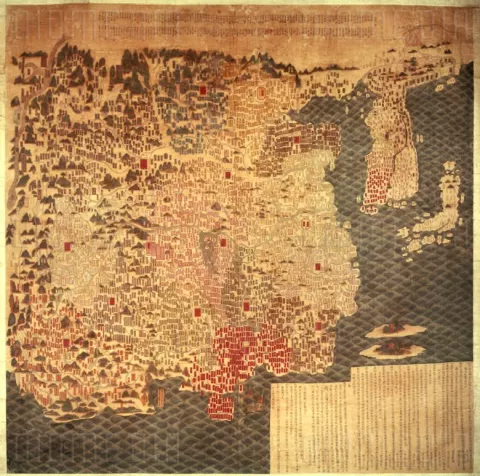
Since ancient times, China has been a part of the distinctive cultural and economic network that linked the Far East with the western parts of the world. Oriental luxury commodities were highly prized items on the West where they had a function of a status symbol and reflected material and social standard of the highest social classes.
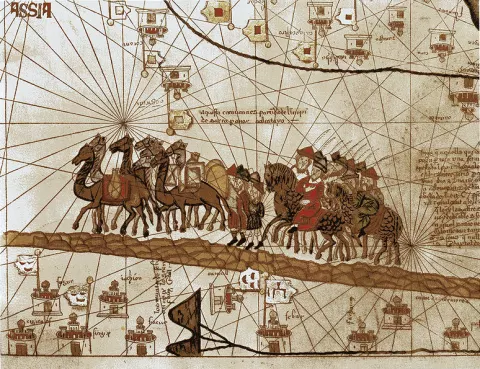
For centuries camel caravans were a commonplace on the paths of Central Eurasia carrying silk, tea and porcelain on the West, and returning with wools, gold and silver. When with time this overland route became inadequate, the Europeans invented new patterns in order to continue this enormously lucrative business. Consequences for the world economy would be enormous and profound.
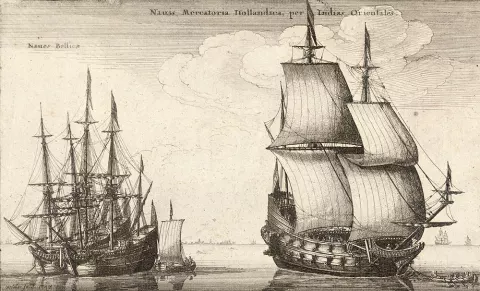
Efforts to find a more suitable way to conduct trade with East by sea, caused the emergence of the age of exploration and subsequent creation of the first genuine global economy in world history. To increase their prospects in Asian trade, which was dominated by Arabs, Indians, Malays and Chinese, the Europeans formed joint stock trading companies with monopoly privileges and fostered technological development. East Indiamen, engaged in trade with East, were the largest merchant ships ever built. At its peak in the 19th century, they were 40 to 50 meters long and had a capacity of 100 to 1400 tons.
China which was economically powerful and culturally advanced civilization conducted an isolationistic foreign policy. Although the Chinese emperor had great benefits of this trade, he was still very cautious about foreigners and their possible impact on internal state affairs. Thus, international trade between East and West was possible only under strict government control and at a limited area. Between 1757 and 1842 this trade was limited to Canton, also known as Guangzhou, and thus the trading system which existed between China and Western countries during this period is called the “Canton system”.
Canton
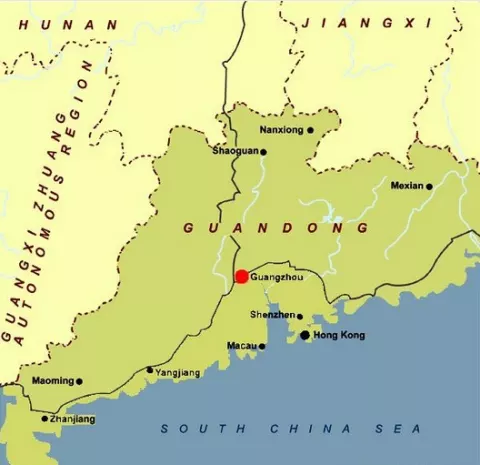
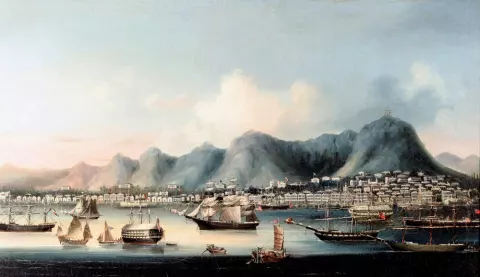
For centuries before the arrival of Europeans, Canton, also known as Guangzhou, had a reputation of a vivid trading center and the major southern port. Its favorable natural location provided an ideal strategic features for conduct of safe and highly regulated international trade.
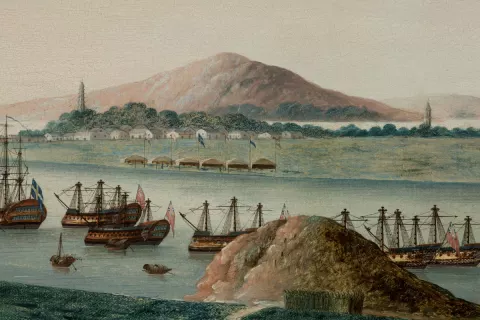
The South China coast could be reached by Europeans only seasonally – from June to September when the monsoon winds blew southwestward and enabled the European ships to cross the Arabian Sea, Indian Ocean and South China Sea. Eventually the ships also began to use another route by going east of the Philippines and were able to sail during the whole year.
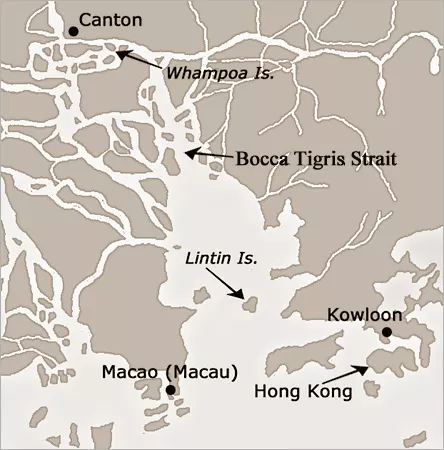
Placed on the Pearl River (Zhujiang) which was characterized by numerous islands and shallow waters, Canton could be reached exclusively with the help of skilled Chinese pilots who were familiar with the river and knew how to avoid shipwrecks caused by dangerous eddies and tides. All pilots were in government service.
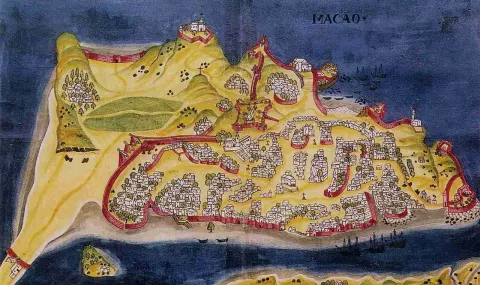
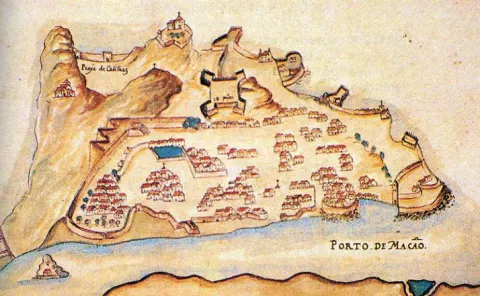
The starting point was Macau, the colony at the mouth of the river which was granted to the Portuguese in 1557. It prospered during the 16th and 17th century, but its relevance decreased as the Canton system emerged. However, it remained the Portuguese property until 1999. Under the guidance of Chinese pilots, foreign ships sailed 40 miles to Bocca Tigris (Humen), the estuary of the river that was guarded by two forts and could be passed only with a license. The next checkpoint was the anchorage at Whampoa, 10 miles away, where the ships’ cargo was unloaded to small Chinese boats, “sampans”. Sampans carried goods to Canton, which was 10-16 miles up the river, while the ships remained there.
For the next four months, the European traders stayed in Canton and managed their business waiting for the beginning of the monsoon season in January. Using this northeast wind the foreign ships loaded with precious cargoes left Canton with the help of pilots and headed back to India or Europe.
The merchants who managed to overcome all the perils on the way – typhoons, pirate attacks, and diseases, earned an enormous profit as one voyage could reach as much as 400 to 500 percent profits.
Merchants
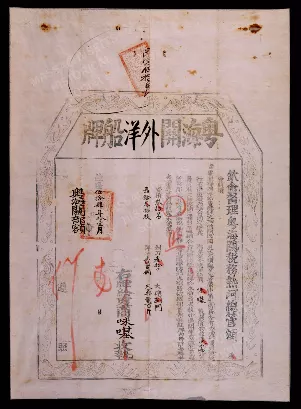
Foreign traders who resided in Canton during the four month business season were subjugated to numerous regulations and restrictions. These were proscribed by Chinese government and supervised in the smallest details by its officials.
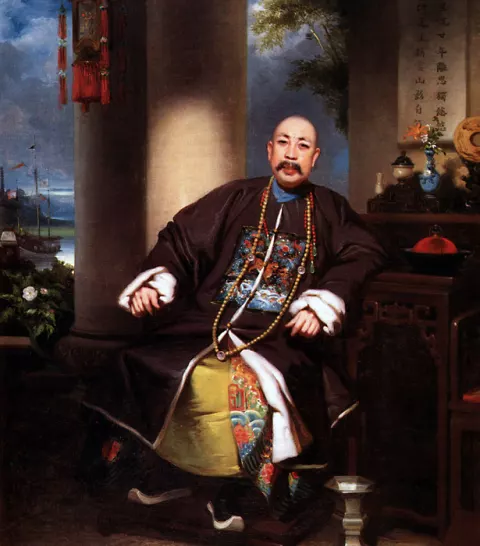
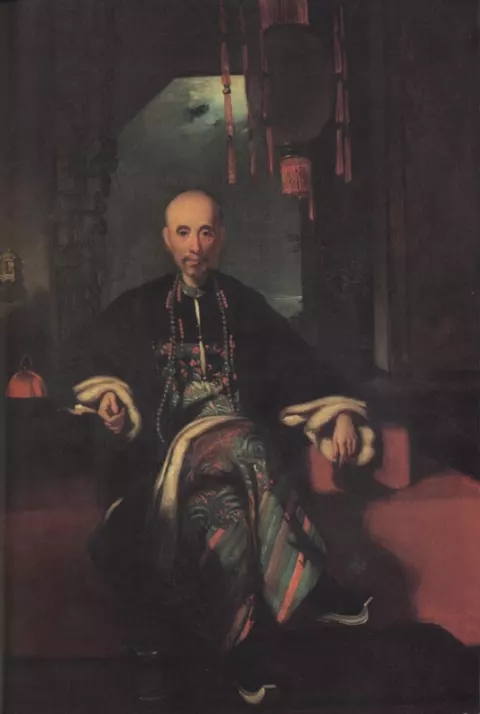
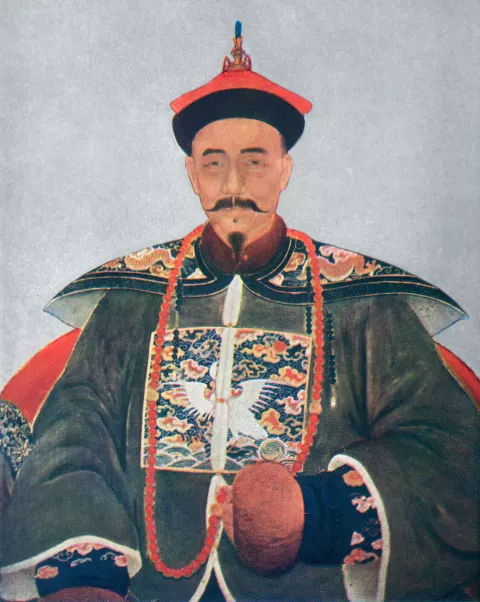
The great risks and profits allowed only to small number of wealthy and affluent merchants from both sides to participate in this business. On the Chinese side, exclusively a special guild of Chinese merchants named “Co-hong” had the monopoly privileges to trade with foreign businessmen. To acquire this privilege, they had to pay a large sum of money to the court and agree to take responsibility for any debts inflicted by foreign traders. Only then were they free to access to the international trade and to reap huge profits. Some of the richest traders like Puankhequa (Pan Chencheng), Mowqua (Lu Guangheng) and Howqua (Wu Bingjian) owned wealth that was competitive on a global scale.
Although the Chinese government was virtually standing aside, it was not indifferent to the fortune that flowed from this trade to the state treasury. The specially designated function of “hoppo” or superintendent of maritime customs was introduced by the state to collect these duties on the foreign trade and sent them to the imperial household.
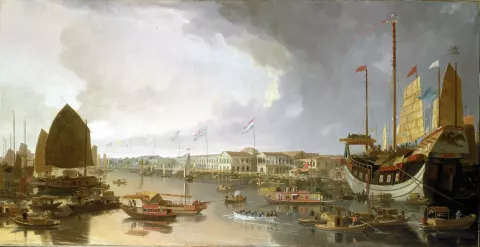
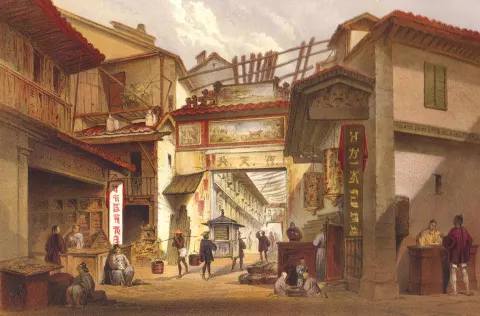
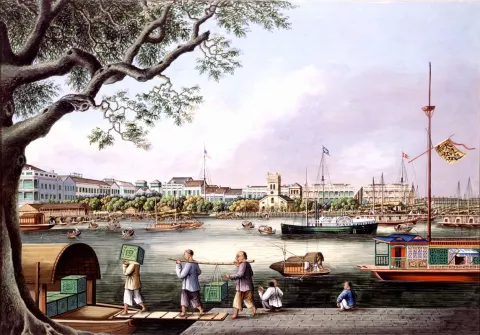
While staying in Canton, the foreign merchants, called “daban” (“supercargos”) were confined to separate quarter of the city, a kind of ghetto, at the riverbank.
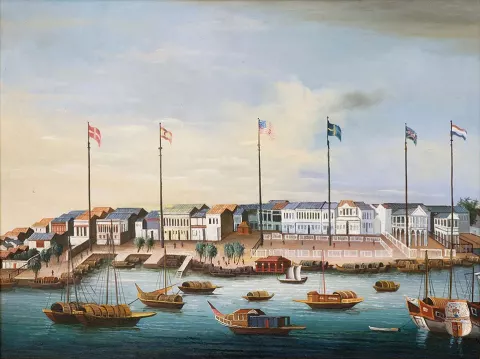
They dwelled in “factories” which included living quarters, warehouses and offices for running a business. These structures were named after the older English world “factor” indicating “commercial agent”, and were not manufacturing facilities as it could be concluded. Each factory had a distinctive national flag - British, Austrian, Danish, Dutch, Spanish, Swedish, American… . The entire quarter was named “Thirteen factories” or “hongs”.
They had limited freedom of movement, social contacts with natives and access to women. Despite this conditions, the number of entrepreneurs dwelling in Canton increased in one century from a few thousand to tens of thousands.
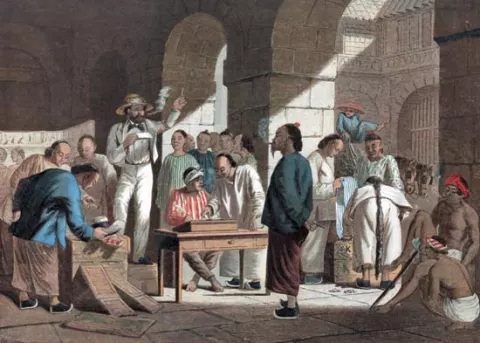
In operating a business, the Westerners were highly dependent on intermediaries. Particularly significant were “compradors” or Chinese licensed merchants who took charge of provisioning factories and ships of respective trading company. They also organized for the company the entire voyage from Macao to Canton and backward, taking care of official permits (“chops”), pilots, and supplies. In the out of season period, they took care of company’s factory.
Since foreign visitors were forbidden to learn Chinese, in communication with Chinese merchants and officials they relied on services of linguists or Chinese interpreters. After 1730s the Pidgin English was developed as a business language to facilitate this intercultural communication.
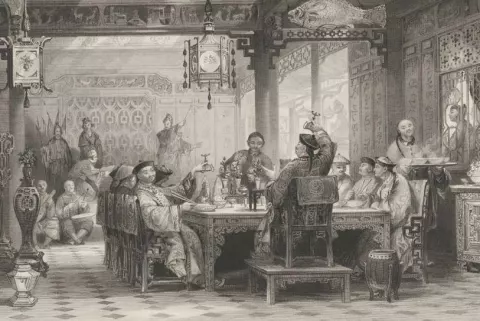
Despite cultural and legal restrictions, the western and Chinese businessmen developed and cultivated relationship full of respect. William Hunter, a young American, mentioned banquets for the foreigners organized by the hong merchants at their country estates where delicacies like bird’s nest soup with sea cucumber, shark fins, roasted snails, and rice wine were served in small silver or porcelain cups to their foreign guests.
Commodities
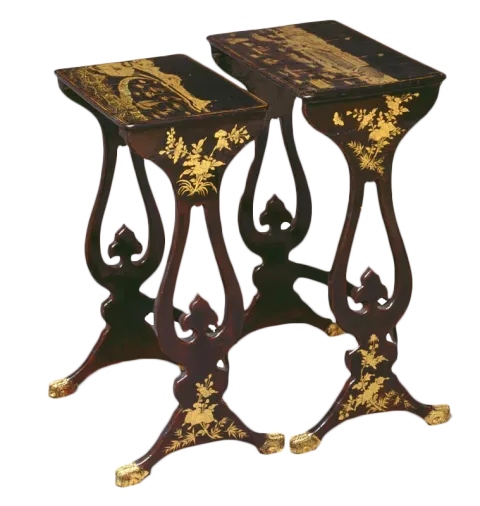
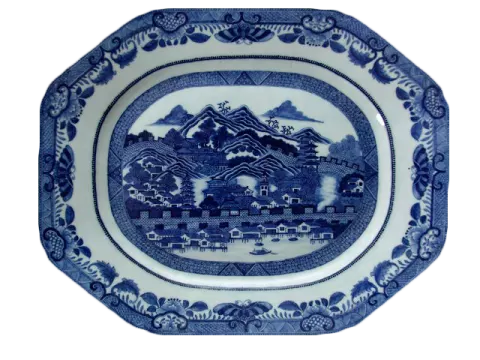
The mainstay of China trade represented tea, silk and porcelains, while the more luxury items included fine porcelain, figurines and furniture decorated specifically for western taste. Until the mid-18th century the main export product was tea, a favorite import of the West. Beginning in the 17th century millions of pounds of tea were exported annually. In the 1760 about 20 ships per year visited China, but by the 1840s there were over 300 per year.
Europeans were paying these commodities with silver that came from the New World since they lacked commodities of equal value. The fact that they had no equivalent goods to offer in return would cause large problems when supplies of silver began to decline.
As amounts of silver began to drain, the English began to look for goods to meet the Chinese taste and balance the trade again. Wool was unsuitable for that climate and raw cotton from India, sandalwood, elephant's teeth, beeswax, pepper and tin were insufficient. Americans, who entered the China trade in 1780s as private traders faced the same problems. Furs were selling slowly, although they managed to achieve some success by exporting ginseng, a popular medicinal root and beche-de-mer or sea cucumber which is regarded a delicacy in China.
Unwilling to give up this lucrative business, the Westerners continued to search for commodity that the Chinese wanted to buy. This is the way how the opium entered the Chinese history. It marked the beginning of the end of China’s economic dominance in international relations. Since opium created addiction, there was a steady demand among Chinese for this commodity. By the end of the 18th century, the English emerged as the leading drug suppliers of the Chinese market. They established a monopoly and developed opium plantations in Bengal where they found methods of growing opium poppies cheaply and abundantly. Americans joined this lucrative business and imported opium from Turkey and India. As it was illegal for the English East Company to deal in opium, this trade was carried by private English traders and Americans, and was based on smuggling. For private traders, opium imports in 1828 were worth 11.2 million dollars, or 72 % of total trade.
The high profits stimulated innovations and advances in naval technology, like the tea and opium clipper ships. The consumers wanted commodity as fresh as possible and fast ships with smaller cargo space were developed in the United States for transport of tea and smuggling of opium since they could outran the Chinese junks. At its peak, around mid-19th century the opium imports reached 50,000 to 60,000 chests a year (1 chest weighted around 140 pounds or 63,5 kg), and they continued to increase in the next three decades.
And while western business flourished, China was falling in the serious economic and social difficulties, which made the conflict inevitable.
Decline
The collapse of Canton trade system marked the end of Chinese control over the international trade with the West. Two factors significantly contributed to this downfall. The first was opium which the western powers introduced in exchange system to compensate for the lack of other commodities. The second was naval technology and emergence of steam-powered vessels in 1830s which could quickly, without Chinese interference, move into shallow waters, thus destroying the system of controlled trade.
The efforts of the Chinese government to terminate the opium trade resulted in two armed conflicts between China and the Western powers, better known in history as the Opium Wars (1839-1842, 1856-1860). China lost both wars and was forced not only to legalize opium imports against which it had fought, but also to open new ports to trade and agree to a low fixed tariff. Therefore, long struggle of Westerners to enter the wider Chinese market was won and the Canton system was terminated.
Although Canton remained an important harbor by the late 1850s, competition of Hong Kong and Shangai, which emerged as the centers of China’s international trade dominated by British colonialism, reduced its importance.
Chapters
Introduction to China trade
Since ancient times, China has been a part of the distinctive cultural and economic network that linked the Far East with the western parts of the world. Oriental luxury commodities were highly prized items on the West where they had a function of a status symbol and reflected material and social standard of the highest social classes.
For centuries camel caravans were a commonplace on the paths of Central Eurasia carrying silk, tea and porcelain on the West, and returning with wools, gold and silver. When with time this overland route became inadequate, the Europeans invented new patterns in order to continue this enormously lucrative business. Consequences for the world economy would be enormous and profound.
Efforts to find a more suitable way to conduct trade with East by sea, caused the emergence of the Age of exploration and subsequent creation of the first genuine global economy in world history. To increase their prospects in Asian trade, which was dominated by Arabs, Indians, Malays and Chinese, the Europeans formed joint stock trading companies with monopoly privileges and fostered technological development. East Indiamen, engaged in trade with East, were the largest merchant ships ever built. At its peak in the 19th century, they were 40 to 50 meters long and had a capacity of 1100 to 1400 tons.
In that time, China which was economically powerful and culturally advanced civilization conducted an isolationistic foreign policy. Although the Chinese emperor had great benefits of this trade, he was still very cautious about foreigners and their possible impact on internal state affairs. Thus, international trade between East and West was possible only under strict government control and at a limited area. Between 1757 and 1842 this trade was limited to Canton, also known as Guangzhou, and thus the trading system which existed between China and Western countries during this period is called the “Canton system”.
Canton
For centuries before the arrival of the Europeans, Canton, also known as Guangzhou, had a reputation of a vivid trading center and the major southern port. Its favorable natural location provided an ideal strategic features for conduct of safe and highly regulated international trade.
The South China coast could be reached by the Europeans only seasonally – from June to September when the monsoon winds blew southwestward and enabled the European ships to cross the Arabian Sea, Indian Ocean and South China Sea. Eventually the ships also began to use another route by going east of the Philippines and were able to sail during the whole year.
Placed on the Pearl River (Zhujiang) which was characterized by numerous islands and shallow waters, Canton could be reached exclusively with the help of skilled Chinese pilots who were familiar with the river and knew how to avoid shipwrecks caused by dangerous eddies and tides. All pilots were in government service.
The starting point was Macau, the colony at the mouth of the river which was granted to the Portuguese in 1557. It prospered during the 16th and 17th century, but its relevance decreased as the Canton system emerged. However, it remained Portuguese property until 1999. Under the guidance of Chinese pilots, foreign ships sailed 40 miles to Bocca Tigris (Humen), the narrow strait of the river that was guarded by two forts and could be passed only with a license. The next checkpoint was the anchorage at Whampoa, 10 miles away, where the ships’ cargo was unloaded to small Chinese boats, “sampans”. Sampans carried goods to Canton, which was 10-16 miles up the river, while the ships remained there.
For the next four months, the European traders stayed in Canton and managed their business waiting for the beginning of the monsoon season in January. Using this northeast wind the foreign ships loaded with precious cargoes left Canton with the help of pilots and headed back to India or Europe.
The merchants who managed to overcome all the perils on the way – typhoons, pirate attacks, and diseases, earned an enormous profit as one voyage could reach as much as 400 to 500 percent profits.
Merchants
Foreign traders who resided in Canton during the four month business season were subjugated to numerous regulations and restrictions. These were proscribed by Chinese government and supervised in the smallest details by its officials.
The great risks and profits allowed only to small number of wealthy and affluent merchants from both sides to participate in this business. On the Chinese side, exclusively a special guild of Chinese merchants named “Co-hong” had the monopoly privileges to trade with foreign businessmen. To acquire this privilege, they had to pay a large sum of money to the court and agree to take responsibility for any debts inflicted by foreign traders. Only then were they free to access to the international trade and to reap huge profits. Some of the richest traders like Puankhequa (Pan Chencheng), Mowqua (Lu Guangheng) and Howqua (Wu Bingjian) owned wealth that was competitive on a global scale.
Howqua (Wu Bingjian)a leading merchant in Canton, was one of the richest men in the world in the early 19th century.
Although the Chinese government was virtually standing aside, it was not indifferent to the fortune that flowed from this trade to the state treasury. The specially designated function of “hoppo” or superintendent of maritime customs was introduced by the state to collect these duties on the foreign trade and to send them to the imperial household.
While staying in Canton, the foreign merchants, called “daban” (“supercargos”) were confined to separate quarter of the city, a kind of ghetto, at the riverbank. They dwelled in “factories” which included living quarters, warehouses and offices for running a business. These structures were named after the older English world “factor” indicating “commercial agent”, and were not manufacturing facilities as it could be concluded. Each factory had a distinctive national flag - British, Austrian, Danish, Dutch, Spanish, Swedish, American… . The entire quarter was named “Thirteen factories” or “hongs”.
They had limited freedom of movement, social contacts with natives and access to women. Despite this conditions, the number of entrepreneurs dwelling in Canton increased in one century from a few thousand to tens of thousands.
In operating a business, the Westerners were highly dependent on intermediaries. Particularly significant were “compradors” or Chinese licensed merchants who took charge of provisioning factories and ships of respective trading company. They also organized for the company the entire voyage from Macao to Canton and backward, taking care of official permits (“chops”), pilots, and supplies. In the out of season period, they took care of company’s factory.
Since foreign visitors were forbidden to learn Chinese, in communication with Chinese merchants and officials they relied on services of linguists or Chinese interpreters. After 1730s the Pidgin English was developed as a business language to facilitate this intercultural communication.
Despite cultural and legal restrictions, the western and Chinese businessmen developed and cultivated relationship full of respect. William Hunter, a young American, mentioned banquets for the foreigners organized by the hong merchants at their country estates where delicacies like bird’s nest soup with sea cucumber, shark fins, roasted snails, and rice wine were served in small silver or porcelain cups to their foreign guests.
Commodities
The mainstay of China trade represented tea, silk and porcelains, while the more luxury items included fine porcelain, figurines and furniture decorated specifically for western taste. Until the mid-18th century the main export product was tea, a favorite import of the West. In the 1760 about 20 ships per year visited China, but by the 1840s there were over 300 per year.
The Europeans were paying these commodities with silver that came from the New World since they lacked commodities of equal value. The fact that they had no equivalent goods to offer in return would cause large problems when supplies of silver began to decline.
As amounts of silver began to drain, the English began to look for goods to meet the Chinese taste and balance the trade again. Wool was unsuitable for that climate and raw cotton from India, sandalwood, elephant's teeth, beeswax, pepper and tin were insufficient. Americans, who entered the China trade in 1780s as private traders faced the same problems. Furs were selling slowly, although they managed to achieve some success by exporting ginseng, a popular medicinal root and beche-de-mer or sea cucumber which is regarded a delicacy in China.
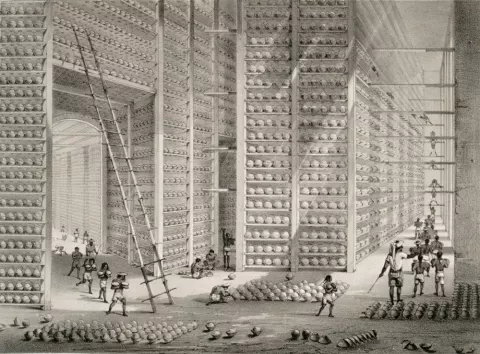
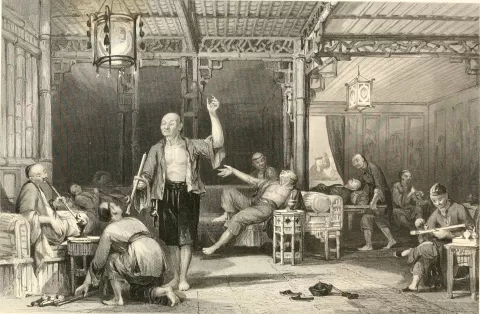
Unwilling to give up this lucrative business, the Westerners continued to search for commodity that the Chinese wanted to buy. This is the way how the opium entered the Chinese history. It marked the beginning of the end of China’s economic dominance in international relations. Since opium created addiction, there was a steady demand among Chinese for this commodity. By the end of the 18th century, the English emerged as the leading drug suppliers of the Chinese market. They established a monopoly and developed opium plantations in Bengal where they found methods of growing opium poppies cheaply and abundantly. Americans joined this lucrative business and imported opium from Turkey and India. As it was illegal for the English East Company to deal in opium, this trade was carried by private English traders and Americans, and was based on smuggling. For private traders, opium imports in 1828 were worth 11.2 million dollars, or 72 % of total trade.
Chinese opium smokers c. 1858.
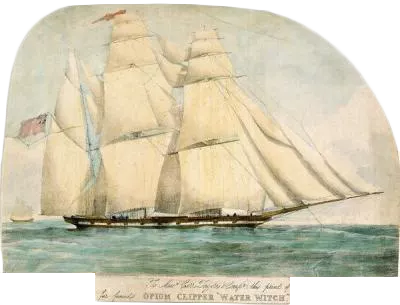
The high profits stimulated innovations and advances in naval technology, like the tea and opium clipper ships. The consumers wanted commodity as fresh as possible and fast ships with smaller cargo space were developed in the United States for transport of tea and smuggling of opium since they could outran the Chinese junks. At its peak, around mid-19th century the opium imports reached 50,000 to 60,000 chests a year (1 chest weighted around 140 pounds or 63,5 kg), and they continued to increase in the next three decades.
And while western business flourished, China was falling in the serious economic and social difficulties, which made the conflict inevitable.
Decline
The collapse of Canton trade system marked the end of Chinese control over the international trade with the West. Two factors significantly contributed to this downfall. The first was opium which the western powers introduced in exchange system to compensate for the lack of other commodities. The second was naval technology and emergence of steam-powered vessels in 1830s which could quickly, without Chinese interference, move into shallow waters, thus destroying the system of controlled trade.
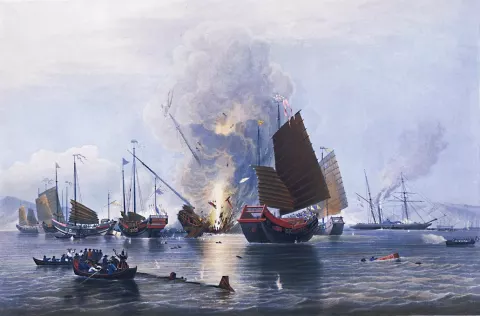
The efforts of the Chinese government to terminate the opium trade resulted in two armed conflicts between China and the Western powers, better known in history as the Opium Wars (1839-1842, 1856-1860). China lost both wars and was forced not only to legalize opium imports against which it had fought, but also to open new ports to trade and agree to a low fixed tariff. Therefore, long struggle of Westerners to enter the wider Chinese market was won and the Canton system was terminated.
Although Canton remained an important harbor by the late 1850s, competition of Hong Kong and Shangai, which emerged as the centers of China’s international trade dominated by British colonialism, reduced its importance.
36 lives in this room
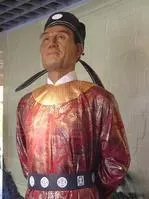 Pu (Abu) Shougengd. 1296
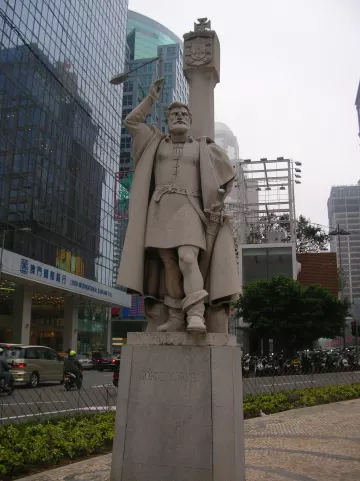 Jorge Álvaresd. 1521
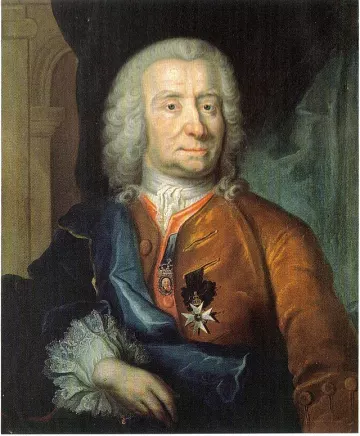 Colin Campbell1686-1757
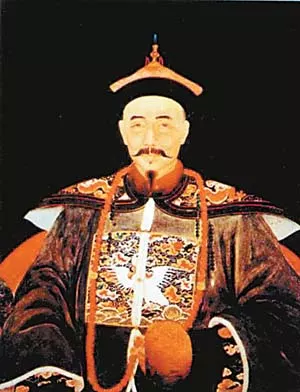 Pan Zhencheng1714-1798
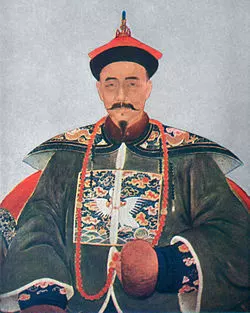 Puankhequa1714-1788
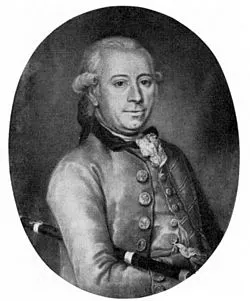 Jean Abraham Grill1736-1792
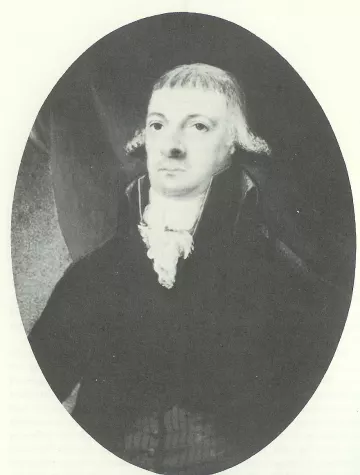 John Brown1736–1803
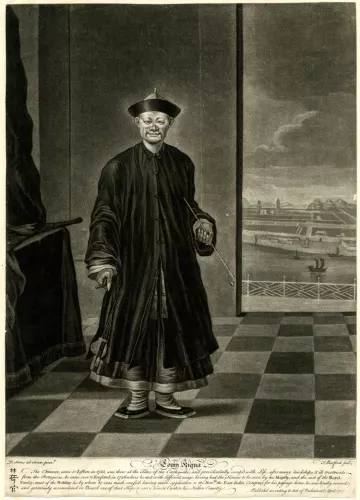 Loum Kiqua18th century
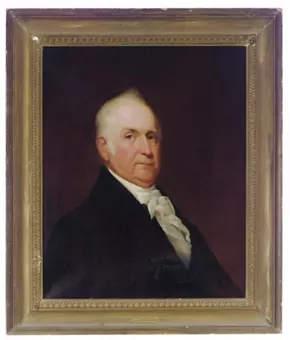 Joseph Peabody1757-1844
 Anders Ljungstedt1759-1835
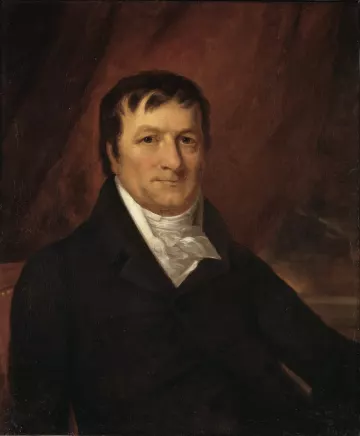 John Jacobs Astor1763-1848
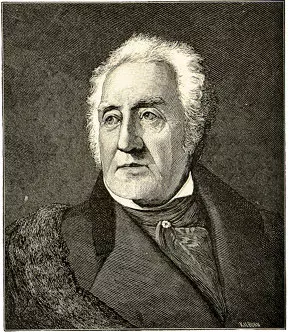 Thomas Handasyd Perkins1764-1854
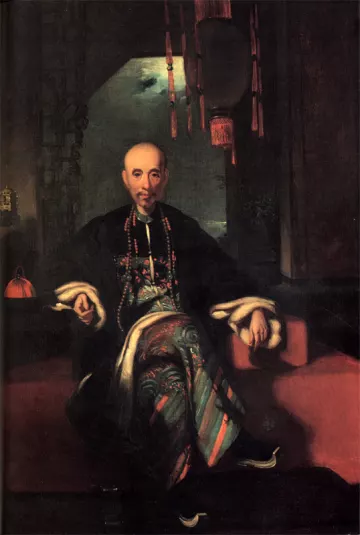 Howqua1769-1843
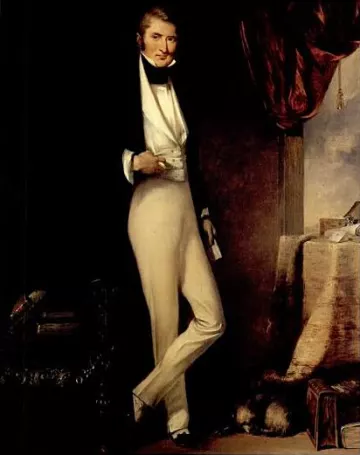 William Jardine1784-1843
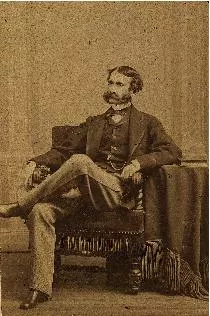 Augustine Heard1785-1868
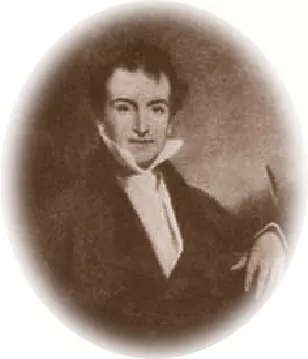 Samuel Wadsworth Russell1789-1862
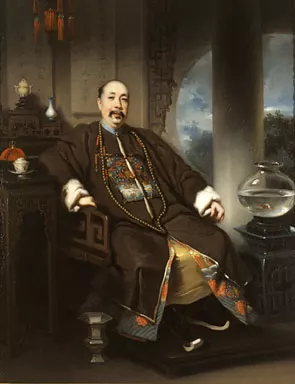 Mowqua1792-1843
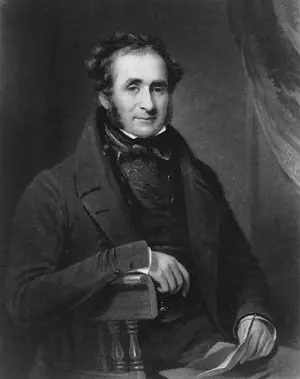 Sir James Matheson1796 – 1878
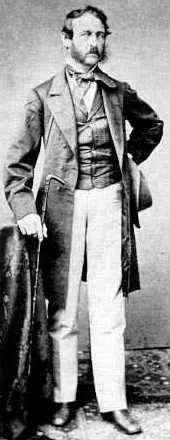 Warren Delano Junior1809-1898
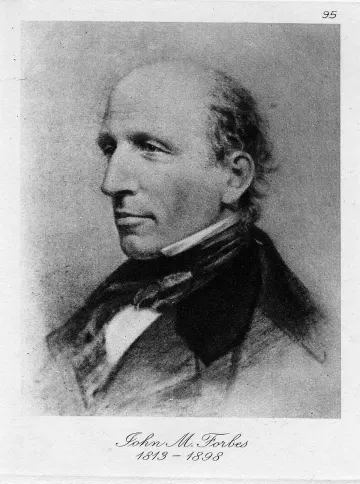 John Murray Forbes1813-1898
More lives in this room
- Rafael Perestrello fl. 1514–1517
- John Weddell c.1583–1639/40
- James Flint b.1720
- Swetja 1720-1763
- Tacqua Amoy fl. 1730-1760
- Wu Kuo-jung 1731-1810
- William Chalmers 1748-1811
- John Henry Cox 1750-1791
- Kousia 18th century
- Pinqua 18th century
- Tan Suqua 18th century
- Tan Hunqua d. 1760
- Consciens Giqua ?-1765
- Consentia Gigua d. 1765
- Inksja ?-1792
- Joseph Coolidge 1798-1879