Museum / Rooms / Shanxi merchant guild
Room · 3 chapters · 5 lives
Shanxi merchant guild
A synonym for any smart and successful businessman to this day
Conducting business in China was strongly influenced by moral principles of Confucian teaching. An idea that business should be conducted in accordance with the moral code of – honesty, trust, benevolence and justice (“cheng xin ren yi”) was widely accepted by Shanxi entrepreneurs and significantly contributed to their success.
The first great businessmen in China
With thousands of years long history China has one of the oldest and most prosperous economies in world history. An important place in business history of China belongs to the Shanxi or Jin merchants whose business tradition lasted for more than 500 years, and had placed them among the greatest merchant classes in the world.
From poverty to the leading Chinese businessmen
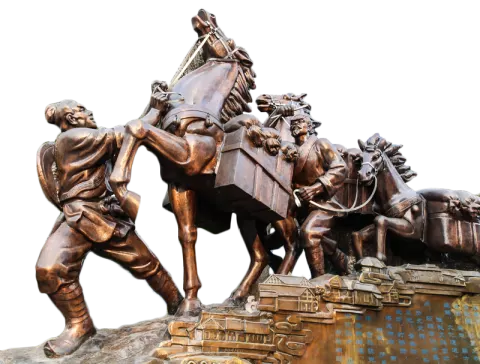
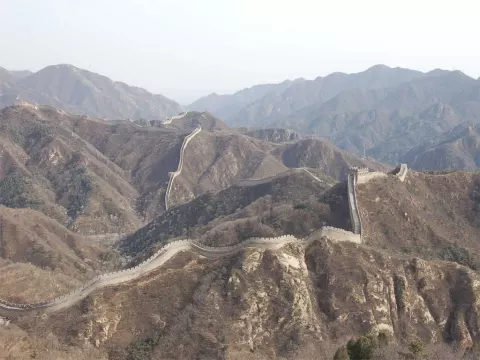
Originating from the poor and inhospitable province of Shanxi in northern China, its inhabitants early turned to commercial vocation as a means of survival. However, their rise to power began in the 14th century during the rulers of the early Ming dynasty (1368-1644). Wisely taking advantage of their geographical position and the government's need to supply around 1,2 million soldiers stationed on the Great Wall, the Shanxi merchants were able to wheedle a monopoly on salt. Salt was the key of wealth. Soon they expanded to other merchandise, of which tea brought them another fortune. In pursuit of profits the Shanxi merchants successfully built a nationwide trade network travelling beyond the borders of China to neighboring Mongolia, Russia, North Korea and even Japan.
The grandfather of China’s rural banking operations
The Shanxi banks called “Piaohao” were originally established in the 19th century to furnish local Shanxi merchants with safe transfer of cash by issuing bank drafts (“huipiao”) between local branches. The Shanxi offered complete banking business of accepting deposits, granting loans and providing bank drafts. Later they extended their services to the Qing government (1644–1912) but it was a double edged sword, because the collapse of Qing government contributed to their failure as well.
The Spirit of Shanxi Merchants
Their fearlessness, commitment and ethics in pursuit of business was described by scholars as “the Spirit of Shanxi," or more precisely, "the Spirit of Shanxi Merchants." Thanks to their business efficiency and moral integrity the Shanxi merchants emerged as one of the wealthiest trade groups in history, well known for these features both in Asia and Europe.
Wealth that was hard to resist
It was commonly said that the wealth of the Shanxi merchants at some periods exceeded that of the state treasury. The Shanxi business operated as share-holding enterprises in which even an assistant was entitled to own shares. A single share was divided according to percentages, and usually 20 or 30 percent was awarded initially. Dividends were paid regularly, usually at three years intervals. In practice this meant that a shop assistant working for a Shanxi business could earn more than an army general stationed in Mongolia.
In the 19th century China there were at least eight Shanxi families, each with a wealth of over 10 million taels of silver, which was at the time the amount of the Qing government’s annual revenues.
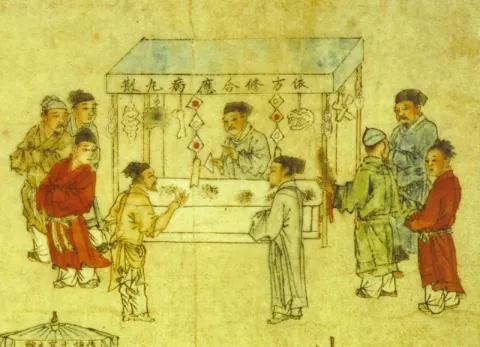
The Shanxi were also among the first businessmen who have noted the importance of advertising in selling goods over the long distances.
To be successful for the Shanxi meant to be completely devoted to business. They were required to undertake long and hard journeys to remote parts and distant lands from which many never returned, they had no holidays, and sometimes home visits were not allowed for years.
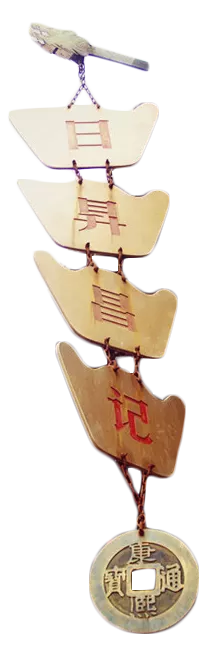
A banner of Rishengchang Draft Bank. As early as 1824, the bank started by Mr. Lei Lutai began its banking business. The bank represents the culture of ancient Shanxi merchants.
In order to prevent counterfeiting of certificates issued by the bank the Shanxi developed an intricate system of secret code, often a group of 12 characters, only comprehensible to a bank personnel.
A path of a Shanxi merchant was a long and challenging. To even get a chance to be trained for a Shanxi the young boy apprentice first had to pass an “honesty” test. The master usually left some silver lying around to tempt the boys. Only those who returned the money to the master were allowed to continue with their education.
Chapters
Introduction
With thousands of years long history, China represents one of the world's oldest and most prosperous civilizations. Although agriculture traditionally represented the backbone of its economy and source of social prosperity, trade (local, regional long-distance and foreign) played an important role as a means of distribution of goods and source of state revenues.
While trade activities can be traced from the earliest times, certain historical periods were especially notable for flourishing commerce. During the Song dynasty in the 11th and 12th centuries, and the Ming dynasty in the 16th century, China experienced growth in commercial activities, often described as a commercial revolution. Such circumstances had a favorable impact on the development of trade and strengthen of merchant class.
In order to promote their social and business interests, merchants of China were allowed similarly like others in the world, to organize themselves into some kind of associations. Guilds of merchants, known as “huiguan” or “gongsuo” originated during the Tang dynasty and became an important factor in economy beginning from the Song dynasty. They were usually formed on the basis of common geographical origin or on the common trade business. Their purpose was to more efficiently establish control over trade, minimize the risks and secure the profits of their members
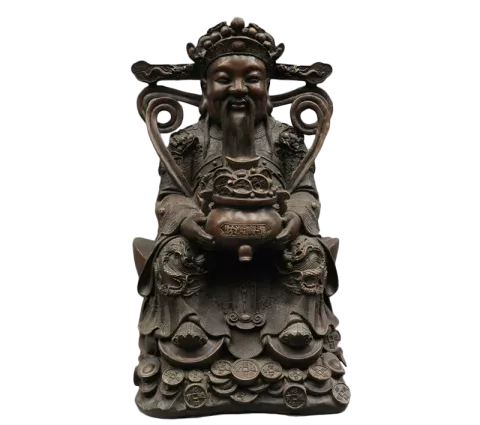
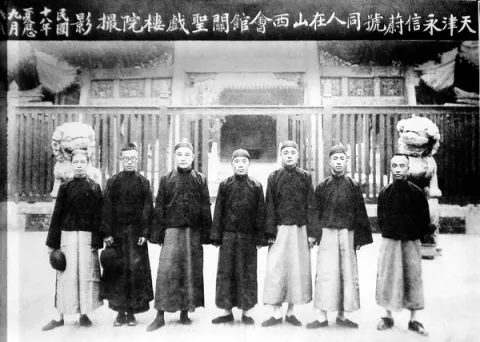
The guild halls, also named “huiguan” served as the guild’s mansions and were built in most of the major cities. They were established to meet the needs of the merchants involved in long-distance trade. Except of providing lodgings, the mansions served as a meeting place where members of the certain guild could inform one another about market and price developments, arrange the finance and transport. Once a year, guilds held their regular meetings. These meetings were opened with sacrifices to their patron deity or deities, such were the God of Wealth (caishen) or the God of Prosperity, and were accompanied by the banquet and theatrical play in their honor.
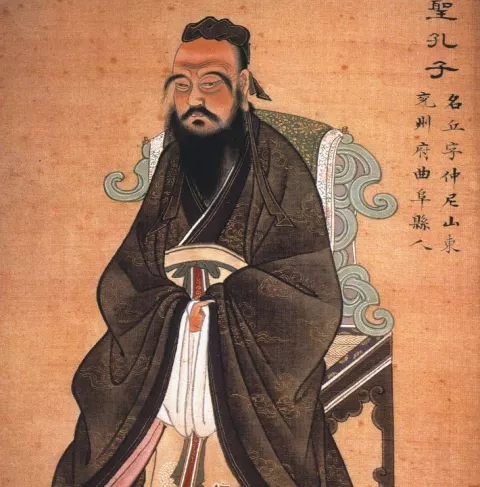
The business practice of ancient Chinese was strongly influenced by moral principles based on Confucian teachings. Thus, the idea that the business should be conducted according to the moral code of – honesty, trust, benevolence and justice (“cheng xin ren yi”) was widely accepted among Chinese business class, and strongly contributed to their business effectiveness.
Among numerous trade guilds, the merchants of Shandong, Shanxi, Shaanxi, Dongting, Jiangyou, Ningbo, Longyou, Fujian, Guangdong, and Huizhou were in particular prominent. The merchants of Shanxi, together with those from Huizhou emerged as the most powerful and influential in China. The following testimony written by the scholar-official Xie Zhaozhe from 1616 said:
“If we were to name those recognized as the richest families of all, one would have to propose the Huizhou merchants in the south, and the Shanxi merchants in the north. The great merchants of Huizhou trade in fish and salt, amassing fortunes measured in the millions of silver taels; those worth 200,000 – 300,000 taels could only be considered merchants of middling rank. Shanxi merchants dealt in salt and silk, some traveling afar to peddle their goods while others pile up stocks of grain. Their wealth exceeds that of the Huizhou merchants, because while the latter are spendthrift, the Shanxi merchants are frugal“.
Shanxi business operations
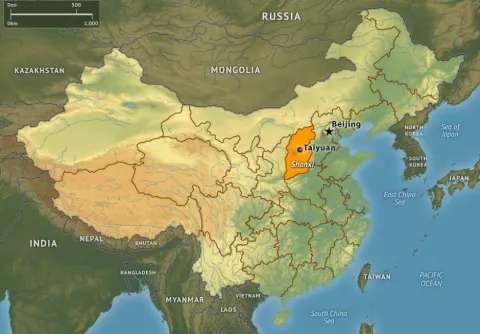
A unique place in China’s business history occupy the merchants of northwestern province of Shanxi. The Shanxi, also known as Jin merchants, were considered one of the greatest merchant class in the world, with business operations lasting for more than 500 years. Today, their name is a synonym for any smart and successful businessman.
The Shanxi province formed a natural corridor linking central China to Mongolia and the northwestern frontier. The region was generally speaking inhospitable and poor in cultivable land, but rich in natural mineral resources, especially salt. Therefore, its inhabitants were forced from the early days to find a way to survive outside of agriculture. It was a business.
Already prominent in the Song period (960-1279 AD), the Shanxi merchant group rose to prominence during the Ming dynasty (1368-1644). Namely, the first emperor of the Ming dynasty is credited with upgrading the Great Wall and establishing of nine towns along the borders against the Mongols which garrisoned around 1,2 million soldiers. In order to supply such a large number of soldiers, the Ming government founded the “kaizhong system”. Through arrangement with merchants, the government arranged deliver of supplies composed of grain to frontiers in exchange for salt monopoly privileges. Selling salt was the key to wealth. Thus, this historical event marked a turning point in the China’s economic history.
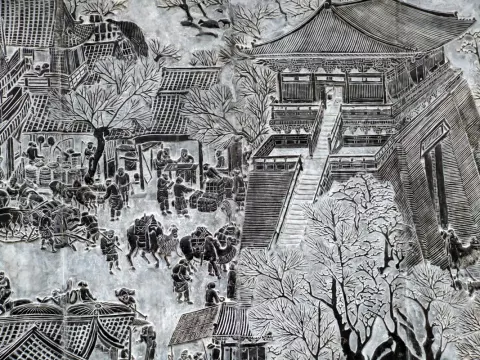
As officially licensed salt merchants, the Shanxi merchants successfully established control over the most lucrative salt distribution markets of China at the time. Although they started business in salt, eventually they extended activities in wide range of goods, including tea, foodstuffs, medicine, silk, cotton, piece goods, iron, and coal, establishing a nationwide trade network. At the beginning they did business only in the inner land, and then gradually they expand their business in some neighboring countries such as Mongolia, Russia, North Korea and Japan.
The Shanxi merchants were also among the first businessmen who have noted the importance of advertising in selling goods over the long distances. The advertisements were mobile and printed in Chinese and Mongolian for the people on the grasslands.
Shanxi business operations
Tea road
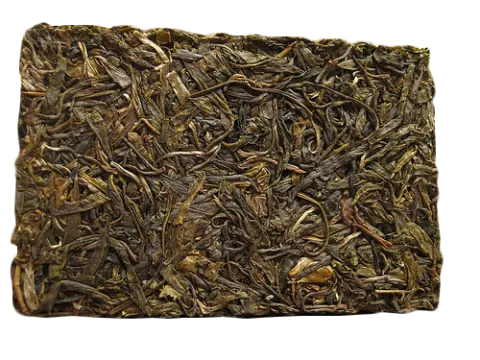
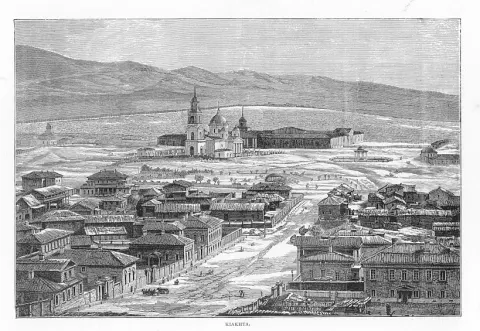
Opening of the famous and extremely lucrative “Tea Road” between Russia and China brought to the Shanxi merchants enormous fortune. During the Song (960-1279), Yuan (1279-1368) and early Ming (1368-1644) dynasties tea exports were prohibited to prevent its popularization. The famous explorer Zheng He, who conducted several voyages of exploration during the Ming dynasty was allowed to carry a huge amount of tea as a gift during his expeditions. In the early Qing Dynasty (1644-1912) the ban was finally withdrawn and the civilians were allowed to carry on business in tea. In order to obtain tea, the Shanxi merchants initially traveled by land. First they went to Wuyi Mountain to collect the tea, across Fenshui Pass, outside Jiujiang, past Shanxi and Urga (today’s Ulaanbaatar) and north to Kiakhta (once a major port in China for Sino-Russian business), covering a distance of nearly 6,000 kilometers, and thence through Siberia to Europe. This is the international trade route – the famous “Tea Road” over which Chinese tea was transported in the form of tea bricks to Russia and onwards to the whole of Europe. In later period, tea would be transported by sea, although the moisture could damage the quality of the product.
At the end of the 18th century the Tea Road was at the heights. By the 1830s, tea exports made 93% of the Sino-Russian trade volume. In return for Chinese tea, silk and cotton, the Shanxi merchants imported horses, sheep and woolen cloth from Mongolia and Russia.
Shanxi business operations
Banks
A banner of Rishengchang Draft Bank. As early as 1824, the bank started by Mr. Lei Lutai began its banking business. The bank represents the culture of ancient Shanxi merchants.
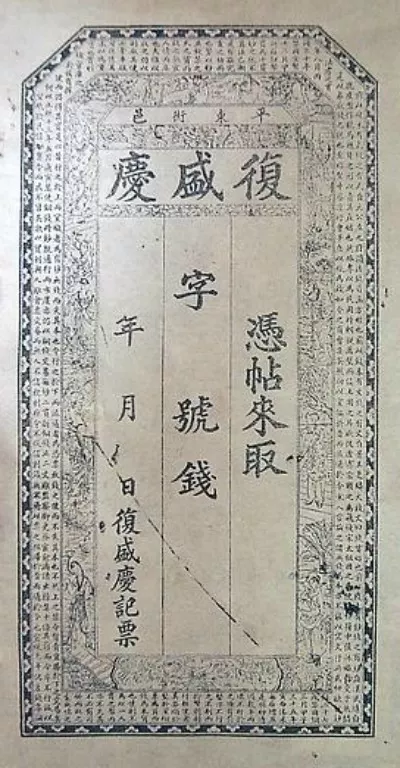
With the profits accumulated in trade, the Shanxi merchants turned to land purchase and pawnshops, and eventually to banking activities. “Piaohao” or the Shanxi banks were originally established in the 19th century to furnish local Shanxi merchants with the safe transfer of funds throughout the issuing of drafts (“huipiao”) between local branches. The Shanxi offered the complete banking business of accepting deposits, granting loans and providing bank drafts. Later they extended their services to the Qing government (1644–1912) but it was a double edged sword, because the collapse of Qing government contributed to their failure as well. In order to prevent counterfeiting, the Shanxi merchants developed a system of secret codes that differed from one bank to another as well as other anti-counterfeiting devices.
They began to decline with the fall of Qing dynasty in 1911 since they lacked competitive strength against foreign banks and modern Chinese banks.
Shanxi merchants
An important part of the Shanxi business success can be attributed to moral integrity of their members. In almost every town in Shanxi were placed the Guanyu temples that symbolizes honesty and justice, qualities appreciated by their inhabitants.
The Shanxi merchants began to learn a business from an early age. As young boys of seven or eight years, they were sent to an apprenticeship of which an important part was the so-called “honesty test”. The master would leave some silver lying around to see if the boy would stole it or handed it back. The boys who failed the test were returned to their homes, while others were publicly honored. Honesty and reliability were virtues required and nourished in this business community. Thus began a long period of testing and trials before the apprentices were finally introduced to business. The boys who proved to be particularly hardworking and devoted could expect to have their own business one day.
The life of the Shanxi merchants had to be completely subordinated to business. An integral part represented difficult and long-lasting journeys to remote areas, with no holidays or home visits for years. Only writing of letters was allowed. Here we should mention various hazards, diseases, bandits and many other threats. It was a business from which many never returned.
Since the merchant occupation was not traditionally considered prestigious in Chinese society, the question is, what motivated the Shanxi merchants to undertake this efforts? The answer is – high profits.
The Shanxi business operated as share-holding enterprise in which even an assistant was entitled to own shares. A single share was divided according to percentages, usually 20 or 30 percentage was awarded initially. Dividends were paid on regular basis, often a three years intervals. For comparison, an army general stationed in Mongolia at the time made just 1,133 taels of silver a year, less than a shop assistant working for a Shanxi business. It was commonly said that the wealth of the Shanxi merchants at some periods exceeded that of the state treasury. In the 19th century China there were at least eight Shanxi families each with a wealth of over 10 million taels of silver. At that time, the Qing government’s annual revenues were around 10 million taels of silver. It was a sufficient motivation.
Showing a lack of fear towards any kinds of difficulties in pursuit of business was described by scholars as “the Spirit of Shanxi," or more precisely, "the Spirit of Shanxi Merchants." Thanks to their business efficiency and moral integrity, the Shanxi merchants emerged as one of the wealthiest trade groups in history well known for these features both in Asia and Europe.
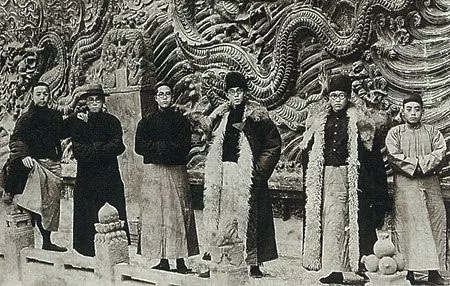
5 lives in this room
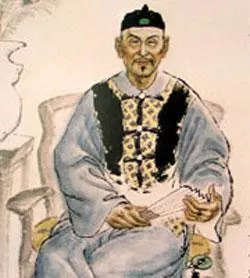
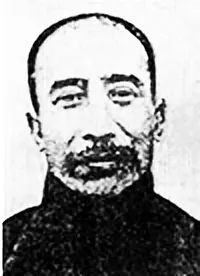
More lives in this room
- Qiao Guifa 18th century
- Lei Lutai 1770-1849
- Qiao Yingxia 1818-1907