Museum / Rooms / Oldest companies in the world
Room · 4 chapters
Oldest companies in the world
The oldest companies in the world have a common feature – they are family businesses
It’s a family business
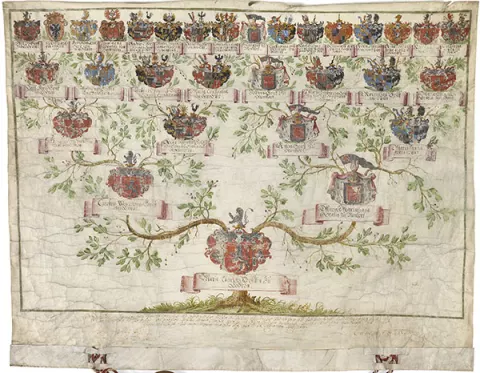
Maybe the fact that the oldest companies in the world are family companies is less surprising when we take into account that the family is the basic unit of every society. During the history family formed the basic business unit as its members were regarded more available, easier to manage and generally more trustworthy. Cohesiveness and a strong sense of identity is essential for companies to prosper and family businesses have a lot to build on this kind of unity. It is not only the company with which managers and employs relate to, but they also identify theit job with their family’s ancestors, stories, pride, and wellbeing.
Oldest of the oldest
The oldest of the oldest companies in the world are located in Japan. These are also family businesses, passed from one generation to the next, some for even fifteen centuries. The oldest is a construction company, and the next three in line are spa hotels or ryokan as is their traditional name.
In Japan long lasting family businesses are greatly appreciated and the title of “family-owned” company is of paramount importance. The helm of the business is always given to the most competent family member, even if one is not blood related to the founder. Usually when the son of a current leader of a family is assessed as incompetent, or there is not one, the family adopts a businessman with the know-how to operate and sustain a successful business. In many cases this businessman is son-in-law with the current company leader.
Henok
Les Hénokiens is an elite social club that only accepts businesses which are operating at least 200 years ─ the same family must be owner or majority shareholder of the company and one member of the founding family must still manage the company or be a member of the board. Their oldest member is a Japanese family business - Houshi Ryokan, founded in 717. The next three in line are European companies: Fabbrica d'Armi Pietro Beretta, Mellerio dits Meller, and Cartiera Mantovana. The name of the association itself was inspired by the story of Henok (or Enoch) who lived for 365 years and then was taken up into heaven without dying, thus presenting a perfect symbol of longevity and continuity for a business association of ancient family companies.
“Before the multinational corporation, there was family business. Before the Industrial Revolution, there was family business. Before the enlightenment of Greece and the empire of Rome, there was family business.”
A practice of business-motivated adult adoptions in Japan rendered Japanese family firms more professionally managed than their peers elsewhere.
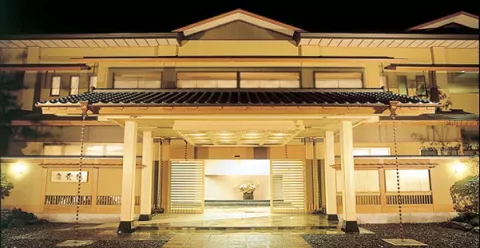
The oldest ryokan in the world is the Nisiyama Onsen Keiunkan in Yamanashi, Japan, which has been operating since 705 AD. This astonishing continuity was officially recognized by the Guinness World Records in 2011. It is followed by Sennennoyu Koman and Houshi Ryokan both dating from the year 717.
Chapters
It’s a family business
The oldest companies in the world share at least one common feature and it is that they are a family business. A partial answer to the question why is that so can be found in the book Centuries of Success, by William O’Hara, the pre-eminent expert on the subject of a family business. On a rhetorical question “Is there any institution more enduring or universal than a family business?” professor O’Hara provided his answer: “Before the multinational corporation, there was family business. Before the Industrial Revolution, there was family business. Before the enlightenment of Greece and the empire of Rome, there was family business.”
The oldest companies in the world are located in Japan. Most of them are spa hotels or ryokan as is their traditional name. Ryokan usually feature bathhouses, multicourse dinners, communal spaces where guests can relax, and rooms with woven-straw flooring and futon mats.
The oldest of Japanese companies, and thus of the world, is Kongō Gumi. As this company holds a special place in our museum it will only be briefly summarized here. Kongō Gumi is the oldest continuously family owned company in the world with a beginning dating back to the year 578. Kongō Gumi began as a temple building company and has remained occupied with this activity to this day, but in the time of crisis it showed flexibility and branched into other areas of construction and carpentry. In 2006 the company became a subsidiary of Takamatsu, a large Japanese construction company, but the Kongō family members continue to build and maintain temples and may very well do so for millennia to come.
Ryokan
The oldest hotel in the world is the Nisiyama Onsen Keiunkan in Yamanashi, Japan, a hot-spring hotel, which has been operating since 705 AD. This astonishing continuity was officially recognized by the Guinness World Records in 2011. In its remarkable history of over 1300 years of continuous operation the Keiunkan was ran by the same family, and today is run by the 52nd generation. The staff working at the Keiunkan seems to be committed to the success of the inn just as much as the owners, given that there are even some staff whose families have held the same post for generations, passing it from parent to child to grandchild. The innkeeper’s and staff's warm, courteous service keeps people coming back which in return means a stable lifestyle and wages for all employees who reap the benefits of their good work.
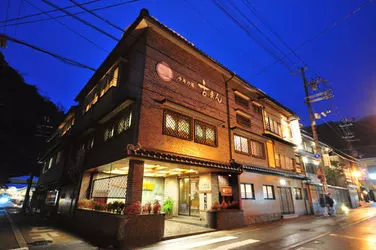
Another incredible Japanese ryokan is Sennennoyu Koman which dates its founding to the year 717. According to a legend it was founded after Hyuga, whose family established the hotel, was visited by four deities one night, and was told to protect the people who lived in the area and their ancestors. Hyuga built shrines for the gods, while his family discovered the hot spring where the inn was built. True or false, this business certainly seem to have been protected by the gods, or maybe its success is own to a location in the Toyooka City which lies entirely within the San'in Kaigan Geopark.
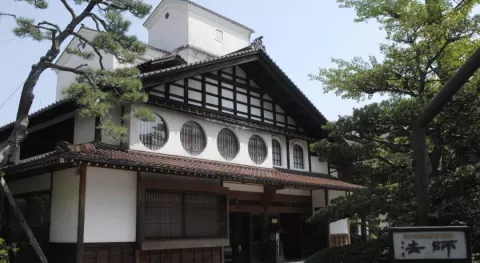
Of the same age as Sennennoyu Koman is a Houshi Ryokan which was founded in 717 and was ran by the 47 generations of the same family. Houshi also claims a divine origin: in 717 Buddhist priest Taicho Daishi hiked up the sacred mountain Hakusan, where the deity of the mountain appeared to him in a dream. Taicho was instructed to go to the village of Awasu where he would find an underground hot spring with wondrous restorative powers. On the site of the spring, and by the instructions of the Taicho, Garyo Houshi built a spa that last for 1300 years now. This ryokan is located in Komatsu, Ishikawa Prefecture.
Les Hénokiens
When speaking of the oldest companies in the world we must mention the Henokiens Association. It is an association whose membership is based on company longevity (the minimum period of existence is 200 years) and permanence (the family must be owner or majority shareholder of the company and one member of the founding family must still manage the company or be a member of the board). The company looking for a membership also must be in good financial health and up-to-date.
The Henokiens Association was created in 1981 by an incentive from Gérard Glotin, manager of Marie Brizard, and it numbered only two companies. In 2016 the association numbers 46 members including 13 Italian, 12 French, 8 Japanese, 4 German, 3 Swiss, 2 Dutch, 2 Belgian, 1 English and 1 Austrian.
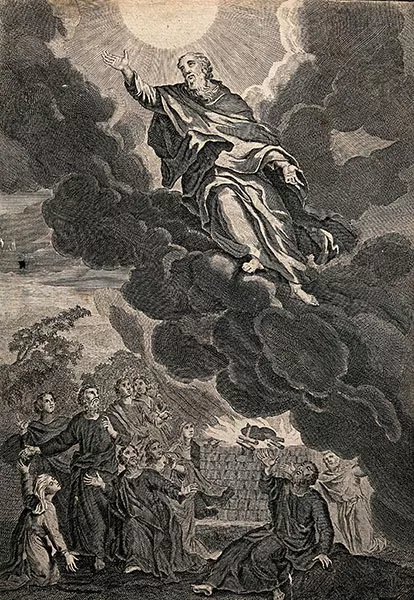
The name itself was inspired by the story of Henok (or Enoch), one of the greatest Biblical patriarchs, the son of Cain and the father of Methuselah. Henok lived for 365 years and then was taken up into heaven without dying, thus presenting a perfect symbol of longevity and continuity for a business association of ancient family companies.
Oldest members of the Henokiens
The oldest member of the Henokiens is Houshi Ryokan, but as we already discussed this company it would be appropriate to move to the next oldest company of the association which is Fabbrica d'Armi Pietro Beretta.
Oldest members of the Henokiens
Fabbrica d'Armi Pietro Beretta
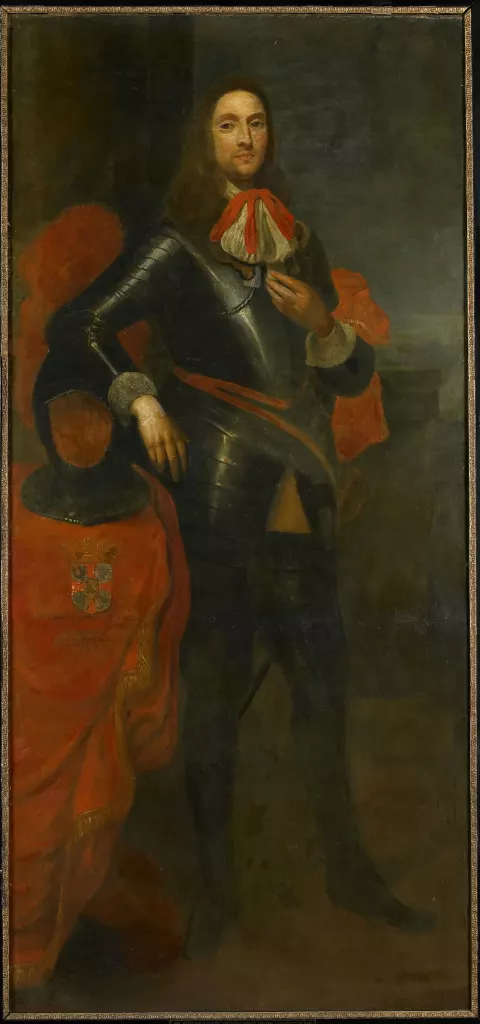
Beretta seems to have been operated since the 1400s but its earliest document dates back to 1526, the year which also represents the beginning of the company. The founder was Bartolomeo Beretta (1490 – 1565/68) of Gardone, a renaissance craftsman who secured the contract with the Arsenal of Venice for 185 arquebus barrels valued at 296 ducats. Bartolomeo operated from the small northern Italian village of Gardone Val Trompia near Brescia, where the company is still established. From Bartolomeo the company was continuously inherited and managed by the members of the Beretta family. Altogether 15 generations ran the company which entered the 21st century under the leadership of Ugo Gussalli Beretta and his sons Pietro and Franco.
Under the leadership of Pietro (1870 – 1957) the company introduced modernized manufacturing methods, many patents for mechanisms and simplified construction, consequently establishing Beretta, the first Italian firearms maker, as one of the most modern firearms production facilities in the world. Today Beretta is amongst the biggest producers of firearms in world, producing approximately 1,500 weapons a day and covers just about the entire range of portable weapons, both for defense and sporting uses.
Oldest members of the Henokiens
Mellerio dits Meller
Mellerio dits Meller is the third oldest member of the Henokiens Association. It is a French jewelry house which started its business way back in 1613. The Mellerio family arrived in France in 1515, from Craveggia, a small village in the Vigezzo Valley nestling on the border between Piedmont and Lombardy. The foundation of the family business is dated to 10th of October 1613 when Marie de Medici (1573-1642), Regent of France, granted her royal protection to the Mellerio family, giving them the right to trade throughout the realm without having to submit to the administrative restrictions generally applied. According to a legend this grant was awarded after a member of the family learned of a plot to incite the assassination of the young king Louis XIII (1601-1643).
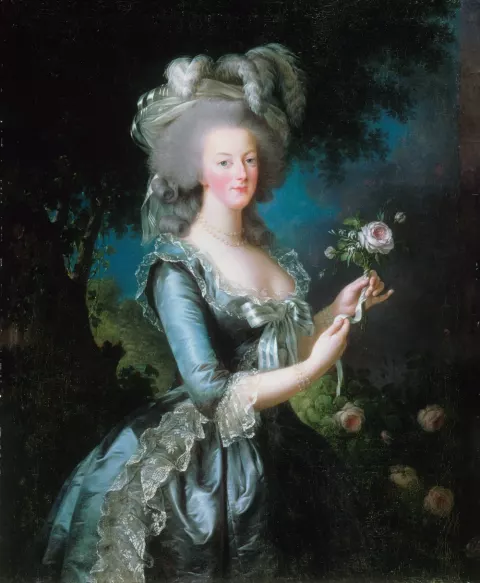
Mellerio’s first royal client was Marie-Antoinette (1755-1793) who made her first purchase from the Mellerio family in 1777. It was Jean-Baptiste Mellerio, a twelve-year-old goldsmith and jeweler, who made this first contact and soon became the supplier to the nobles of the Queen. From then on the list of clients from royal and imperial families expanded throughout Europe, Russia, Latin America and the Far East.
The family was the first jewelers to set up on rue de la Paix in 1815, and played a great part in making this legendary Parisian street one of the symbols of French luxury in the world. Today the company still has a workshop at 9 rue de la Paix, and is headed by the 14th generation of the Mellerio family.
Also an interesting fact about Mellerio dits Meller is that each year it makes some of the finest sports awards, including the Coupe des Mousquetaires (Musketeers’ Trophy - Roland Garros - French Open Tennis Tournament) and the Fifa Ballon d’Or.
Oldest members of the Henokiens
Cartiera Mantovana
The fourth oldest member of the Henokiens Association is the Italian paper making company Cartiera Mantovana. The company traces its roots to 15 of July, 1615, when a paper factory was built by Angelo da Fano at Maglio de Goito, some 6 miles from Mantua. In 1688 the company was granted by the Duke of Mantua, Ferdinando Carlo (1652-1708), “to build, in a good position, a new building along the Naviglio river, in Goito, for paper production.” This concession allowed the Fanos to exploit a three meter high waterfall with a flow rate of 2000 liter per minute. The right to the water exploitation was continuously reconfirmed to the company despite the political turmoil through which the region passed during the company’s long history.
Until 1850 the paper in Cartiera Mantovana was made by recycling old rags, processed in large marble tubs using wooden hammers and rammers activated by the energy produced by a large bladed wheel. The paper dried in the air in a high hall with large windows, after which it was packed and sent via the Naviglio river, then navigable, to the Mincio river and then to the port of Mantua. From the mid-19th century old rages were replaced by straw as the producing material, and the mill went through process of modernization by introducing new technical solutions.
Today the company is among the leading Italian paper producers and is run by the Marenghis, descendants of the same family which founded it more than 400 years ago.