Room · 5 chapters · 4 lives
Jagat Seths
A business family which by shaping Indian economy, society, and politics has shaped the history of India
Hiranand’s business success was explained by a legend in which he finds an enormous wealth in an old palace in the woods. But even in legends Hiranand was shrewd, instead of taking the entire wealth at once he visited the palace several times and carried the wealth in installments.
Beginnings
History of Jagat Seths began in the mid-17th century with Hiranand, an Oswal Jain from Nagaur in Marwar who by opening a small banking business in Patna put the family on the path of success. With time Hiranand expanded the enterprise by installing his seven sons in different parts of North India to spread the business.
Nagar Seth – Banker of the City
Hiranand was succeeded by his son Manick Chand who moved the business to Mursidabad, the capital of Bengal. Through business relationship with the local rulers, the Nawabs of Bengal the Jagat Seths were able to expand family’s business. It was not long that Manick rose to the position of the Nawab’s chief advisor and banker, helping him to bring extensive financial reform and enriching himself in the process. Moreovoer, the Jagat Seths ability to transfer large amounts across the length and breadth of the Mughal Empire by using “hundis” or bills of exchange, made their bank central to the Mughal financial system. For all his services to the Nawab and the Emperor, Manick Chand was bestowed with the title Nagar Seth (banker of the city) in 1712.
Jagat Seth – Banker of the World
Continuing on the work of his uncle Manick, Fateh Chand brought the family to the heights of their glory and power. The business of the Jagat Seths was said to be equal to that of the Bank of England in terms of size and volume. In his time the Jagat Seths took control of the Murshidabad Mint what enabled them to control the currency system of Bengal from 1718 until 1760. In fact, in Bengal traders were not allowed to sell bouillon to anyone other than the Jagat Seths. At the time of his death in 1744, Fateh Chand was reputed to be the richest merchant in Bengal – possibly in the world.
Who flies high, falls deep
Fateh’s successors continued to hold prominent part in Indian business and policy. However, the historical processes in which the House of the Jagat Seth held a prominent role – such as the rising power of the English on the one hand, and the declining power of Nawabs on the other – began slowly but steadily to deteriorate the power of the House until they finally lost their business and political influence in the late 18th century.
Fateh Chand was bestowed by the Emperor Muhammad Shah (r. 1719-1748) with the title of Jagat Seth – Banker of the World as a hereditary distinction.
Even the powerful East India Company loaned large sums from the Jagat Seths and used to consult them in all matters relating to Bengal.
Prior to Manick’s reform an annual tax from Bengal was taken to Delhi in a convoy of 200 wagons escorted by a regiment of 600 horses and 500 foot soldiers. After the reform, the entire annual revenue of Bengal, then about 15, 000,000 silver rupees, was transferred through the Jagat Seths’ bank and its branch offices.
Chapters
Founder of the House
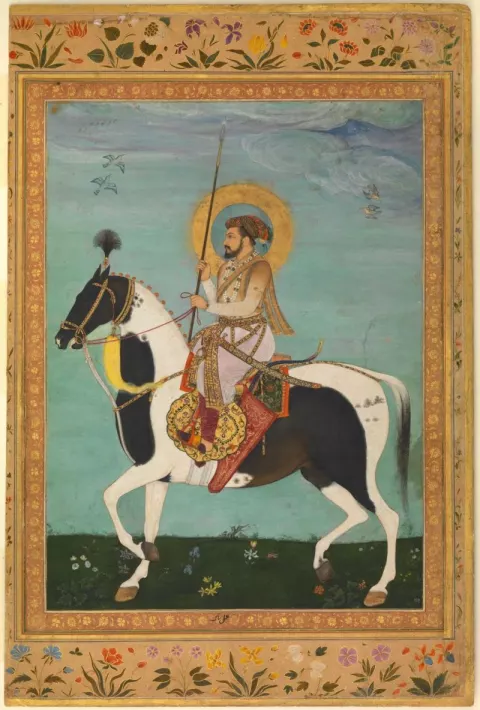
Seth's started their ascent with Hiranand, the founder of their house. Hiranand was an Oswal Jain from Nagaur in Marwar who came to Patna in 1652. During the reign of Emperor Shah Jahan (1628-1658) Patna was an important commercial center. Commodities like saltpeter, indigo, cotton textiles and opium were brought to Patna from the neighboring areas, and also, it was a vital trade point for Nepali and trans-Himalayan commodities. Hiranand started as a banker and trader of saltpeter. Saltpeter was among most sought commodity by the Europeans and he soon prospered. Besides trade he also had banking activities that included advancing loans to Europeans and discounting bills of exchange that they received from other places. The center of his activities was Patna but he installed his seven sons in different parts of North India to spread the business.
Founder of the House
The legend of Hiranand
There is an interesting legend how Hiranand came to possess great wealth. Story tells that while travelling through a forest Hiranand rested under the shade of a tree and soon fell asleep. When he woke up he was in the midst of a dark forest, and was wonder-stricken by the sound of a cry coming from nearby. He went to explore the strange noise and found himself in front of the old palace from where the cry came from. He entered the palace and found the old man lying sick on a bed, waiting to pass away. The old man’s dying wish was that Hiranand stays with him and take care of him for his last days. Hiranand stayed and took care of the old man and soon found out that the old man had enormous wealth. Out of gratitude the old
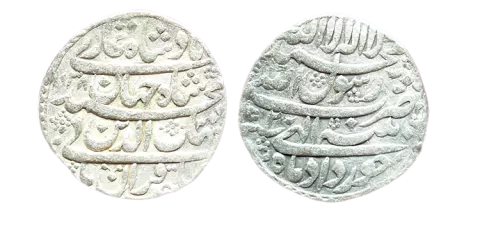
Silver rupee coin of the Mughal Emperor Shah Jahan, from Patna.
man left his entire fortune to Hiranand. He did not take the entire wealth at once but visited the palace several times and carried the wealth in installments.
Hiranand’s successor
Hiranand’s eldest son, Manick Chand, succeeded him as the head of his business. Manick Chand moved to Dhaka, the capital of Bengal at that time. He soon developed a cordial relationship with Murshid Quli Khan (r. 1717-1727), the Nawab of Bengal - the ruler of Bengal subjected to the Mughal Emperor. Before becoming the Nawab, Murshid Quli Khan was the governor of Bengal from 1707, and even before that had the power of governing in Bengal. When Murshid Quli Khan transferred his capital from Dhaka to Murshidabad, Manick Chand followed him and build a palace there. He soon became the Nawab’s chief advisor and banker.
Being the Nawab’s right hand man, Manick helped him to bring extensive financial reform. Prior to the reforms Nawab collected monthly taxes from the zamindars (landlords) and then transferred them annually to the Mughal Emperor in Delhi. Except for the money, the Emperor also received as tribute elephants, horses, antelopes, hawks, shields of rhinoceros hide, swords, mats from Sylhet, ivory, gold and silver art works, Dhaka Muslin, Cossimbazar silk and various European artifacts. All of this was taken to Delhi in a convoy of 200 wagons escorted by a regiment of 600 horses and 500 foot soldiers.
After the reform, taxes were not physically transferred to Delhi; the taxes were passed in to the hands of Manick Chand and he issued a draft for this amount that was only payable by his several branches maintained by his brothers. Manick Chand profited from commission on such drafts; the amount that was annually remitted to the Emperor was one crore and fifty lakh of rupees.
Hiranand’s successor
Murshidabad Mint
Nawab also deposited his personal wealth to Manick Chand and established a mint in Murshidabad, which came under the control of Jagat Seths in 1718. From then on the currency policy of Bengal was officially controlled by the Jagat Seths until 1760. For all his services to the Nawab and the Emperor, Manick Chand was bestowed with the title Nagar Seth (banker of the city) in 1712. Close relations of the House to the Nawab of Bengal and the Emperor became a crucial factor in the economic progress of the family.
The control over of the Murshidabad Mint enabled the Jagat Seths to control the currency system of the country. Since Bengal was an important trade mart, and its exports always exceeded its imports, it was full of coins from various countries. The coins were sometimes reminted and because the Jagat Seths decided and charged the batta i.e. the relative exchange rate, this brought them great profit. They also exchanged the coins and received the commission for this service. In fact foreign traders were not allowed to sell bouillons to anyone other than the Jagat Seth. Some of the estimates are that the House coined 5 million rupees a year and the profits were about 0.35 million rupees.
The House had transactions with the government, domestic and foreign traders and companies such as English, Dutch, and French East India companies. The zamindars paid their revenue through this House and often took loans from them.
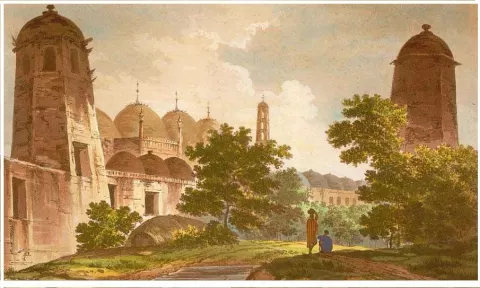
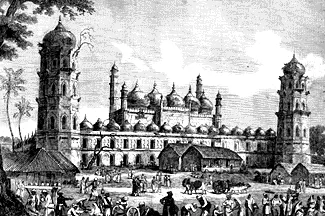
The first Jagat Seth
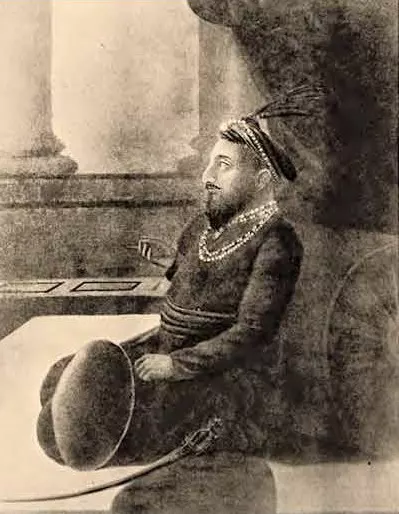
Manick Chand had no children and was succeeded by Fateh Chand, his nephew, the son of his sister Dhanbai. Fateh Chand was the first Jagat Seth – Banker of the World. Emperor Muhammad Shah (r. 1719-1748) conferred upon him the title Jagat Seth as a hereditary distinction and under him the House reached its zenith. The title of Jagat Seth was and is a testimony to the unique position acquired by his House in Bengal and beyond. Jagat Seth was held in high regard by both the Emperor and the Nawab and the European companies courted him for the weight that his words had with the rulers. Such position as the most important man in India’s finances naturally led to his involvement in the politics of the period.
The first Jagat Seth
Involvement in politics
Jagat Seth was on good terms with Murshid Quli Khan and his successor Shuja-ud-Din Muhammad Khan (r. 1727-1739) to whom he served as a councilor of state. Situation changed after Sarfaraz Khan succeeded Shuja-ud-Din Muhammad Khan. There are two versions of story why Fateh Chand broke his alliance with the Nawab.
One story states that Fateh Chand had a beautiful daughter-in-law that caught an eye of Sarfaraz Khan. Nawab abducted her, brought her to his harem and dishonored her. The lady was afterward returned to her husband fiscally unharmed. The Seth family was shocked and enraged by the Nawab’s madness and had thus supported his rival.
The other story tells that Murshid Quli Khan kept his personal treasure in the coffers of the Seth family and the sum of seven crore remained unpaid by the banker. Murshid Quli and the Shuja-ud-Din never asked the banker for this money but the Sarfaraz Khan pressed the banker for the sum. Fateh Chand asked the Nawab to give him some time for repayment since the amount was huge, and in the meantime allied himself with the Ali Vardi Khan that was preparing a rebellion against the Nawab.
The fact is that Ali Vardi’s rebellion was successful; he defeated and killed Sarfaraz Khan in the battle at Giria in 1740. It is interesting how Fateh Chand helped the Ali Vardi Khan; he convinced the Sarfaraz Khan that if Ali Vardi troops are provided with money as a bribe they will turn against him and bring him as a prisoner in Murshidabad. The Ali Vardi Khan actually knew about this plan and money sent to his troops as a bribe was actually sent to Ali Vardi Khan. He then used the money to boost his troops and to become the Nawab. Throughout his reign Ali Vardi Khan (r. 1740-1756) depended on Jagat Seth for credit, especially to finance battles with Marathas.
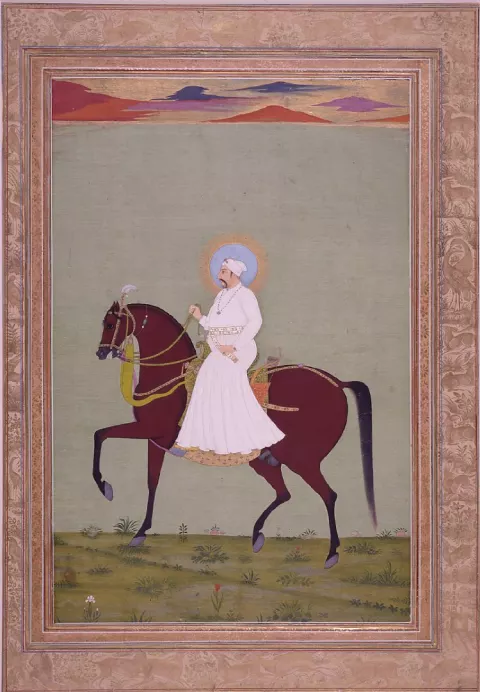
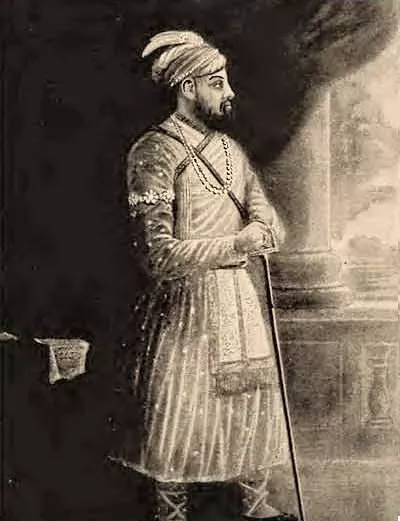
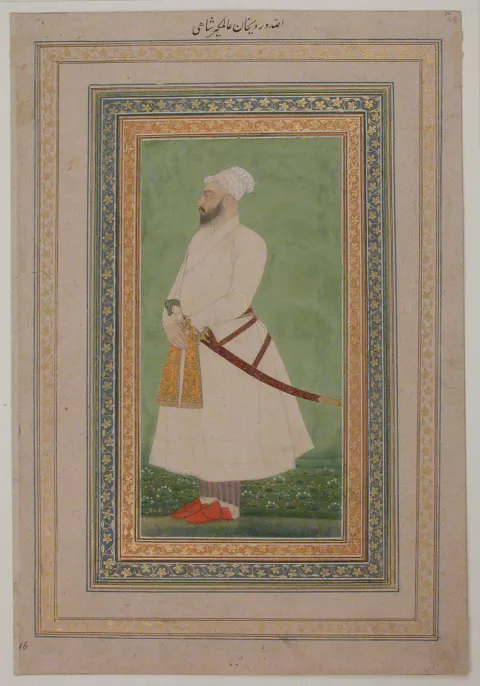
The second Jagat Seth
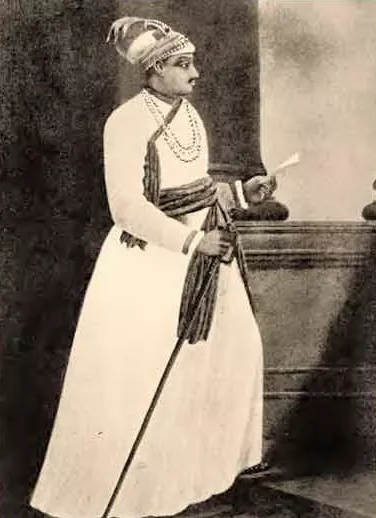
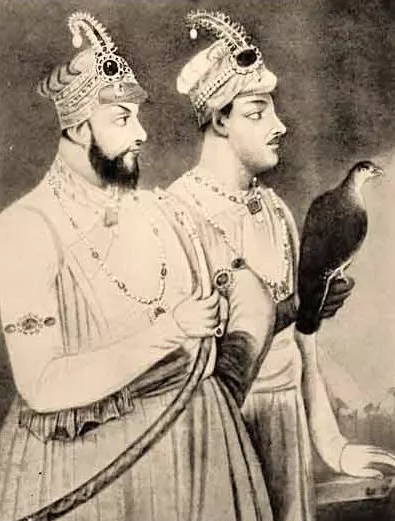
After Fateh Chand’s death in 1744 his two grandsons, Mahatap Rai and Swarup Chand, were joint heirs to his property. Fateh Chand’s two sons Anand and Daya predeceased him. Mahatap Chand was given the title Jagat Seth, and Swarup got the title of Maharaja. The second Jagat Seth was also involved in politics and played a decisive role in Bengal’s and India’s history. Because of their financial power Ali Vardi always paid heed to the advice of the Seths, he advised his successor, Siraj ud-Daulah (r. 1756-1757), to do the same. The new Nawab was too confident in his power and turned the Seths away from himself. Already at the beginning of his reign Nawab insulted the Seths. The royal confirmation of the Nawabs’s post from the Emperor did not came in time, and in this foul mood he started to argue with Seth about the reasons of delay. Seth had not provided a satisfactory answer, so the Nawab punished him by ordering to raise three crores of Rupees out of the Seth’s pocket. When Seth asked the Nawab to withdraw his decision the Nawab punched him in the face and had him confined.
The second Jagat Seth
Seth’s part in shaping Indian future
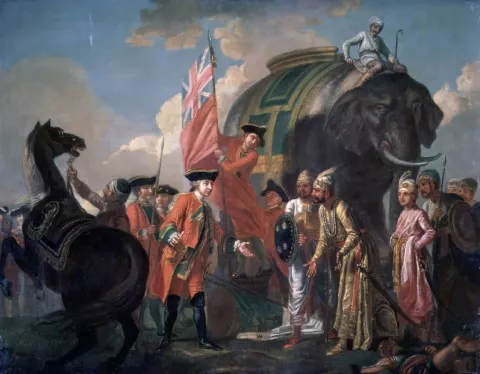
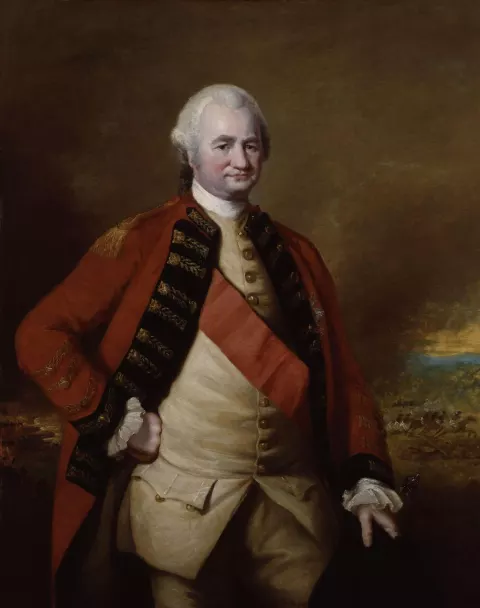
For the offence inflicted upon him by the Nawab, Seth decided to join the conspiracy against the Siraj ud-Daulah. The conspiracy was led by the British under Robert Clive, and Mir Jafar – future Nawab, the puppet of the British. After the defeat of the Siraj ud-Daulah’s army in the famous battle of Plassey (1757), a conference was in the house of Jagat Seth regarding the share of the booty. The English acknowledged his efforts as well the new Nawab Mir Jafar (r. 1757-1760 and 1763-1765). When Mir Jafar went to Calcutta, the British foothold, he was accompanied by Jagat Seth. There they were given a lavish welcome and reception at the East India Company’s expense; about 80,000 Rupees was spent for the amusement of the Nawab and 17,374 for the entertainment of the Seth.
The Battle of Plassey marked the beginning of British rule in India. Although there were still Nawabs, they were dependent on the British. Mir Jafar kept good relations with Seth, he knew that Seth had the power of money and he knew too well how easily people turn sides at the jingle of coins. Mir Jafar’s successor, Mir Qasim (r. 1760-1763), however, was an independent ruler that did not want to be a puppet in British hands. He intercepted secret correspondence between the English and the Seths so he decided to transferee Mahatap to Munger and kept him under close surveillance. However, war broke out between the English and Mir Qasim, and immediately after the latter’s defeat in Battle of Udhwa nala in 1763 the enraged Nawab killed the two Seths by throwing them from the tower of the fort in Munger.
Steady decline
After the death of the two cousins, their sons inherited their titles. Khosal Chand, the eldest son of Mahatap Chand, was bestowed with the title of Jagat Seth and Udayat Chand, son of Swarup Chand, inherited his father’s title of Maharaja. The two cousins ran business together, just like theirs fathers before them. Only, Khosal Chand was only 16 when he became Jagat Seth.
With the rising power of the English, and the declining power of Nawabs – the old allays of the House of Jagat Seth – the influence of the House, financial and political, was rapidly declining. Especially powerful blow was inflicted upon the House in 1765, when the English East India Company was granted Diwani (right to collect revenue) of Bengal in return for an annual tribute of 2.6 million rupees. By then, this right was practically in the hands of the House and one of their greatest sources of income. Also, the grant of Diwani further reduced the need of the Company to look for money from the Seths for commercial investments.
With Diwani right in the hands of the East English Company and their rise as a territorial power, the decline and fall of the House was inevitable. During the 1780s began the rise of the European Agency Houses and the following decade made the traditional banking at state level unnecessary. Thus the banking family of the Jagat Seths, which played so significant role in the late Mughal polity in Bengal, got lost in terms of financial power and influence from the 1780s.
Allready in 1765 Khosal Chand wrote to Robert Clive complaining about distressed situation the House was in. In the following year the Seths claimed a sum of about 50 to 60 lakh of Rupees from the English, of which 21 lakhs were already advanced to Meer Jaffer for maintaining the Nawab’s and the Company’s army. The fall of the House was further aided by the fact that Khosal Chand was a spendthrift and a lavish benefactor for religious matters; he built several Jain temples in the Parasnath hills. He died in the age of 39. According to a story Khosal Chand had buried a vast treasure but before he could tell anyone about its location he died. Supposedly there are four chests of Arcot coins, two chests containing mohurs (gold coins), and two other chests containing gold and silver bullions. Besides, there is one chest of diamond and precious stones, and another chest of jewels. Apart from these there are also pearls and two statues. One of goddess Laxmi made of ruby and other of Lord Pareshnath made of emerald.
Steady decline
Later Seths
After the death of Khosal Chand his nephew Harack Chand inherited his property and was given the title Jagat Seth, which was conferred upon him by Warren Hastings - the first Governor-General of Bengal from 1772 and the first Governor-General of India 1773 to 1785 – and not by the Emperor.
After him there were two more of Jagat Seth; his son Indra Chand and grandson Gobin Chand. Gobin Chand’s son, also named Gobin, was not conferred the title of Jagat Seth, by his time the House of Jagat Seth had become insignificant. After the family wealth was drained out, Gobin Chand lived with an annual pension of 1,200 Rupees which was given to him by the East India Company for the services rendered to the Company by his ancestors.
4 lives in this room
More lives in this room
- Hiranand Shahu 17th century
- Fateh Chand c. 1680- 1744
- Manick Chand d. 1714
- Omichund d. 1767