Museum / Rooms / History of taxation in the Medieval and Early modern period
Room · 9 chapters
History of taxation in the Medieval and Early modern period
TAXATION IN THE MEDIEVAL AND EARLY MODERN PERIOD
Taxes as source of revenues and political (in)stabilities
Taxation policy
Medieval and early modern systems of taxation were shaped by two factors – the feudal system which limited the rulers’ base of tax payers, since the nobility and the Church were virtually exempt from paying taxes of any kind, and religion which considered any excessive tax collection a sin against God and people. Thus, the medieval rulers who were always in need for additional revenues to finance their lavish lifestyles and conduct wars found the way out of the situation by imposing special taxes on the Jews, the only royal subjects that didn’t possess God’s protection in Europe.
Arabic caliphate
Taxation was an important part of the success of Islamic conquest starting from the 7th century. Believing in human and tolerable taxation, the Arab conquerors actually brought relief to population exhausted by oppressive and corrupt tax systems of the previous rulers. Islamic states also provides perhaps the best example of the over-use of tax avoidance in history. The large conversions on Islam were actually voluntarily and motivated by personal benefit of non-Muslim subjects who wanted to avoid payment of the poll or head tax.
The words of the caliph’s vizier, Ja’far ibn Yahya (767–803) testify about progressive understanding of taxes in Islamic world: “A ruler who burdens his taxpayers until they cannot cultivate the land is like one who cuts off his flesh and eats it when he is hungry. He grows stronger in one part and weaker in another…”.
Spain
In the early Modern period the Spanish Empire was undoubtedly among the richest and largest empires in world history. The royal treasury was filled with fabulous incomes that came from its domains in Europe and the Americas. The king imposed royal fifth or “Quinto real” on all gold and silver bullion imported from the New World. However, wealth was a temptation and no one wanted to give up what he had considered his own. Consequently the Spaniards developed the best system of fraud and evasion that history has ever seen. Smuggling, bribery, false declaration of value and other devices were routinely used to evade the royal taxes. Due to the tax evasion and bad political decisions, Philip II scored almost impossible – he actually declared bankruptcy four times during his reign.
Aztec and Inca Empires
The main reason behind the collapse of the powerful Aztec empire in Mexico and the Incas in South America represented their taxation system. By recognizing and taking advantage of discontent taxpaying vassal states, the minor forces of Spanish conquistadors were able to crush these empires and seize their incredible fortunes.
Russia
That taxes were not always necessary evil testifies the example of Russia. Taking advantage of the tax system, the Moscow Prince Ivan I (r. 1325-1340) nicknamed “Kalita” or “Moneybag” became the chief tax collector for of all Russia which was under the yoke of the Golden Horde from the 13th century. This position allowed him to collect a huge wealth and vast lands. Thanks to his legacy, his ancestor Ivan IV the Terrible was able to expel the Mongols from Russia in the 16th century and to restore control over Russia. From then on Moscow emerged as the leading city in Russia. The reform of tax system also played an important role in transforming Russia into modern and powerful state under Peter the Great (1682-1725).
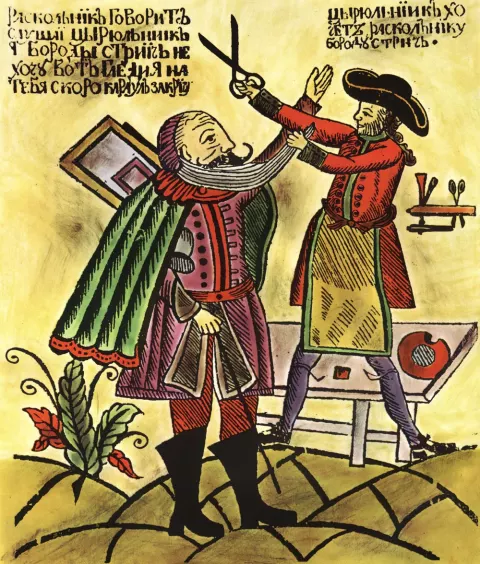
In 1705 Tsar Peter the Great levied a tax on beards to encourage the adoption of European customs. Only Orthodox clergy that was obliged to wear beards were exempted of this tax.
Germany
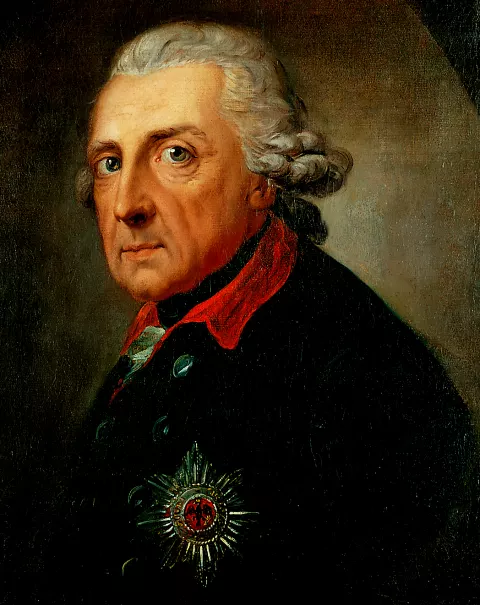
Holy Roman Empire was the monarchy created in the 9th century that lasted until the 19th century. Prussia was one of the strongest states in the Empire. Its powerful rulers were able to increase their revenues by imposing taxes on the nobility and the Church that were exempted until then. Frederick the Great (1740-1768) went so far in his desire to improve the conditions of lower class that he proclaimed himself the “King of the Poor” and replaced heavy taxes with low ones. Of course, as it turned out, it was only temporarily.
During one of his government meetings, the Prussian king Frederick, who was dissatisfied with state revenues, asked his finance minister to explain him how the treasury was empty when subjects were paying so much taxes. To explain the problem, minister took a piece of ice and gave it to the minister who was sitting farthest to the king. Then he told him to pass this ice to the next person all the way to the king. When the ice finally reached Frederick, all he received was a wet hand.
France
The long period of material inferiority of the medieval French rulers ended with Philip the Fair (r. 1285-1314) who was determined to increase his revenues at all costs. After he successfully destroyed the French Jews and the Knights Templars and confiscated their wealth he turned to taxing the Church’s property. However, the Pope was not willing to easily give up his income and threatened the king with excommunication. Although excommunication might not sound so serious, it had a serious effects for the excommunicated ruler who lost all power over his subjects. The conflict was solved by moving the papal residence to Avignon between 1309 and 1377 during which the Popes were subordinated to the French king. Several centuries later, a tax placed on salt helped spark the French revolution in 1789.
The French Crown created a large base of offices and noble titles for sale that could be treated hereditary if the holder was able to pay annual tax called “paulette”.
England
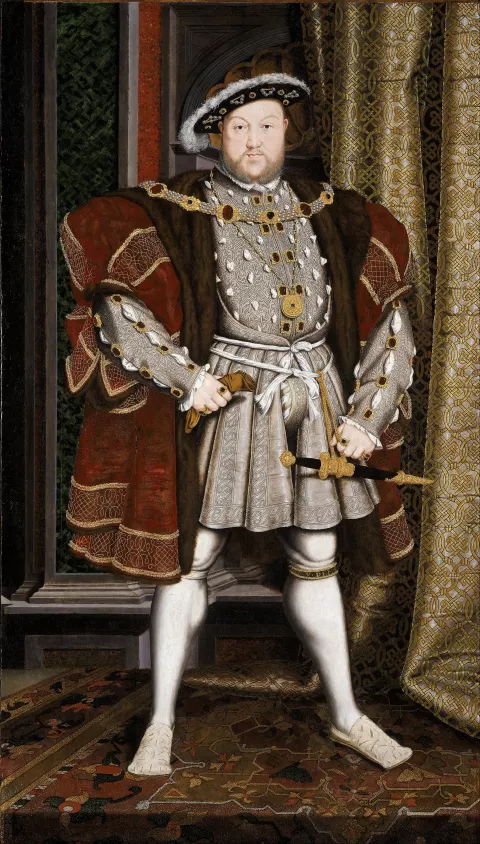
Thanks to its progressive tax system that stimulated trade and the absence of tax immunity for the rich, England became the leading commercial power in the world. English history is also full of colorful rulers whose tax policy dramatically changed the history of the country. King John (r.1119-1216) who often taxed nobles was literally forced by his barons to sign the Magna Carta (1215) which limited the king’s power to raise revenues. King Henry VIII (r. 1509-1547) who founded the national Church of England and appointed himself the supreme ruler of the Church and its riches did it primarily for two reasons: because the Pope refused to grant him a divorce and to stop the drain of English silver and gold to the Pope’s coffers. A disagreement on the rights of taxation between the Parliament and the King Charles I (1625–49) ended with the scandalous king’s execution.
One of the bizarre taxes of England was certainly a window tax from 1696. As houses were taxes based on the number of windows that led to many houses had very few windows in order to avoid paying the tax. Eventually this became a health problem and ultimately led to the tax’s repeal in 1851.
Chapters
- Taxation in the Middle Ages and Early modern period
- Arab caliphate
- Jews
- Spanish Empire
- The Aztec and Inca Empires
- Russia
- Germany
- France
- England
Taxation in the Middle Ages and Early modern period
As the early medieval kingdoms of Europe were, generally speaking, inferior in comparison with the ancient Roman civilization, most of the taxes disappeared in the Western Europe by the 8th century. All that has left of the past times were tolls and taxes on goods transported by land and water.
Taxation policy of the period was strongly influenced by two main features. The first was social and economic system known as feudalism − a system of landownership and mutual obligation found in many parts of Europe throughout the most of the Middle Ages. It emerged after the fall of the Western Roman Empire when the lack of money and the constant threat of barbarian attacks encouraged the rulers to find another base for their rule. As owners of the whole land, the rulers started to grant fiefs to their vassals with the right to use the land and income of that property in exchange for personal loyalty and regular military service. The system flourished until early 14th century when the rise of centralized kingdoms and the overall economic progress, caused its gradual erosion. The centralized kingdoms which sought a new source of revenue, founded the various forms of direct and indirect taxes on property and commerce, but they often needed the approval of representative bodies of the royal subjects.
The second feature which influenced the policy of medieval taxation was of religious nature. According to religious beliefs of the time, the excessive tax collection was regarded as a sin against the God and the people, an action punishable by God. The medieval rulers found themselves in a kind of stalemate – on the one hand, they had limited revenues as they had a small base of taxpayers since Church and nobility were exempted from paying taxes, while on the other hand the introduction of new taxes or increase of the existing ones was heavily disapproved. The only subjects that didn’t possessed “God’s protection” were Jews. With desire to improve their material situation almost every Christian sovereign of the period in question imposed special taxes on the “Chosen People”.
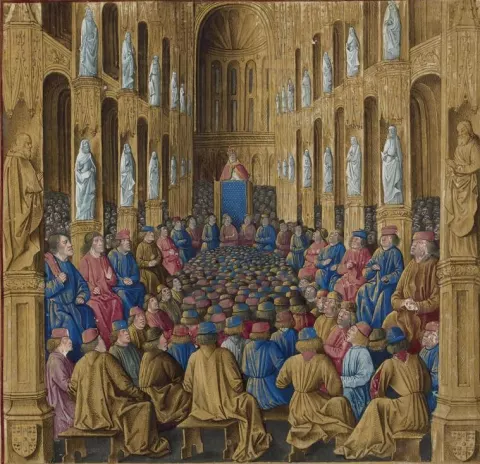
Church council. Pope Urban II at the Council of Clermont, 1095. Illumination from the Livre des Passages d'Outre-mer, of c. 1474.
Arab caliphate
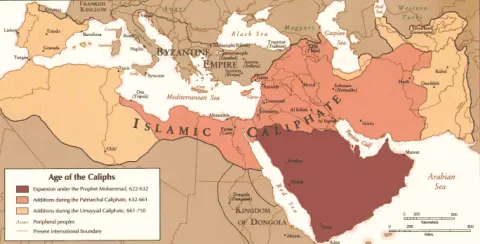
The fall of the Western Roman Empire in the 5th century opened a way for other political powers to enter the historical scene − in the West these were the early Medieval Christian kingdoms, while in the East the Islamic states became a dominant political factor in the world history from the 7th century.
The speed and efficiency of early Islamic conquests followed by the process of mass conversion to Islam have long been the subject of various controversies and exaggerations. But the success of Islamic conquests can be rather attribute to the wise expansionistic strategy and tax policy rather than the war brutalities.
The Arabs brought relief to over-taxed and exhausted people who were usually subjugated to oppressive and corrupt tax systems. The strong belief of the early Islamic caliphate in humane and tolerable taxation was very well expressed in the following words of the caliph’s vizier, Ja’far ibn Yahya (767–803): “A ruler who burdens his taxpayers until they cannot cultivate the land is like one who cuts off his flesh and eats it when he is hungry. He grows stronger in one part and weaker in another…”.
The general practice of the Arabs was not to interfere dramatically in the existing tax system. On the large parts of the territory that belonged to the Roman Empire – the Middle East, North Africa and Spain, the existing poll and land taxes were simply continued. But the changes they introduced were part of the broader strategy. In order to strengthen their political position the numerically scarce forces of the new religion considered the increase in number of their coreligionists of crucial importance for retaining the occupied territories. Taxes have become a tool with which they meant to achieve that. The same pattern would be applied by the Ottoman Turks few centuries later.
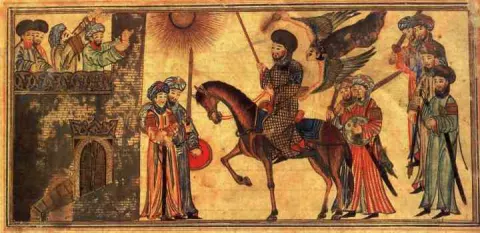
Mohammed receiving the submission of the Banu Nadir, a Jewish tribe he defeated at Medina. From the Jami’al-Tawarikh, dated 1314-5.
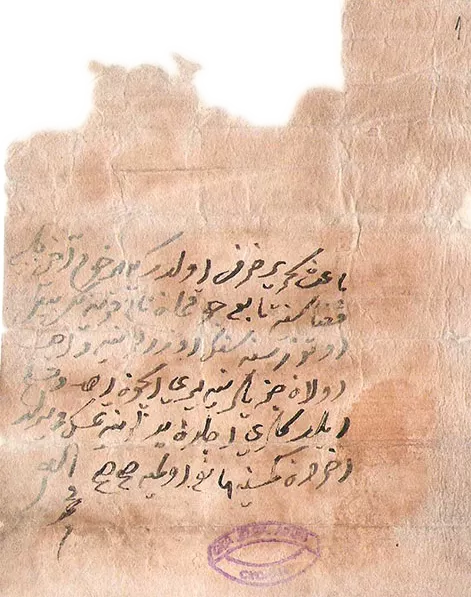
A jizya document from 17th century Ottoman Empire.
The poll or head tax of the Roman times was reduced and sought only from the non-Muslims. Thus, Zoroastrians in Persia and large number of Christians joined the Islam voluntarily, although driven by economic reasons, to avoid paying of taxes. This is maybe the best example in history of the over-use of tax avoidance. Non-Muslim population of the Empire was obliged to pay aforementioned poll tax (“jaliya” or “jizya”) as a price for protection and safe practicing of their religion, work, and freedom. Regarding the large territorial extension of the Islamic state, the poll tax naturally varied and was not uniformed. Rates were adjusted to local circumstances and were generally 4, 2 or 1 dinar. For example, in Egypt was 2 dinars for adult male “infidel”, while in other, less prosperous places, 1 dinar was common.
The other main tax, “kharaj” or land tax was imposed on all landowners, regardless of whether they were Muslims or not. The goods produced on landowner’s property – grain, fruit and livestock – were also subject to taxation. However, this tax also had an exclusive characteristic. In comparison with other Muslims and non-Muslims in the empire, the rate for the Arabs was lower, and according to some theories they were entirely exempted from paying of taxes.
Another important tax of Islamic state was “zakah”, which was based on wealth and was collected annually and separately from that of state taxes. Cash holdings, assets and inventories were taxed at a standard rate of 2,5 percent. Interestingly, it was paid by those with surplus liquid wealth for social and humanitarian causes, that is, for the benefit of the poor and needy. Among other levies, we should mention those on imported and exported goods and craft products made in the cities. In Spain they introduced a hated 5 percent excise tax which was perhaps the world’s first excise.
After the subject paid the tax, a tax receipt was stamped on his neck with an indelible ink as a form of tax record. They adopted this custom from the Persians. Although it was a bizarre practice, its actual purpose was to protect taxpayer of paying double payment and served as his personal passport for safe travel in the country.
With the conquest of Spain in the 8th century, the conquests of the early Islamic state reached its peak. The end of expansion was partly motivated by decision to farm out taxation to local governors which resulted in the rise of corruption and reduced inflow of money to the ruler. Thus, good principles of taxation present in the early period of Islamic state were eventually replaced by the heavy increase in tax rates, extension of tax base on all subjects and more oppressive methods of collection, which negatively affected the overall development of the state.

Jews
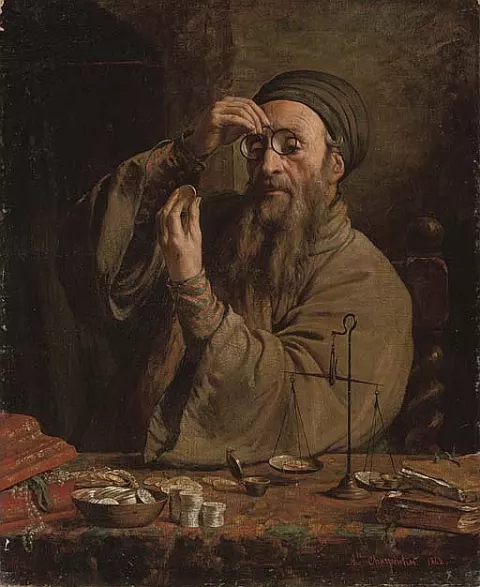
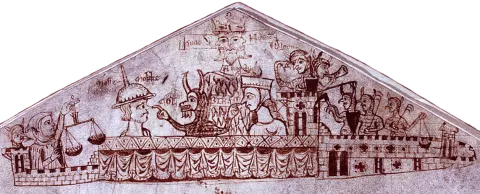
In the medieval world which was regulated and defined by religion in almost every aspect of life, the Jews were the only non-Christian community in the wider area of Europe. Their uniqueness outlawed them. Not only were they blamed for Jesus’ Calvary, but the moneylending and banking professions they performed where generally perceived as despicable and unworthy of a decent man. According to medieval Christian philosophy, making money for “doing nothing” and charging interest on loans (usury) were against its understanding of decency, morality, justice and hard work. However, the medieval world was also pragmatic and aware of the fact that they depended on services the Jews provided. Therefore, the Jews were protected as long as they were useful to society.
The shift from ancient agricultural occupations to banking and commercial operations of the medieval and early modern period enabled to the Jews to acquire a considerable wealth. The rulers who were always in need for money saw the Jews as a source of large and easy cash. However, providing loans to royalty was a dangerous game because when the loans become too high, the protection could easily be withdrawn.
Very soon the Jews realized that the land was uncertain − in an emergency it must be left behind and in normal circumstances could always be seized. For instance, after they were expelled from France in 1306 and Spain in 1492, the market has been flooded with their estates. The fifty Jewish houses could be acquire for nothing in France, while the farms in Spain were sold for piece of linen. Thus, the safest way for Jews to preserve their wealth was to keep it in the movable forms.
The ancient Jewish kingdoms of Israel and Judah were destroyed due to the unsuccessful tax revolts and the Jews pulled a strong lesson from that unfortunate event. No matter how much the taxes were oppressive, they paid them peacefully and looked at them as self-protection device.
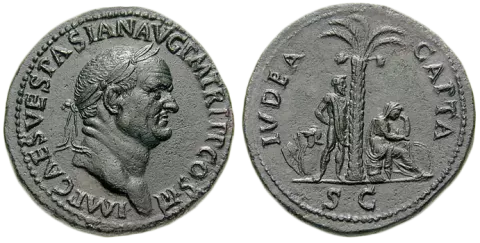
The first anti-Jewish taxes occurred during the reign of Roman emperor Vespasianus in 72 AD, but were abolished in 326 AD by Emperor Julian. Special taxes were reintroduced in 813 AD by Louis de Pious, the son of famous French ruler Charlemagne. Initially a modest revenue quickly escalated.
Vespasian sestertius, struck in 71 to celebrate the victory in the first Jewish-Roman war.
There were many Jewish taxes. Regular ones consisted of religious, commercial, death and poll taxes. The hardest were poll taxes, wealth taxes and arbitrary tallages, which were imposed whenever government was in need for cash. The poll tax was graduated, which means that the wealthy Jews paid more than the poor ones. The introduction of the wealth tax was considered morally justified since it was earned by “sinful means”. It was calculated on a fixed percentage of Jewish wealth, such as 1/3 or 1/10 or it could be a fixed sum. Various religious customs, such as marriages, burials, mines, kosher food, and religious paraphernalia were taxed. The death tax amounted 1/3 of the estate.
Among the taxes which Jews needed to pay were also: coronation taxes, naval taxes (in Spain they were obliged to provide the anchors for all new vessels), protection taxes (for the military), and taxes for public amusements (to pay circus performers). They were also subjugated to special taxes when they used roadways, bridges, and even when they entered and left Christian marketplaces and fairs. Financing of Church constructions and the Crusade wars was also their domain.
Various taxes imposed on Jewish community were mainly collected by the Jews themselves. The famous Jewish ghettos actually had a purpose of the tax district. Three main systems of internal tax collection developed.
According to first method, described as progressive, an honorable elder Jew distributed tax burdens among all taxpayers on the basis of their ability to pay. The wealthy were expected to provide a larger share than the poor. Actually, the poor together with rabbis, doctors, and teachers were exempted. The second method can be described as proportionate. The tax expert divided the tax owed by community upon accounting principles, and every taxpayer paid his share after being interviewed by the tax expert. For example, if the total wealth of the community was one thousand talents and the tax bill was one hundred talents, then each person was obliged to pay 10 percent of his wealth. And the last method was declarative. After everyone made a declaration of their wealth, the tax bill was divided proportionately among all taxpayers according to their declarations.
The modern revenue system for income taxation is based on these three methods practiced by the medieval Jews.
Special Jewish taxes in Europe lasted until the 19th century and the time of Napoleon who introduced the tax equality in the conquered countries. Unfortunately, this idea in most of the cases lasted as long as his rule.
Spanish Empire
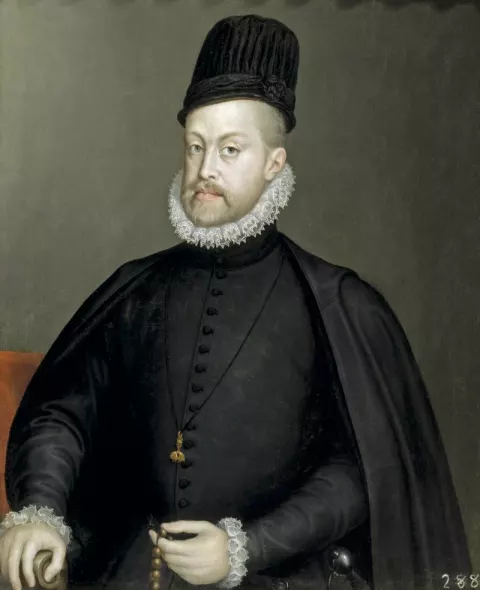
The period of the 16th and 17th centuries in the Spanish history were often called the “Golden Age of Spain”. During the reign of Charles V (b. 1500-1558), and his successor Philip II (b. 1527-1598) the Spanish Empire was one of the richest and largest empire in the world history. Known as “the empire on which the sun never sets” (“el imperio en el que nunca se pone el sol”), it had on its disposal vast resources and the greatest military and naval forces in the world. One of the historical ironies is that, Philip II, lord of the largest empire in the world hardly ever left the Escorial, the splendid palace built in the mountains near Madrid.
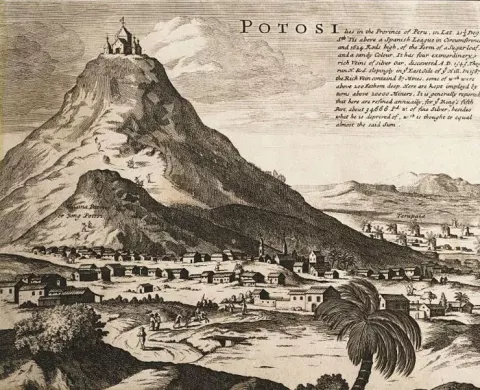
Through conquests and inheritance, Charles V came into possession of a large Spanish and Habsburg Empires extending across Europe from Spain and the Netherlands to Austria and Kingdom of Naples, reaching overseas to Spanish America. No ruler in history ever had such an influx of wealth in his treasury. In addition to revenues from the European domains, the silver mines in the Americas opened in the mid-16th century produced huge quantities of precious metals and emeralds which were annually shipped to Spain.
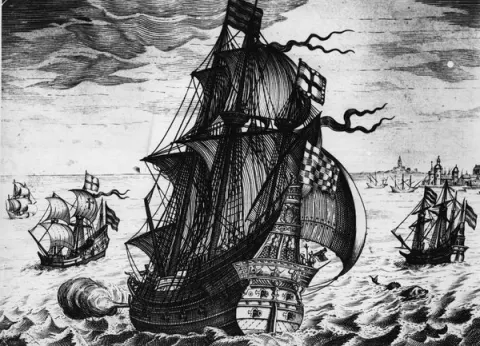
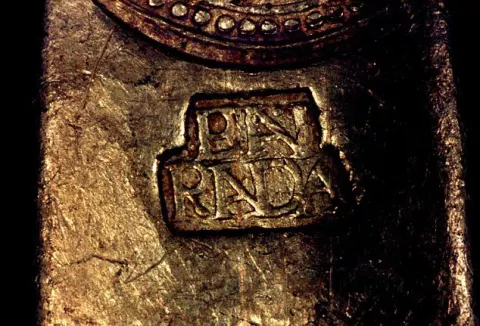
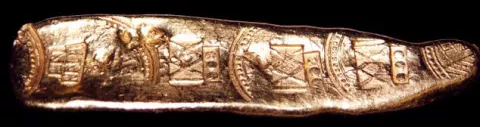
In theory all trade needed to enter certain ports of entry in Spain to clear taxes. There was also a tax imposed at the port of departure, a convoy tax and obligation to pay for the escort vessels. In 1600 the convoy tax was 6 percent, and thirty years later, in 1630 it was a 35 percent. Royal fifth or “Quinto real” was imposed on all the gold and silver bullion imported from the New World. In addition to this tax, the government knew simply to confiscate bullion whenever it was short of money and gave to its owners the government bonds instead.
The great riches of the New World were source of temptation for everyone, and everyone tried to keep its share at all costs. Eventually, the Spaniards were credited with development of the best system of fraud and evasion that history has ever seen. Smuggling, bribery, false declaration of value and other devices were routinely used to evade the royal taxes. The truth is that it is impossible to know how much silver was really shipped to Spain in the early 1600s. Custom records show that in 1600 silver worth 30 million pesos was shipped to Spain, and fifty years later, when the smuggling was at its heights, that number has dropped to three million pesos. The Crown tried to stop the smuggling in every possible way. Initially, the death penalty was introduced for the smugglers, but as it proved to be inefficient, it was replaced with offering of the pardon for confessed smugglers if they promised to behave well.
On the other hand, despite of the tax avoidance the Spanish rulers still received enormous amounts of wealth from the New World. The wealth which was unfortunately wasted in the most imprudent possible way. Spain’s role as a pillar of Catholicism bounded it morally to wage the wars against the Reformation and the Ottoman Turks which drained most of its assets. Both rulers were forced to borrow large sums from financiers such as the Fuggers, and the interest payments consumed the majority of government’s yearly revenue. Philip II succeeded to declare during his reign bankruptcy for four times!
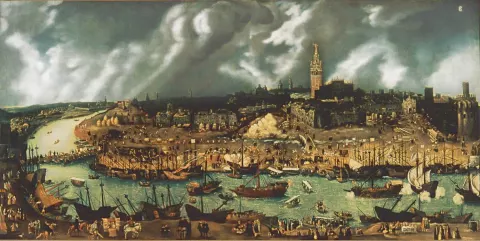
The port of Seville in the 1500s. Originally, all trade with the colonies in the Americas was required to go through this port.
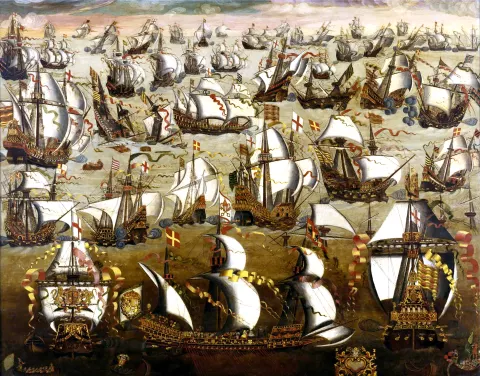
Constant flow of gold and silver into Europe caused inflation in the mid-16h century. The wealth from the Americas was not invested in a low domestic agricultural and industrial production, but was rather spent on waging wars and consumption. To fulfill requests from the colonies for manufactured goods, the Spain had to import goods from Europe, at unfavorable conditions and paying with the money which was rapidly losing its value. And while Spain became weaker, its opponents grew richer.
Since the bullion from Americas provided insufficient revenues to support Spanish wars, the rulers resorted to high taxation of its subjects. The lack of funds they first tried to compensate in homeland.
Spain already had the “alcabala”, a 10 % excise on the transfer of all real and personal property. In practice it had depressing effect on trade and industry as on the same goods, as they changed hand, tax was paid each time. Since large landholders and church were exempted from direct taxation, the poor carried all tax burdens of the state. Their only participation in the tax system was the payment of taxes, which the ruler and corrupted Cortes, a body of taxpayer representatives, agreed on for mutual benefit. They fought the system in every possible way. Some fled to the New World, others who were educated entered the tax exempted civil service, those with money and connections bought the peerage, while poor peasants joined the bands of gypsies.
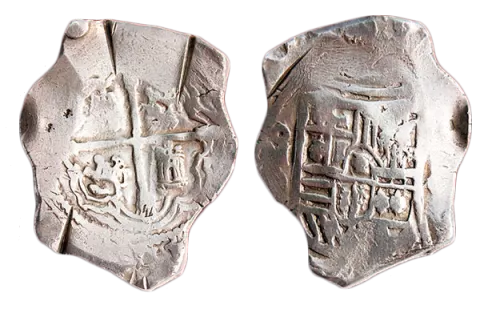
A silver 8-Reales (Peso) coin minted in México (1621-65).
So, when the trade with the Americas began to fade and revenues from Castilla were drying up, the Crown turned to provincial taxation as a last resort. Although from the ruler’s point of view greater participation of provinces in the share of the empire’s revenue burden was just, the provinces which were more than aware of their traditional “ancient customs and liberties” responded with revolts. All that led to further weakening and depletion of state funds. The Spain’s enemies – the Dutch, English and French took advantage of the opportunity and started to seize the Spanish overseas colonies.
Therefore, the disintegration of the powerful Spanish Empire starting from the 17th century was actually a joint result of bad economic policy and massive tax evasion practiced by its rulers and subjects.
The Aztec and Inca Empires
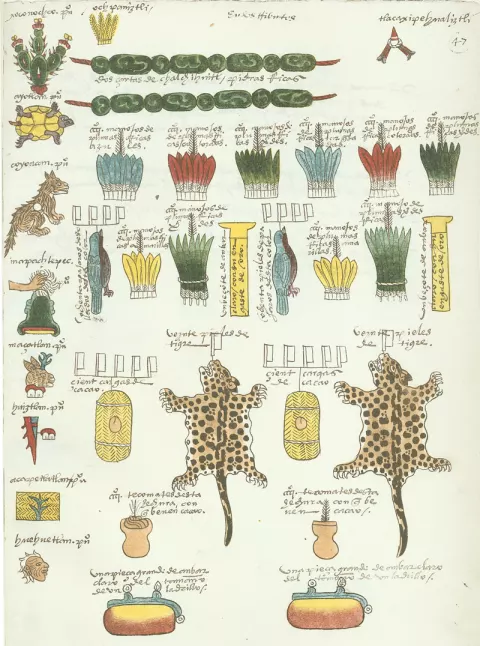
This facsimile from the Codex Mendoza (c. 1541) shows tribute that the Aztecs extracted twice a year from the cacao-growing region of Soconusco in southern Mexico
It is still difficult to understand how the powerful and advanced civilizations of the Incas and Aztecs in Mexico and in Central and South America have collapsed under inferior and scarce armies of the conquistadors in such a short time.
The leaders of the invading forces, Hernán Cortés and Francisco Pizzaro, were not even famous military generals. It is a known fact that Pizarro at one time earned for living working as swineherd. Also, they were not accompanied by a large army of skilled warriors. Cortés had at his disposal 508 soldiers, 16 horses, 14 cannons and a few greyhound dogs, and Pizzaro even less, 200 men, 30 horses and a few small cannons. But both men had in common high ambitions, fearlessness and ingenuity.
The taxation system of the respective empires is recognized as their weakest point. The Aztec Empire stretched on the vast area and was comprised of 400 to 500 small states. These vassal states were not military occupied and the Aztec tax director and few of his assistants were the only representatives of the Aztec ruler in foreign countries. The subjugated states were obliged to provide taxes specified in treaty every 80 days. According to preserved tax records, the king Montezuma received every year solely on basic items 7000 tons of corn, 4000 tons of beans and no less than 2 million cloaks. Naturally, defiance against the taxation was common, and the empire was always on the edge of revolt. Thus, Cortés actually succeeded to defeat Montezuma by recognizing the discontent of his taxpaying vassal states and using it as a main weapon.
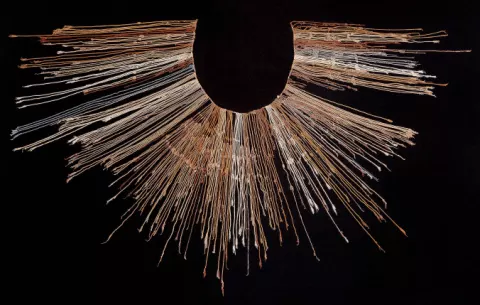
The civilization of the Incas in the South America was the largest empire in the world extending over a vast area from northern Ecuador to central Chile. It was headed by the ruler who was regarded the “Son of the Sun”. The state was divided into four provinces, each of which was divided in numerous tax districts on hierarchical principle: units of 10,000 taxpayers, then sub-units of 5,000, then, 1,000, then 500, then 50, then 10 at the bottom. In contrast with the Aztecs, who exacted products and commodities from their vassal states, the empire of Incas was more centralized and sought labor from all taxpayers. Identically as Cortés, Pizzaro used the discontent of vassal taxpayers to crush this civilization.
Under the Spanish rule, the Aztecs and Incas were decimated by disease, conflicts and over-taxation. The historical phase of Spanish colonization of the Americas thus just started.
Russia
The early history of Russia is a history of a multitude of cities that gradually coalesced into an empire. The river routes of Russia served as a natural link between Scandinavia on the north and Byzantine Empire on the south by which transport of furs, slaves and other luxury commodities was carried out. Kiev, Novgorod and Pskov were the leading trading centers on the Waterway.
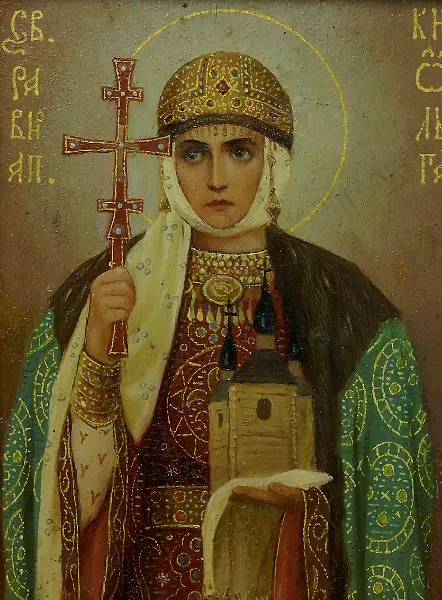
The initial form of taxation implied collection of taxes made by princes of these three cities during the annual visit to subjugated towns in the countryside. The reign of Princess Olga, by contemporaries called “the wisest of women” and “wiser than all men” in the mid- 10th century, brought major changes to the system. The countryside was divided into tax districts and each tax district had its own tax director who was responsible for all revenues and who lived there permanently. Due to this tax policy, Kiev emerged as dominant in the Waterway, and one of the most prosperous cities in all of Europe. Economy of Kievan Russia was based on agriculture as well as on trade, with the predominant agricultural population.
The prosperity lasted until the 13th century, when forces of the Golden Horde led by Genghis Khan’s grandson, Batu Khan, occupied the land and during its rule succeeded to demote the Russian civilization for centuries. The Mongols demanded 10 percent of everything. During two hundred years of Mongol rule, three taxation phases can be distinguished.
Mongols considered the tax collection beneath the dignity of the warrior’s vocation and initially farmed out the collection to the powerful Muslim merchants of Baghdad. Their methods were oppressive, and in the second half of the 13th century the Muslims were liquidated in several violent revolts. Subsequently, the Khan agreed to remove them from the tax scheme and to reform the system. In the period that followed, Russia was divided into military-financial districts managed by “Great Baskak”, the Mongol tax director whose position was enhanced by Mongol military garrisons. A census was made which included all lands, people and registry of young males for recruitment. There were seven basic taxes imposed on Russian population: annual and extraordinary tribute, sale and customs, raw land taxes, a plow tax, a poll tax, and a draft evasion tax. The third phase, marked by khan’s decision to shift the power from the “Great Baskak” to native Russian princes regarding the tax collection, proved to be fatal for their interests.
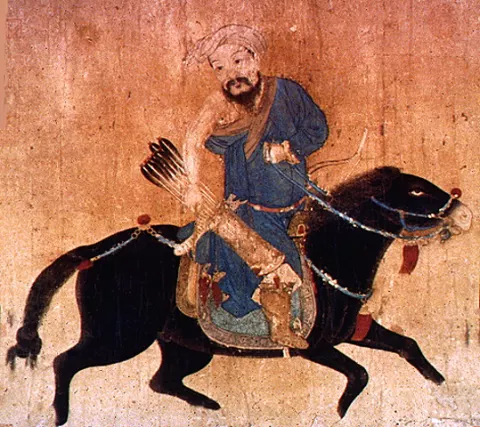
Drawing of a mobile Mongol soldier with bow and arrow wearing deel.
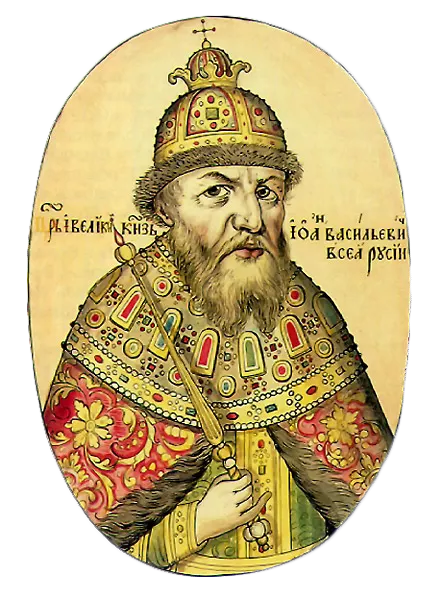
Although a practical solution for the Mongol khan who on one hand, continued to receive revenues that belonged to him, and on the other, reduced the expenditures since there was no more need for Mongol garrisons, side effect was a dangerous strengthening of Russian princes. One of them has been extremely successful. He was the Moscow prince, Ivan I nicknamed “Moneybags” due to his effectiveness. Ivan managed to become a chief tax collector for all of Russia. While performing this duty, he managed to amass a huge wealth and lands. Thanks to his legacy, his successor Ivan IV “the Terrible” was able to expel Mongols from Russia in the 16th century acquiring the title the “Tsar of all Russia”. Thus, by controlling tax system, the Russian princess actually succeeded to restore control over Russia. From then onwards, Moscow held primacy as the leading city in Russia.
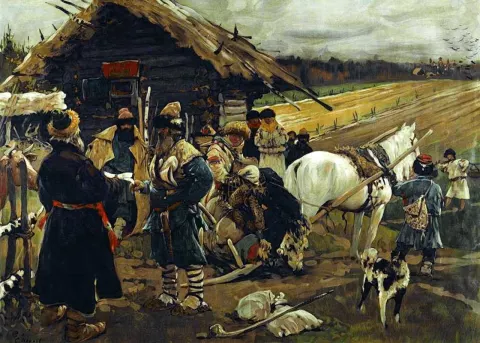
In the described period, there have been important changes regarding the position of peasants. In the beginning, the medieval Russian peasants succeeded to preserve their freedom of movement and were able to contract their services to the landowner who offered the most attractive price. These largely free peasants of Kiev Russia were gradually transformed - first into renters, and by the end of the 16th century to serfs, the peasants tied to the land permanently which was legalized by the law code in 1649. So, with time they however shared the same fate as their Western counterpart.
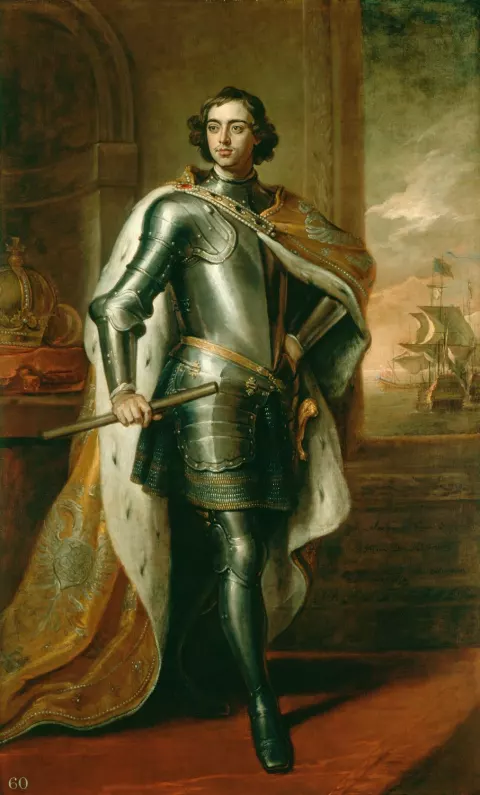
The country entered in the 18th century as predominantly agricultural, undeveloped, isolated, politically insignificant and freely described as backward in comparison with the others in Western Europe. Peter the Great (1682-1725), considered as one of the greatest rulers in history, managed to modernize this country in series of reforms. He was the first ruler of Russia who left the country after more than one hundred years, and spent two years travelling throughout Europe searching for ideas and means to modernize his realm military, economically, socially and culturally.
In order to carry out all the ideas, it was necessary to reform the tax system. In the 18th century about 90 percent of Russia’s population consisted of peasants. Instead of the old household and land taxes, in 1718, he introduced a famous head or soul tax on all male peasants to avoid apparent shortcomings. Before his reforms, the Russian peasants were taxed on a household basis, and each household paid a certain amount regardless of the number of persons in the household. The taxpayers used to crowd into a single household, usually sons with their families remained living under their father’s roof. As the total number of household decreased, the revenues of the state decreased as well. To make sure everyone is paying the new tax, a census was taken. The system was very successful and by 1724 the head tax provided more than a half of the Peter’s total revenue.
To improve his incomes, he introduced the mercantilist principles in the economy by encouraging exports, discouraging imports, and sponsoring new industries in metallurgy, mining and textiles. He also diversified indirect taxes, which were attached to such items and services as official paper for contracts, private bathhouses, mills, beehives, oak coffins and so on. Some taxes, as in the case of beard tax in 1705, were introduced to change behavior and encourage the adoption of European customs as well as to raise revenue. He also established export monopoly on certain commodities such as “unholy herb” tobacco, salt, liquor, furs, fish oil, caviar, coffins, and other items.
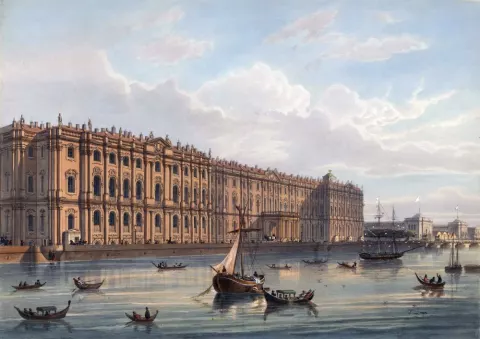
As a consequence of his active foreign policy and various reforms, by the end of the 18th century Russia was a major player in European politics, with Saint Petersburg as the new capital and “a great window recently opened in the north through which Russia looks on Europe”.
Germany
During the most of its history, Germany was part of the Holy Roman Empire, the feudal monarchy which was created in the beginning of the 9th century and lasted for one thousand years.
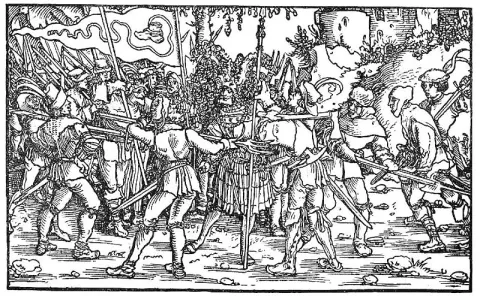
In the Middle Ages Germany was comprised of a number of small principalities of which each possessed its own laws, money and taxes. The economic growth of Germany was suppressed until its unification in the 19t century mostly due to the bad taxation system and political disintegration. Trade was hindered as each principality had toll gates erected at all borders, bridges and even roads with the purpose of tax collection. Difficult position of peasants culminated in the so called Peasant’s War (1524-1525) which was brutally crushed and discouraged further similar attempts. Germany was heavily depopulated after this event which reflected on economic situation as well.
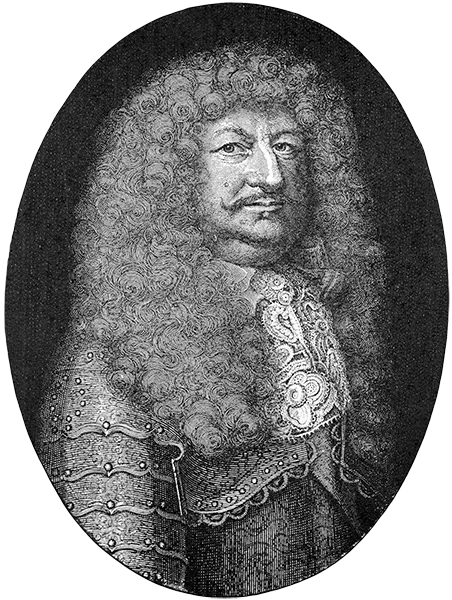
“Great Elector” Frederick William of Brandenburg (1640-1688).
In the first half of the 16th century, the Hohenzollern family of Prussia started to extend their territories to become one of the strongest and largest states in the Empire.
The first prominent Prussian ruler was the “Great Elector” Frederick William of Brandenburg (1640-1688). In contemporary Europe he was known for his small but highly effective private army which was trained and rented out to various rulers for high sums of money. When this army was not on the field, he used its service to administer the state and collect taxes.
The Prussians levied three basic taxes. Rural areas were obliged to provide a land tax which was based, similarly to the ancient Egyptian tax, on a percentage of the value of the expected harvest. Taxpayers who dwelled in town paid an occupation tax. It was a kind of license fee necessary for free conduct of trade and business. Nobles were also obliged to pay taxes, but they had an option to avoid this obligation if they served in the military. Church land was not tax-exempt.
Thanks to his shrewdness, Germany was one of the few countries in Europe that introduced excise taxes without social turmoil. Using the landowner’s fear of another peasant rebellion, the Hohenzollerns offered them a protection of his overwhelming army in exchange for the right to collect an excise tax. Excises and customs provided most revenues for the treasury. Army collectors were later replaced by French tax-farmers who were more oppressive and corrupt.
During the rule of Frederick the Great (1740-1786), the great grandson of “Great Elector” and a brilliant military commander, Prussia was one of the great states of Europe. At the internal level, he proclaimed himself “King of the Poor” and invested efforts to improve the position of the lower class and to replace heavy taxation with low taxes. However, low taxes don’t go hand in hand with expensive military operations, and in the end he was forced to reintroduce taxes he cancelled.
During one of his government meetings, Frederick, who was dissatisfied with state revenues, asked his finance minister to explain him how the treasury was empty when subjects were paying so much taxes. To explain the problem, minister took a piece of ice and gave it to the minister who was sitting farthest to the king. Then he told him to pass this ice to the next person all the way to the king. When the ice finally reached Frederick, all he received was a wet hand.
France
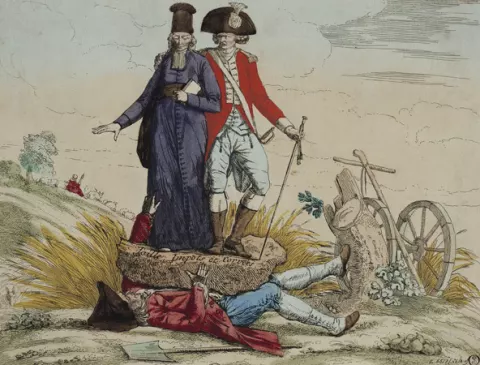
The rulers of medieval France were for a long time persons of moderate importance as there were many nobles who surpassed the king in power and wealth. Feudal contracts protected most nobles of paying taxes, while numerous charters between lords and commoners prohibited imposition of taxes, such as hated “taille”.
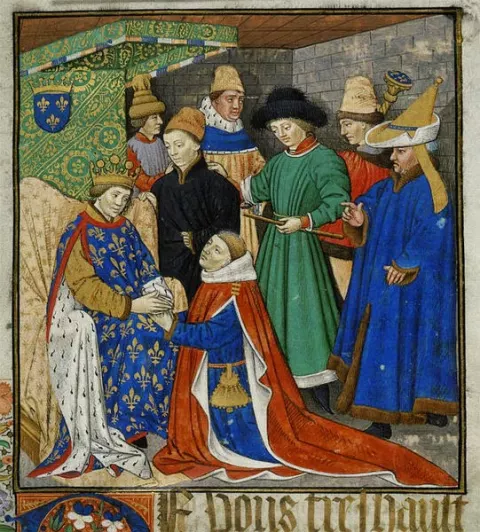
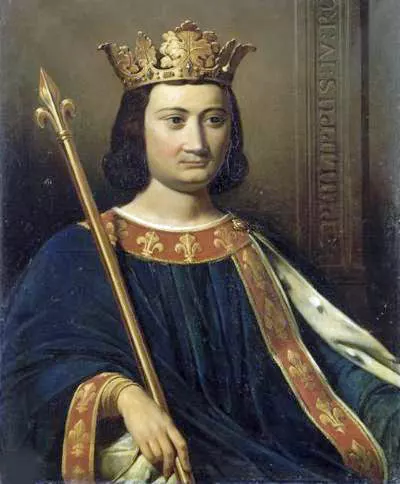
The situation started to change with the rule of Philip the Fair (r. 1285-1314), a sovereign of strong will and great ambitions who put France on the path of absolutism. In order to increase his revenues, he destroyed the French Jews and the wealthy crusading order of the Knights Templars, and appropriated their wealth. Then he turned to taxation of clergy, but the Pope did not just let his incomes go and threatened him with excommunication. The conflict resulted in transfer of the papal residence to Avignon, better known as the “Babylonian captivity” (1309-1377) of the papacy during which the popes were under the influence of French rulers. During his rule Philip managed to increase taxes on nobility by transforming the knight’s military service into an annual tax, like the English “scutage”.
The fact that he did not have a male heir, except his grandson who was the Crown Prince of England, caused the Hundred Years’ War (1337-1453) between England and France for control of the latter. The French led by the new king Charles VII came out of the war as victors. They achieved that by improving material and spiritual background of their army. The Estates General granted the king the permanent right to tax the “taille” in order to create a solid financial base to fight prolonged war. It was a crucial advantage over the English.
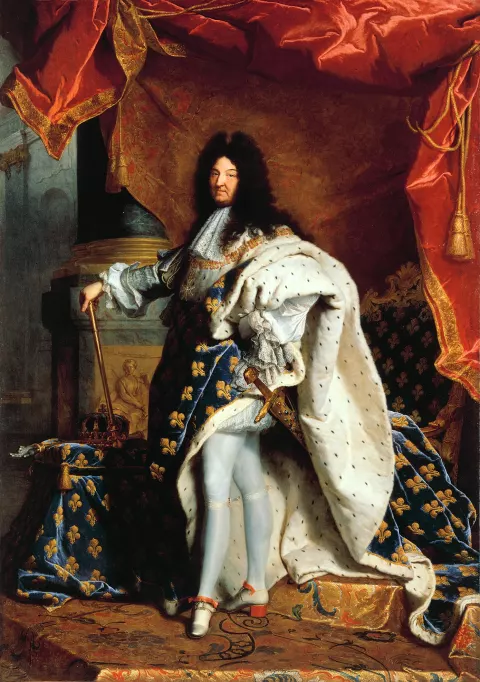
After the Hundred Years’ War the French king, who was permitted to levy a sales and salt taxes, and “taille”, in reality did not depend anymore on Estates General and started to reign absolutistic. Louis XIV was perhaps the best example of absolutistic monarch. On complaints about excessive taxation he replied that since everything belonged to him, he was only taking what is his.
The “taille” (usually a land and wealth tax) became an ordinary annual tax with fluid rates which were determined by military needs. There were several attempts to reform this tax. The most solid was the one of Louis XIV who tried to replace it with the poll tax, but his attempt was revoked after his death. According to this scheme, everyone were classified into 22 categories and each category paid a rate of tax based on the amount of wealth normally associated with that category. By the 18th century it became predominantly the “peasant’s tax”, since everyone, from nobility and clergy to cities and provinces, found a way to avoid or reduce this tax. It was finally abolished during the French revolution.
Besides “taille”, there was also the excise called “gabelle” imposed on all movable goods including food. For example, on wine there were five kinds of excises – a tax on the vine, on the harvest, on the manufacture, transport and on the sale. That was the reason why the rich drank wine, and the poor drank cider. Import duties were not a large source of revenue in France, and customs called “octroi” were usually levied at the entrances to cities.
The French rulers, like all the other, sometimes found themselves short of cash and in need for loans. Since borrowing was not an easy undertaking in a society which prohibited lending of money at interest, they found interesting alternative. Since the common people have always aspired to noble status the French king made the business of that. The Crown created a large base of offices and titles for sale, which were interest free and perpetual loans to the government. If some holder of office wanted to make it hereditary, he was able to do it for an annual fee, called a “paulette”.
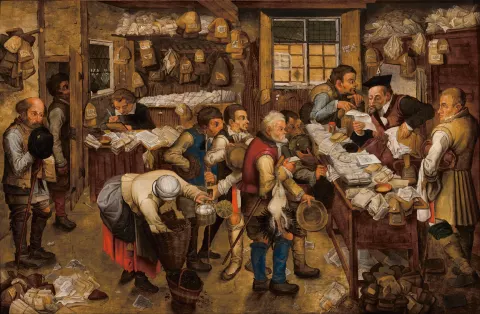
The taxes were collected in France since the Medieval Ages through private tax collectors because the state apparatus was usually inefficient and corrupt. These private entrepreneurs, usually Jews, paid the fixed sum in advance for the right to collect tolls and revenues. Except for a short period when this system was abandoned by John Law, the Scottish financial innovator, the tax farming was in force until the French Revolution during which it was finally abolished.

England
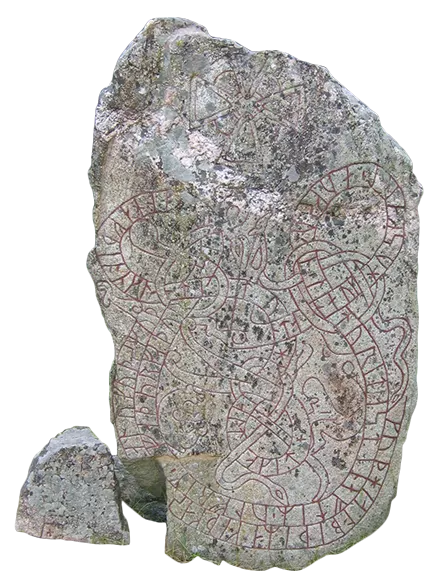
The runestone U 241 in Lingsberg, Uppland, Sweden, was raised by the grandchildren of Ulfríkr circa 1050 in commemoration of his twice receiving danegeld in England.
The taxation system was introduced to the British Isles during the Roman times, and after their withdrawal the Anglo-Saxon kings and nobles continued levying taxes.
In early Middle Ages a special land tax, called “danegeld” was imposed in Britain for defense against the Vikings and was set up at 2 shillings for every hide of land (100-120 acres). By the 11th century, it was replaced with a “carucate”, a land tax on ploughed land. After William the Conqueror seized England in 1066 he ordered a complete survey of all the lands and personal property in country. The survey is known as the Domesday Book, and it served for taxation purposes.
According to feudal concept, the knight was obliged to provide military service for his lord which amounted to 40 days a year. With time this obligation was replaced by “scutage”, known as a “shield tax”, which existed in various countries, including France and Germany, but was most highly developed in England. It was amount of money paid instead of military service. “Tallage” was another medieval tax which was levied on estates in the king’s possession and on boroughs. In more universal sense of the word, it referred to any arbitrary and oppressive tax.
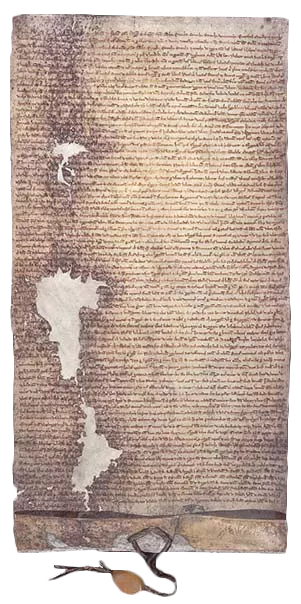
The rule of King John (r. 1199 - 1216) was of great importance for the further history of taxation in England. Hard-pressed with financial difficulties, King John increased the “scutage” several times, while the use of “tallage” was turned from occasional to frequent. The discontent barons of the realm forced him to sign the Magna Carta (“Great Charter”) in 1215 which limited the king’s power to raise revenues. The charter also regulated trade and protected it from internal tolls and duties, and prohibited the excessive tolls at seaports. From that time onwards, the taxes could be levied only with the common consent of Great council and usually in return for some benefit. So when the ruler had extra needs for money, usually for warfare, he asked for “aid” which was granted only if the reasons were of “evident utility, evident necessity and dire emergency”. To ensure the continuity of rights and benefits the taxes were approved for a short periods. The perpetual debates and bargains for taxes gave birth to Parliamentary government.
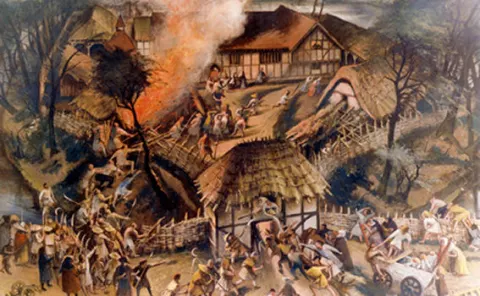
Third important element of the tax system in England were taxpayers themselves. When in 1379 a poll tax of 1 shilling for every man and women over 14 was introduced and farmed out to private collectors, the peasants expressed their bitterness in extremely violent nationwide revolt. The consequence was that for centuries thereafter the peasants were excluded from the poll taxes or taxed at nominal rates. The taxes they were willing to pay were called the “fifteenths” and “tenths” – they knew their precise amount and no one was taxed double. The “fifteenths” were 1/15 of the assessed value of a personal property, usually livestock and goods, while the “tenths” were 1/10 of real property rentals. In practice, the tax evolved in £30,000 grant for all England. Each tax district was obliged to pay a fixed amount to a local people who were in charge for collection, and the treasury needed to wait two years to receive that money. Later at the same time a “subsidy” was imposed which was fixed at £80,000.
King Henry VIII (r. 1509-1547), nicknamed Bluff King Hal, was one of the most controversial rulers in world history. His ambitions were great as well as his extravagance. Dissatisfied with the traditional “fifteenths and tenths”, he tried to raise subsidy. When it proved unsuccessful, he turned to Catholic Church. Large amounts of silver and gold of the country that every month went to Rome embittered him, as well as the Pope’s rejection to provide him a divorce. Thus in 1529 he prohibited the further payment of tithes to Roman Church, obtained the excommunication, and established the national Church of England appointing himself the supreme ruler and controller of its riches.
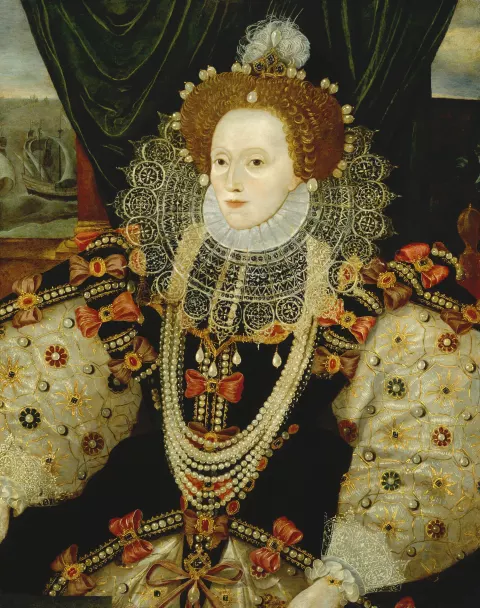
Under the rule of his daughter, the Queen Elizabeth I (r. 1558-1603), England evolved in super power which would dominate the world for 400 years. She managed to achieve that by peaceful external policy, low taxes and sound monetary policy. During her reign England was known for the lowest taxes in Europe. She was the only ruler in history who told: “I would rather the money was in the pockets of my people than in my treasury”.
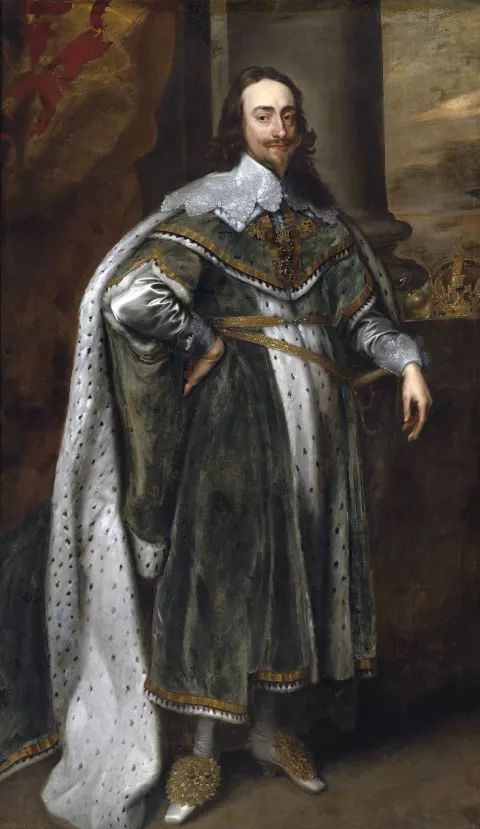
However, the benevolent taxation policy of the Tudor dynasty who accepted Parliament’s authority and lived and ruled in accordance with available funds, ended with Elizabeth’s death when the throne passed to the Stuarts. A disagreement on the rights of taxation between Parliament and the king Charles I (1625–49) resulted in his abolishment of Parliament and outbreak of the Civil War. The king was defeated, brought to London where he was put on trial and executed.
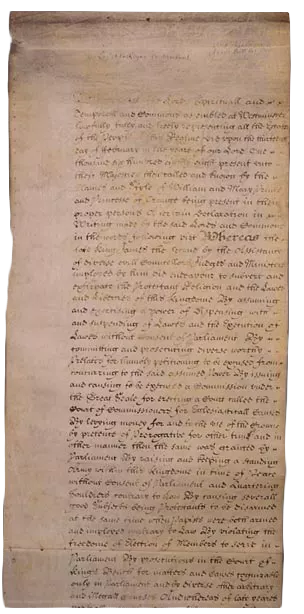
Although in 1660 the English monarchy was restored under Charles II, the Parliament did not restore the old tax system. In order to avoid any future misunderstandings, in 1689 Parliament adopted the English Bill of Rights which emphasized that there would be no taxation without Parliament. The taxes temporarily introduced during the Civil War – excises, poll taxes and wealth taxes - represented the base for the future taxes. The old “fifteenths”, “tenths” and subsidies went in history.
Shortly after Restoration, a heart tax (2 shillings for each heart/ fireplace in every house) was adopted but was abolished in 1688 and replaced with odious poll tax which was also repealed in 1698. Finally, the heart and poll taxes were replaces with a window tax, house tax and land tax. To avoid window tax, an obligation of each house to pay 1 shilling per window providing that each house had more than seven windows, taxpayers used to board up windows during collection or built houses without a single window in bedroom. During the Civil War the hated excise tax was introduced by parliament, and despite the promises it was continued in England from that time onwards. In England there were numerous excises – on beer, liquor, soap, salt, iron, lead and some luxury items - but they were moderate and never destructive like in the rest of Europe. In the mid-18th century the excise became the major tax in Britain.
The most remarkable feature of the English tax system was its unique progressiveness and the absence of tax immunity for the rich. The principle was simple – the greater the wealth, the greater the taxes. By cancelling export taxes on manufactured goods and elimination or considerable reduction of many tariff items, the British trade was stimulated as well as the competitiveness of its goods on world markets.
Thanks to this policy, England became the leading commercial power of the world.